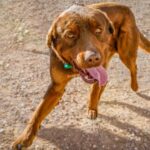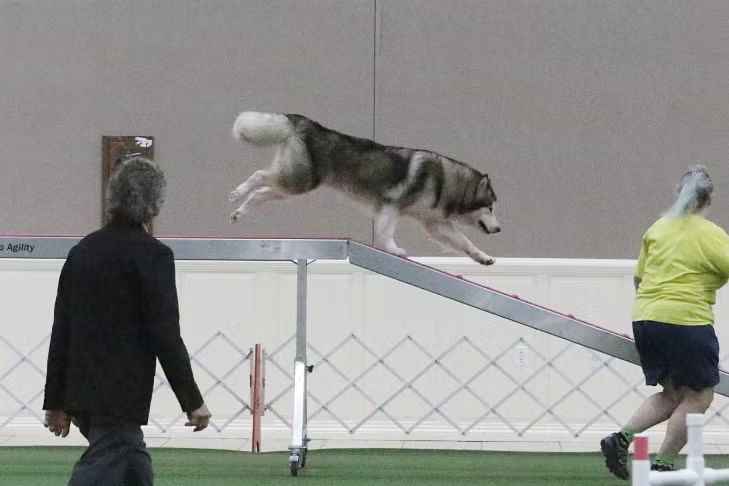

The spotlight shines on a mother and son of a Working breed not seen often in agility – the Alaskan Malamute. Zenny and her son, Pickle, run with the Dream Acres teams in Wisconsin and excel at a number of other endeavors, including sledding and carting. Their breeder and trainer, Jen Effler, has had a fascination with the breed since she was a young girl and got her first Malamute right after college. Zenny is a third- generation AKC Agility titled dog and Pickle therefore the fourth! Jen tells us more about training and competing with them.
Call Names: Zenny and Pickle
Breed: Alaskan Malamutes
Ages: Almost 6 and 3
Registered names:
Powderhound’s Straighter Yer Crown RE OAP OJP OFP CGC TKN ATT
CH Powderhound’s I’m Kind of a Big Dill SWN
Team names and divisions:
Zenny was on Dreams Come True (Regulation Senior) in the fall. She will return in the fall again at the Senior level after maternity leave.
Pickle is on Dream Catchers (Regulation Freshman) for Summer.
City/state: Fort Atkinson, WI
Owners: Jen Effler-Leveille & George Leveille
How long have you owned Malamutes and how did you discover the breed?
I bought my first Malamute in 2000, though my love of Malamutes goes back to childhood. My babysitter had one named Sabbath. Sabbie was really an awesome dog, and he was beautiful – especially to an 8-year-old girl. When I was about to graduate college, I started contacting breeders to see if they had any adults to place. Nancy Russell of Storm Kloud Malamutes responded that she had an 18-month-old return, and I was welcome to meet her. Kita came home with me.
When did you get involved with breeding?
I bred my first litter in 2005. I had gone back to Nancy for a show puppy in 2002. Bella didn’t end up loving the show ring but that’s ok. She was a truly exceptional working dog, and we had fun with the homemade agility equipment we built for the backyard. Three of her sons were multi-sport athletes, and two ended up earning agility titles.
Malamutes are not traditionally seen a lot in agility. How did you get involved in the sport?
My friends Mark and Kim Christiansen were running their boys, Mack and Blaze, at Western Waukesha County Dog Training Club (WWCDTC). I was invited to check out class and decided I *really* wanted to do that. I joined the program soon after with Ikey from my first litter. Today we have six Malamutes in the WWCDTC agility program.

What are Malamutes like to train and compete with in agility?
They’re typically pretty smart, and things have to move along quickly. Across any sport, as soon as they demonstrate that they did ‘the thing’ correctly, you have to move on. “One more time to cement it” is a poor choice. Their unfair reputation for being obstinate or hard to train is usually a product of someone putting in too many reps. Zenny’s mother Nellie could only run a sequence once. If she did it perfectly the first time, you had to just let that be or she’d just quit. This is why I started training several at once – one and done makes for short training. Once I figured that out and applied it across my other dogs, the change was dramatic. We started QQing in Master pretty regularly. Everyone was doing better in all their sports.
How has League benefited your training program?
It’s a nice step between classes and a trial. We have electronic timers, there are quite a few people there, quite a few dogs there, and some of the trial noises. And it’s fun to run other places. It’s also much less intense and more of a social outing than regular trials, and I enjoy it immensely.
What is it like running mother and son? Do you see similarities?
I believe this is specific to these two as I have run mothers and sons before, and they had different similarities. For example, Zenny’s grandma Lucy and son GP were both always skeptical of the panel jump and always peeked over first (only in agility, never in rally). Zenny is easily distracted visually and unfortunately Pickle is easily distracted visually like his mother plus he hears everything like his father. They both are great at reading my body cues though. Zen prefers more distance from me than Pickle, but I don’t have to run a course much differently for one versus the other.

Do they compete in other sports?
Yes. Zenny is an accomplished weight pull dog and has several Triple Qs toward her RACH in AKC Rally. Pickle is following in his mother’s footsteps in becoming a very good weight pull dog but also is a breed champion and has been doing really well in scent work. They both have work toward their backpacking titles with the Alaskan Malamute Club of America, and they both sled and cart.
What are their favorite rewards?
They will do sketchy stuff for the “chicken sausage” treats. And the Carolina Prime Pork Jerky is their top tier reward, though Mals are rarely picky.
What advice do you have for others training Northern breeds – and also large breeds – in the sport of agility?
For the Northern breeds – if your dog is struggling in class, running off, and having attention problems: after you rule out avoidance due to pain or discomfort, remember to keep things short. Did the dog do whatever you were asking? Yes? Move on. The other dogs in the class may enjoy the reps but yours probably doesn’t. And discuss that with your instructors – most of them I have dealt with are absolutely understanding once they see it’s true. For large breeds in general – it’s not wrong to run Preferred. I will only run Preferred; 24-inches is too much for most big dogs, in my opinion.
If you are thinking about adding a Malamute to the family, what should you consider?
They’ll destroy your house, your yard, and the livestock in the neighborhood if they’re not given an appropriate outlet because they’re a primitive working breed. They can also be dog selective, and it’s REALLY important to do the work with them as babies unless you want to have a very big problem later. They can be outstanding family dogs, though, and often once people get one, they want more.