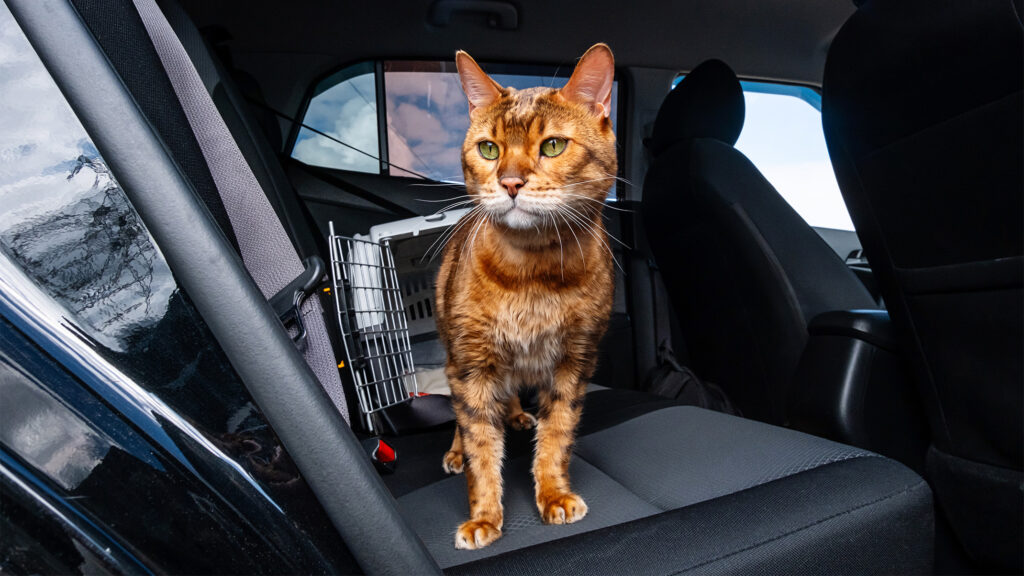

Car sickness happens when the motion your cat’s body feels and the movement their eyes see don’t match up. Your cat’s inner ear has a built-in balance system called the vestibular system, which tracks movement. When your cat is in a moving car, this balance system senses motion but your cat’s eyes may not clearly see it, especially if your feline friend sits inside a carrier. This mismatch is what makes them feel queasy.
Car sickness is most likely to affect:
- Kittens (their balance system is still developing)
- Cats not used to travel
- Anxious or stressed cats
While dogs often get to enjoy car rides to fun places like the park, most cats are only taken out for trips to the vet. This can cause our feline friends to associate car travel with stressful experiences, adding an extra emotional layer.
The earliest clues that your cat is getting carsick can be subtle. Most cats will start by letting out loud, complaining meows, called yowls. Other signs your cat is experiencing motion sickness are:
- Severe drooling
- Restlessness or pacing in carrier
- Panting (less common but possible)
- Vomiting
- Peeing or pooping in their carrier
In cats, carsickness often isn’t just about motion and movement not matching. Usually, there is a psychological aspect involved. Here are some things you can do to help your cat feel better during travel.
Leave your cat carrier out around the house, even when you’re not planning a trip, and add a soft blanket inside to make it cozy. Cats are naturally curious, so chances are they’ll check it out and might even start using it as a little nap spot. Over time, the carrier becomes a familiar safe space instead of something to fear when it’s time to travel.
Still looking for a cat carrier that was designed to look like a cat bed and looks amazing in your interior? Take a look at the Catit PIXI Mio!

Try not to feed your cat 3–4 hours before a trip and avoid large meals for up to 8 hours before travel. An empty stomach can help reduce nausea and the need for frequent potty breaks, which are often unwelcome, especially during long car rides or when traveling by plane or train.
Cats are less anxious when their surroundings smell familiar. To help your cat feel at ease in the car, you can provide them with their favorite blankie or stuffie. If that doesn’t work, pheromone sprays are worth trying. These products are odorless to humans but help cats feel more relaxed.
You can help your cat feel more at ease by:
- Maintaining a cool temperature
- Avoiding loud music
- Driving smoothly

If your cat struggles with severe motion sickness, it’s a good idea to visit the vet. Your veterinarian professional may recommend:
- Anti-nausea medications
- Mild sedatives
- Anti-anxiety treatments
Never give human medication to your cat. Drugs meant for humans can be toxic to cats and can cause serious harm as cats’ metabolism is very different from ours.
While mild cases usually don’t require specialist care, it’s best to see a vet if:
- Your cat vomits frequently during travel
- Symptoms don’t improve with training
- Your cat shows extreme distress or panic
Yes, many kittens improve as their balance system matures. While they’re still young, try to make car trips as comfortable as possible so they don’t develop a negative association.
Not always. Limited visibility can sometimes reduce motion confusion and stress.
So, can cats get carsick? Absolutely. But with the right preparation, most cats can learn to tolerate or even enjoy car travel. The key is to reduce stress, create positive associations, and ease them into the experience gradually.