
Petful is reader supported. As an affiliate of platforms like Amazon and Chewy, we may earn a commission when you buy through links on this page. There is no extra cost to you.
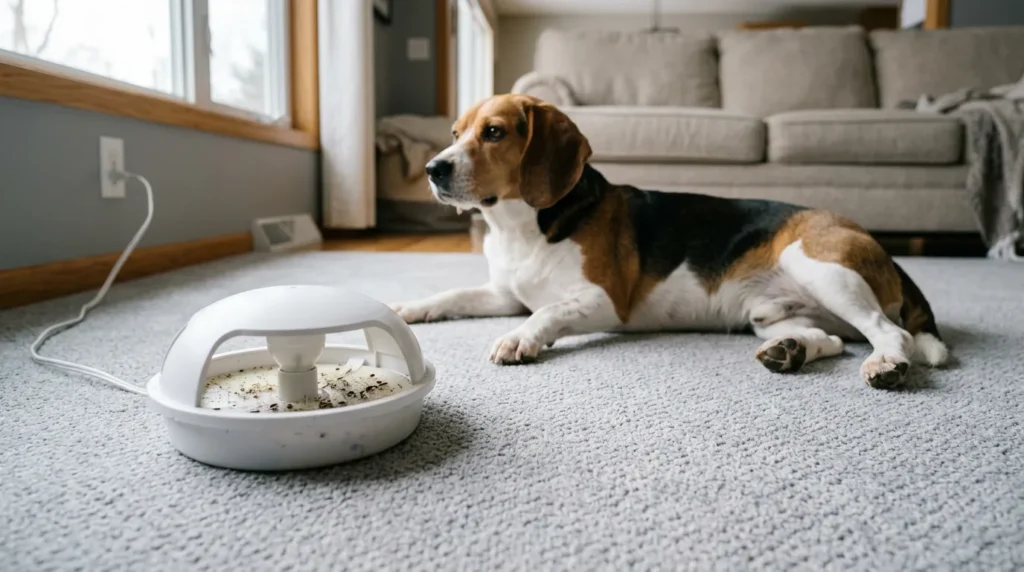
Flea traps sell a very appealing idea: plug one in, wake up to a pad covered in bodies, and watch the problem shrink on its own. The arithmetic gets in the way. Veterinary parasitology guidance, including the Companion Animal Parasite Council, puts adult fleas at roughly 5 percent of a household flea population, which leaves about 95 percent sitting in carpet pile and bedding as eggs, larvae and pupae where no trap can reach. That does not make a trap useless. It makes it a different tool than most buyers think they are paying for. This guide gives the effectiveness verdict first and the product guidance second.
- 1A flea trap catches adult fleas only, and adults are roughly 5 percent of a household infestation
- 2Use a trap as a monitoring tool that measures whether your treatment is working, not as the treatment itself
- 3Light traps work because fleas orient to warmth and green to yellow light, so run them overnight in a darkened room
- 4A homemade dish soap trap gives you one night of usable evidence for under five dollars
- 5Real control still needs vet recommended on-pet prevention plus an insect growth regulator in the home

Don’t Guess When It Comes To Your Pet’s Care
Sign up for expert-backed reviews and safety alerts all in one place.
Do flea traps work?
Flea traps work, but in a narrow sense: they capture adult fleas only, and adults are the smallest slice of any established infestation. Treat a trap as a monitoring tool that tells you how bad the problem is and whether it is shrinking, not as something that will clear the house on its own.
That framing is the whole article in one line. A trap is a measuring instrument and not a treatment, and confusing the two is what costs people three weeks of an infestation they thought was under control.
The One Line Version
- A flea trap measures your infestation. Vet recommended on-pet prevention plus an insect growth regulator in the home is what actually shrinks it. Buy a trap to know where you stand, not to solve the problem.
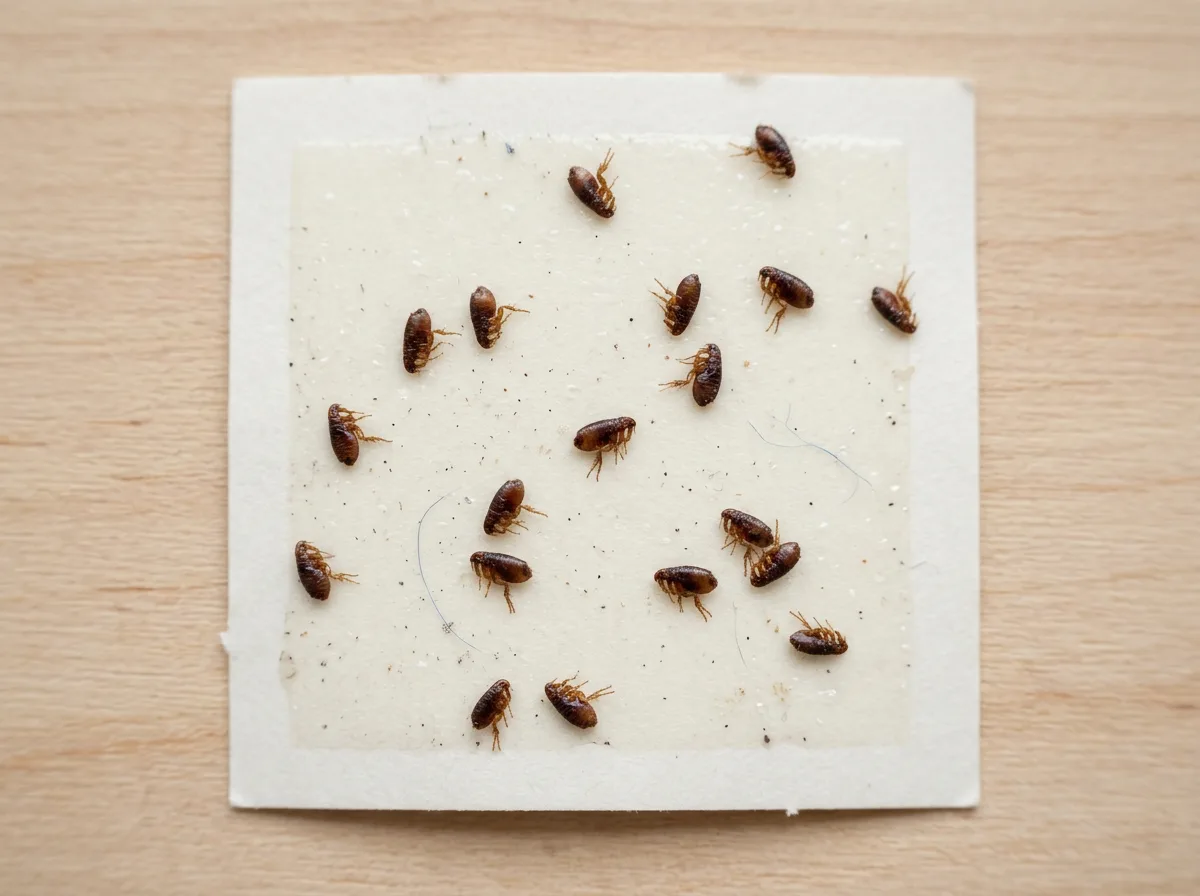
Do flea traps really work? Yes, at the specific job of catching newly emerged, host seeking adults that pass close to the light. In controlled testing published in the Journal of Medical Entomology, a purpose built light trap collected more than 86 percent of the live fleas released into a small carpeted room over 20 hours, while three commercially available traps each collected roughly 13 percent. Both numbers describe adults on the floor of one room. Neither number touches the eggs and larvae buried in the carpet, which is exactly why catch rate and infestation control are not the same measurement.
Here is where owners get misled by a good looking result:
Petful may earn a commission when you click through to Chewy, at no extra cost to you.
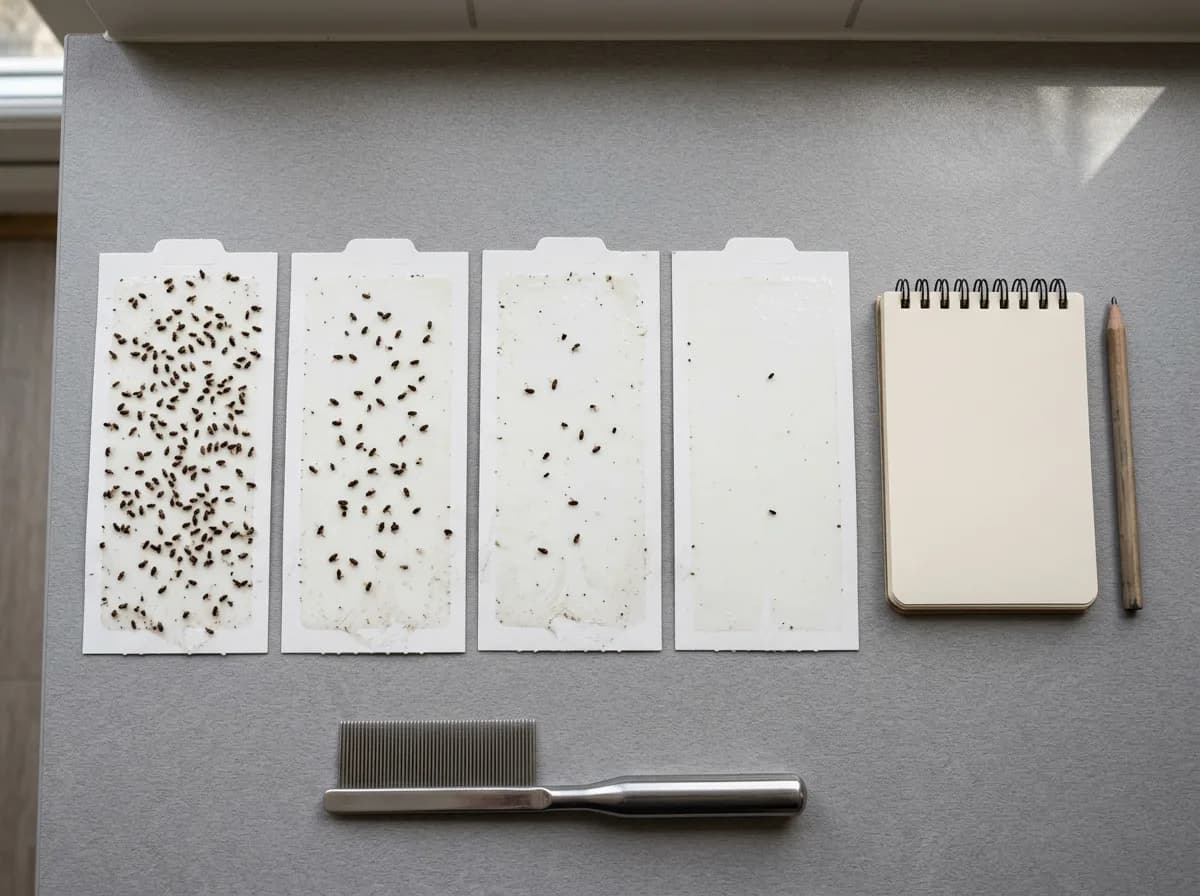
- A full pad proves fleas are present and emerging. It does not prove the population is falling.
- Catch counts often rise in week one of a real treatment, because vacuuming and foot traffic trigger pupae to hatch.
- A trap only samples the room it is in. Fleas in a second bedroom are invisible to it.
- The pad cannot distinguish a fresh emergence from a flea that has been in the house for days.
Nothing on the pad was ever on the pet. An oral flea tablet kills the adults feeding right now in about 30 minutes, but it leaves no residual behind, so it resets one night rather than lowering the weekly count. A bath strips adults off the coat faster than anything else, and a flea and tick shampoo kills what plain water only moves around. Expect the pad count to keep climbing anyway, because bathing does nothing to the carpet.
Flea trap vs actual flea treatment: what each one does
| Job | Flea trap | Household treatment plus on-pet prevention |
|---|---|---|
| Kills adult fleas in the room | Partly, only those that reach the pad | Yes, on contact and with residual action |
| Kills flea eggs and larvae | No | Yes, an insect growth regulator stops development |
| Reaches deep carpet pile, cracks and under furniture | No | Yes, with vacuuming plus treatment |
| Tells you whether numbers are falling week to week | Yes, this is its real strength | No, not directly |
| Protects the pet itself | No | Yes, this is what vet prescribed prevention is for |
The way to stop a trap misleading you is to use it as a counter rather than a control measure. Run it for three nights before you change anything and average the catch, and you have a baseline in fleas per night that every later count can be compared against. That single number is what separates monitoring from treatment. The trap is not shrinking the population and never was. It is telling you whether the things that do shrink it are working.
- Always average three nights. One night’s count swings too much with room temperature, whether the door was shut, and whether the pet slept nearby.
- Write down the number, the room and the date every morning. A remembered impression of a full pad is not a measurement.
- Expect the count to hold steady or rise during the first week of real treatment, because vacuuming triggers pupae to emerge. That is progress, not failure.
- A falling three-night average says keep the current plan. A flat one after two weeks says look for an untreated pet, a second room, or the yard.
- The finish line is zero across three nights, repeated about three weeks later, because the pupal window outlasts any single clean night.
Owner threads filed under do flea traps work reddit tend to open with the same photo: a pad covered in bodies after one night, posted as proof the plan is working. Read those counts as evidence of emergence rather than progress, because a heavy pad means adults are hatching, not that the population is shrinking. The cheapest way to sanity check a trap is to run a flea comb alongside it. Two minutes through the coat over a white towel gives you a second number, and it is the only one of the two that reflects what is happening on the animal. Flea traps work as room counters. A comb works as a pet counter. Neither treats anything, and reading either as treatment is what costs owners weeks.
- A flea comb costs a few dollars and needs no refills, which makes it the cheapest second opinion on any trap count.
- Wet a suspect speck from the towel. Flea dirt smears rust red because it is digested blood, while carpet grit stays gray.
- Log both numbers side by side each morning: fleas on the pad, then live fleas and dirt from the comb, with the date and room.
- Run the two counts on the same mornings for at least three days, so the room number and the pet number can be compared on one date.
- A photo of a loaded pad is not data. Three consecutive written counts are the smallest thing worth acting on.
What flea traps catch and what they miss
A household flea infestation is not a pile of adult insects. It is a flea life cycle running in parallel, and the visible adults are the tip of it. The widely cited veterinary breakdown of a flea population looks like this:
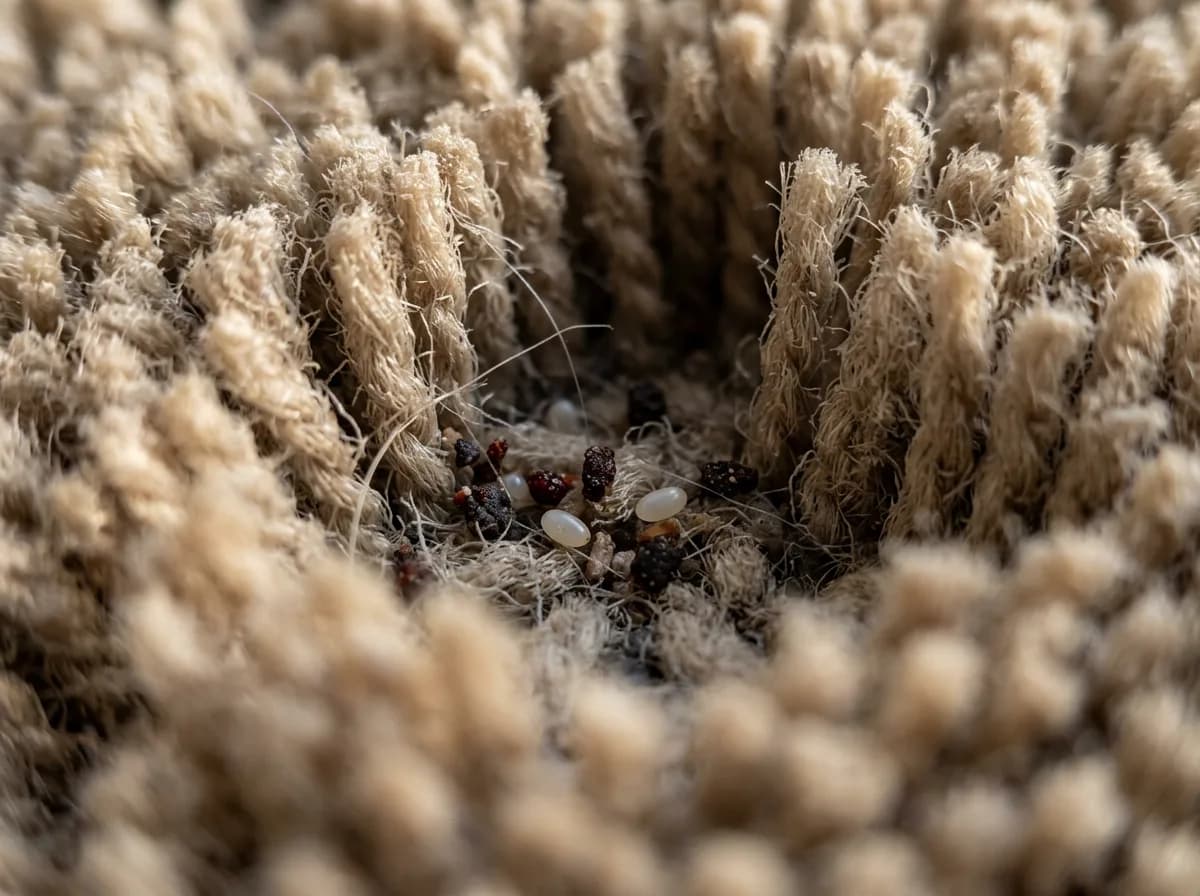
- Flea eggs, roughly 50 percent. Laid on the pet, they roll off into carpet, bedding and floor cracks within hours. Smooth, dry and about half a millimetre across.
- Flea larvae, roughly 35 percent. Blind, worm like, and actively negatively phototactic, meaning they burrow away from light and down into carpet pile. A light trap repels them rather than attracting them.
- Flea pupae, roughly 10 percent. Sealed in a sticky silk cocoon that resists freezing, drying and insecticides.
- Adult flea, roughly 5 percent. The only stage a trap can physically remove.
Read that list again with a trap in mind. The device attracts one stage, repels another, and is completely irrelevant to the two that make up more than half the problem. That is the honest ceiling on what any trap can do.
Owners searching actual size flea pupae are usually trying to identify something on the floor and failing for a good reason. The cocoon is only a few millimetres long, and it is sticky by design, so it collects dust, carpet fiber and pet hair until it is effectively camouflaged against the floor. Pupae can stay dormant for months and emerge on cue when they detect vibration, warmth or a rise in carbon dioxide, which is why a house that seemed clear erupts the day people come back from holiday.
A Rising Catch Count Is Not Failure
- If your nightly trap numbers jump in the first week of treatment, that is usually pupae hatching on schedule rather than a product that is not working. Judge results from week two onward, not from day three.
Search do flea traps work reddit and the same story repeats across threads. Owner reports describe an impressive overnight catch of twenty, forty, sometimes a hundred fleas on one pad, a photo of the pad, and then a follow up post two weeks later asking why fleas are still biting. Nothing went wrong with the trap. The trap did its one job, the other 95 percent of the population continued developing untouched, and the emergence rate simply refilled the room.
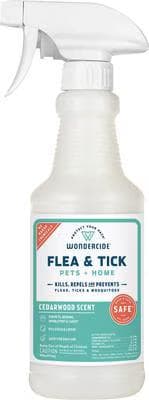
Petful may earn a commission when you click through to Chewy, at no extra cost to you.
It is worth doing the arithmetic that trap packaging never shows you. Adults are roughly 5 percent of a household population. In the controlled testing described above, commercial units collected on the order of 13 percent of the adult fleas released into one carpeted room over 20 hours. Multiply those two figures and the share of a whole infestation a trap physically removes lands well under 1 percent per night, in a single room, under conditions considerably more favourable than your living room floor.
- The purpose-built research trap collected more than 86 percent of released adults in that same room, which still works out at under 5 percent of a whole-house population.
- Every flea on the pad was already an adult. None of the eggs, larvae or pupae producing the next wave are touched at any point.
- A trap samples one room. Fleas emerging in a second bedroom or a hallway appear nowhere in the count.
- Refill economics follow from that. Six weeks of pads buys you a measurement rather than a reduction, so budget for them as a diagnostic cost.
- Judge a trap on how reliably it counts, not on how full the pad looks. A heavily loaded pad is a sign of a heavy infestation, not of a successful one.
The reason this gets misread so often is a blur between two different jobs. Trap makers and their competitors all sell the same phrase, flea control, without separating monitoring from treatment, leaving readers believing a trap can clear an infestation on its own. It cannot, and the cost of that belief is measured in weeks. An owner who watches a pad fill for three weeks and reads it as progress has given the eggs and pupae in the carpet three uninterrupted weeks to develop. Keep the two jobs apart from day one. The trap reports. The growth regulator, the vacuum and the preventive on your pet are what actually reduce the population.
- A full pad proves fleas are emerging. It does not prove the population is falling.
- Counts often rise in week one of real treatment, because vacuuming triggers pupae to hatch.
- Nothing on the pad was ever on the pet, so the trap says nothing about how on-pet control is going.
- Pair every trap count with a two-minute flea comb count over a white towel.
- If the room number falls but the comb number does not, the on-pet product is the weak link.
How light flea traps work
So how do flea traps work, mechanically? Every commercial unit exploits the same host seeking behavior. A newly emerged adult flea is looking for a warm body, and it navigates using a short list of cues: heat, light, carbon dioxide and vibration. A trap convincingly fakes the first two, offers a landing surface, and holds whatever arrives on an adhesive pad.
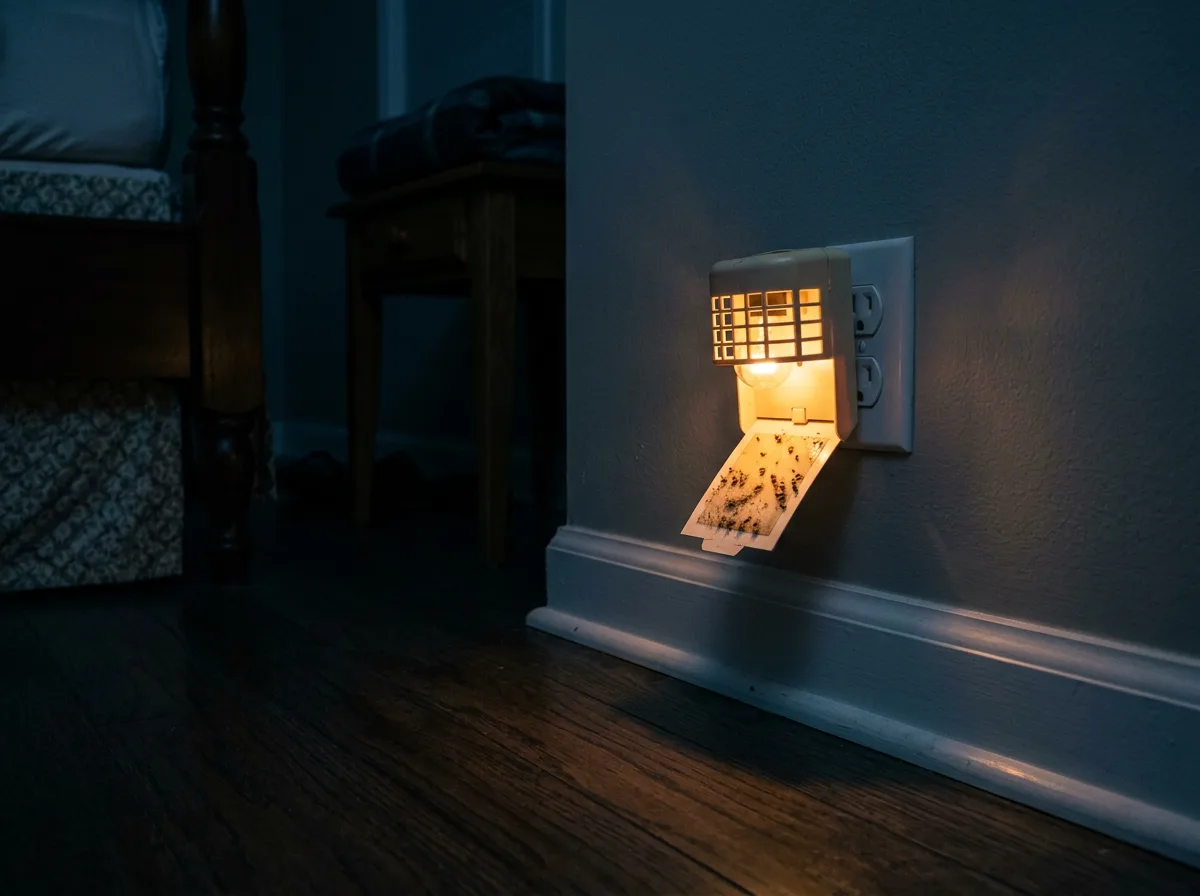
The design detail is better researched than most buyers realize. In the 1993 Journal of Medical Entomology work by Dryden and Broce, a green to yellow filter centred at 515 nanometres pulled significantly more fleas than white light or any other filter tested, and the resulting trap ran its lamp on a 10 minute on, 5 second off cycle rather than burning continuously. Intermittent green tinted light, not a bright white bulb, is what a flea reads as a living target.
Green Light Beats Bright White
- If a trap offers a choice of bulbs or modes, the green tinted pulsing option is the one backed by the published research. A brighter white lamp looks more impressive on the shelf and catches fewer fleas.
What attracts fleas to kill them overnight is therefore a short and specific list: warmth, light in that green to yellow band, carbon dioxide and vibration, because together those four signal a sleeping host. A plug in trap reproduces two of them well and cannot reproduce the other two at all. That is the practical reason a trap collects a share of the fleas in a room rather than clearing it, and why placing the trap where the pet actually sleeps matters more than the brand on the box.
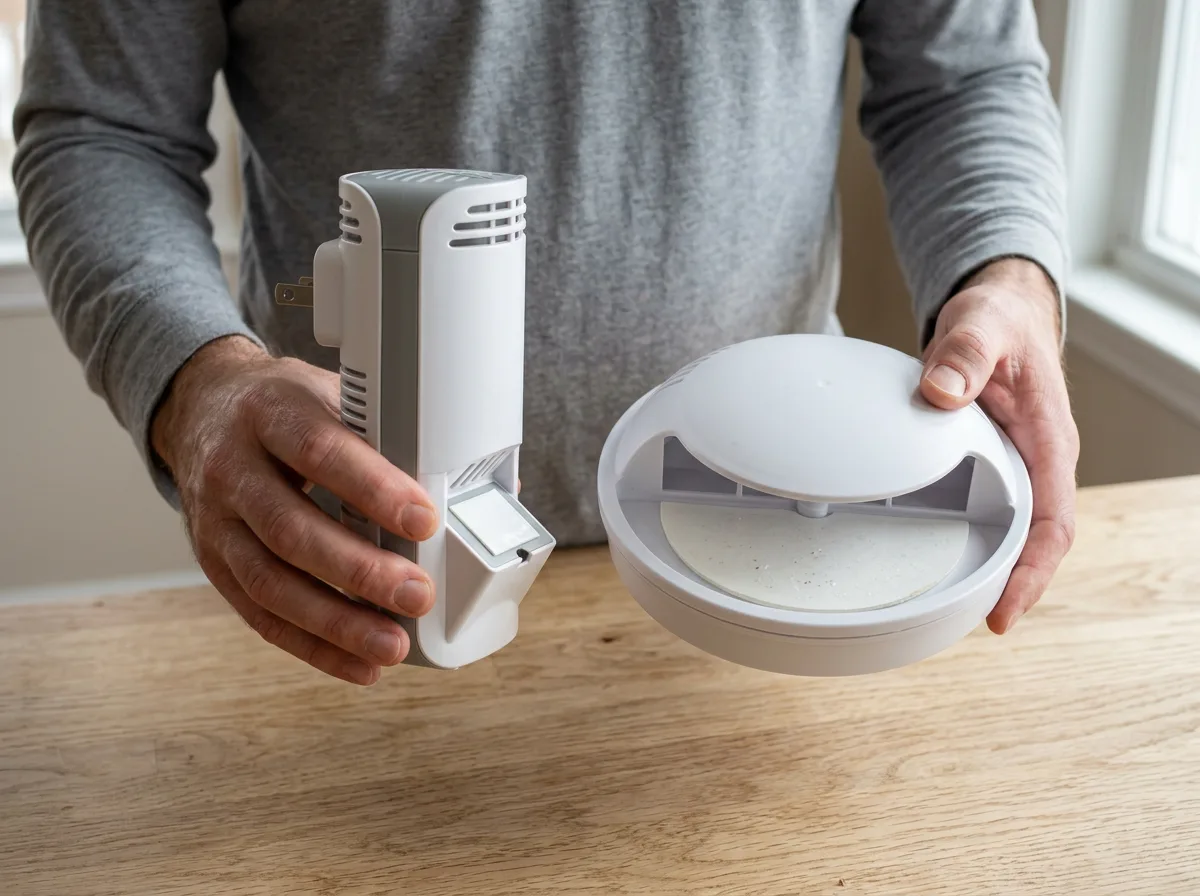
Type flea trap light into any retailer search and one design dominates: a low wattage bulb or LED set above a replaceable sticky pad, in either an upright plug in housing or a flat disc that sits on the floor. Retailers label these as flea trap indoor products to separate them from garden gear, and that label is honest. None of this hardware does anything useful outdoors.
Do flea traps work during the day? They keep catching, but far less of it. The lamp is competing with daylight, its contrast against the room collapses, and household fleas are most active in the evening in any case. If you want a number you can compare week to week, run the trap overnight in a room you can darken, and leave the count until morning.
- Put it in the room where the pet sleeps, which is where egg fall is heaviest.
- Set it on the floor, not on furniture. Fleas jump, but they emerge at floor level.
- Keep it away from the pet’s own bed by a meter or so, so it is competing with a cold spot rather than a live host.
- Leave doors shut overnight so you are measuring one room rather than an unknown volume.
Whatever the pet sleeps on is the egg reservoir your trap is sampling, so use a washable pet bed with a cover that comes off and takes a weekly 60C wash. If the dog sleeps in a folding wire crate, set the trap just outside it rather than inside. Inside, the pad is competing with a live warm host and the count reads artificially low.
Homemade flea traps: the dish soap method
How do I make a homemade flea trap? Fill a shallow dish with warm water, add a few drops of dish soap, put it on the floor, and shine a desk lamp down onto the surface overnight. The soap breaks the surface tension so fleas that jump toward the light sink instead of bouncing off the water, and by morning the catch is sitting in the dish where you can count it. Total cost is a few pence, and it works on exactly the same cue as a commercial unit.
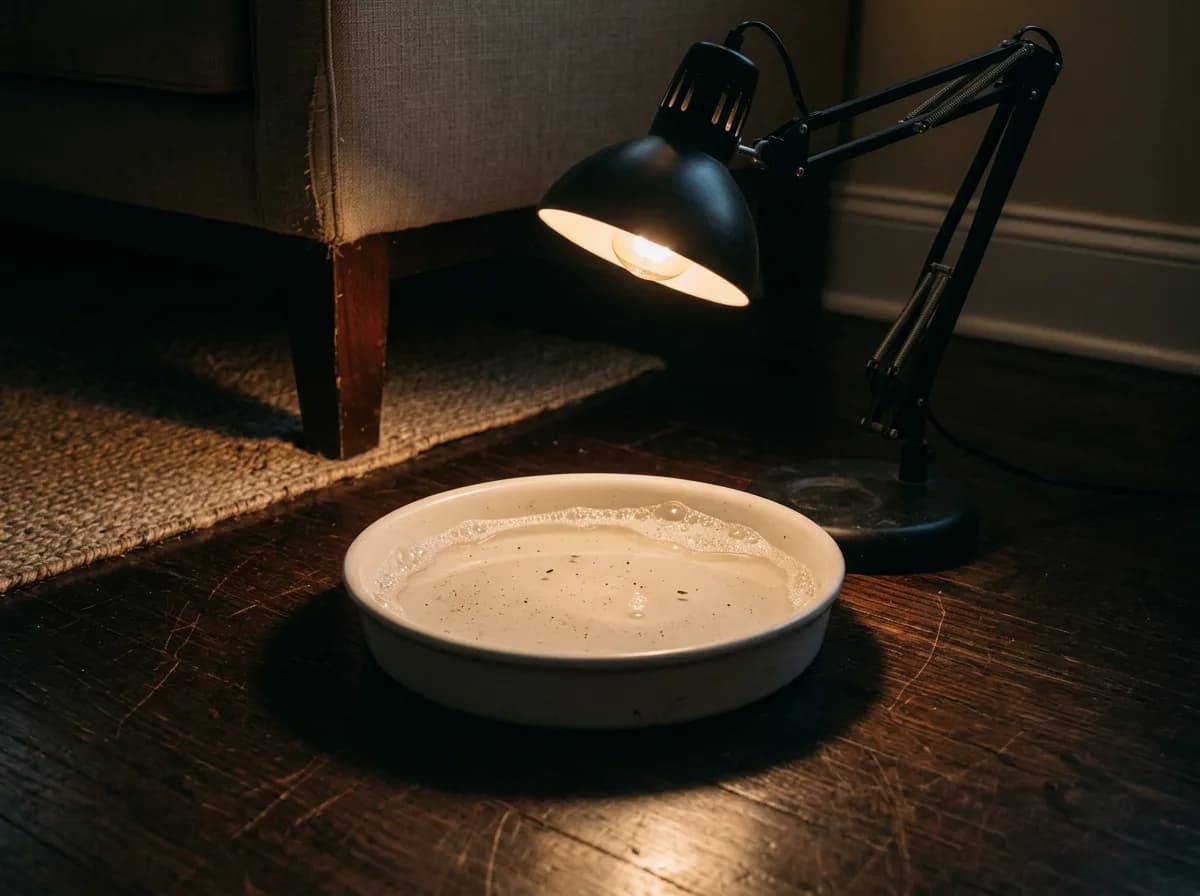
Search flea traps homemade and every result lands on this build. It is worth doing properly:
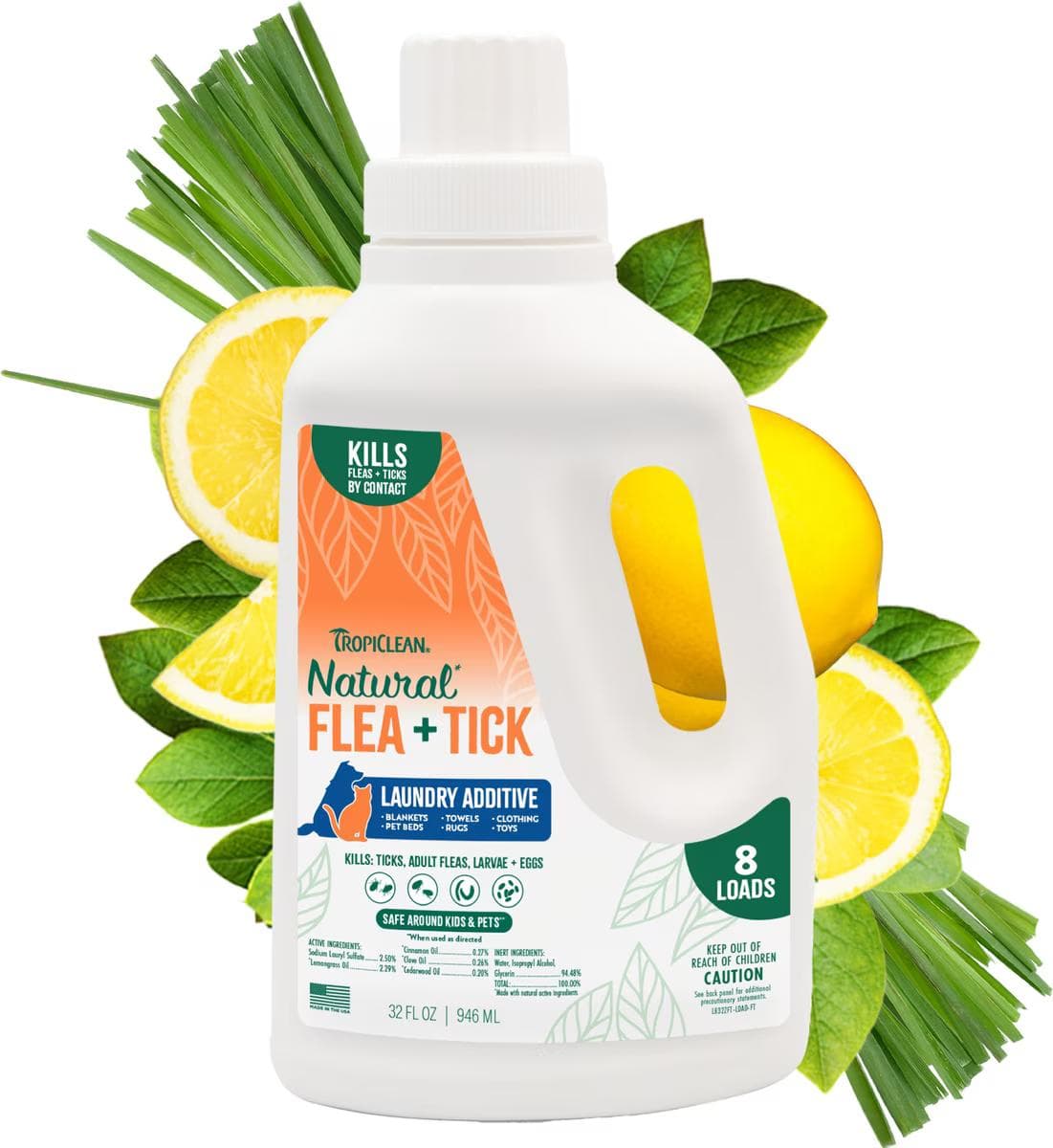
Petful may earn a commission when you click through to Chewy, at no extra cost to you.
- Use a wide, shallow dish. A dinner plate with a rim or a pie dish beats a deep bowl, because fleas need to reach the water on a low arc.
- Add two or three drops of dish soap and stir gently. You want the film, not a bowl of foam.
- Warm water helps, because heat is one of the cues fleas are tracking.
- Position the lamp 20 to 30 centimetres above the dish, angled down at the water.
- Leave it overnight in a darkened room and count in the morning before tipping it out.
- Replace the water daily. A day old dish stops attracting and starts smelling.
Stand the dish on a washable pee pad. A bowl knocked at 3am soaks into the pad instead of running under the carpet edge you are trying to treat. Close the room off, with a pet gate if the door will not stay shut. A tipped dish costs you that night’s number, and the protocol only works if three nights are comparable.
The homemade flea trap vinegar variation swaps part of the water for white vinegar. It does not improve the catch. Vinegar is not a flea attractant, it does not break surface tension the way a surfactant does, and the fleas that drown in it drown because of the soap you also added. Keep the vinegar for the mop bucket.
So do homemade flea traps work? For one night of evidence, yes, and about as well as a cheap commercial unit. What they do not do is run unattended for three weeks, and they carry a household risk a sealed plug in unit does not.
Lamp and Water Safety
- An open dish of water under a desk lamp is an electrical hazard and a burn risk if a pet or child knocks it over. Use an LED bulb rather than a hot halogen or incandescent lamp, keep the cord out of chewing reach, and never leave the setup running in a room with an unsupervised pet or toddler.
The limits of the dish soap trap are worth naming, because the build is cheap enough that people leave it running for weeks. An open dish of water under a mains lamp is an electrical and spill risk in a room where a pet moves around at night, and it needs resetting daily to keep working. It also catches exactly what a commercial unit catches, which is adult fleas in one room, so its ceiling is a measurement rather than any reduction in the infestation.
- Keep the lamp and its cable clear of the dish and use a cool-running bulb. Water, a hot bulb and a mains cable on the floor is the genuine hazard in this build.
- Do not leave it down in a room a pet can reach unsupervised. Soapy water gets drunk and shallow dishes get tipped.
- Change the water daily. A day-old dish stops attracting and starts smelling, and a stale night is not comparable with a fresh one.
- It catches adults only, exactly as a plug-in does, so it cannot touch the eggs, larvae and pupae that make up the bulk of the problem.
- Use it for a defined counting window of a few nights rather than as a permanent fixture, then put it away and let the actual treatment do the work.
Using a flea trap to monitor an infestation
This is the use case that justifies buying one. A trap converts a vague feeling that things are getting better into a number, and a number is what tells you whether to keep going or change approach. Competitors describe traps as helpful without ever giving a protocol. Here is one you can actually run.
Petful may earn a commission when you click through to Chewy, at no extra cost to you.
- Nights 1 to 3: set the trap in the room the pet sleeps in, count every morning, and average the three results. That average is your baseline in fleas per night.
- Day 4: begin real treatment, meaning vet recommended on-pet prevention plus a household product containing an insect growth regulator, and keep vacuuming daily.
- Nights 8 to 10: recount for three nights and average again. Expect this figure to be flat or slightly higher. Pupae are hatching.
- Nights 15 to 17: recount. By now the average fleas per night should be well under half of baseline. If it is not, something in the plan is being missed, most often an untreated pet, a second room or the yard.
- Finish line: zero fleas per night across three nights, repeated three weeks apart. One clean night proves nothing, because the pupal window outlasts it.
- Run a deshedding brush through the coat before you comb. Clearing loose undercoat lets the comb teeth reach skin, where flea dirt actually sits, and it makes the two minute count repeatable week to week.
- If the room number falls but the comb number does not, ask your vet whether a flea and tick collar suits the animal. One runs up to eight months against a monthly topical, which removes the dosing day people forget.
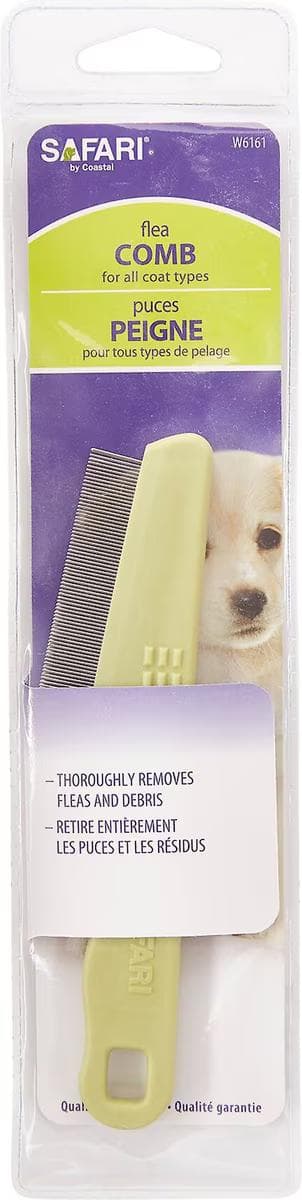
A flea comb is the other half of this measurement, and the two together tell you more than either alone. Comb the pet for two minutes over a white towel, working the base of the tail, the groin and behind the ears, then count what falls. You are counting two things: live adults, and flea dirt, the dark specks of digested blood that smear rust red when you wet them. Trap counts measure the room. Flea comb counts measure the animal. If the room number falls but the pet number does not, the on-pet product is the weak link.
Log It Somewhere Boring
- Write the date and count on the back of the used pad, or in a note on your phone. Three weeks in, memory is unreliable and the trend is the only thing that matters.
What makes a monitoring protocol repeatable is holding the conditions steady, not the counting itself. Fix the room, the exact spot on the floor, the hours the trap runs, and whether the door is shut, then change nothing about that setup for the full six weeks. A pad close to saturation catches worse than a fresh one, so swap pads on a schedule rather than when they look bad. Record the nightly catch as a number, a date and a room every morning, and let the three-night average drive the decision rather than any single count. That is what turns a routine based on numbers into something you can act on: same conditions, same measurement, comparable results.
- Same room, same floor spot, same hours, door shut. Change one variable and the series breaks.
- Three-night averages only. Single nights swing with room temperature and where the pet slept.
- Log the date, the room and the count in one place. A remembered impression of a full pad is not a measurement.
- Replace the pad on a fixed schedule, because a saturated pad quietly under-reports.
- A flat average after two weeks of real treatment points to an untreated pet, a second room, or the yard.
Choosing a flea trap that is worth buying
Most flea traps for home use are the same device in different plastic, so the buying decision comes down to pad economics and light behavior rather than brand loyalty. The best flea trap for home monitoring is simply the one you will keep running for a month without resenting the refill cost.
What separates flea traps that work from the ones that annoy you:
- Pad size. A larger adhesive surface holds a longer count before it saturates and starts letting fleas walk off.
- Refill format. Check the price of flea trap refills before you buy the unit, not after. Some cheap traps use proprietary pads that cost more per month than the trap did.
- Intermittent light. Pulsing lamps outperform continuous ones in the published research, and a few consumer units now do this.
- A guard grid over the pad. This keeps curious paws, tails and toddler fingers off the adhesive.
- Cord length and a floor level plug, because a trap on a worktop is measuring nothing useful.
- Budget the rest of the kit while you are shopping. A tick removal kit costs less than one pack of trap refills, and the shaded ground producing fleas usually produces ticks too.
- Weigh six weeks of refill spend against the on-pet spend before you commit. A spot-on treatment your vet has signed off on covers roughly a month per dose, and that is the product actually shrinking the population the trap is counting.
On brands, the field is small. The common upright plug-in units use a replaceable sticky disc. The flat dome design that sits on the floor has been sold for decades and takes standard round refill pads. Both sit in the same price bracket, and honestly, either does the monitoring job.
Availability is easier than the search volume suggests. Flea traps Home Depot listings and the equivalent Lowes flea trap aisle both carry the mainstream plug in and disc styles alongside household flea sprays, and pet retailers and Amazon stock the same two or three units plus their refills. There is no premium tier here worth chasing.
Flea trap styles compared
| Style | Typical unit price | Refill cost | Best use |
|---|---|---|---|
| Upright plug in with sticky pad | $15 to $30 | $8 to $15 per pad pack | Nightly monitoring in one room |
| Flat disc with dome light | $15 to $25 | $10 to $18 per pad pack | Low profile placement under furniture |
| Homemade dish and lamp | Under $5 | None, change the water daily | A single night of quick evidence |
| Refill pads bought separately | Not applicable | $8 to $18 | Keeping a trap running for several weeks |
Prices move, so treat those as ranges rather than quotes. The number that actually matters is monthly refill spend, because a monitoring protocol runs for six weeks and a trap you stop refilling has stopped measuring anything.
A fair follow-up when people describe how traps work is whether running six of them would clear a house. It would not, and it helps to quantify why before you spend. A trap only samples the room it is in, and even inside that room it catches a fraction of the adults present, while adults are around 5 percent of the whole population. Multiply those two figures and the share of an infestation a single trap can physically remove is a rounding error, whether you run one unit or ten. Extra traps buy you coverage of extra rooms, which is a better measurement rather than a bigger dent. Put the same money into the products that reach the other 95 percent.
- One trap per room you genuinely want to measure. More rooms means better data, not more removal.
- Price the refills before you buy the unit. Six weeks of pads is the real cost of running the protocol.
- A saturated pad stops catching, so replace it on a schedule rather than when it looks full.
- Weigh six weeks of refills against a month of vet-recommended prevention. Only one of those shrinks the population.
- Judge a trap on how reliably it counts, not on how loaded the pad looks in the morning.
Why on-pet prevention still does the heavy lifting
Every environmental tool on this page, traps included, is a supporting act. Adult fleas feed on the pet, and a female begins laying within about 24 to 48 hours of her first blood meal, producing dozens of eggs a day that fall straight into the carpet. Until the animal itself is covered by an effective product, the household population keeps being restocked no matter how many pads you fill.
That product decision belongs with your veterinarian, not with a shelf label. Prescription and vet recommended options differ in speed of kill, residual length, tick coverage and suitability for pets with seizure histories, pregnant animals or young puppies and kittens. Our sister site WebVet has the vet reviewed walk through of getting fleas off a dog, and Petful covers the product comparison in safest flea treatment for dogs.
Never Put a Dog Flea Product on a Cat
- Canine spot-on products commonly contain permethrin at 45 to 65 percent, and cats metabolise it very poorly. Exposure causes severe muscle tremors, hypersensitivity to sound and touch, seizures and sometimes death, typically within 6 hours. Cats are also poisoned by grooming a dog that was treated hours earlier, so separate treated dogs from cats until the application is fully dry. If exposure happens, contact a veterinarian or a pet poison line immediately.
Treat the trap as your dashboard and the vet plan as the engine. The trap will tell you, in fleas per night, whether the engine is running.
The reason veterinary prevention is the primary control rather than one option among several is that it is the only measure acting where the eggs are made. Everything else on this page works on fleas that have already left the animal. A preventive on every pet in the home cuts egg production at source and keeps cutting it every day, with no further effort from you. That is a different category of intervention from a trap, a spray or a vacuum, and it is why it ranks first.
- Treat every dog and cat in the household on the same schedule. One untreated animal keeps restocking the carpet whatever the others are on.
- Ask your veterinarian which product suits each animal by species, weight, age and health history, and raise any seizure history, pregnancy or nursing before you start.
- Keep it unbroken. A gap between doses is the most common reason a household that was nearly clear ends up back at week one.
- Never use a dog product on a cat. Some canine flea products contain permethrin, which is highly toxic to cats and can be fatal.
- If a pet keeps scratching despite good prevention, that is a veterinary conversation rather than a reason to buy more traps, because flea allergy needs treating in its own right.
Sprays that actually treat the house
A flea spray is the tool that does what a trap cannot: kill on contact and leave a residual film with an insect growth regulator that stops eggs and larvae from ever becoming adults. If your searches are for flea spray for house treatment or a flea killer for house use, that is the right instinct and the wrong page. Our guide to flea spray for the house covers product selection, coverage rates and the re-entry and drying times that keep pets and children safe.
Flea bombs and foggers
Flea bombs and total release foggers are the most requested and least effective option in this category, because the aerosol settles on horizontal surfaces and never penetrates the carpet pile and furniture gaps where larvae and pupae actually live. If you are weighing up a flea fogger, read the effectiveness verdict in our guide to flea foggers and bombs before you buy one and evacuate the house for four hours.
Treating the carpet where fleas live
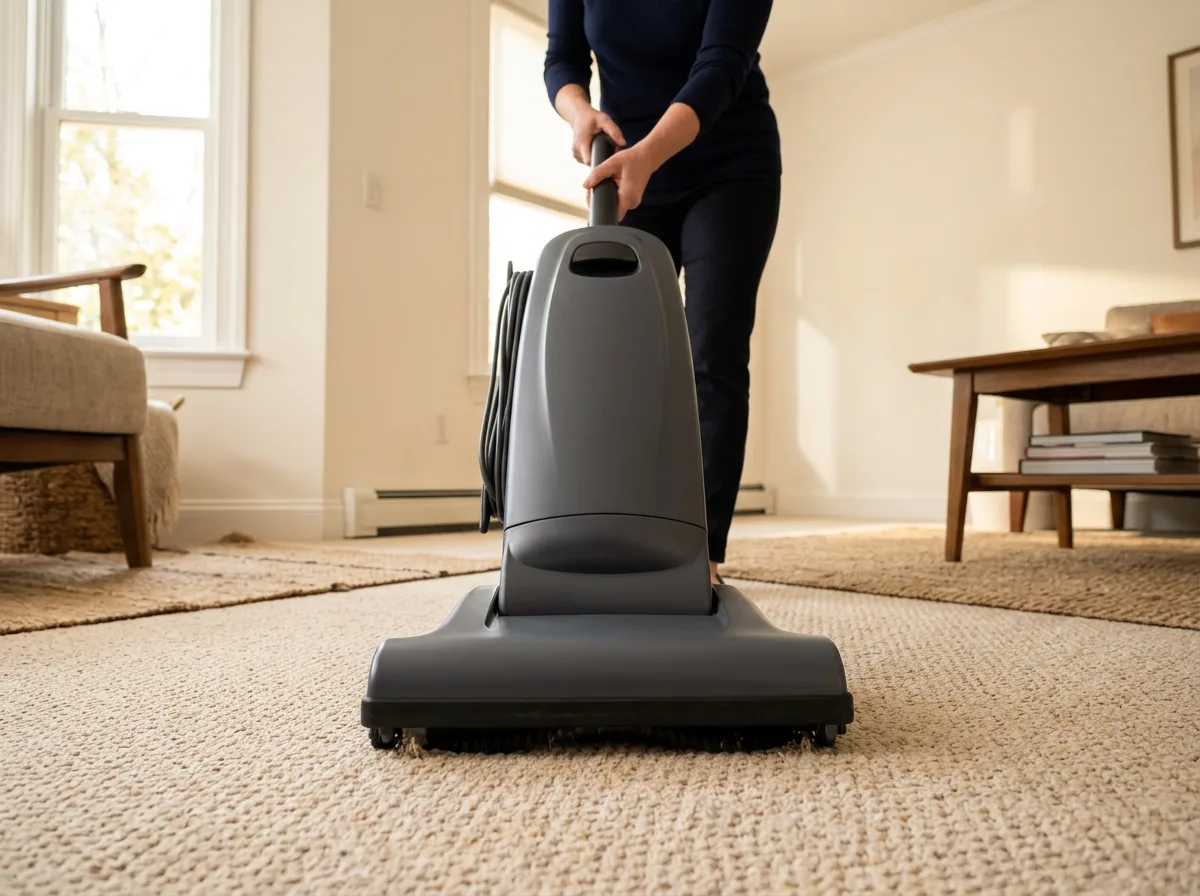
Carpet is the reservoir, and flea carpet treatment is where the eggs, larvae and pupae are physically located. Vacuuming plus an insect growth regulator does the work here, worked into pile, edges, skirting boards and under furniture. Bedding matters too, which is why people searching for flea eggs on bed sheets find real specks: eggs roll off a sleeping pet onto whatever it sleeps on. The full step by step protocol lives in our pillar guide, how to get rid of fleas in the house.
Outdoor traps and yard treatment
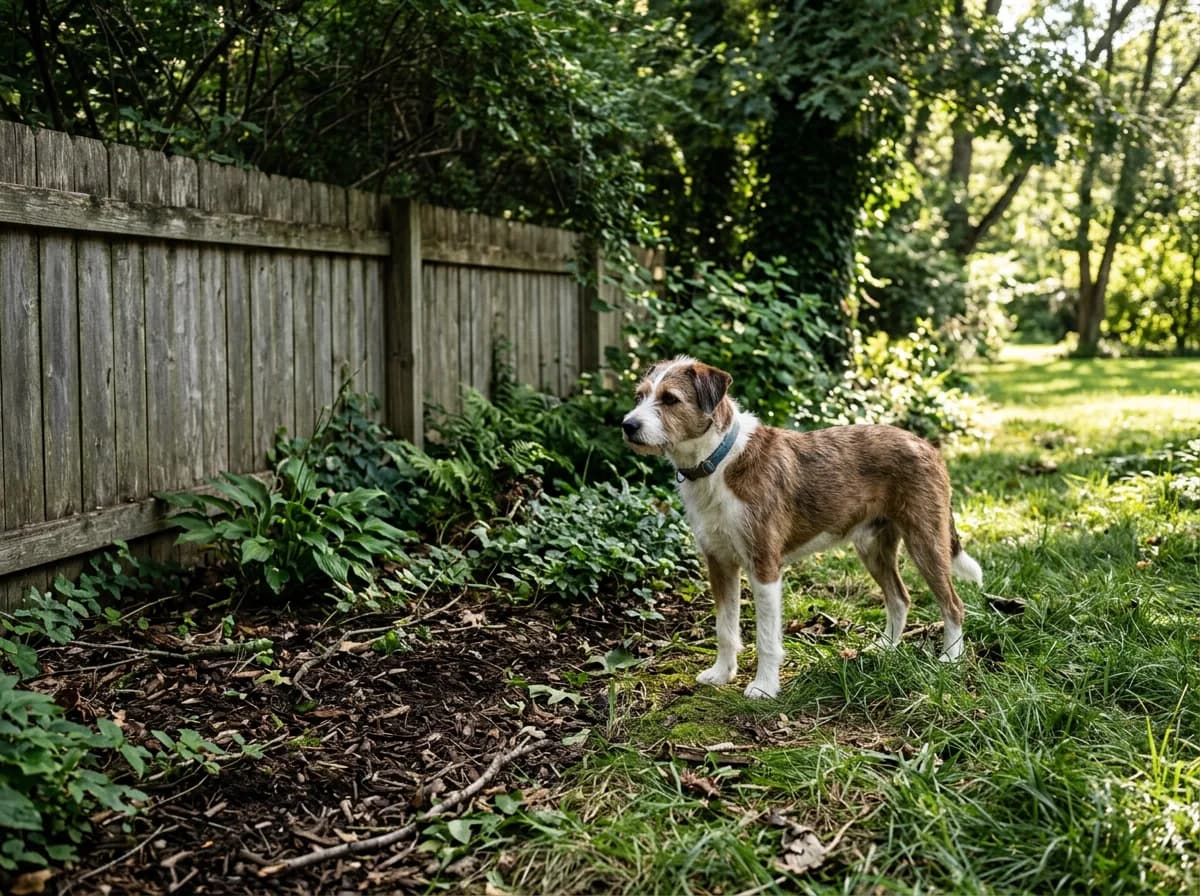
A flea trap outdoor listing is a category error, because a lamp cannot compete with the sky and rain destroys the adhesive pad within a day. Outdoors, control means treating the shaded, humid ground where larvae survive: under decking, along fence lines, and beneath shrubs where wildlife rests. For product choice and application, see our guide to yard flea treatment if you are shopping for a flea and tick spray for yard use, plus WebVet’s vet-reviewed house and yard flea protocol.
Home remedies and what fleas actually hate
Traps sit next to a shelf of DIY options, and the evidence behind them varies enormously. If you are researching a natural flea repellent, wondering does vinegar kill fleas, or working through home remedies for fleas on dogs, the honest answers with safety caveats are in our guide to home remedies for fleas. Powdered products deserve their own read, because grade matters for lung safety: see diatomaceous earth for fleas, and never use filter grade or pool grade product around animals, since heat treatment converts it to roughly 60 percent crystalline silica.
Flea trap questions, answered
Frequently Asked Questions
Only on the adults that emerge from the carpet and travel toward the light. The eggs, larvae and pupae inside the carpet pile are untouched, and larvae actively burrow away from light, so a trap cannot draw them out. Carpet needs vacuuming plus a product containing an insect growth regulator.
Run it continuously for at least six weeks. That covers the pupal emergence window, which can stretch well beyond a month. Change the sticky pad when it looks crowded or dusty, because a saturated pad stops holding fleas and gives you a falsely low count.
Commercial plug in units are low risk if you choose one with a guard grid over the adhesive pad and keep the cord out of chewing reach. The adhesive is not toxic, but a pad stuck to fur or a paw is unpleasant to remove. The homemade dish and lamp version needs more care because of the open water and the lamp.
No. Flea eggs are laid on the pet and roll off into carpet and bedding within hours. They are smooth, dry and immobile, so nothing draws them toward a light and nothing carries them onto a pad. A trap captures adult fleas only.
On the floor, in the room where the pet sleeps, about a meter from the pet’s own bed, in a room you can darken overnight. That is where egg fall is heaviest and where newly emerged adults are hunting. Keep it away from draughty doorways, which disperse the heat cue.
Roughly every two to four weeks in an active infestation, or sooner once the pad is visibly crowded with fleas and dust. Budget for the refills before you buy, because a monitoring run lasts six weeks and a trap without pads has stopped measuring anything.
They catch other small crawling and jumping insects that respond to light, which is why people mistake the catch for a bigger flea problem than they have. Check the pad with a magnifier: a flea is dark, laterally flattened and about 1 to 3 millimetres long, with obvious back legs.

BVMS, MRCVS
Dr. Pippa Elliott, BVMS, MRCVS, is a veterinarian with nearly 30 years of experience in companion animal practice. Dr. Elliott earned her Bachelor of Veterinary Medicine and Surgery from the University of Glasgow. She was also designated a Member of the Royal College of Veterinary Surgeons. Married with 2 grown-up kids, Dr. Elliott has a naughty Puggle named Poggle, 3 cats and a bearded dragon.