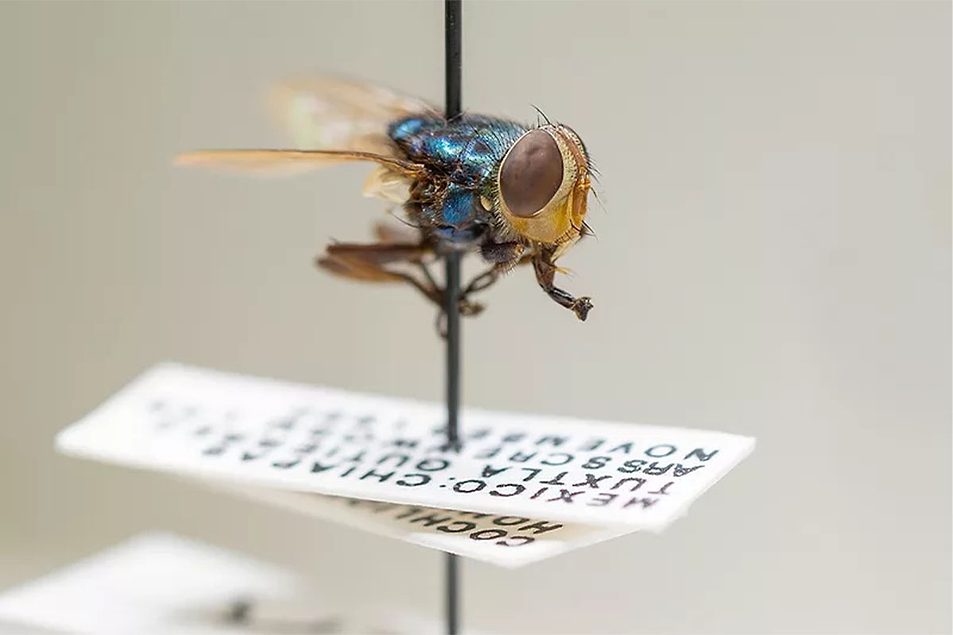


VIENNA — The Food and Agriculture Organization of the United Nations (FAO) and the International Atomic Energy Agency (IAEA) announced an investment of $1 million to fund a five-year project for tackling the reemergence of New World screwworm (NWS) in the Americas.
The agencies said sterile fly production is currently insufficient to halt the spread of the pest. The newly funded project is intended to help UN member states strengthen surveillance and suppression measures required to monitor and control NWS. These efforts include targeted insecticide application, livestock treatment and enhanced monitoring, complementing the existing sterile insect technique (SIT).
Responding to the current outbreak could require up to 600 million sterile flies per week, according to FAO and IAEA. However, emergency response efforts fall short of the ability to produce such a quantity.
The only operational facility producing sterile NWS flies is the US-Panama commission (COPEG) in Panama, which produces approximately 100 million sterile flies per week. Expanded capacity slated in Metapa de Dominguez, Mexico, and Mission, Texas, could add up to 400 million flies per week in the coming years.
“To meet the needs of greater numbers of sterile flies, the project will bring together expertise to improve the cost-effectiveness of mass-rearing, developing and managing screwworm strains, enhancing handling and release methods, and studying mating behavior and competitiveness,” said Rui Cardoso Pereira, head of the Insect Pest Control Section.
Last week, IAEA launched the Coordinated Research Project (CRP) to help countries use SIT capacity to halt the parasitic pest’s re-invasion. The new CRP will bring together leading experts from over 20 affected countries, including those in South America, to strengthen control methods and research.
“The New World screwworm outbreak in Central America, Mexico and the United States is a timely warning that pests and diseases never respect territories, and addressing this re-emerged threat requires vigilance, international cooperation, and sustained coherent management in monitoring, science and innovation,” said QU Dongyu, FAO director-general. “Through the Joint FAO/IAEA Centre and under the new Coordinated Research Project, we are strengthening proven tools, such as the sterile insect technique, which has successfully eradicated this pest in the past, including in Libya, to help countries protect livelihoods and build more resilient agrifood systems.”
On June 3, the United States announced its first livestock case of NWS in more than 40 years. As of June 25, the country has since seen a total of 20 confirmed cases of NWS, the majority occurring in Texas, with one reported in New Mexico, according to the US Department of Agriculture.
FAO and IAEA estimated that the previous eradication of NWS generated annual benefits of $1.3 billion for livestock producers in the United States, Mexico and Central America.
“The return of New World screwworm is already causing serious damage in the region, threatening animals, livelihoods and economies,” said Rafael Mariano Grossi, IAEA director general. “Through nuclear science and technology, and by coordinating with a new generation of researchers, the IAEA is helping countries strengthen the tools they need to detect, suppress and ultimately control this devastating pest.”
Stay up to date on the latest pet food processing industry headlines on our News page.