
Petful is reader supported. As an affiliate of platforms like Amazon and Chewy, we may earn a commission when you buy through links on this page. There is no extra cost to you.
best food for miniature schnauzers is a decision about nutritional adequacy, life stage, calories, body condition, medical history, and the dog’s response. A breed picture on the bag, a fashionable ingredient, or one guaranteed-analysis number cannot make that decision alone.

Don’t Guess When It Comes To Your Pet’s Care
Sign up for expert-backed reviews and safety alerts all in one place.
How to choose food for a Miniature Schnauzer
- 1Start with a complete and balanced food for the correct life stage.
- 2Measure calories and count treats instead of relying on a breed feeding chart.
- 3Use body and muscle condition to adjust the plan.
- 4Ask the veterinarian before using fat restriction or a therapeutic diet.
- 5Adjust the plan from individual body condition.
Five-question Miniature Schnauzer food screen
| Question | Evidence to check | Decision |
|---|---|---|
| Complete? | Adequacy statement | Reject incomplete main diets |
| Right life stage? | Growth or adult maintenance | Match the dog |
| Transparent maker? | Expertise and quality control | Ask specific questions |
| Measurable? | Calories per unit | Calculate a portion |
| Working? | Condition, stool, appetite | Review with evidence Record calories per serving. |
Begin with the nutritional adequacy statement described in the FDA complete and balanced guidance. Then check life stage, calorie content, manufacturer contact information, feeding practicality, and whether the dog maintains healthy weight, muscle, stool, appetite, skin, and energy.
- Ingredient order cannot establish overall nutrient quality.
- Guaranteed analysis lists minimums and maximums, not the full typical nutrient profile.
- Calories per cup, can, pouch, or kilogram are necessary for portion calculations.
- A transparent manufacturer should answer detailed nutrition and quality-control questions.
How to choose food for a Miniature Schnauzer: practical checks
- Photograph the current label.
- Write the food’s intended role in one sentence.
- Calculate daily calories before converting to volume.
- Set a date to review weight and response.
The WSAVA nutrition guidelines provide useful questions for selecting a pet food without endorsing a brand list.
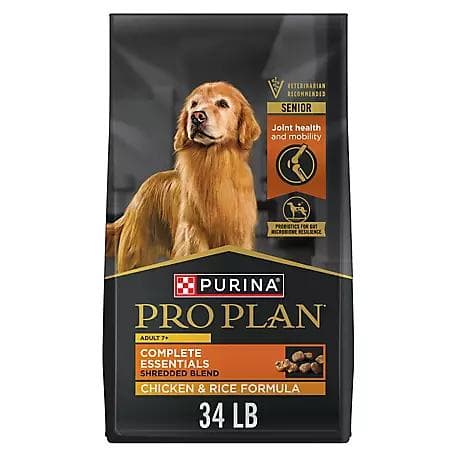
From Chewy
A vet-backed adult kibble with full WSAVA alignment and AAFCO feeding trials. Budget-friendly, though corn gluten and soybean meal sit in the top ingredients.
Petful may earn a commission when you click through to Chewy, at no extra cost to you.
If the label, life stage, calorie target, and veterinary plan align, Purina Pro Plan Adult Chicken and Rice Formula is one current adult formula to compare, with any transition made gradually. If the label, life stage, calorie target, and veterinary plan align, Hill’s Science Diet Adult Chicken and Barley Recipe is one current adult formula to compare, with any transition made gradually. If the label, life stage, calorie target, and veterinary plan align, Wellness Complete Health Adult Chicken and Oatmeal is one current adult formula to compare, with any transition made gradually.
A label-to-bowl decision process
The best food for Miniature Schnauzers starts with a complete and balanced diet for the correct life stage, not a breed picture on the bag. Read the nutritional adequacy statement, identify the AAFCO nutrient profile or feeding-test basis, note calories per serving, and confirm the manufacturer’s quality-control and nutrition expertise. Then measure the portion and evaluate the dog’s individual body condition, muscle condition, stool quality, appetite, and weight trend. This label-to-bowl decision process separates general healthy-dog selection from a diet chosen for a diagnosed condition.
The best food for a Miniature Schnauzer is the diet that meets those general standards and works for the individual dog. A veterinary nutritionist can help when disease, repeated intolerance, or a home-prepared diet makes the decision more complex. A diagnosed condition may require a therapeutic diet with different goals, so a general healthy-dog recommendation should not be presented as a substitute for the veterinary plan.
What breed labels can and cannot tell you
A small-breed formula may offer smaller pieces or a different calorie density, but the label does not prove it fits this dog. A Miniature Schnauzer does not require food with the breed name on the package.
- Kibble size can affect pickup and chewing comfort.
- Dental pain should be assessed rather than solved by changing kibble shape alone.
- Calorie density can vary widely between similar-looking foods.
- Breed risk is not a diagnosis.
What breed labels can and cannot tell you: apply the plan
- Compare adequacy and calories first.
- Watch the dog eat without forcing a texture.
- Ask about dental discomfort when chewing changes.
- Choose a package size that can be stored safely.
Marketing categories can narrow a shelf, but they should not outrank life stage, health, measured intake, and the results seen in the individual dog.
How to evaluate breed-formula marketing
A product such as Royal Canin Miniature Schnauzer can be evaluated with the same evidence screen as any other diet: life-stage adequacy, calorie density, manufacturer expertise, feeding instructions, and the dog’s response. The words Royal Canin Miniature Schnauzer or a breed image do not independently prove that the food is the best choice. Compare the complete label and the dog’s needs rather than treating the front-panel breed name as a clinical recommendation.
Food for Miniature Schnauzer puppies
Puppies need food labeled for growth, and the feeding plan should support steady development without promoting excess condition. The breeder’s or rescue’s food can be continued briefly while the veterinarian reviews the label and puppy.
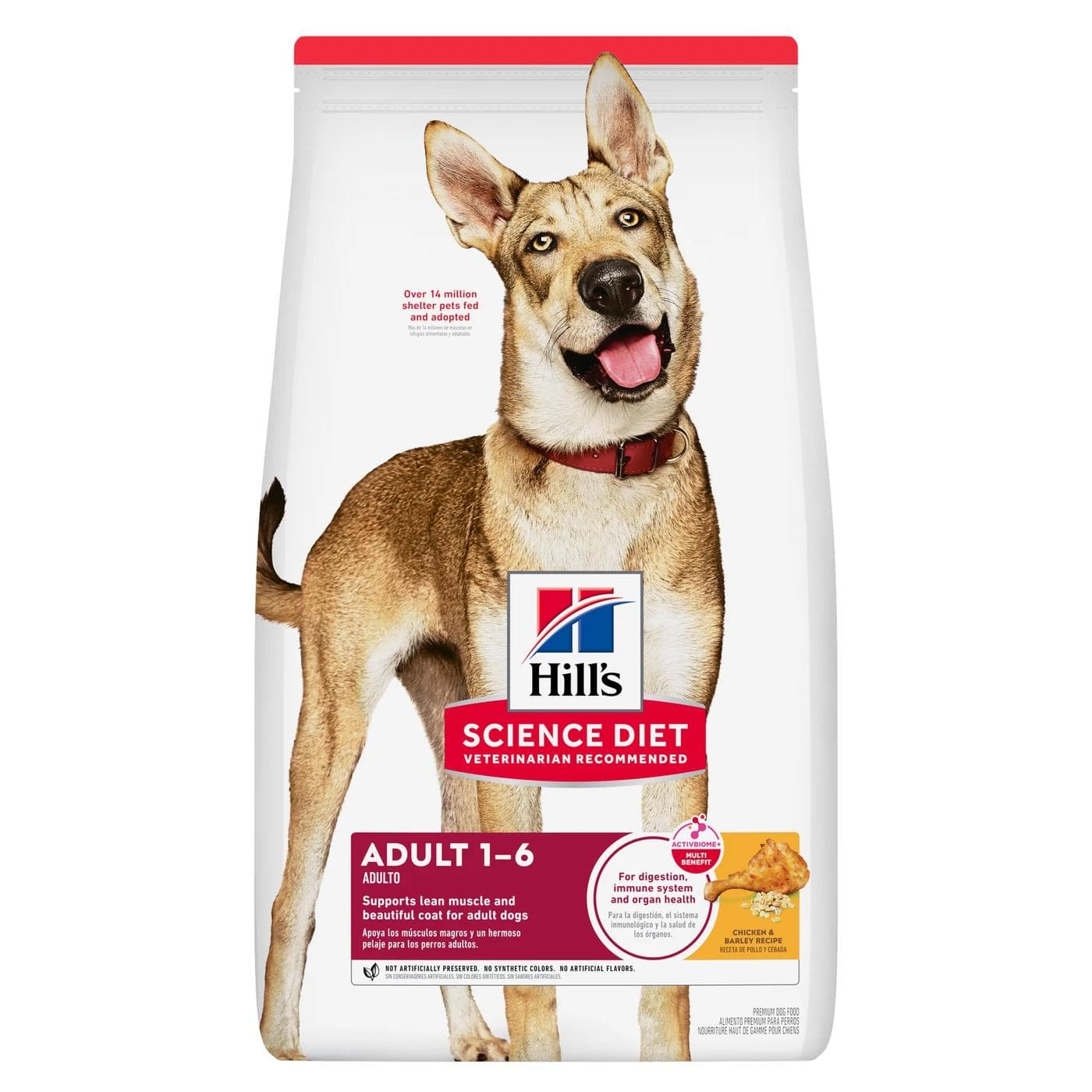
From Chewy
A vet-channel adult-maintenance kibble backed by AAFCO feeding trials. Leaner protein and fat than many competitors at a comparable price.
Petful may earn a commission when you click through to Chewy, at no extra cost to you.
- Growth adequacy should be explicit on the label.
- Puppy portions change as weight and calorie need change.
- Training treats can quietly displace a meaningful share of complete food.
- Vomiting, diarrhea, poor appetite, or abnormal growth needs clinical evaluation.
Food for Miniature Schnauzer puppies: questions to answer
- Measure a full day’s food.
- Use some kibble for training.
- Record weekly weight during rapid growth.
- Change foods gradually when the puppy is stable.
Do not add calcium, vitamins, or minerals to a complete puppy diet without a formulated reason. More of an essential nutrient is not automatically safer.
If the label, life stage, calorie target, and veterinary plan align, Purina ONE Chicken and Rice Formula is one current adult formula to compare, with any transition made gradually. If the label, life stage, calorie target, and veterinary plan align, Blue Buffalo Life Protection Formula is one current adult formula to compare, with any transition made gradually. If fast eating is a real issue, the Outward Hound small slow-feeder bowl is one format to try with a measured portion while watching comfort, frustration, and muzzle access.
When fat level needs veterinary guidance

warning
- Fat level is a clinical decision | Breed association does not create one safe percentage for every dog. Use symptoms, history, fasting laboratory context, diagnosis, and veterinary follow-up. Review fasting triglycerides and pancreatitis history.
Miniature Schnauzers are discussed in relation to hypertriglyceridemia and pancreatitis, but the evidence does not justify one universal fat cutoff. A small case-control triglyceride study included 17 dogs with a history of pancreatitis and 34 controls and reported an association, not proof that triglycerides caused every case.
- A breed association is not an individual diagnosis.
- Symptoms, medication, fasting status, laboratory method, and medical history affect interpretation.
- Therapeutic low-fat diets are selected for clinical goals.
- Randomly restricting fat can unbalance a home-prepared plan or obscure the real problem.
When fat level needs veterinary guidance: practical checks
- Ask whether fasting blood work is indicated.
- Bring the exact food and treat list.
- Follow the prescribed product and amount when treatment is needed.
- Schedule the recommended recheck rather than changing several factors at once.
Seek prompt veterinary care for repeated vomiting, marked abdominal pain, collapse, weakness, or rapid deterioration. Online food advice cannot determine the cause.

From JustFoodForDogs
Fresh, human-grade meals made from vet-formulated recipes and 100% human-grade ingredients.
Check current price →
Petful may earn a commission when you click through to JustFoodForDogs, at no extra cost to you.
Fat tolerance is an individual veterinary decision
Miniature Schnauzers are discussed in veterinary literature in connection with hypertriglyceridemia, but that association does not create one safe fat percentage for every dog. Fasting triglycerides, pancreatitis history, current symptoms, medications, body condition, and the full laboratory picture belong in a veterinary decision. Do not start a severe fat restriction from breed name alone or assume that a food described as low fat is appropriate for a specific diagnosis.
Repeated vomiting, abdominal discomfort, reduced appetite, marked lethargy, or dehydration warrants prompt veterinary advice. A dog with a prior pancreatitis history may need a carefully defined plan and follow-up. The useful question is not whether one ingredient is universally forbidden, but whether the entire diet, portion, treats, and extras match the dog’s documented medical and calorie needs.
Portions, treats, and body condition
The AAHA nutrition and weight guidelines emphasize more than scale weight. Feel ribs, look for a waist, assess muscle over the spine and limbs, and adjust calories with the veterinary team.
- A heavy coat can hide a changing outline.
- Dental chews, toppers, table food, and pill pockets count.
- The package feeding range is a starting point.
- Neutering, age, activity, illness, and temperature can change energy needs.
Portions, treats, and body condition: apply the plan
- Weigh food in grams for repeatability.
- Keep a three-day food diary.
- Photograph the body from above and the side.
- Make small measured adjustments and recheck.
Do not chase a breed-average weight if the dog’s frame and body condition tell a different story. Unexplained loss or gain deserves a medical review.
Adjust portions from measured evidence
Portion adjustment begins with calories per serving and the amount actually fed, including treats, chews, table food, and training rewards. Recheck the miniature schnauzer size and weight trend on the same scale, but do not treat a miniature schnauzer weight chart as a body-condition diagnosis. Two dogs at the same weight can have different frames and muscle condition. Make small measured changes, hold other variables steady, and review the result before changing again.
For the source and full decision framework, see the Miniature Schnauzer size and weight guide.

Deboned chicken and whole grains with guaranteed probiotics, taurine, and omegas. The sensible middle of the premium aisle for everyday adult dogs.
Petful may earn a commission when you click through to Chewy, at no extra cost to you.
Meal timing and portions
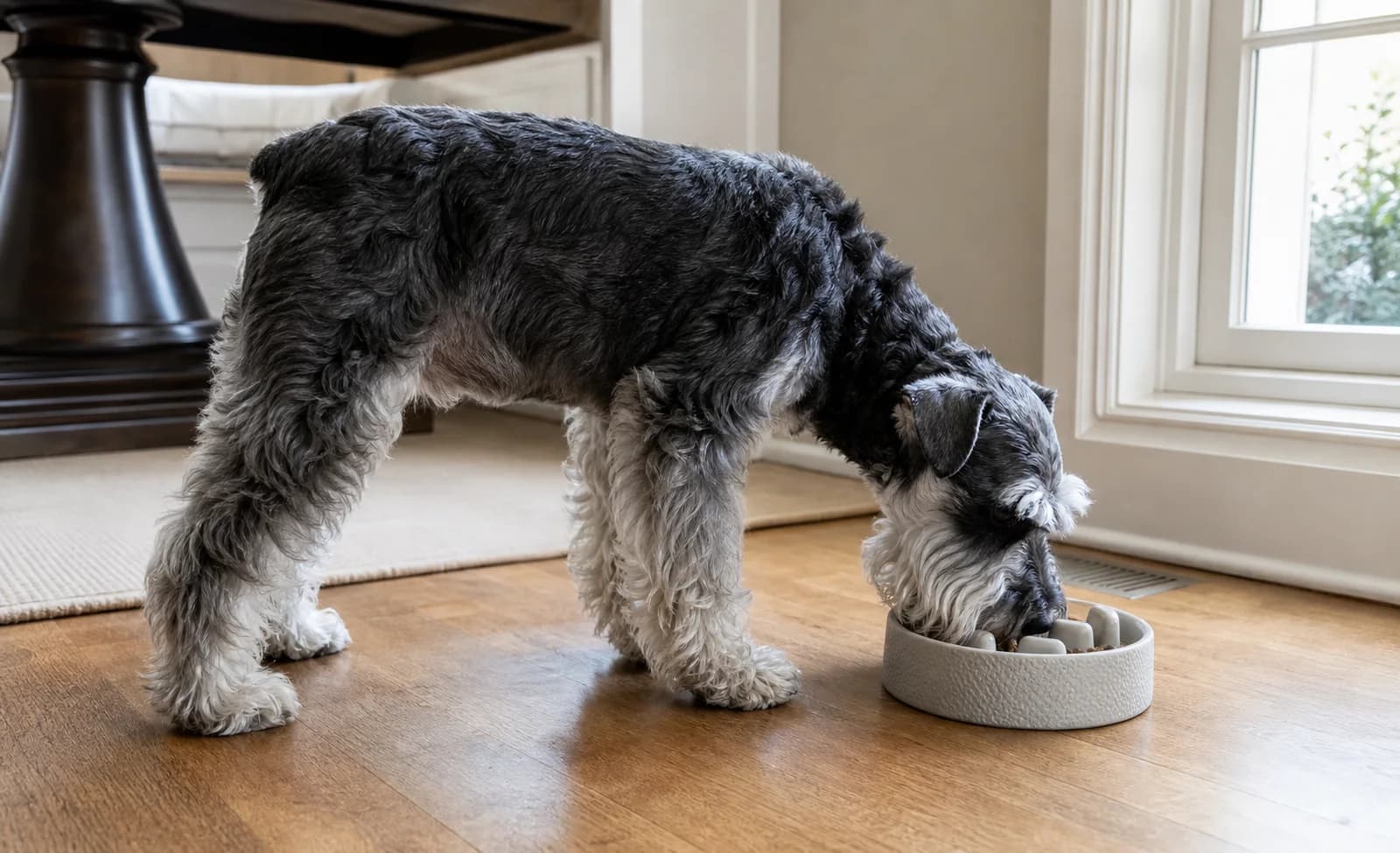
Meal timing should fit the dog’s medical needs, appetite, household schedule, and training plan. Splitting a daily allowance can improve routine and make it easier to reserve calories for enrichment.
- One daily total matters more than the size of the scoop.
- Free feeding makes intake harder to measure.
- Slow feeders must be large enough and supervised.
- Fresh water should remain available unless a veterinarian directs otherwise for a procedure. The Petlibro stainless-steel fountain is one fresh-water format to compare for capacity, cleaning access, filter cost, noise, and the dog’s actual drinking preference.
Meal timing and portions: questions to answer
- Premeasure the day into one container.
- Subtract training food before filling bowls.
- Wash bowls and feeding tools.
- Record refusal, vomiting, and stool change.
A dog that suddenly refuses food, seems painful, repeatedly vomits, or becomes weak should not be managed as a picky eater without veterinary advice.
How to switch foods
Food transition record
| Stage | What to record | When to call |
|---|---|---|
| Baseline | Food, amount, weight, stool | Existing illness or poor appetite |
| Transition | Exact proportions and extras | Repeated vomiting or worsening signs |
| Stable feeding | Measured intake and response | Persistent change |
| Review | Goal, result, next step | No improvement or weight concern Track stool quality during a gradual transition. |
A gradual transition is often easier for a stable dog, but the veterinarian may give different instructions for disease, food reactions, or urgent diet changes. Keep the total calories similar while changing proportions.
- Transition speed should respond to the dog, not a rigid internet schedule.
- New treats introduced at the same time confuse the result.
- Stool changes should be recorded with exact proportions.
- A true elimination trial has stricter rules than an ordinary switch.
How to switch foods: practical checks
- Save the old and new labels.
- Measure both foods.
- Change one factor at a time.
- Contact the clinic when signs are significant or persistent.
Do not continue feeding a food that appears spoiled, has a damaged package, or differs unexpectedly from the product used in the calculation.
Snack choices and dental chews
Food questions become clearer when the intended job is stated first. A snack, dental chew, topper, complete meal, and therapeutic food are different tools and should not be judged by the same standard. The Jasper finger toothbrush is one gradual brushing option to discuss with a veterinarian; dental chews supplement rather than replace an appropriate home-care routine.
- Snacks should be small enough for the dog’s calorie budget.
- Hard chews can fracture teeth.
- Human foods can be toxic, salty, fatty, or nutritionally disruptive.
- A reward can be part of the measured complete diet.
Snack choices and dental chews: apply the plan
- Choose low-calorie training pieces.
- Check every chew for size and supervision needs.
- Keep a written unsafe-food list.
- Ask the clinic which treats fit a therapeutic plan.
If a snack causes vomiting, diarrhea, itching, pain, or appetite change, stop using it and seek veterinary guidance appropriate to the severity.
Use the page that owns the next decision:
Miniature Schnauzer food FAQs
Frequently Asked Questions
What are the best snacks for Miniature Schnauzers? Use small portions of the dog’s measured complete food or veterinarian-approved treats that fit the calorie and medical plan. Count every snack within the daily portion and watch individual body condition. A treat that suits a healthy dog may not suit a dog with pancreatitis history, hypertriglyceridemia, food intolerance, or a therapeutic diet, so ask the veterinary team when health history changes the choice.
What foods should a schnauzer avoid? Keep known toxic foods such as chocolate, grapes, raisins, xylitol, onions, and garlic out of reach, and avoid unplanned high-fat table scraps. The larger decision is individual: a dog with pancreatitis history, fasting triglyceride concerns, or a prescribed therapeutic diet may have additional restrictions. Do not create a universal forbidden list from breed alone; use the complete diet and veterinary plan.
What is the best dry food for Miniature Schnauzers? Start with a complete and balanced life-stage diet, then compare the nutritional adequacy statement, calories per serving, manufacturer expertise, quality control, and the dog’s response. Breed marketing alone is not proof. The best dry food is one that supports healthy body and muscle condition without conflicting with a diagnosed condition or veterinary diet plan.
How many meals a day should a miniature schnauzer eat? Many healthy adults do well with a measured daily amount divided into two meals, while puppies often need more frequent age-appropriate feeding. Meal frequency can change with medical needs, medication, appetite, or the veterinary plan. The total calories, treats, individual body condition, and portion adjustment matter more than using the same schedule for every dog.
What is the best food to feed Miniature Schnauzers? Choose a complete and balanced diet for the correct life stage, verify the AAFCO nutrient profile or feeding-test basis, measure calories, and adjust from individual body condition and weight trend. Dogs with pancreatitis history, hypertriglyceridemia, or another diagnosed condition need veterinary guidance. A veterinary nutritionist can help when the case or diet design is complex.
A Miniature Schnauzer puppy should eat a complete and balanced growth diet in measured age-appropriate meals. Confirm the nutritional adequacy statement, calories per serving, feeding instructions, and expected adult size category. Track stool quality, appetite, weight, and body condition during a gradual transition. Do not add supplements or use an adult maintenance diet unless the veterinary team recommends it for the individual puppy.
Bottom line
The best food is complete for the life stage, practical to feed, measured to the individual, and reviewed through body condition and clinical evidence. The strongest package claim cannot replace that process.

BVMS, MRCVS
Dr. Pippa Elliott, BVMS, MRCVS, is a veterinarian with nearly 30 years of experience in companion animal practice. Dr. Elliott earned her Bachelor of Veterinary Medicine and Surgery from the University of Glasgow. She was also designated a Member of the Royal College of Veterinary Surgeons. Married with 2 grown-up kids, Dr. Elliott has a naughty Puggle named Poggle, 3 cats and a bearded dragon.