

Krill oil has quietly become one of the most talked-about dog supplements in recent years. More pet parents are adding it to their dogs’ daily routines to support healthy skin, comfortable joints, sharper cognition, and overall wellness. But what actually makes krill oil worth switching to? And how is it different from the fish oil you’re probably already familiar with?
Here are 10 solid reasons pet parents are making the switch. Each benefit comes back to one central fact: krill oil is built differently, absorbed more efficiently, and loaded with compounds you won’t find in standard fish oil. Whether your main goal is a shinier coat, less joint pain, or better brain health for an aging dog, there’s something on this list for your pup.

What Makes Krill Oil Different From Regular Fish Oil?
Krill is a tiny, shrimp-like crustacean that lives in cold ocean waters and forms one of the largest animal groups on the planet by mass. It’s actually one of the main food sources for whales, penguins, and seals. Krill oil is extracted from these small crustaceans and packed with omega-3 fatty acids, phospholipids, and a powerful antioxidant called astaxanthin.
What sets krill oil apart from standard fish oil isn’t just the source. It’s how the body uses it. The nutrients in krill oil are delivered in a form that’s easier to absorb, harder to oxidize, and gentler on your dog’s digestive system. That matters a lot when you’re paying for a supplement and expecting results.
10 Krill Oil Benefits for Dogs
#1: It Contains Less Mercury Than Salmon Oil
One of the most common concerns with fish-based supplements is heavy metal contamination. Larger fish like salmon accumulate mercury, PCBs, and other toxins because they eat smaller fish throughout their long lives. Krill sits much lower on the food chain. It feeds primarily on phytoplankton, which means it has far less opportunity to accumulate these contaminants.
For dogs that take omega-3 supplements daily, this matters. Krill oil gives you the same core nutrients without the same contamination risk. That’s especially relevant for small dogs, older dogs, and any dog already dealing with health challenges.
#2: It Has a Higher Absorption Rate Than Fish Oil
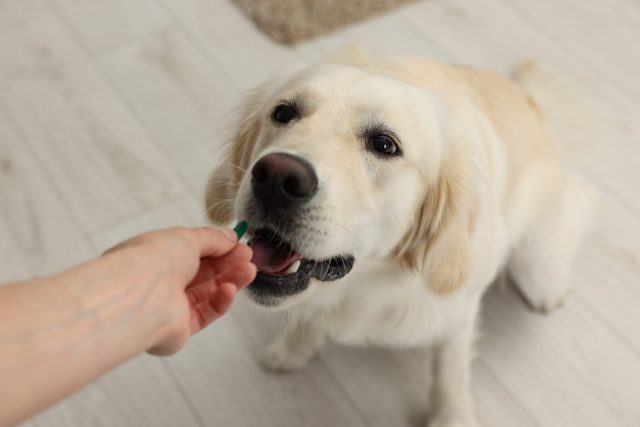
Standard fish oil delivers omega-3s as triglycerides. Your dog’s body has to work to break these down before they can be used. Krill oil is different. Its omega-3s come bound to phospholipids, which are the same type of molecules that make up your dog’s cell membranes. That structure lets the fatty acids pass directly through the intestinal wall and into the bloodstream much more efficiently.
The practical result? Your dog gets more benefit per dose. Studies have shown that phospholipid-bound omega-3s from krill have significantly higher bioavailability than triglyceride-based fish oil. You’re not just buying a supplement. You’re buying one that your dog can actually use.
#3: It Improves Skin Health and Coat Quality
If your dog has dull fur, flaky skin, or seems to shed excessively, omega-3 deficiency is often a factor. Krill oil’s fatty acids help rebuild the skin’s natural barrier, lock in moisture, and reduce the inflammation that causes itching and redness. Most owners notice a shinier coat within four to eight weeks of consistent supplementation.
Krill oil may also help dogs with chronic skin allergies. The anti-inflammatory effects of EPA and DHA can calm the overactive immune response that drives itching and hotspots. It won’t replace allergy treatment, but it’s a meaningful part of the support stack. Pairing it with the right dog allergy supplements can make a real difference.

#4: DHA Supports Brain Health in Aging Dogs
DHA (docosahexaenoic acid) is a critical structural component of brain and nerve tissue. In puppies, it’s essential for neurological development. In older dogs, it helps maintain cognitive sharpness and memory. Research has shown that DHA supplementation in senior dogs can help them stay more alert, retain learned behaviors, and reduce signs of cognitive dysfunction syndrome, the canine version of dementia.
Krill oil is an excellent source of DHA in a form the brain can use directly. If your dog is slowing down mentally or seems a bit lost sometimes, adding krill oil is one of the simpler, lower-risk things you can try before going to more aggressive interventions.
#5: Krill Is a More Sustainable Choice
Krill is among the most abundant species on the planet, with a global biomass estimated in the hundreds of millions of metric tons. It reproduces quickly and is harvested under strict international quotas in Antarctic waters. Compare that to many popular fish species, which face serious overfishing pressure. If sustainability matters to you, krill oil is a more defensible choice than salmon or anchovy oil.
Certified krill products also come with traceability standards that are hard to find in generic fish oil. You know where the krill came from and how it was harvested. That transparency is worth something.

#6: It’s More Concentrated Than Other Fish Oils
Because krill oil is so efficiently absorbed, your dog actually needs far less of it to get the same effect as fish oil. Roughly one-fifth the dose delivers comparable omega-3 levels. That changes the math on price significantly. A bottle of krill oil that looks expensive compared to a large jug of fish oil often ends up costing less per effective dose.
Most krill oil supplements for dogs can even be given every other day for maintenance, which stretches a bottle even further. Less mess, fewer doses, and better bioavailability. That’s a hard combination to beat.
#7: GLA Helps Reduce Joint Inflammation
Krill oil contains gamma-linolenic acid (GLA), an omega-6 fatty acid with notable anti-inflammatory properties. This isn’t the same as the pro-inflammatory omega-6s in most commercial dog foods. GLA specifically targets the inflammation pathways that drive joint pain, particularly in dogs with arthritis or hip dysplasia.
For active dogs or senior dogs showing stiffness after rest, the combination of EPA, DHA, and GLA in krill oil covers more anti-inflammatory ground than fish oil alone. GLA also helps with dry noses, cracked paw pads, and persistent skin dryness. It’s doing a lot of work in a small dose.

#8: It Supports Brain and Liver Function
Krill oil helps the body absorb carnitine more effectively. Carnitine is an amino acid-derived compound that plays a key role in mitochondrial energy production, specifically in the brain and liver. Without adequate carnitine, these organs can’t produce energy efficiently, which shows up as fatigue, sluggishness, or cognitive fog.
For dogs on high-fat diets, liver support is particularly worth thinking about. Krill oil’s phospholipid structure also contributes to cellular membrane health throughout the body, not just in the brain. Think of it as maintenance for the organs that do the heavy lifting.
#9: It Contains Natural Antioxidant Protection
Astaxanthin is the pigment that gives krill its reddish color, and it’s one of the most potent natural antioxidants known. It’s roughly 6,000 times stronger than vitamin C and about 800 times stronger than CoQ10 in some oxidative stress tests. That’s not marketing language. It’s the reason researchers have been studying astaxanthin seriously for decades.
In practical terms for your dog, astaxanthin protects the omega-3 fatty acids in krill oil from oxidizing before or after ingestion. This makes krill oil far more stable than standard fish oil, which goes rancid quickly once opened. Rancid fish oil doesn’t just smell bad. It actively generates the free radicals it’s supposed to be fighting.

#10: It Promotes Cardiovascular Health
EPA and DHA from krill oil have been shown to support heart health in several ways: helping lower triglyceride levels, supporting healthy blood pressure, and reducing markers of vascular inflammation. None of this means krill oil treats heart disease. But for dogs at risk, like large breeds, obese dogs, or older dogs, adding an omega-3 source with good bioavailability is a reasonable preventive measure most vets would support.
The astaxanthin component adds another layer of cardiovascular protection by reducing oxidative stress in blood vessel walls. It’s one of the few nutrients that supports both the circulatory system and the nervous system simultaneously.
If you’d like to see what krill oil can do for your dog, try our Honey Guard™ Allergy & Itch Omega 3-6-9 Powder. Made with Antarctic krill oil, it provides a rich source of omega-3 fatty acids, including EPA and DHA, to help support healthy skin, a shiny coat, and a normal inflammatory response. It’s an easy daily supplement for dogs dealing with seasonal allergies, itchy skin, or dull coats.
- Mercury risk: Krill: very low | Fish oil: moderate to high (larger fish)
- Absorption: Krill: phospholipid form, high bioavailability | Fish oil: triglyceride form, lower absorption
- Antioxidants: Krill: contains astaxanthin | Fish oil: minimal
- Stability: Krill: resists oxidation | Fish oil: goes rancid quickly
- Dose needed: Krill: small (about 1/5 the amount) | Fish oil: larger daily doses
- Sustainability: Krill: highly sustainable | Fish oil: variable by species

Frequently Asked Questions About Krill Oil for Dogs
1. Is krill oil safe for dogs?
Yes, krill oil is generally considered safe for dogs when given at appropriate doses. It’s well-tolerated by most dogs and has a lower contamination risk than many fish oils. If your dog takes blood thinners or other medications, check with your vet before adding any new supplement, since omega-3s can affect clotting at high doses.
2. How much krill oil should I give my dog?
Dosing varies by product and your dog’s weight. Because krill oil is more concentrated than fish oil, doses are typically much smaller. Most products recommend starting with a low dose and adjusting based on your dog’s response. Follow the product’s label and consult your vet if you’re unsure, especially for dogs with existing health conditions.
3. How is krill oil different from fish oil for dogs?
The main differences are absorption, stability, and composition. Krill oil delivers omega-3s in phospholipid form, which the body absorbs more efficiently than the triglyceride form in fish oil. Krill oil also contains astaxanthin, a powerful antioxidant that fish oil lacks. And krill naturally has far less mercury exposure due to its low position in the food chain.
4. How long before I see results from krill oil?
Most owners start noticing improvements in coat quality and skin health within four to eight weeks of consistent daily use. Joint and cognitive benefits may take a bit longer to become apparent. Like most nutritional supplements, krill oil works gradually rather than immediately. Consistent daily use is key.
5. Can krill oil help with dog allergies?
Krill oil can help reduce the skin inflammation that makes allergy symptoms worse, particularly itching, redness, and hotspots. It’s not a cure for allergies, but it’s a useful part of the support plan. For dogs with seasonal or environmental allergies, combining krill oil with other targeted supplements tends to work better than any single product alone. Learn more about how omega-3 supplements support dogs’ overall health.
6. What should I look for when buying krill oil for dogs?
Look for products that specify Antarctic krill, show third-party testing results, and carry a sustainability certification. Avoid products with unnecessary fillers. Powder, softgel, and liquid formats all work. The format matters less than the quality and concentration of the krill oil itself.
Small Source, Real Results for Your Dog
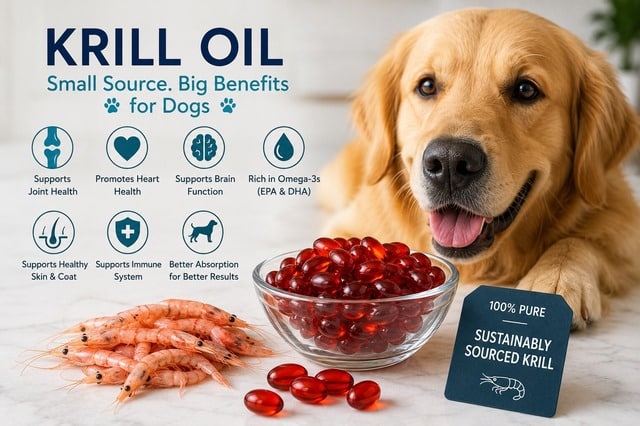
Krill oil punches well above its size. It’s cleaner than most fish oils, better absorbed, more stable, and covers more health systems in a single supplement. Whether you’re dealing with an itchy dog, a stiff senior, a dull coat, or just looking for solid long-term nutritional support, it’s worth trying.
Start with a quality product, give it six to eight weeks, and watch what changes. Most pet parents who switch don’t go back.
These statements have not been evaluated by the Food and Drug Administration. This product is not intended to diagnose, treat, cure, or prevent any disease. The information on this website is not intended to replace a one-on-one relationship with a qualified health care professional.