
Alyssa is the Chief Visionary Officer of Empowering Veterinary Teams. An inaugural Fellow of the Association of Veterinary Technician Educators and a certified veterinary technician with over 20 years of experience, Alyssa blends science, education, and empathy to elevate veterinary teams worldwide. She is a cofounder of nûrtûr and the nonprofit Project Sticker, the director of MentorVet Tech, and an advisor for blendVET; she has also presented internationally, coauthored 2 books, and contributed to numerous publications and podcasts. Through her VetUp online program, she helps veterinary professionals strengthen their skills, communication, and confidence. In 2025, Alyssa became the first credentialed veterinary technician to be nominated for the Feather in Her Cap HighFlyer Award at VMX. Above all, she is deeply committed to inclusivity and empowering every voice within veterinary medicine.
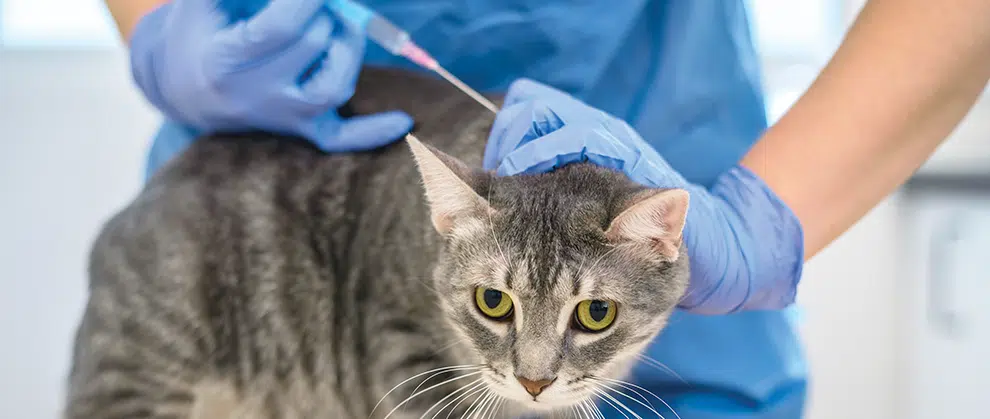
Vaccination remains a fundamental pillar of preventive veterinary medicine, safeguarding not only individual dogs and cats but also the broader communities they inhabit. Core vaccines—those recommended for every pet regardless of lifestyle or location—protect against highly contagious and potentially fatal diseases. By promoting herd immunity, vaccination reduces disease transmission, protects vulnerable populations, and supports global One Health goals linking human, animal, and environmental wellbeing. As climate change expands the reach of disease vectors, such as ticks, maintaining up-to-date vaccine protocols becomes increasingly essential. Veterinary professionals play a crucial role in educating and empowering clients, addressing concerns with empathy, and emphasizing shared responsibility.
Take-Home Points
- Core vaccines protect all pets from severe, widespread, and often fatal diseases and are recommended regardless of age, lifestyle, or geography.
- Herd immunity matters: High vaccination rates reduce disease spread and protect those who cannot be vaccinated.
- Vaccination is a One Health action, lowering zoonotic risk (e.g., rabies, leptospirosis), protecting wildlife, and reducing the need for antimicrobial treatments.
- Climate change is shifting disease patterns, expanding the range of disease vectors and increasing the prevalence of Lyme disease and leptospirosis in previously low-risk regions.
- Rabies vaccination is a public safety imperative; every vaccinated pet helps prevent a nearly 100% fatal disease in humans and animals.
- Client communication is essential: Empathy, evidence, and shared responsibility strengthen trust and support preventive care.
- Vaccines enable pets and people to live safely together, supporting healthy families and communities under the One Health umbrella.
Vaccination is a cornerstone of preventive veterinary medicine. Beyond protecting individual patients, vaccines safeguard communities, strengthen herd immunity, and reinforce the global One Health framework that connects animal, human, and environmental wellbeing.
Core Vaccines: A Foundation for Health
Core vaccines are those recommended for all dogs and cats, regardless of age, lifestyle, or geographic location, because they protect against severe, widespread, and often fatal diseases.
Core vaccines for dogs include1,2:
- Canine distemper virus (CDV)
- Canine adenovirus types 1 and 2 (CAV-1 and CAV-2)
- Canine parvovirus type 2 (CPV-2)
- Rabies virus
- Leptospirosis is now recognized as a core vaccine due to zoonotic risk and prevalence.
- Lyme disease (Borrelia burgdorferi infection) may be considered a core vaccine in endemic areas; however, it is not considered a core vaccine for all dogs.1,2
Core vaccines for cats are1,2:
- Feline panleukopenia virus (FPV)
- Feline calicivirus (FCV)
- Feline herpesvirus type 1 (FHV-1; rhinotracheitis)
- Rabies virus
- Feline leukemia virus (FeLV) for cats less than 1 year old with a continued high risk of exposure (i.e., outdoor or indoor/outdoor cats).2
These diseases share several key characteristics: they are highly contagious, cause significant morbidity and mortality, and often have zoonotic potential or implications for wildlife populations.
Vaccinating pets not only prevents individual illness but also limits the spread and persistence of these pathogens in the environment.
The Importance of Herd Immunity
Herd immunity is achieved when a sufficient proportion of a population is immune to a disease, either through vaccination or natural exposure, thereby reducing transmission risk for everyone, including those who cannot be vaccinated due to age, illness, or immunodeficiency.
In companion animal populations, maintaining high vaccine coverage is critical for preventing outbreaks of diseases like parvovirus or panleukopenia, which are highly contagious and can spread rapidly and devastate unprotected populations.
From a One Health perspective, herd immunity in animal populations also protects people. Leptospirosis, for instance, is a bacterial disease transmitted through the urine of infected animals and can cause serious illness in humans. Rabies remains nearly 100% fatal once clinical signs appear but is entirely preventable through vaccination. Every rabies vaccine administered to a pet contributes directly to public safety, reducing the global burden of this deadly zoonosis.3
Vaccines and the One Health Connection
The One Health concept recognizes that the health of humans, animals, and ecosystems is interdependent (BOX 1). Veterinary vaccination programs are a cornerstone of robust One Health initiatives.4 By controlling infectious diseases in companion animals, veterinary professionals:
- Prevent zoonotic transmission (e.g., rabies, leptospirosis)
- Protect wildlife reservoirs from spillover infections
- Reduce antimicrobial and antibacterial use by preventing disease outbreaks
- Enhance public trust in veterinary and medical collaboration
As climate change and the global movement of both animals and humans continue to shift the distribution of vector-borne and infectious diseases, vaccination remains among our most effective frontline defenses. Climate-driven expansion of tick habitats has increased Lyme disease risk in areas where these vectors previously could not survive, including parts of Canada. Ixodes scapularis ticks (deer ticks) become active at temperatures above roughly 7 °C (45 °F) and thrive in environments with humidity levels of 85% or higher; as warming trends create more suitable conditions, their range—and the incidence of Lyme disease—continues to grow. This trend, alongside the recent rise in leptospirosis and Lyme cases in regions once considered low risk, underscores the need for up-to-date vaccine protocols informed by current epidemiologic data.5
Box 1. A Personal Lens: Why This Matters
Vaccines allow my family—2-legged and 4-legged—to live together safely. They allow my kittens to grow; my senior cat to age gracefully; and my children to explore, cuddle, and care without the looming threat of preventable disease. This is the power of preventive medicine. This is One Health in real time.
A Collective Responsibility
Vaccines are not merely a medical intervention; they are an act of shared responsibility. Each vaccinated pet contributes to a healthier, safer community. Veterinary nurses play a crucial role in educating clients, addressing hesitancy with empathy and evidence, and advocating prevention as the foundation of lifelong wellness (CLIENT HANDOUT).
Ultimately, vaccination represents more than protection from disease. It is a commitment to connection, compassion, and collective health. By championing core vaccines, veterinary teams strengthen the invisible, yet powerful, web that links pets, people, and the planet under the One Health umbrella.