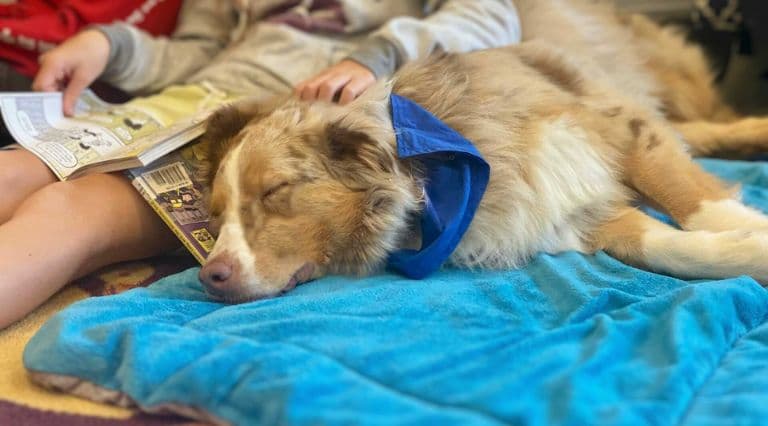

Therapy dogs play a vital role in providing comfort, emotional support, and mental health benefits to adults, children, and families. They visit personal homes, elder care facilities, hospitals, schools, and many other places in our communities. Behind every calm and confident therapy dog is a strong foundation of training.
While therapy dogs must learn thirteen core behaviors to pass their evaluation, this article highlights five essential therapy dog skills: settle on a mat, loose-leash walking, chin target, hand target, and leave it. These skills help ensure safety, predictability, and positive therapeutic experiences.
1. Settle on a Mat
A therapy dog often spends time in emotionally charged or overstimulating environments. The “settle on a mat” skill helps the dog maintain calm and self-regulation.
- Creates calm on cue during stressful moments and around vulnerable people
- Provides a familiar, secure resting place
2. Loose-Leash Walking
Navigating hallways with medical equipment, mobility aids, or groups of people requires controlled movement. A dog that pulls can compromise safety.
- Predictable movement protects both the dog and the people around them
- Reflects emotional stability and connection with the handler
3. Chin Target
A chin target—placing the chin gently in a hand or lap—creates a predictable, soothing interaction.
- Offers a predictable, intentional way for people to engage with the dog. Ideal for children, seniors, or anyone who may feel nervous around dogs
- Allows both the person and the dog to engage with choice and control
4. Hand Target
A hand target—touching the nose to a hand—is a versatile skill that promotes engagement and smooth handling.
- Allows handlers to reposition the dog without pulling on the leash
- Promotes agency for both the dog and the person
5. Leave It
Therapy environments can contain distracting or unsafe items such as dropped pills, tissues, food, or medical supplies. A reliable “leave it” is an essential safety skill.
- Prevents ingestion of harmful items
- Reinforces boundaries and appropriate behavior
- Keeps the dog focused and responsive to the handler
Therapy work is rooted in emotional presence, safety, and trust. These five core skills, along with the other eight, equip therapy dogs to navigate complex, unpredictable environments with confidence. When dogs are well-trained and responsive, they can deliver meaningful comfort and support to the individuals who benefit from their visits. You can learn more about teaching your dog the skills of therapy dog work and discover just how big a difference you and your dog can make together in our on-demand course, Therapy Dog Team Training.