
Petful is reader supported. As an affiliate of platforms like Amazon and Chewy, we may earn a commission when you buy through links on this page. There is no extra cost to you.
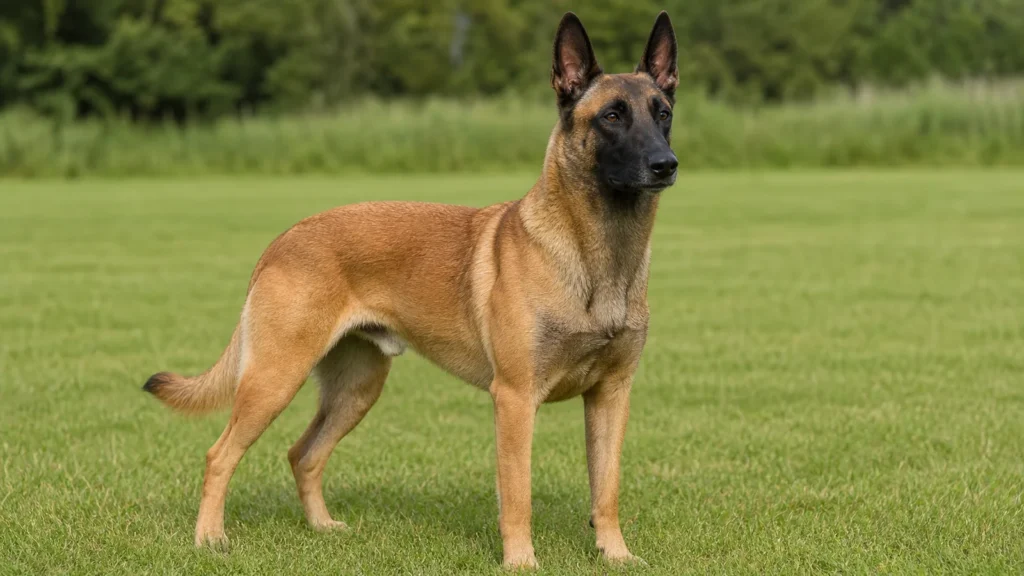
Belgian Malinois colors are easiest to understand when you separate three things that online listings often blur together: the base coat, the black overlay on individual hairs, and the black mask. A standards-typical Malinois is not simply “tan with a dark face.” Its short double coat falls within a fawn-to-mahogany range, black-tipped hairs create a shaded overlay, and the ears and mask appear black.
That concise summary is the useful starting point, but it is not the whole story. Light, camera settings, puppy coat, seasonal coat, and color labels chosen by a seller can all change what you think you see. American and international standards also describe the Malinois differently because the American Kennel Club treats it as a breed, while the FCI treats it as the short-haired variety of the Belgian Shepherd Dog.
This visual guide uses those official source boundaries to explain the accepted range, the markings that matter, and what labels such as blue, silver, white, brindle, or solid black can and cannot tell you. Color is one part of breed type. It is not a shortcut for judging ancestry, health, temperament, trainability, or working ability.

Don’t Guess When It Comes To Your Pet’s Care
Sign up for expert-backed reviews and safety alerts all in one place.
Standard Belgian Malinois colors
The standard Belgian Malinois color range is rich fawn to mahogany with a black overlay, a pronounced black mask, and black ears. The AKC registration page lists fawn and mahogany as the breed’s two colors and the black mask as its marking. The detailed American Belgian Malinois Club standard adds the important visual details: black tips on the hairs should create an overlay rather than patches or stripes, and the underside of the body, tail, and breeches can be a lighter fawn.
The FCI description is narrower in wording. It recognizes the Malinois variety as fawn with black overlay and a black mask. In both systems, the core visual idea is the same. Look for a warm base, dark hair tips that shade it, and a strongly pigmented face. That is the source boundary to keep in mind when a breeder website uses a much longer menu of colors.
- 1Standard Belgian Malinois colors run from fawn to mahogany
- 2A black mask and black ears are defining markings
- 3Black-tipped hairs should create an overlay, not large dark patches or true brindle stripes
- 4Color names alone cannot verify ancestry or quality
Belgian Malinois color terms at a glance
| Label | What it usually describes | Breed-standard or registration status |
|---|---|---|
| Fawn | A warm tan-to-golden base coat | Standard color when paired with the expected mask and overlay |
| Mahogany | A deeper reddish-brown base coat | Standard color when paired with the expected mask and overlay |
| Black overlay | Black tips on otherwise fawn or mahogany hairs | Expected shading, not a solid black blanket |
| Black mask | Dark pigmentation across the muzzle and face, with black ears | Standard marking and a strong breed feature |
| Blue, silver, gray, cream, or white | Diluted, pale, nonstandard, mixed-ancestry, or marketing labels | Not part of the standard Malinois color description |
| Brindle | Clearly striped dark pattern over a lighter base | Not the standard’s black-tipped overlay |
Petful may earn a commission when you click through to Chewy, at no extra cost to you.
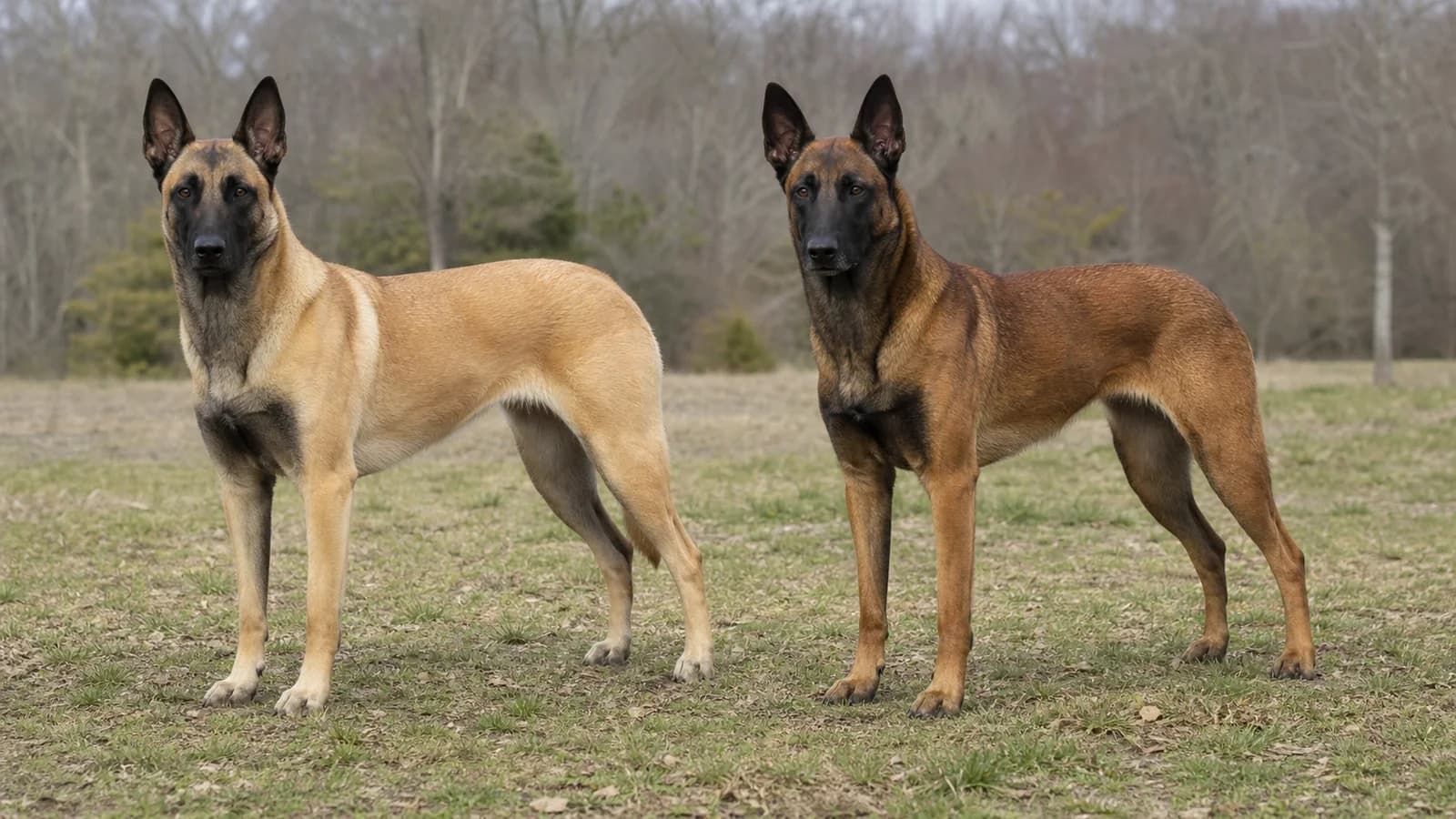
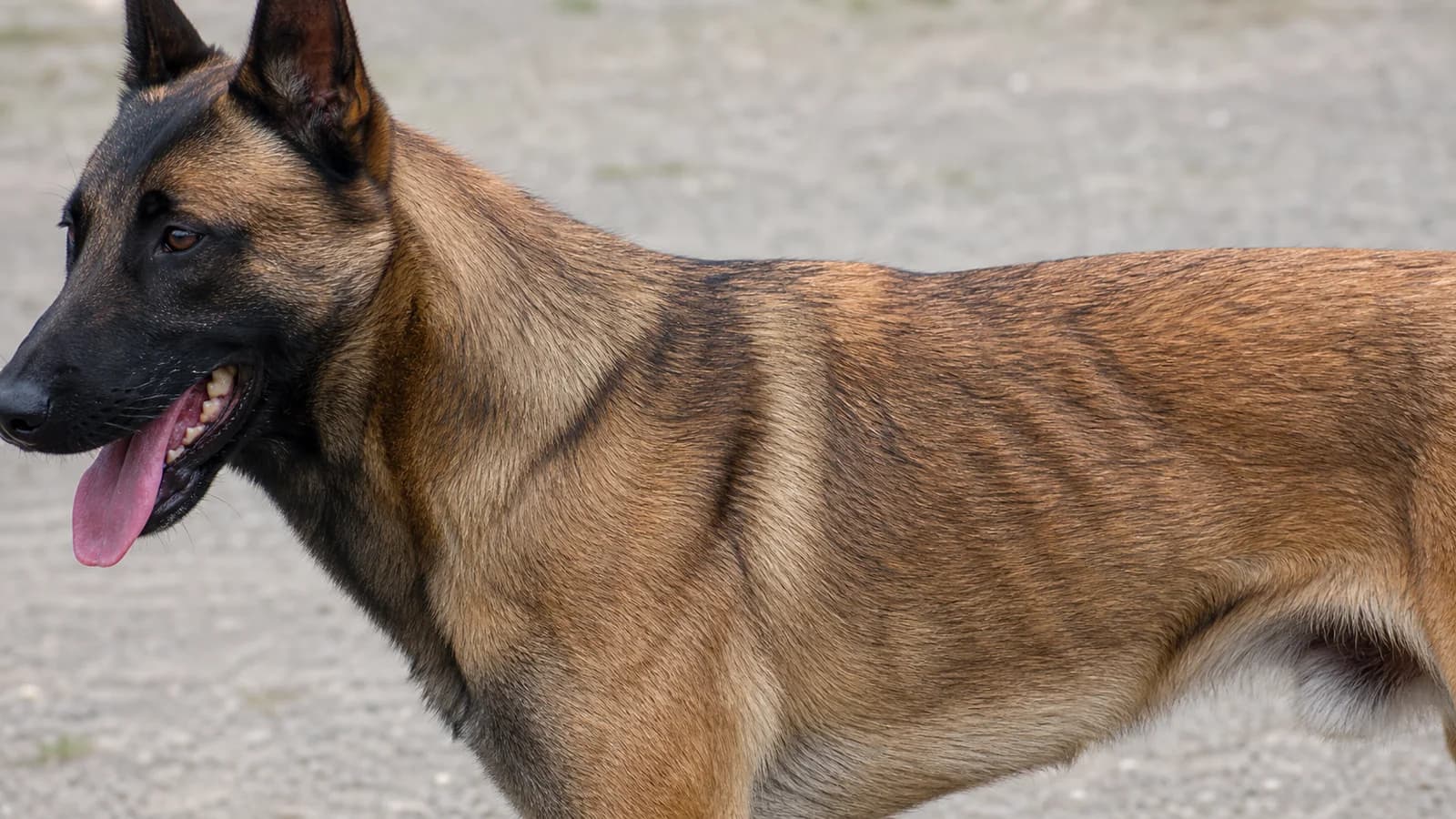
Use the side-by-side photograph for base shade and the close coat study for pattern. The first separates fawn from mahogany under one light source; the second separates black-tipped overlay from true striping.
Fawn Belgian Malinois
A fawn Belgian Malinois has a warm base coat that can appear light gold, tan, deer-colored, or deeper reddish tan depending on the dog and the light. “Fawn” is a range rather than one paint-chip color. The standard favors richness, so an extremely pale or washed-out body is not the ideal show description, but a photo cannot establish how a judge would score a dog.
The easiest visual check is to compare the body with the face. On a typical fawn dog, the muzzle and ears are distinctly dark, while black-tipped body hairs add a soot-like veil. The underparts often look lighter. A dog photographed in full sun may look golden; the same dog in shade may look brown or grayish because the dark hair tips become more prominent.
For a reliable reader decision, use several unfiltered photos taken outdoors and indoors. One dramatic image can exaggerate either red warmth or cool gray tones. If color matters for registration or showing, compare the dog and its records with the language of the registry you intend to use rather than relying on a seller’s adjective.
Mahogany Belgian Malinois
A mahogany Belgian Malinois sits at the deeper end of the accepted base-color range. The body can read as reddish brown, coppery brown, or dark fawn, while the same black mask, ears, and overlay remain visible. Mahogany does not mean the entire dog should look uniformly chocolate or nearly black.
The dark overlay can make a rich mahogany dog appear much darker across the shoulders and back than along the legs or belly. To identify the base, look where the black tipping is lighter, such as the sides, thighs, and lower body. Those areas often reveal the warm underlying coat more clearly than the back.
Fawn and mahogany dogs can overlap visually. Neither label is a quality ranking. A deeper coat does not make a Malinois more “working line,” more intense, or more valuable. Structure, stable behavior, health testing, and the breeder’s records are more useful buying evidence than how saturated the red pigment appears.
Deciding what the photo can tell you
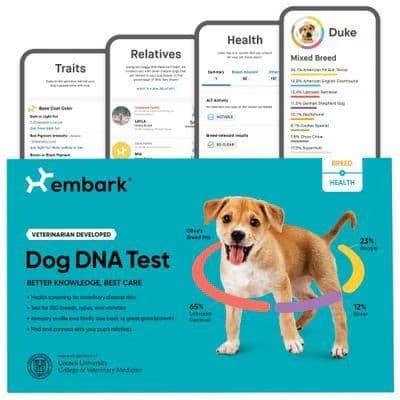
If you want an ancestry estimate for an adult dog with unknown records, an Embark Breed and Health Dog DNA Test Kit can add information about likely breed ancestry and screened variants. It cannot certify that a dog meets a registry’s definition of purebred, replace a pedigree, or turn color into proof of quality.
Is a Belgian Malinois brindle?
A true brindle pattern has visible dark stripes on a lighter base. That is different from the Malinois black overlay, which is produced visually by black-tipped hairs distributed across a warm base coat. The ABMC standard says the blackening should not appear brindled, while the FCI standard lists brindle as a fault for the Malinois variety.
Why, then, does “Belgian Malinois brindle” appear in so many searches and listings? Some heavily overlaid dogs look striped when groups of dark hairs follow the coat’s direction. Harsh side light can increase that effect. A mixed-breed dog may also have genuine brindle patterning. Finally, some sellers use “brindle” loosely for any coat with dark streaks.
Use this practical method:
- Look at the sides and ribs in even daylight, not only at the darkest back hairs.
- Separate individual black-tipped hairs from clean, repeated stripes.
- Compare the markings across several ages and coat conditions.
- Treat a seller’s label as a description, not as registration evidence.
- Ask which registry and written standard the seller is referencing.
How the black mask and sable overlay work
The mask is the concentrated dark area across the muzzle and face. In a strongly marked Belgian Malinois, it covers the upper and lower lips, the corners of the mouth, and the area around the eyelids, with black ears completing the expression. The FCI description goes further by naming six points of black pigmentation: both ears, both upper eyelids, and the upper and lower lips.
The overlay is different. Each affected body hair has a black tip that shades the warm base color beneath it. Dog-color writers often call this sable tipping, although breed standards generally describe the visible result as black overlay. More tipping makes the back and shoulders look darker. Less tipping leaves more fawn or mahogany visible.
Pigment terminology can help, but it should not be used to overpromise a dog’s genotype from a photo. Eumelanin produces black or brown dark pigment, while phaeomelanin produces the red-to-yellow range seen in the base coat. Genes can alter the intensity, placement, and dilution of those pigments. Visual appearance alone does not reveal every relevant variant, and common consumer DNA panels do not answer every registration or breeding question.
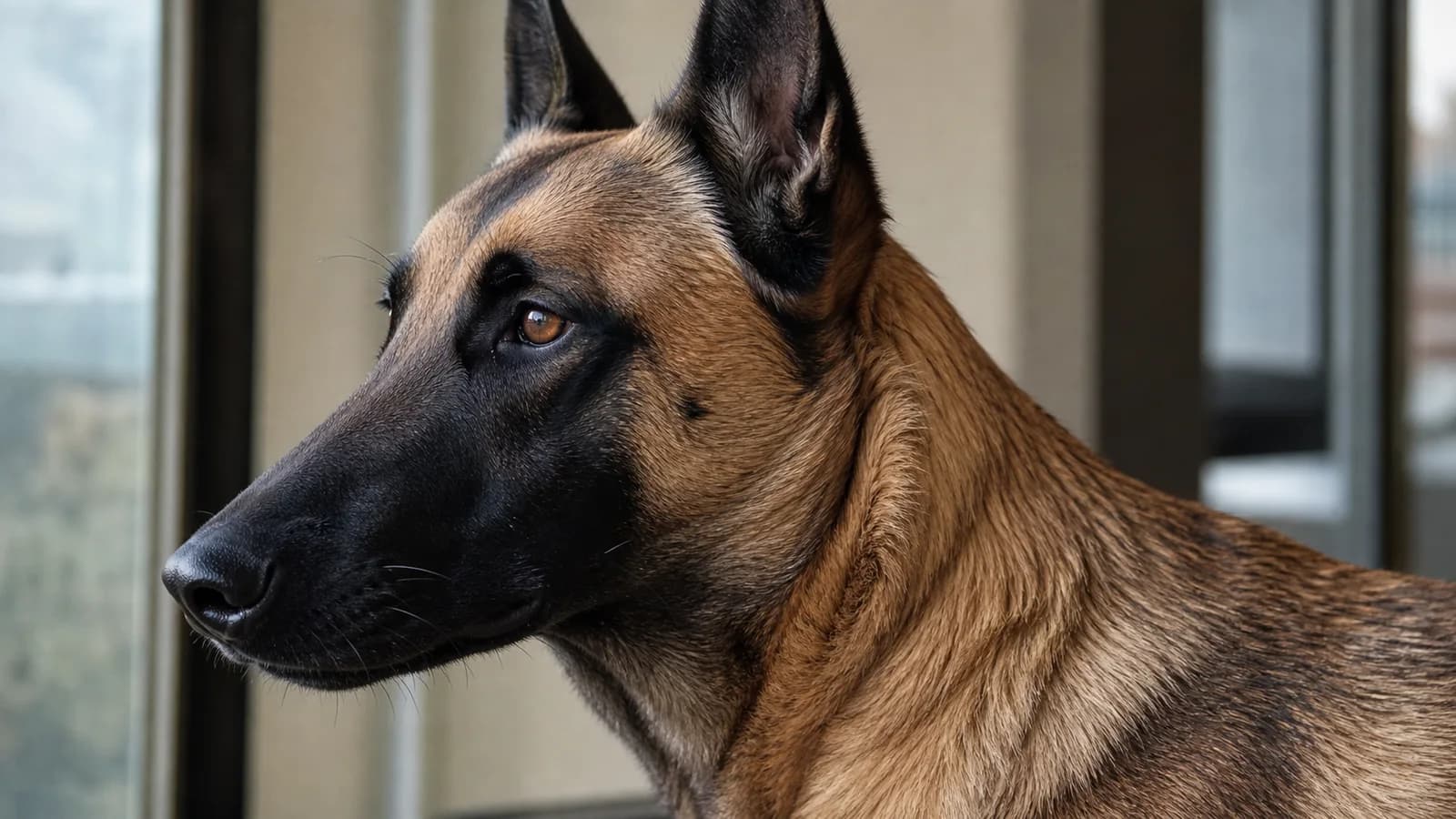
When viewing a photo, trace the coat in layers:
- Find the warm base color along the sides and legs.
- Identify black tips rather than assuming every dark region is a separate patch.
- Check whether the face carries a distinct dark mask.
- Note the ears, eyelids, lips, and nose pigmentation.
- Recheck under neutral daylight before assigning a rare-color label.
That sequence is more dependable than asking whether the entire dog looks “light” or “dark.” It also explains why two standard-colored Malinois can appear quite different while still sharing the same basic pattern.
For an unknown rescue or shelter dog, an Embark Breed Identification Dog DNA Test Kit may help estimate breed ancestry. Use the result as one piece of owner context alongside physical traits and known history, not as a substitute for registry papers or a breeder’s documented lineage.
Petful may earn a commission when you click through to Chewy, at no extra cost to you.
Rare and nonstandard Belgian Malinois colors
Blue, silver, gray, cream, white, liver, and solid black are widely searched Belgian Malinois color labels, but they are not the standard color description for a Malinois in the American or FCI systems discussed above. The responsible interpretation is not “impossible dog” or “valuable rarity.” It is “pause and verify what this label means in this dog.”
A nonstandard appearance can have several explanations:
- The dog’s pigment may be modified or diluted.
- The coat may be extremely pale or heavily overlaid.
- Lighting, white balance, editing, or wet fur may be changing the photograph.
- The dog may belong to another Belgian Shepherd variety under a different registry.
- The dog may have mixed ancestry.
- The seller may be applying a fashionable label to an ordinary visual variation.
That list is a practical method for making a reader decision. Start with neutral photos, written parentage, registry rules, and health records. Do not begin with a premium price and work backward to a story that justifies it.
For a useful photo check, ask for an unfiltered side view and head-on view outdoors in open shade, then compare those images with the same dog in ordinary indoor light. Direct sun can make warm fawn hair look pale gold, while a phone’s cool white balance can push a muted coat toward blue-gray. Wet hair also clumps the black tips and makes an overlay appear darker. Consistent photographs will not prove ancestry, but they can expose a label built around one dramatic image. If the color still appears unusual, record what is visible in plain language before adopting a genetic explanation: base shade, mask pigment, ear pigment, hair-tip pattern, white placement, and whether the pattern is striped or merely shaded.
Rare color is not a quality certificate
- A rare-color claim does not prove that a dog is purebred, healthy, responsibly bred, or suited to your home. Ask for verifiable parentage, relevant health testing, stable behavior in the parents, and a breeder contract. Color can describe the coat, but health records and breeding practices support a responsible choice.
Blue, silver, and gray Malinois labels
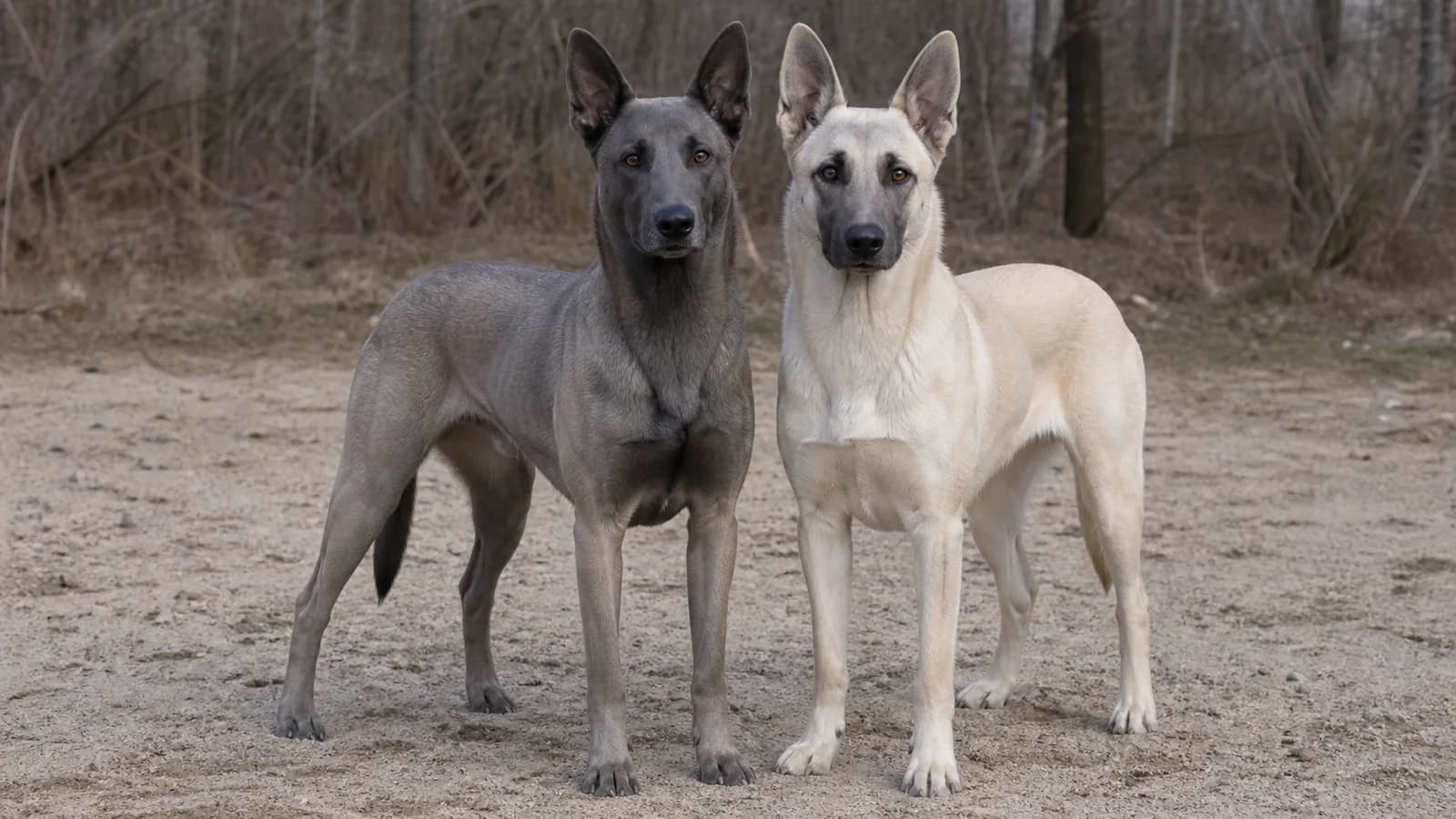
A dog advertised as a rare blue Belgian Malinois often has dark pigment that appears slate, charcoal, or blue-gray rather than black. “Silver Malinois” and “grey Belgian Malinois” may describe an even paler or cooler-looking coat. These are descriptive marketplace terms, not standard Malinois colors in the AKC or FCI language used for this article.
Be cautious with online pictures. A shaded fawn coat can turn cool gray under cloudy light, and smartphone processing can reduce warm tones. Ask for images beside a neutral object in daylight, plus photographs of the parents. If the dog is being sold as a purebred Malinois, ask which registry issued the papers and compare the color recorded on those documents with that registry’s current standard.
Blue-looking pigment does not establish a particular health outcome by itself. At the same time, no seller should use rarity to wave away ordinary breeder due diligence. The useful questions remain the same: Were the parents appropriately health tested? Can you review the results? What are their temperaments and working traits? How were the puppies raised and socialized? What support does the breeder provide?
White and cream Malinois labels
A white Malinois or very pale cream dog falls outside the expected fawn-with-black pattern. A tiny permitted white area is not the same as an all-white or predominantly cream coat. The American standard permits white toe tips and a small white spot on the breastbone that does not extend to the neck. The FCI tolerates a small amount of white on the forechest and toes.
Those narrow allowances matter because a listing may turn “a small white marking is permitted” into “white is a recognized Malinois color.” It is not. Ask for a clear full-body view and a close view of any white. A small chest spot on an otherwise fawn, masked dog is a different observation from a pale dog lacking the expected mask and overlay.
Do not infer ancestry solely from whiteness. Pale dogs can be visually misidentified, and mixed ancestry can produce many coat combinations. Documentation and a full assessment of the dog are more informative than a color guess.
Liver, brown, and other altered dark pigment
The standard Malinois nose, mask, ears, and overlay are black. If those areas appear brown rather than black, the dog may be described as liver, chocolate, or brown. That visual difference is not an accepted alternative mask color under the standards used here.
Again, a photograph has limits. Warm indoor light can make black pigment look brown, and reflections can soften the nose color. Check the nose, lips, eyelid rims, ear shading, and hair tips outdoors. If all dark pigment is consistently brown, the appearance deserves a more careful lineage and registration discussion rather than a creative marketing name.
A broad consumer test such as the Wisdom Panel Essential Dog DNA Test can provide an ancestry estimate for a dog whose background is unknown. It should not be presented as a replacement for documented parentage, breed-club guidance, or breeding-specific genetic counseling.

Petful may earn a commission when you click through to Chewy, at no extra cost to you.
Why the same Malinois can look like two different colors online
Before assigning a rare shade, compare how the photograph was made. A fawn coat contains warm base pigment plus dark tips, so small changes in exposure can shift which layer dominates. Bright sun can blow out the warm hair and make the dog look pale gold. Deep shade can hide the base and make the same dog look charcoal. Indoor bulbs may push mahogany toward orange or brown.
Automatic phone processing adds another variable. A camera may cool the image to compensate for warm indoor light, increase contrast around the face, or lift shadows until black hair looks gray. Social-media filters can alter saturation even when the person posting does not intend to make a color claim.
Use a quick image-quality check:
- Look for a neutral reference, such as gray pavement, a white wall, or green grass that does not appear unnaturally tinted.
- Compare the nose with other black areas. If the nose looks blue or brown only in one frame, the lighting or processing may be responsible.
- Check whether highlights on the coat have lost all texture. Overexposure can erase black tips.
- Ask for an unedited outdoor video as well as still photographs.
- Compare several body areas instead of sampling one dark shoulder patch.
Wet coat creates a different illusion. Water clumps hairs together, exposes darker layers, and makes the overlay look heavier. Freshly shed or brushed coat can look lighter because loose dark-tipped hairs have been removed. Neither state should be used alone to label a dog. When the dog is genuinely dirty, a routine product such as Buddy Wash Original shampoo and conditioner can be used according to its label, but bathing solely to make a color photograph look better is unnecessary.
The practical conclusion is not that photos are worthless. It is that color identification needs repeatable conditions. Neutral light, multiple views, and the dog’s records turn a striking image into useful evidence. A single edited portrait is good for appreciating the dog, but weak support for a rare-color premium.
What is the rarest Belgian Malinois color?
There is no official “rarest Belgian Malinois color” title within the standard range. Fawn and mahogany are the accepted American color labels, while the FCI describes the Malinois as fawn with black overlay and a black mask. Blue, silver, white, liver, and solid black may be uncommon appearances or marketplace labels, but uncommon does not mean recognized, desirable, or more valuable.
That direct answer matters because search results often rank nonstandard shades as if they were collectible versions of the same product. Dogs are not limited-edition colorways. A responsible buyer needs practical context: what the applicable standard says, how the breeder documents parentage, which health tests were completed, and whether the parents show stable, appropriate behavior.
For measured guidance, ask the seller to answer these questions in writing:
- What color is each parent recorded as by the named registry?
- Can I verify both parents’ registration numbers?
- Which health tests were completed, and where are the public results?
- Has this pairing previously produced unexpected colors?
- Is the unusual coat associated with a mixed line or another Belgian Shepherd variety?
- Does the contract make any claim that rarity increases health, performance, or value?
Your owner context also changes the decision. A nonstandard-looking rescue dog can be a wonderful companion without needing to fit a show standard. A puppy sold at a large color premium requires more scrutiny because the seller is making a commercial claim. In either case, the coat is a visible trait, not a character assessment.
Black Belgian Malinois: standard status and genetics
A uniformly black coat is not one of the AKC Belgian Malinois colors, and the FCI assigns uniform black to the long-haired Groenendael variety rather than the short-haired Malinois. Yet black, short-coated dogs with a Malinois-like outline do exist, and “solid black Belgian Malinois” remains a high-interest search.
This article keeps a clear boundary around that topic. Petful’s dedicated guide to the black Belgian Malinois covers the appearance, lineage questions, and common claims in depth. It also addresses searches for jet black Belgian Malinois and black Belgian Malinois military dogs without treating occupation or coat as ancestry proof.
What a black coat does and does not prove
The responsible choice is to evaluate the individual dog and the evidence behind the label. A dark working dog in a photograph may have a heavy overlay, another Belgian Shepherd background, mixed ancestry, or camera exposure that hides warm pigment. Military or police work does not create a separate black color standard. Agencies select individual dogs for traits and training, not because a coat label guarantees performance.
If you are comparing puppies, place temperament, health records, parentage, socialization, and breeder support above color. That priority is not anti-color. It is the clearest boundary between enjoying a distinctive appearance and allowing rarity marketing to replace evidence.
How Belgian Malinois colors change from puppy to adult
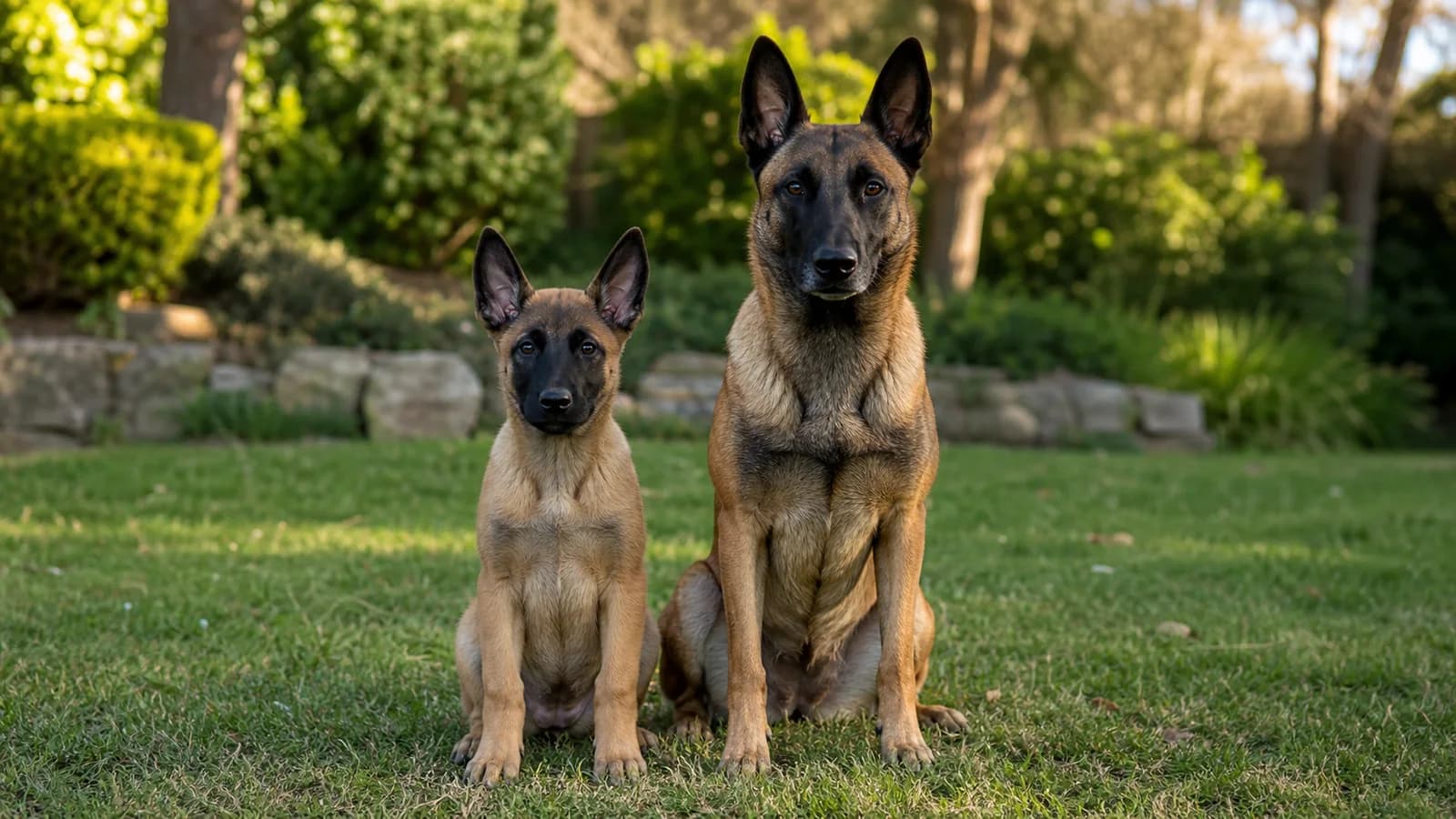
Belgian Malinois puppy coats can look softer, lighter, less overlaid, and less sharply masked than adult coats. As the adult coat comes in, black tipping may become more visible, the mask can look more defined, and the overall color can appear richer or darker. Seasonal shedding and new coat growth can also change how much overlay catches the eye.
That does not mean every pale puppy will become mahogany or every small mark will disappear. Genetics sets the broad pattern, but the visible coat develops as puppy hair is replaced. Photographs taken months apart also differ in season, grooming, light, exposure, and camera processing. A seller should not promise a precise final shade from an eight-week photo.
To track change without fooling yourself:
- Photograph the dog in the same shaded outdoor spot once a month.
- Use the same camera and disable dramatic filters.
- Include the full body, face, ears, chest, and toes.
- Note whether the dog is shedding or wet.
- Compare the base color and overlay separately.
An aumuca self-cleaning slicker brush can help remove loose coat so you can see the current surface color more clearly, but brushing does not change genetic color. Use light pressure and stop if the skin looks irritated. For a lighter surface pass, the Four Paws Magic Coat wet-and-dry glove and curry brush is another existing option, especially when the dog is less comfortable with pins.

Petful may earn a commission when you click through to Chewy, at no extra cost to you.
Changes in visible shade are ordinary. Sudden patchy hair loss, inflamed skin, widespread scaling, sores, or a major coat-texture change are not simply color development. Those signs deserve a veterinarian’s attention rather than a genetics guess.
Can coat color prove a Belgian Malinois is purebred?
No. Coat color cannot prove that a Belgian Malinois is purebred. A standard-looking fawn dog with a black mask may still have unknown or mixed ancestry, while a dog with documented lineage can have a fault or nonstandard appearance. Purity is a claim about ancestry and registration evidence, not a conclusion you can draw from one visible trait.
Records to check before relying on color
For a dog sold as registered, start with the pedigree and confirm the registry, registration numbers, breeder identity, and parent records. Ask for health-test results that can be verified independently. Look at structure and behavior as well as coat. If the dog is a rescue with no papers, use “Malinois-type” or “likely Malinois mix” when the history is uncertain rather than upgrading a visual guess into a fact.
DNA ancestry estimates can be useful, especially when no records exist, but they have a different purpose from a registry pedigree. Results depend on a company’s reference database and statistical model. They may support a breed estimate; they do not certify conformation to a breed standard or prove that every ancestor was registered.
The same caution applies in reverse. A nonstandard shade does not by itself tell you the exact mix, predict the dog’s temperament, or measure working ability. Training history, socialization, health, drives, and the individual dog’s responses matter far more to daily life.
Belgian Shepherd varieties are not four Malinois colors
When people ask, “What are the four types of Belgian Malinois?” they are usually blending the Malinois with the four Belgian Shepherd varieties. Petful’s guide to Belgian Shepherd varieties explains the Groenendael, Laekenois, Malinois, and Tervueren and how registries classify them.
The short version is that these names describe coat varieties or separate breeds depending on the registry. They are not a list of four Malinois colors. A long black Belgian Shepherd is not merely a black-coated version of the short-haired Malinois in every registry system. Naming the registry is essential when discussing status.
This distinction also prevents a common visual error. If a dog has a long coat, rough coat, or uniform black coat, look beyond color and compare coat texture and length with the other Belgian Shepherd varieties.
How to evaluate Belgian Malinois color claims
A useful color evaluation moves from observation to documentation. It does not begin with a price premium. Use this checklist whether you are reading a breeder page, evaluating a rescue, or trying to label your own dog’s coat.
1. Identify the standard you are using
The AKC and FCI do not organize Belgian Shepherd dogs in exactly the same way. State the registry before saying a color is standard, faulted, or assigned to another variety. For an American conformation question, the ABMC standard accepted by the AKC is the most direct source. For the international Belgian Shepherd framework, consult the FCI standard.
2. Describe the base, overlay, and markings separately
Write “warm fawn base, heavy black overlay, pronounced black mask” rather than “rare dark sable.” The first description records visible traits. The second may be a marketing category with no agreed boundary.
3. Check the whole dog in neutral light
Review the face, ears, body, underparts, chest, toes, and hair tips. A close portrait can hide white on the chest. A dark back can hide a warm base on the sides. A filtered image can make fawn look silver. If ordinary surface dirt obscures the coat, an unscented Earth Rated grooming wipe can clean a small area without turning the evaluation into a full bath; stop if the skin reacts.
4. Verify records and priorities
For a puppy purchase, ask for pedigree documentation, verifiable health testing, parent temperament information, and the contract. If a seller discusses color for ten minutes but cannot produce records, the imbalance is the real finding.
5. Match appearance questions with the rest of the dog
Color is only one part of a square, athletic, medium-sized shepherd. Petful’s main Belgian Malinois breed guide covers the breed’s broader traits. For dimensions and growth, the same-release Belgian Malinois size guide explains adult ranges and how to measure at the withers.
The strongest conclusion is often modest: “This dog appears fawn with a heavy black overlay, but I need records to make an ancestry claim.” That wording is more accurate than forcing every unusual photograph into a rare-color category.
A six-view Belgian Malinois color check
Color guides become less useful when every example is a polished portrait taken from one flattering angle. A dog is three-dimensional, the overlay is not equally dense everywhere, and markings can disappear outside the frame. For a photograph-by-photograph field guide, collect six ordinary views and give each one a specific job.
View 1: full body in open shade
Start with the dog standing side-on in open shade on a bright day. Open shade gives you plenty of light without the hard highlights that can bleach fawn hair or turn dark tips into solid black patches. Keep the camera’s white balance neutral and include the entire dog.
Use this view to name the base as cautiously as possible. Is the coat within a warm fawn-to-mahogany range, unusually pale, or unusually cool? Do not decide whether the dog is “blue” from this picture alone. The first view creates a baseline for comparison.
View 2: face and ears from the front
Photograph the head at eye level, with the dog looking roughly toward the camera. This frame should show the muzzle, lips, eyelids, nose, and both ears. It is the best view for deciding whether the black mask is distinct and whether the ears carry the expected dark pigmentation.
Avoid placing the face in deep shadow. Shadow can manufacture a mask on a lightly marked dog, while direct sun can erase detail in genuinely black fur. The goal is visible traits, not drama.
View 3: shoulder and back hair close-up
Move close enough to see groups of hairs over the shoulder or back. Focus on the surface of the coat rather than the dog’s outline. This image helps separate black-tipped hairs from a uniformly dark patch. If the hairs have a warm lower portion and a dark tip, they contribute to overlay.
Part the fur gently with your fingers if the dog is comfortable. The base near the skin may look lighter than the visible tip. That does not mean the coat “changed color” when parted; it shows how multiple pigment zones create the overall shade.
View 4: ribs and flank in even light
The flank often reveals the base color more clearly because the overlay can be less concentrated than it is along the back. It is also the right place to check whether a brindle claim describes repeated stripes or only the directional grouping of black-tipped hairs.
Take the photograph perpendicular to the body. An oblique angle compresses markings and can make separate dark areas look like stripes. Compare this frame with the close shoulder view before choosing a label.
View 5: chest, underside, and toes
Photograph the chest and feet while the dog is standing safely. This view documents any white marking and shows whether lighter underparts remain within the warm base-color family. It prevents a cropped profile from hiding a large patch that matters to a conformation question.
White toe tips or a small breastbone spot must be described by location and extent. “Has white” is too vague. The official American Belgian Malinois Club standard and the FCI Belgian Shepherd Dog standard set specific allowances, so compare the real marking rather than a seller’s summary.
View 6: repeat the set as the coat matures
For a puppy, repeat the same views every four to eight weeks through coat changes. Keep the location and camera settings as consistent as you reasonably can. The resulting sequence shows whether the adult overlay is increasing, the mask is becoming more distinct, or a supposed color change was simply different light.
This six-view set supplies measured guidance without pretending that a photograph is a genetic test. It gives an owner context for questions, a breeder or rescue a clear description to respond to, and a veterinarian a better timeline if the concern is actually skin or hair loss rather than ordinary color.
What the six views still cannot prove
Even an excellent image set cannot prove pedigree, rule out mixed ancestry, predict a puppy’s exact adult shade, or determine temperament. It cannot show every pigment variant. It also cannot tell you whether a breeder completed the health tests recommended for the breed.
Think of the process as observation with a clear boundary. Photos improve the accuracy of your description. Documents support an ancestry claim. Health records support a breeding-quality discussion. Direct behavior and training history support a temperament assessment. Keeping those evidence types separate is the practical advantage this guide offers over a gallery of unlabeled coats.
Frequently asked questions about Belgian Malinois colors
Frequently Asked Questions
They can look darker as the puppy coat is replaced and the adult overlay becomes more visible. If the coat darkens, black-tipped hairs, a more defined mask, and seasonal coat changes may deepen the overall appearance. The amount of change varies by individual, so a breeder cannot guarantee that a pale puppy coat will mature into a specific mahogany shade. Compare unfiltered photos in similar daylight to distinguish true coat development from lighting.
Yes, a narrowly placed white marking can occur within the allowances described by the breed standards. The American standard permits white toe tips and a small white spot on the breastbone that does not extend to the neck. The FCI tolerates a small amount of white on the forechest and toes. Larger or differently placed white markings fall outside those allowances, so check the exact breed standard for your registry.
There is no reliable link that lets you predict an individual Malinois’s temperament or working ability from fawn, mahogany, overlay depth, or a rare-color label. Breeding priorities, genetics beyond coat color, early development, socialization, training, health, and individual experience all matter. Evaluate the parents and the dog directly instead of treating coat color as a behavioral test.
In American breed language, the standard range runs from fawn through mahogany, with black-tipped hairs, a black mask, and black ears forming the familiar appearance. The FCI describes the Malinois as fawn with black overlay and a black mask. Always name the registry because its wording and classification system determine which terms are official.
There is no official rarest title within the accepted range. Blue, silver, gray, white, liver, and solid black may be uncommon appearances or marketplace labels, but uncommon does not make them recognized or more valuable. Treat a rare-color premium as a reason to verify pedigree, health testing, parent temperament, and the seller’s claims more carefully.
A uniformly black coat is not one of the American Belgian Malinois standard colors. Under the FCI framework, uniform black is associated with the long-haired Groenendael variety, not the short-haired Malinois. A dark short-coated dog may have heavy overlay, mixed ancestry, or another background, so coat alone should not be used to certify identity.
True brindle has repeated dark stripes over a lighter base, while a typical Malinois overlay comes from black-tipped hairs distributed across a warm coat. Heavy overlay can look striped in side light, and mixed ancestry can produce genuine brindle. Because brindle is not the expected standard pattern, describe the hairs and stripes precisely instead of relying on a seller’s label.
Blue, silver, and gray are not standard Malinois color descriptions under the American or FCI language used in this guide. Photos can also shift fawn and black pigment toward cool gray through shade, white balance, exposure, or processing. Ask for unfiltered daylight views, parent photographs, and documentation before accepting a color claim.
No. Color is one visible trait, not proof of ancestry. A standard-looking dog may have unknown parentage, while a documented dog can have a fault or nonstandard appearance. Registry records and verified pedigree support a purebred claim; consumer DNA tests may estimate ancestry but do not certify conformation or registered lineage.
That question usually mixes up coat color with the four Belgian Shepherd varieties. The names are Groenendael, Laekenois, Malinois, and Tervueren, with classification differing by registry. They are not four Malinois colors. The Malinois is the short-haired variety in the FCI system and is treated as a separate breed by the AKC.
Belgian Malinois colors are visually striking because a warm coat, black overlay, dark ears, and a pronounced mask create so much variation within a relatively focused standard. That variation is worth observing accurately. It is not a reason to let a color name outrank the dog.
For most readers, the practical answer is simple: identify what you can see, compare it with the correct registry language, and keep proof separate from appearance. A responsible breeder or rescue should welcome that approach because it keeps the conversation centered on the dog’s documented background, health, behavior, and fit.
Save the neutral photographs and records together if the dog is yours. A simple dated coat log can help you distinguish seasonal overlay, puppy-coat replacement, grooming changes, and camera effects from a genuinely new skin or hair problem. That evidence is also more useful to a veterinarian than a color label alone. For a dog you are considering, the same discipline protects the buying decision: enjoy the visible coat, but require the same verified parentage, health information, temperament evidence, contract terms, and post-placement support you would expect for an ordinary fawn puppy.

Coreen Saito is a pet writer and longtime shelter volunteer with more than a decade in animal rescue. She covers cat behavior, breed care, and the small, ordinary science of sharing a life with companion animals, with a particular focus on honest takes about the products and decisions that actually matter. At home in Arizona, she’s outranked by Mac (a dog with the loudest opinion in the house), Rebel (a cat who governs by quiet authority), and Meri (an orange tabby who runs the late shift and the laundry basket). She writes about all three, plus the rescues that keep coming through her life, at LifeWithMinty.com.