
-New-World-screwworm-in-the-US_Lead.webp?t=1781006567)
WASHINGTON — Agriculture Secretary Brooke Rollins confirmed on June 3 that a case of New World screwworm (NWS) was detected in La Pryor, Texas. This is the first case in the state of Texas where NWS was eradicated in the United States decades ago.
The US Department of Agriculture’s (USDA) Animal and Plant Health Inspection Service (APHIS) confirmed the detection of the pest in a 3-week-old calf. This case follows the agency’s confirmation on June 2 of an NWS case 25 miles from the US-Mexico border.
“Additional USDA personnel have arrived in South Texas to support our partners on the ground,” Rollins said on social media. “The National Veterinary Stockpile is ready to deploy and on its way. I now call on our producers to be vigilant and watchful. The most effective thing to do right now is to put eyes on all livestock.”
The agency sent the NWS sample to the National Veterinary Services Laboratories in Ames, Iowa, where scientists confirmed the detection.
“Protecting our livestock industry is a national security issue of the utmost importance, and USDA is wasting no time in taking action,” said Dudley Hoskins, undersecretary for Marketing and Regulatory Programs at the Animal and Plant Health Inspection Service (APHIS). “USDA invested heavily in the tools needed to eliminate NWS ever since cases started increasing in Central America and Mexico. The United States has defeated this pest before, and we will do it again.”
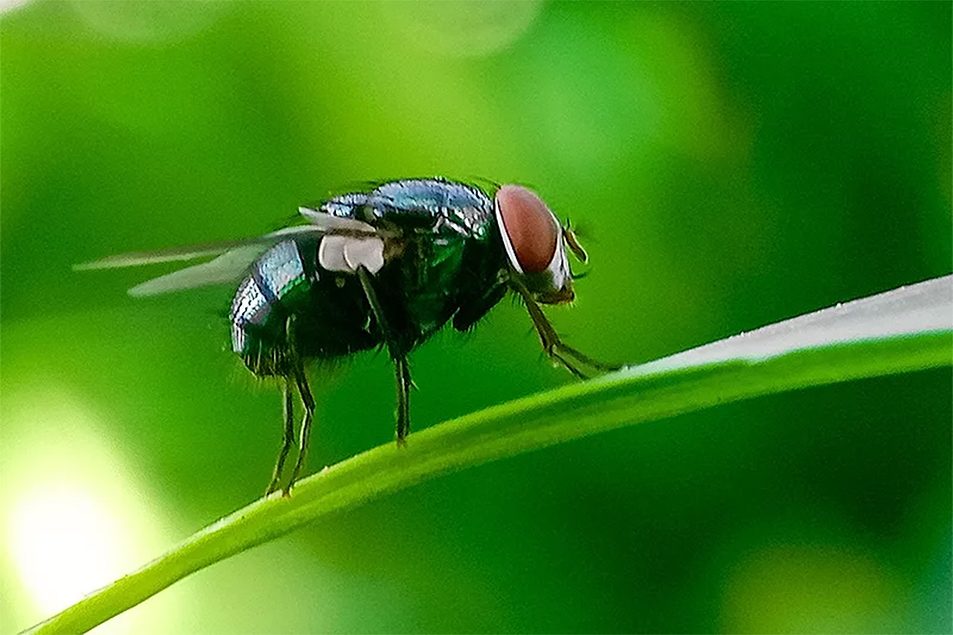
The NWS fly will lay eggs in fresh wounds of warm-blooded animals. The pest can affect livestock, pets and wildlife and, less commonly, people and birds. There are no food safety concerns regarding the pest, as the APHIS pointed out that screwworms do not infest meat, fruits, vegetables or other food sources.
In a press conference on June 4, Rollins confirmed no new detections of NWS in the local area of La Pryor since the first appearance of the pest.
“We’ve had a couple [cases] come through as possibilities,” she said. “None of them we think are positive identifications — certainly none that looked like the one we saw yesterday from La Pryor. But we are running that down, and the minute we get any kind of a confirmation, we will be posting that onto our social media channels and issuing a press release.”
During the call, Lewis R. “Bud” Dinges, executive director of the Texas Animal Health Commission, described improvement in the affected calf, which had larvae in an umbilical lesion.
“Our staff visited the premises with the infested calf yesterday, and the infested calf is doing much better,” he said. “They looked at the cattle on the premises there and didn’t find any other infested animals. From our… investigation, there is no evidence of a recent movement of animals onto or off of the premises.”
The 20-kilometer area around the infested zone will remain under quarantine for 36 hours initially and up to 72 hours if extended. Animals can move out of the zone, Dinges clarified, if they receive a proper inspection and/or treatment.
In response to the new case, the agency said its latest plans include releasing two million sterile screwworm flies into the area twice a week. Along with the aerial releases, the USDA will ship four million sterile flies, which will be released using 24 ground release chambers.
APHIS also said its strike team is already on-site in Texas, which includes animal health experts and mobile resources that can be used for operational and laboratory space to use against NWS.
The US Food and Drug Administration (FDA) issued emergency use authorization for several treatments used for NWS. The National Veterinary Stockpile also relocated NWS treatment supplies to Texas to help affected producers.
Along with the federal response, Texas Governor Greg Abbott issued a disaster declaration to Zavala and Uvalde counties on June 5. As part of the declaration, Abbott said all personnel are available, including those within the university systems in Texas.
In a recent press conference, Abbott pushed to accelerate the movement of sterile flies into the state and the construction of the federal government’s NWS sterile fly production facility in Edinburg, Texas, which is scheduled to open in fall 2027.
“Here’s the reality of this cycle,” Abbott said. “This is likely to spread over the course of the summer. During winter months, it may kill off the flies or reduce their number, but we can’t make it through a second summer. So, I am pushing for the facility in the state of Texas under construction right now to be completed by May of next year, as opposed to November of next year.”
The current USDA sterile fly production facility is the COPEG facility in Panama, which can produce 100 million flies per week.
During 2025, the agency invested $21 million in an existing sterile fruit fly production facility in Metapa, Mexico, which is expected to be open later in June or July of this year. That facility will also be able to produce 100 million flies per week once fully operational.
The USDA and Rollins decided in May 2025 to stop importing livestock through US ports along the southern border as a precaution against NWS entering the United States.
In February, the USDA and Texas officials opened the sterile fly dispersal facility run by APHIS at Moore Airfield Base in Edinburg, Texas. The agency is also building a domestic sterile NWS fly production facility, which is scheduled to open in November 2027. Officials anticipate that facility to produce 300 million sterile flies per week upon full capacity.
Food Safety and Inspection Service inspection personnel must inspect all eligible animal species unless they are exempt or covered by a state inspection program.
“Any evidence of screwworm infestation in an animal would be identified during these inspections, and any contaminated product from an affected animal would not be allowed to enter the food supply,” the agency said.
Read more about supply chain topics affecting the industry on our Operations page.