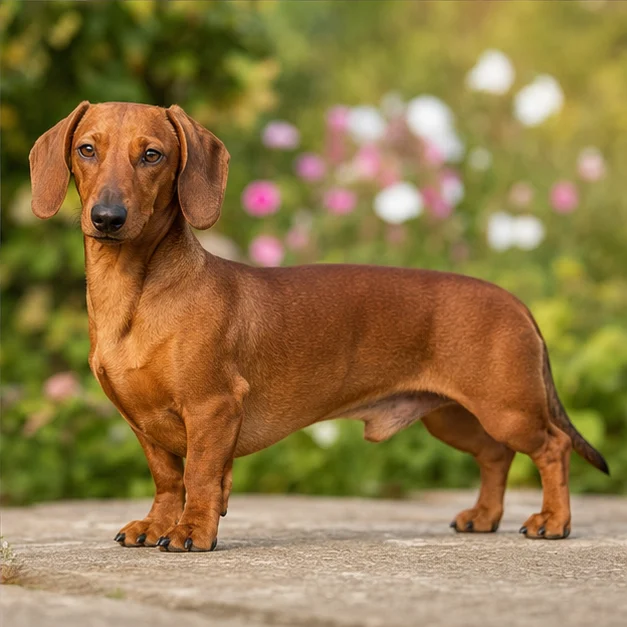

Dachshund colors are easiest to identify when you separate four things: the dog’s base color, any pattern laid over that color, specific markings, and the smooth, longhaired, or wirehaired coat that carries them. A red longhaired Dachshund and a red smooth Dachshund share a color but not a coat variety.
This photo-led guide uses breed-standard terms and visible clues, not rarity marketing. Natural daylight, accurate captions, and a full-body view are more useful than a heavily edited puppy photo, and appearance alone cannot prove ancestry, health, breeding quality, or future temperament.
Dachshund colors at a glance
- 1Base color describes the main pigment, while dapple, piebald, brindle, and sable describe how pigment appears or is distributed
- 2Markings include defined points or small localized areas that do not replace the base-color name
- 3Smooth, longhaired, and wirehaired are coat varieties, not colors
- 4Red and black and tan are widely seen, but no authoritative national database ranks every color by popularity or rarity
- 5Double dapple is a breeding-related welfare issue, not a premium color
- 6Always compare photos in neutral daylight because editing and warm indoor light can change how cream, chocolate, blue, and Isabella appear
The AKC Official Standard of the Dachshund is the primary US source for breed-standard wording. The Dachshund Club of America color and pattern guide adds useful visual examples. Neither source turns color into a measure of quality.
Dachshund Color Legend
| Label type | What it describes | Visible cue |
|---|---|---|
| Base color | The underlying pigment | Red, cream, black, chocolate, blue, Isabella, wheaten, or wild-boar appearance |
| Pattern | How pigment is distributed through the coat | Irregular dapple patches, piebald white areas, brindle striping, or sable hair tipping |
| Marking | Localized contrasting areas | Tan or cream points over the eyes, on the muzzle, chest, legs, and under the tail |
| Coat type | Hair length and texture | Smooth, longhaired, or wirehaired coat |
| Registration term | The label used on official paperwork | Must be interpreted within the registry’s current choices and breed standard |
| Marketing term | Seller language that may not be standardized | Rare, exotic, English cream, or other promotional wording |
Petful may earn a commission when you click through to Chewy, at no extra cost to you.
Color, pattern, marking, and coat type
Begin identification with the largest area of the coat. That is usually the base color. Then look for a repeating or irregular pattern across that base. Finally, note localized markings such as tan points above the eyes or a small white patch on the chest.
Coat type changes what your eye notices. Long hair can soften boundaries, feathering can make a pale area look larger, and a harsh wire coat can blend differently colored hairs into a grizzled effect. The three varieties are still smooth, longhaired, and wirehaired, as explained in Petful’s broader Dachshund breed guide.
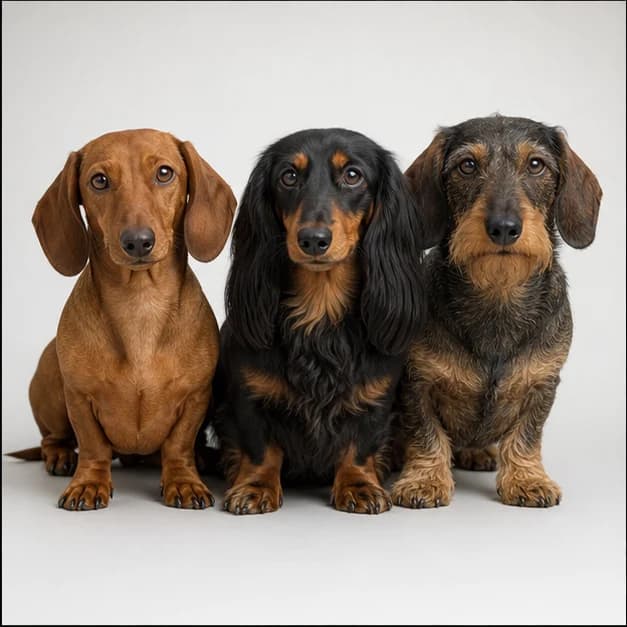
Use this order when reading a photo:
- Check whether the lighting is neutral and the full dog is visible.
- Name the broad base color before studying small areas.
- Look for a pattern across the body, not one isolated light spot.
- Identify points and white marks separately.
- Record the coat variety last.
- Treat the result as a visual description, not proof of genetics or pedigree.
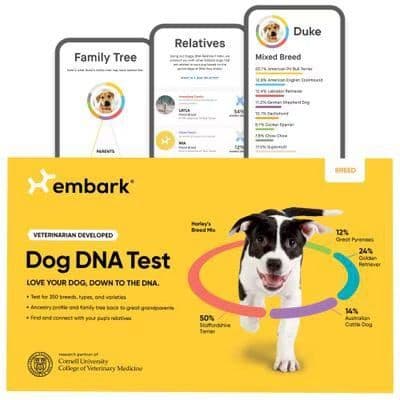
A canine DNA product can sometimes add ancestry information, but it does not replace registration papers, a breed standard, or responsible breeding records. The Embark Breed and Health DNA Test may be useful for broader ancestry questions, yet a test result should not be presented as a visual color certificate or a guarantee of health.
Common Dachshund colors
Red and black and tan are among the most familiar Dachshund appearances, but there is no authoritative national count proving one color is the most popular in every country or year. Red is widely seen across all three coat varieties, and black and tan is instantly recognizable because of its contrasting points.
The US standard also describes cream and two-color combinations involving black, chocolate, gray or blue, and fawn or Isabella with tan or cream markings. Wirehaired dogs add wheaten and wild-boar appearances that depend heavily on hair texture and banding.
Fast identification rules
- Red: The coat reads broadly red, from lighter copper to deeper red, sometimes with darker shading.
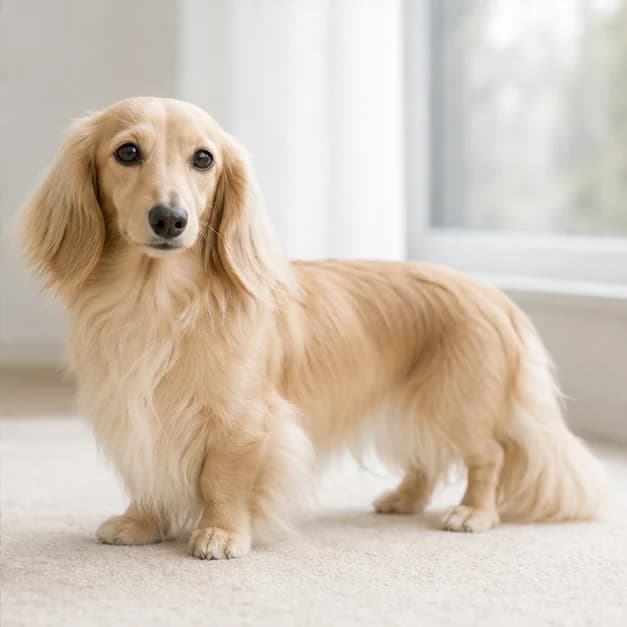
- Cream: The coat reads pale cream rather than red, with shade and development varying among individuals.
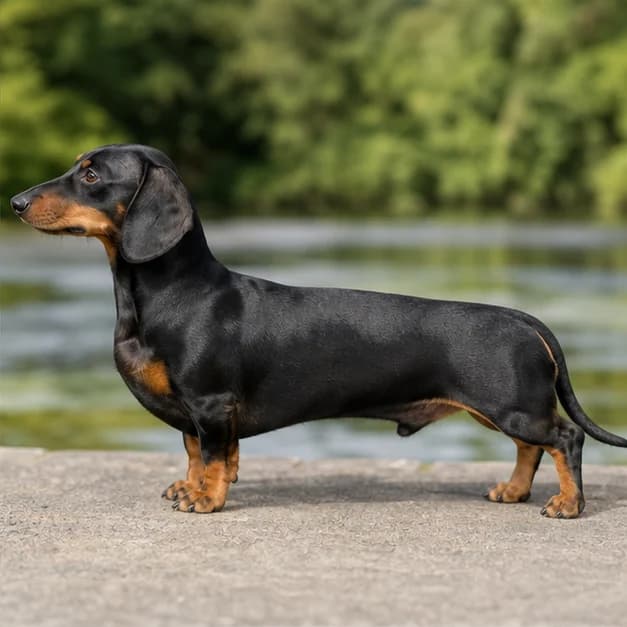
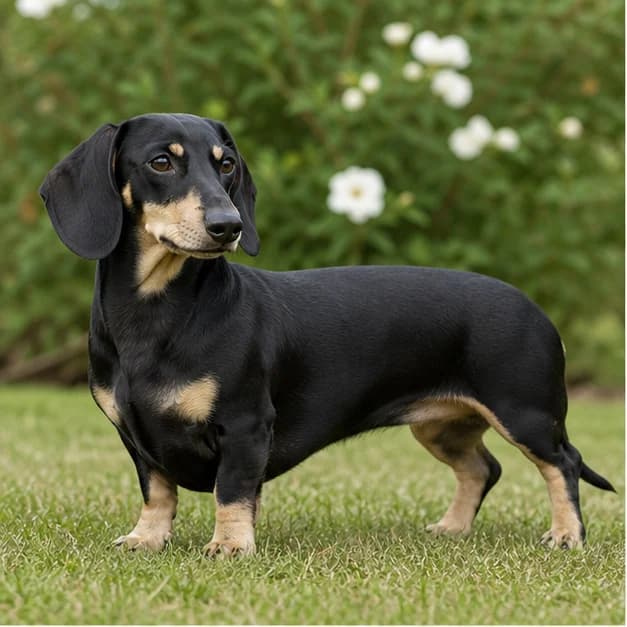
- Black and tan: A black body carries defined tan points on the face, chest, legs, feet, and under the tail.
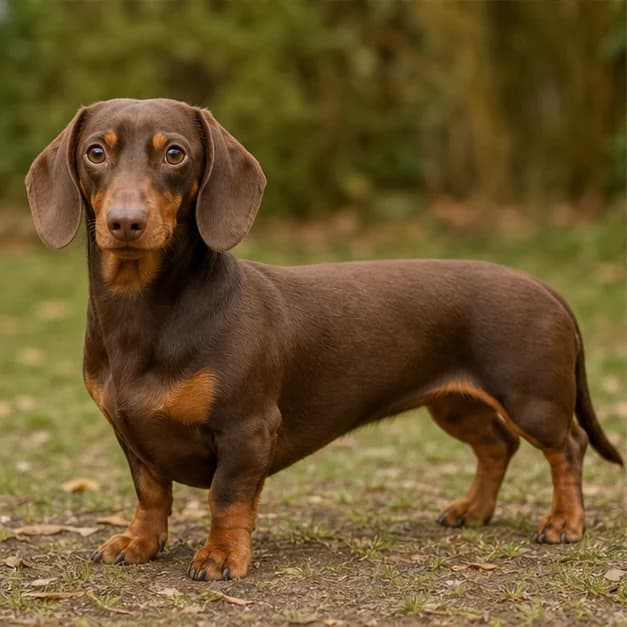
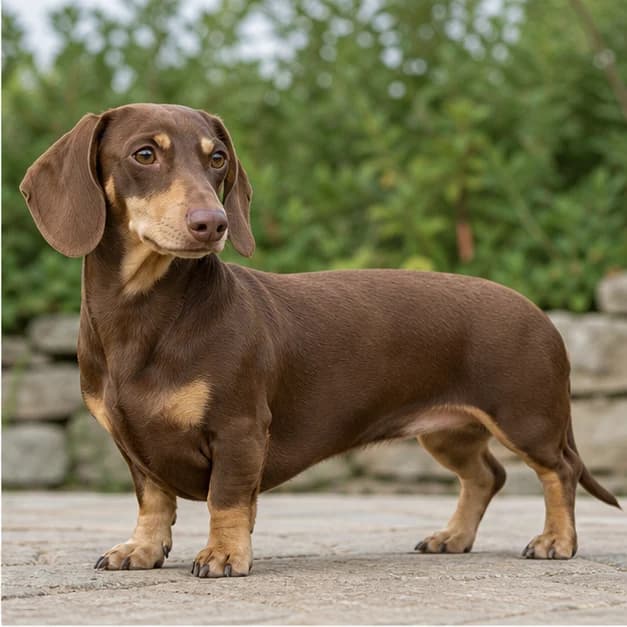
- Chocolate and tan: Brown pigment replaces black, with tan points in the expected locations.
- Black and cream: A black body carries much paler cream points.
- Chocolate and cream: Brown body color combines with cream points.
- Blue and tan: Diluted black appears slate gray or blue-gray with tan points.
- Isabella and tan: Diluted chocolate appears pale brown, taupe, or fawn with tan points.
Petful may earn a commission when you click through to Chewy, at no extra cost to you.
Wheaten and wild boar
Wheaten is most associated with wirehaired Dachshunds and reads as a light golden or straw-colored coat. Wild boar also appears primarily in wire coats, where individual hairs carry banding that creates a darker grizzled look. It is not one flat brown paint color.
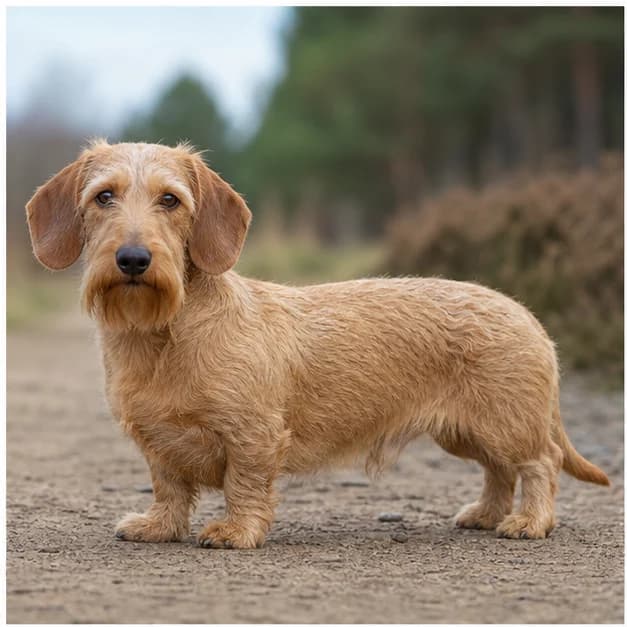
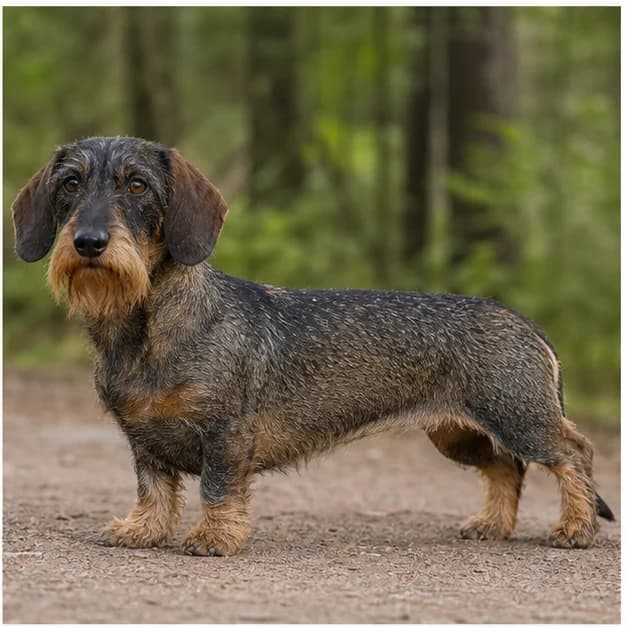
If ancestry is uncertain, compare the dog’s whole appearance and records rather than choosing the most exciting label from a photo. The Embark Breed Identification DNA Test is an existing ancestry option, but it still cannot certify that a seller used a color term correctly or that a dog meets a conformation standard.
Red Dachshunds
Red can range from a clear warm copper to a deeper, more shaded appearance. Darker hairs may be mixed through the coat, especially along the ears, back, or tail. That shading does not automatically make the dog sable, because true sable concerns the color pattern within individual hairs rather than a simple dark overlay.
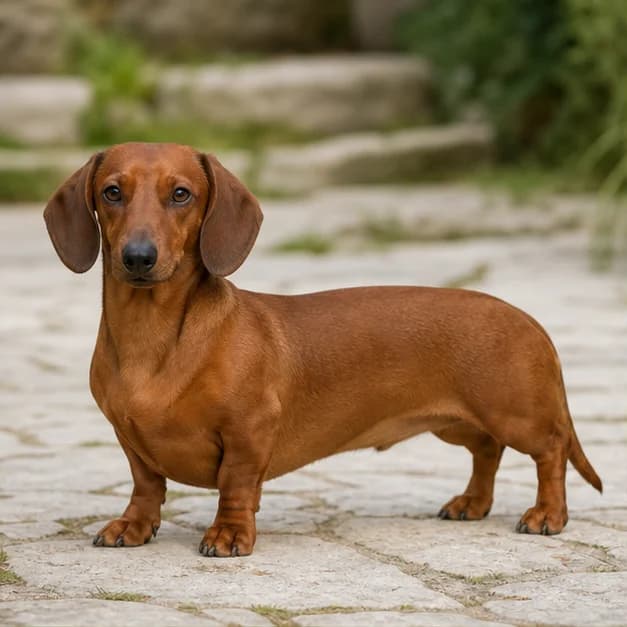
Photograph a red dog outside in open shade or beside a neutral window. Warm bulbs can push cream toward gold and make a deep red look brown. Phone filters can also erase darker hair tips that matter for distinguishing shaded red from sable.
Black-and-tan, chocolate-and-tan, and cream Dachshunds
Two-color Dachshunds are identified by both the main body pigment and the contrasting points. Points commonly appear above the eyes, on the sides of the muzzle and jaw, at the chest, on the legs and feet, and beneath the tail. Their size and sharpness vary, so use the overall arrangement rather than one eyebrow spot.
Chocolate should read as brown pigment throughout the relevant areas, including nose pigment that does not look black. Black and tan retains black body pigment. Cream is a pale base color, while cream points are localized pale markings on a darker body. Those are different descriptions.
The phrase English cream is widely used in longhaired-Dachshund marketing, but it is not a separate breed or size. Cream is the meaningful color term. Ask what the seller means, compare puppy and adult relatives in neutral light, and do not treat a pale coat as proof of a particular country, bloodline, temperament, or quality.
Petful may earn a commission when you click through to Chewy, at no extra cost to you.
Blue and Isabella Dachshunds
Blue and Isabella are dilution terms. Blue is the diluted appearance of black, producing a slate or blue-gray body pigment. Isabella, also called fawn in some standard wording, is the diluted appearance of chocolate and can look pale brown, taupe, or grayish beige. Both may occur with tan points.
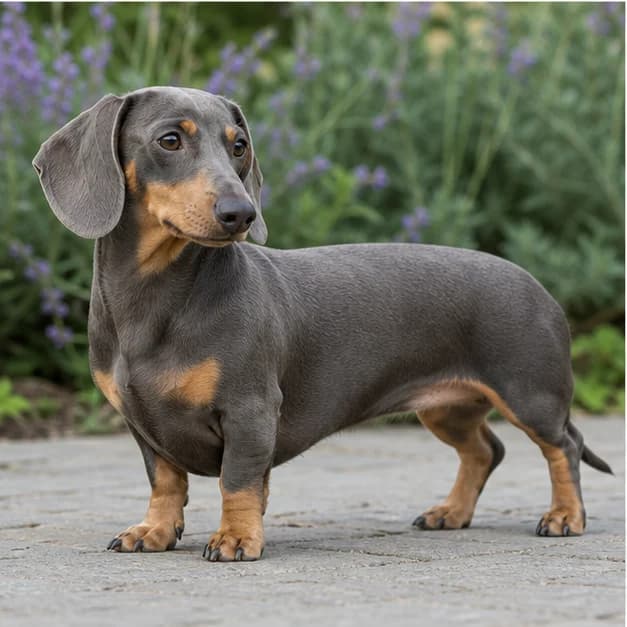
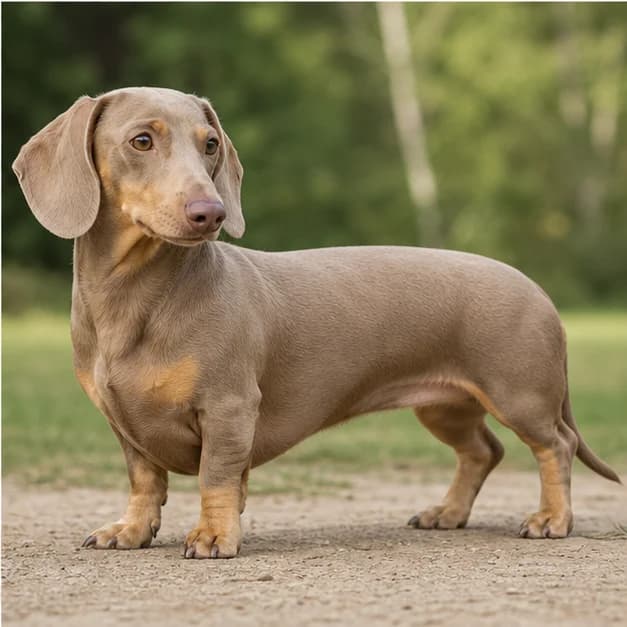
The AKC standard includes gray or blue and fawn or Isabella within its two-color description, but standard context matters more than a marketplace rarity claim. Registry language can also differ by country and form. Check the current authority for the paperwork you are using rather than copying a seller’s label.
Dilute color does not let a reader diagnose a skin condition from a photo. If a dog has hair loss, irritated skin, repeated infections, or another physical change, a veterinarian should examine the dog. Keep visual identification separate from medical conclusions.
A third ancestry option, the Wisdom Panel Essential Breed Identification test, can support mixed-breed questions. Like the other DNA offers here, it does not turn color into a quality score, verify a rare-color sales claim, or replace a veterinary evaluation.
Dachshund patterns
Patterns describe how color appears across the coat. They can occur on more than one base color, which is why dapple is not itself one exact color. Identify the base first, then the pattern.
Dachshund Pattern Identification
| Pattern | Visible cue | Practical boundary |
|---|---|---|
| Dapple | Irregular lighter and darker areas within the coat | Patch size and contrast vary; one photo cannot prove parentage |
| Piebald | Defined white spotting with colored areas | White distribution differs from dapple’s mottled lightening |
| Brindle | Dark stripes over red, cream, or tan areas | Stripes may be subtle on a small dog or long coat |
| Sable | Individual hairs show lighter roots and darker tips | Most associated with long hair and easily confused with shaded red |
| Double dapple | A dog inherits dapple from both parents | Appearance alone cannot diagnose sensory status; the breeding carries increased welfare risk |
In general canine genetics, the word merle is often used for the pattern called dapple in Dachshunds. That makes merle Dachshund a searchable phrase, but dapple is the established breed term used by Dachshund organizations. Neither word should be used to make the coat sound more exotic or valuable.

Petful may earn a commission when you click through to Chewy, at no extra cost to you.
Dapple, piebald, brindle, and sable
Dapple
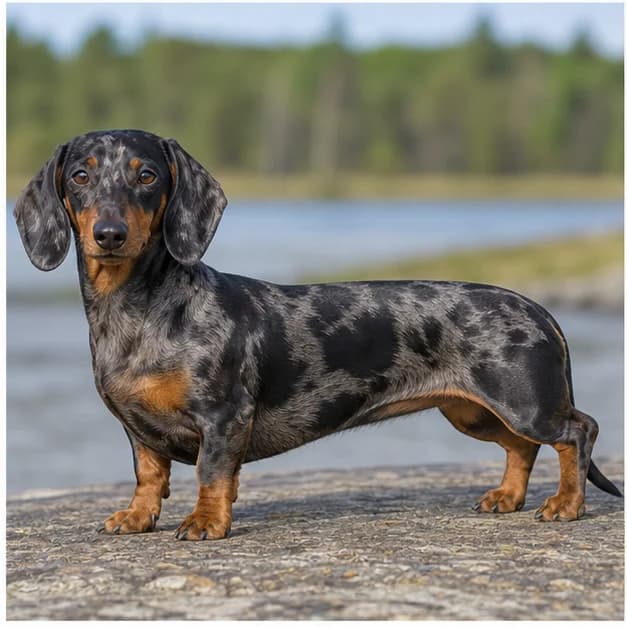
A single-dapple Dachshund has irregular areas where the base color appears lighter. Some dogs have broad, obvious patches, while others have a small area that is easy to miss. The eyes may differ in color, but an eye-color change alone is not enough to label the whole pattern.
Piebald
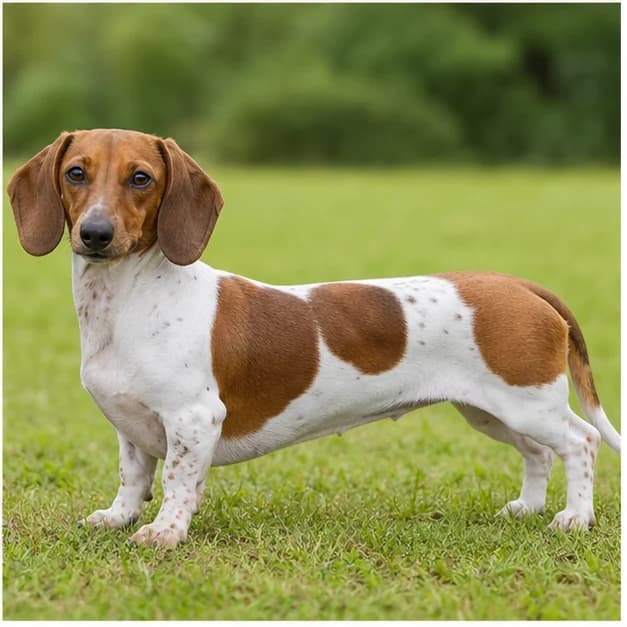
Piebald creates white spotting with colored areas. A piebald dog can also carry another pattern, which is why labels can become long. The cleanest visual distinction is that piebald white is a spotting distribution, while dapple lightens areas within a colored coat.
Brindle
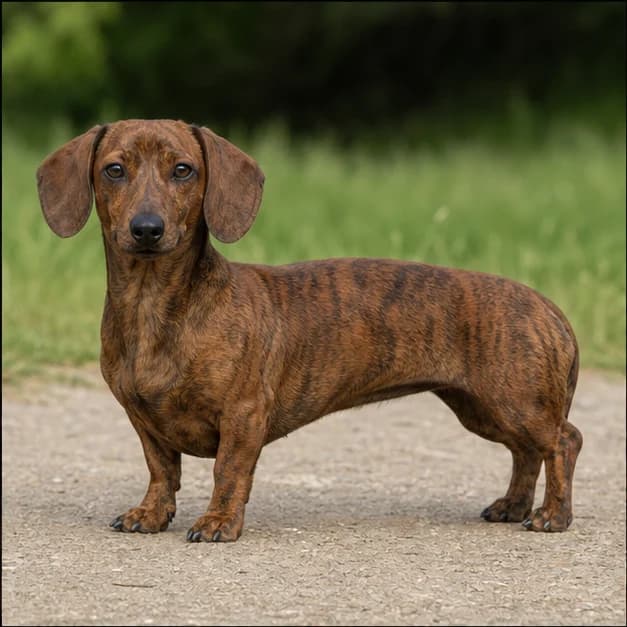
Brindle produces darker stripes over areas that would otherwise be red, cream, or tan. On a black-and-tan dog, striping may be visible mainly within the tan points rather than across the black body. Neutral light and a close coat view help reveal it.
Sable
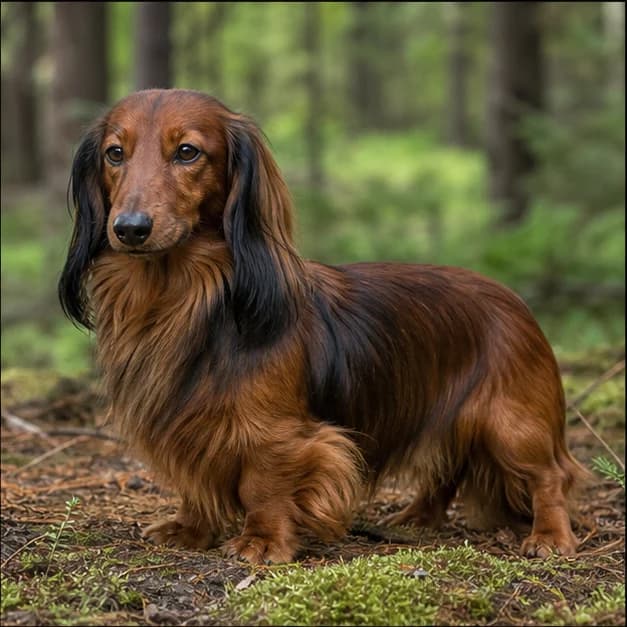
Sable hairs have lighter color near the root and darker pigment at the tip. It is most often discussed in longhaired Dachshunds and can be confused with shaded red in ordinary photos. Part the coat and examine individual hairs before using the label.
Dachshund markings
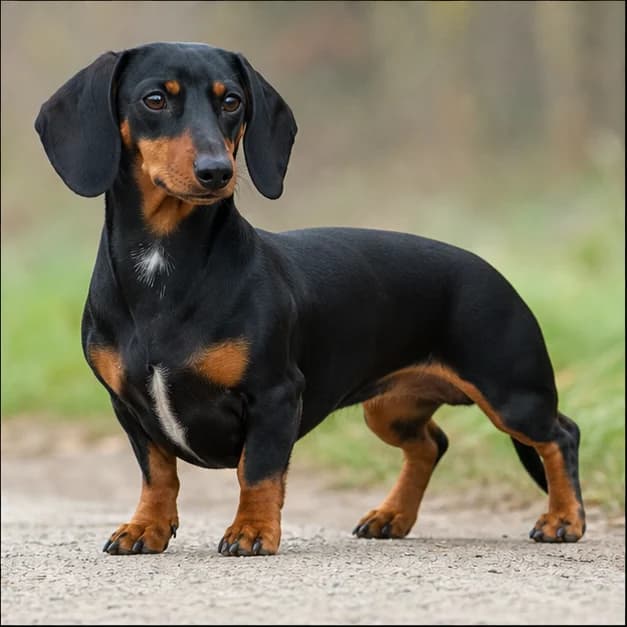
Markings are localized features, not a replacement for the main color description. Tan or cream points help identify two-color combinations. A small white chest patch may be noted separately, while extensive white distribution calls for a closer look at pattern terminology and the applicable breed standard.
Nose and eye pigment can support identification, but photography can mislead. A shadow may make a brown nose look black, while direct sun can wash a dark eye pale. Use several neutral-light photos and the dog’s records rather than one close-up.
Coat upkeep also changes what is visible. Matting can hide pattern edges and mix pale feathering with dirt or debris. Petful’s Dachshund shedding guide owns the grooming and seasonal-shedding details. For longer coats, an option such as the aumuca self-cleaning slicker brush may help with surface tangles when used gently, but a slicker does not suit every coat task or replace combing and professional advice. For smooth coats, Mr. Peanut’s Hand Gloves Grooming and Deshedding Aid are one gentle loose-hair option when used in the direction the coat grows.
Double dapple welfare warning
Double dapple can occur when two dapple Dachshunds are bred and a puppy inherits the dapple pattern from both parents. The concern is not that a white-heavy coat is unattractive. The concern is the increased risk of serious hearing and vision problems associated with this breeding.

Double dapple is a welfare boundary, not a premium color
- The Royal Kennel Club does not register puppies from two dapple parents because of the associated risk of impaired hearing and sight. Appearance cannot diagnose an individual dog, but responsible breeding avoids dapple-to-dapple matings and never markets the result as rare or more valuable.
The Royal Kennel Club Dachshund breed page states the restriction directly. The Dachshund Breed Council coat and color guide provides additional breed-specific genetics context.
Do not diagnose hearing, vision, or genetic status from white patches, eye color, or an online photograph. A veterinarian evaluates the individual dog, and a responsible breeder supplies clear parent information rather than relying on color labels.
Do colors change with age?
A Dachshund’s genetically determined color does not simply switch to an unrelated color, but appearance can change as the puppy coat is replaced, shading becomes clearer, longhair develops, sun exposure affects the coat, or gray hairs appear with age. A cream puppy may mature paler or show changing overlay, and a shaded red may look different once adult hair grows in.
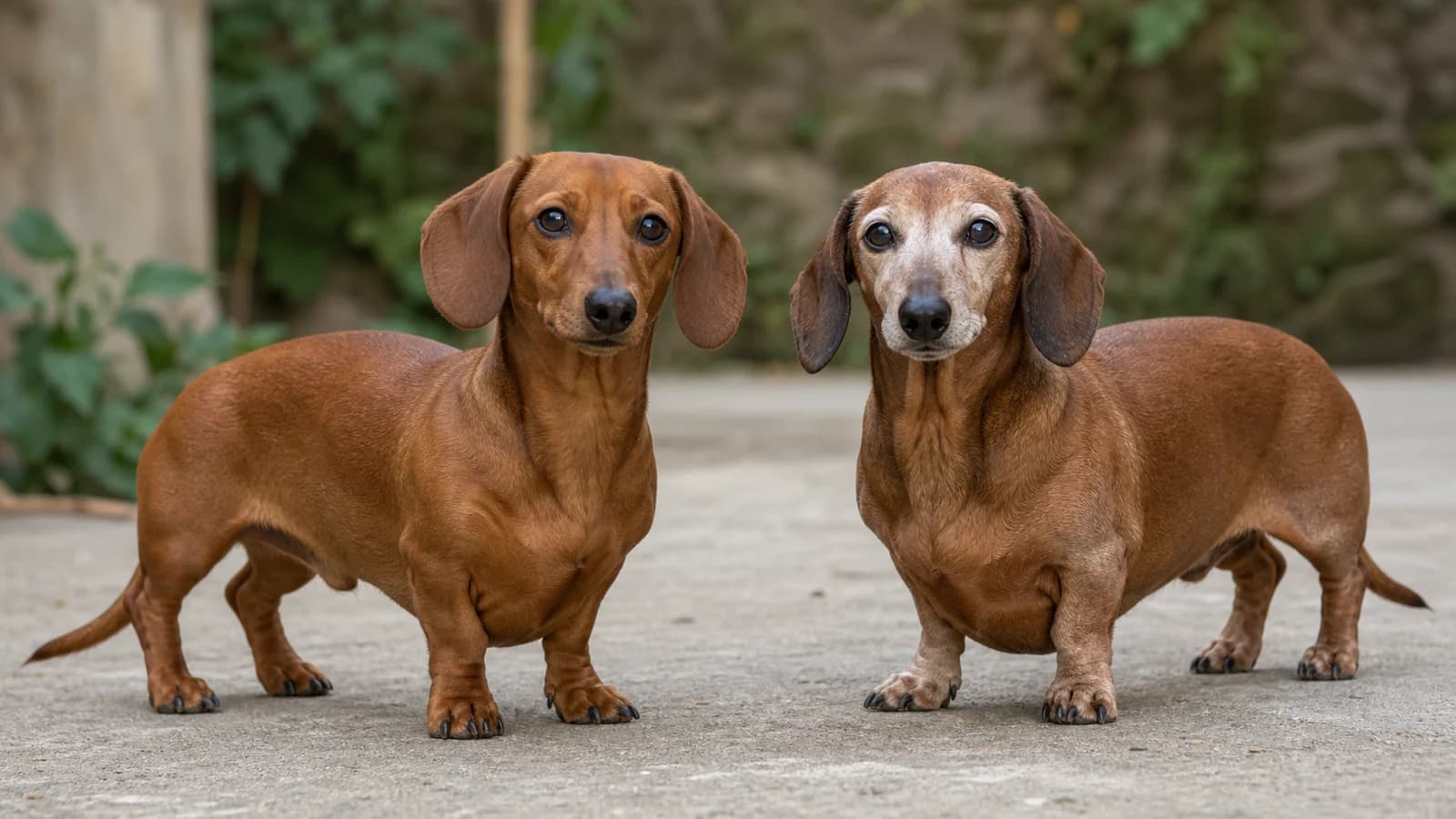
Take comparison photos in the same type of light, from the same side, without a filter. That record is more useful than comparing a warm indoor puppy photo with a cool outdoor adult photo. If the change involves hair loss, skin irritation, or a sudden patch rather than normal coat development, ask a veterinarian.
Color also does not determine adult size. Petful’s Miniature Dachshund guide explains the official size classification and why actual weight and measurements matter more than a puppy label.