
Petful is reader supported. As an affiliate of platforms like Amazon and Chewy, we may earn a commission when you buy through links on this page. There is no extra cost to you.
The typical Dachshund lifespan is often given as 12–16 years. That is a useful planning range, but it is not a promise for an individual dog. Size, inherited risk, body condition, dental health, activity, preventive care, and simple chance all help shape how long a Dachshund lives and how comfortable those years are.
Thinking about Dachshund lifespan is most useful when it leads to good decisions today. Keeping your dog at an appropriate weight, preserving muscle, adapting the home for safe movement, noticing subtle changes, and arranging timely veterinary care cannot guarantee extra years. They can support health, comfort, and earlier detection of problems throughout your dog’s life.

Don’t Guess When It Comes To Your Pet’s Care
Sign up for expert-backed reviews and safety alerts all in one place.
How long do Dachshunds live?
The American Kennel Club lists the breed’s expected life span as 12–16 years. Many owners understandably treat that as a forecast. In reality, it is a broad breed range that includes dogs with very different genetics, medical histories, lifestyles, and access to care.
A large 2024 UK study offers another way to look at longevity. Among the breeds and crossbreeds included, Miniature Dachshunds had an estimated median survival of 14.0 years. The study used records for 584,734 dogs, making it valuable population evidence, but it still cannot predict the lifespan of one particular Dachshund.
- 1A commonly cited Dachshund life span is 12–16 years
- 2A large UK study estimated a 14.0-year median for Miniature Dachshunds
- 3Population figures guide planning but do not predict an individual dog’s future
What an expected lifespan can tell you
A breed range can help you plan for long-term costs, insurance, preventive care, and the changing needs of a senior dog. It can also prompt useful conversations with your veterinarian before a problem becomes urgent. For example, you can discuss an appropriate body-condition target, dental prevention, mobility, and how often your dog should be examined.
The range cannot tell you that a 12-year-old Dachshund is at the end of life or that a 7-year-old cannot develop a serious condition. Calendar age is only one part of the picture. Function, comfort, appetite, behavior, and disease status matter more when assessing an individual dog’s health.
Quality and quantity both matter
A longer life is not the only goal. Good senior care also aims to protect pain-free movement, interest in family life, sleep, appetite, continence, and the ability to enjoy familiar activities. Those measures can change gradually, so a simple weekly note about what your dog can and wants to do may reveal a trend that memory misses.
Comfort can include a supportive resting area, especially for a dog who takes longer to settle. An orthopedic bed such as the FurHaven Velvet Waves Perfect Comfort Orthopedic Sofa Bed may be one practical home option if its height and firmness suit your dog. A bed is not a treatment for spinal disease, and a dog who appears painful still needs veterinary assessment.
Longevity numbers are easy to misunderstand because a range, an average, and a median describe different things. A 12–16-year expected range is a broad breed summary. An average is calculated by adding ages and dividing by the number of dogs, while a median is the midpoint of a studied population.
How to interpret Dachshund longevity numbers
| Number type | What it means | What it does not mean |
|---|---|---|
| 12–16-year breed range | A familiar planning range published for the breed | A guarantee that every Dachshund will live within it |
| 14.0-year median | Half of the studied Miniature Dachshunds had died before this estimated point and half after it | A personal forecast for a standard or miniature Dachshund |
| Individual prognosis | A veterinarian’s evolving assessment based on the dog’s health, function, and response to care | A fixed expiration date |
The 14.0-year estimate comes from the 2024 Scientific Reports life-table study. Researchers combined information from several UK sources and accounted for dogs who were still alive when their data ended. As with any retrospective population study, the result reflects its data set, time period, methods, and local dog population.
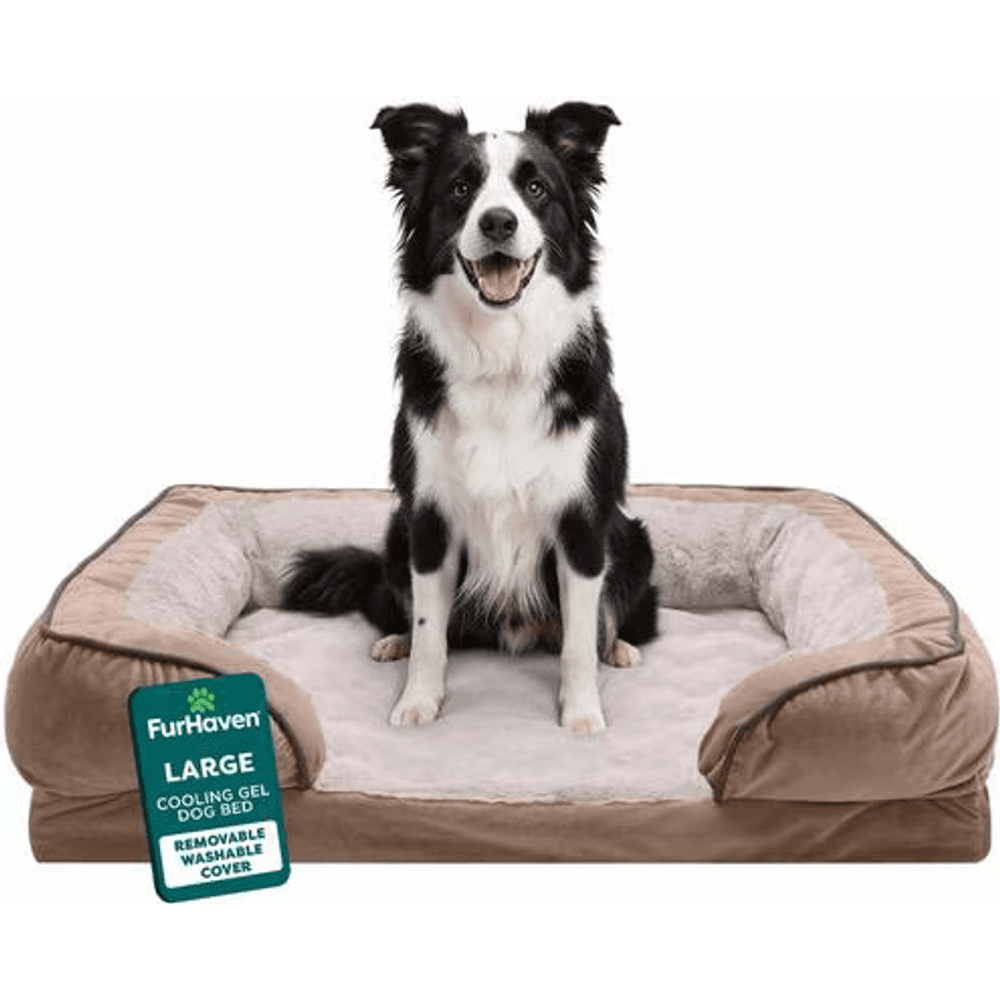
An orthopedic sofa bed with three bolstered sides for dogs who like to rest their head and joints against a cushion. The supportive foam base cradles hips and elbows, a comforting spot for an older or shaky dog to settle.
Petful may earn a commission when you click through to Chewy, at no extra cost to you.
The study’s authors also acknowledged limitations, including the possibility of duplicate dogs across sources and differences in how demographic information was recorded. That does not make the finding unhelpful. It means the number should be used as context, not as a countdown.
Do male or female Dachshunds live longer?
The same study found a modest sex difference across all dogs in its data: females had a median survival of 12.7 years and males 12.4 years. Those figures were not a Dachshund-specific male-versus-female result. It would be misleading to turn them into a prediction that a female Dachshund will outlive a male one.
For an individual dog, current health, inherited susceptibility, body condition, neuter status and timing, environment, and medical care create a much more complicated picture than sex alone. Ask your veterinarian to interpret risks in the context of your dog’s complete history rather than relying on a population-level difference of a few months.
Why two healthy-looking dogs may age differently
Genes influence susceptibility to disease, but they do not act alone. Two littermates can have different injuries, dental histories, body conditions, infections, exposures, and access to preventive care. Some diseases develop despite attentive care, while other problems are detected early because an owner notices a small change.
That uncertainty can feel uncomfortable. The useful response is not to chase a perfect formula. It is to focus on adjustable factors without blaming yourself for biology you cannot control.
Miniature vs. standard Dachshund lifespan
Miniature and standard Dachshunds share the same long-backed, short-legged body plan, but they are different size varieties. You can compare the basic breed context in Petful’s Dachshund breed profile and its guide to the Miniature Dachshund.

The large UK life-table study reported a 14.0-year median specifically for Miniature Dachshunds. It did not provide a matching standard-Dachshund figure in the same published breed table, so it cannot prove that miniature Dachshunds always live longer than standards.
Smaller dogs as a broad group often outlive larger dogs, but the difference between two varieties within one breed is not a simple scale effect. Their breeding populations, health risks, body condition, care, and representation in a data set may differ. Treat claims that one variety lives a precise number of years longer with caution unless they come from directly comparable, breed-specific evidence.
Plan for the dog in front of you
Whether a Dachshund is miniature or standard, care should be fitted to the individual. A healthy 10-year-old miniature may need a different exercise plan from a 10-year-old standard with osteoarthritis, dental disease, or a history of back pain. A veterinarian can assess the whole dog rather than using variety as a shortcut.
Measure progress through function: Can your dog rise without struggling? Walk with a steady gait? Maintain muscle? Eat comfortably? Rest well? Enjoy interaction? Those observations are more actionable than trying to decide which size variety wins a lifespan contest.
What affects a Dachshund’s lifespan
No single habit determines longevity. Instead, health develops through interacting factors, some adjustable and some not.
- Genetics and conformation: Inherited traits can affect disease susceptibility. Dachshund conformation is strongly associated with intervertebral disc disease risk.
- Body condition and muscle: Excess body fat can add health burdens, while muscle loss may reduce stability and resilience. Both require individual assessment.
- Nutrition: A complete diet, appropriate portions, and adjustments for life stage and medical needs support overall health.
- Movement and environment: Regular, suitable activity helps preserve fitness. Traction, sensible access, and supervision can make daily movement more manageable.
- Dental health: Painful oral disease can interfere with eating and welfare. Prevention and professional treatment matter throughout life.
- Preventive veterinary care: Exams, vaccination planning, parasite control, and age-appropriate testing can identify needs that are not obvious at home.
- Medical history: Prior spinal disease, heart disease, endocrine disease, cancer, and other conditions can alter both care and prognosis.
- Chance and exposure: Accidents and diseases can occur even when an owner does everything thoughtfully.
Prevention is not a promise
Good care changes risk and supports welfare; it does not make a Dachshund invulnerable. This distinction is especially important around IVDD. Owners are sometimes told that one diet, supplement, ramp, or rule will prevent a disc problem. Current evidence does not justify that certainty.

Soft-sided travel safety carrier that keeps a stressed cat secure and well-ventilated on the way to the vet, with mesh panels for airflow and a seat-belt loop.
Petful may earn a commission when you click through to Chewy, at no extra cost to you.
A practical plan combines routine care with early recognition. Know your dog’s normal gait, posture, appetite, toileting, and tolerance for touch. Changes from that baseline are often more informative than a generic checklist.
If a small carrier makes transport to routine appointments safer and calmer, the Frisco Travel Safety Dog & Cat Carrier in Medium is one option to evaluate. Confirm your Dachshund’s measurements and the carrier’s current weight limit first, and lift the carrier with the dog’s body kept level. A carrier is not appropriate if it compresses the dog or if moving a painful dog could worsen distress.
IVDD, mobility, and weight evidence
Intervertebral disc disease, commonly shortened to IVDD, is a major Dachshund health concern. Degenerated disc material can cause pain, spinal-cord compression, weakness, and in severe cases paralysis or loss of bladder control. The condition ranges from painful but ambulatory episodes to surgical emergencies.
A 2015 owner survey of 2,031 Dachshunds discussed earlier reports estimating that 19–24% of Dachshunds show signs of IVDD during their lifetime. In the study itself, researchers examined associations between reported IVDD and factors including exercise, jumping, stairs, neuter status, age, and body condition.
The DachsLife 2015 study found that body-condition score was not significantly associated with IVDD in its analysis, while previous studies had produced conflicting findings. The survey was observational and owner reported, so it cannot show that a particular behavior caused or prevented disease.
Weight control is not an IVDD guarantee
- Keeping a Dachshund at an appropriate body condition supports general health and mobility, but current evidence does not prove that leanness prevents IVDD. A lean dog can still have a disc episode, and a dog with pain, weakness, or a changed gait needs veterinary care.
Build a mobility-aware routine
Regular movement supports cardiovascular fitness, muscle, coordination, and mental engagement. The appropriate amount depends on age, conditioning, current health, weather, and any veterinary restrictions. Sudden bursts of unfamiliar exertion are different from consistent, progressive activity.
Useful everyday adjustments may include:
- providing nonslip footing on slick floors;
- keeping nails and paw fur managed so traction is not reduced;
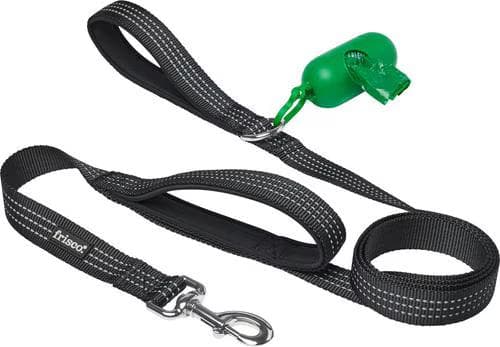
- using a well-fitted harness for ordinary walks if your veterinarian agrees; A short, controlled setup can include the Frisco Traffic Leash with Dual Padded Handles when its width and hardware suit the dog; equipment does not replace veterinary mobility advice.
- preventing uncontrolled leaps from high furniture;
- placing essentials where the dog can reach them without repeated difficult transitions;
- maintaining calm, regular activity rather than relying on occasional intense outings; and
- asking for rehabilitation guidance after an injury, surgery, or meaningful mobility decline.
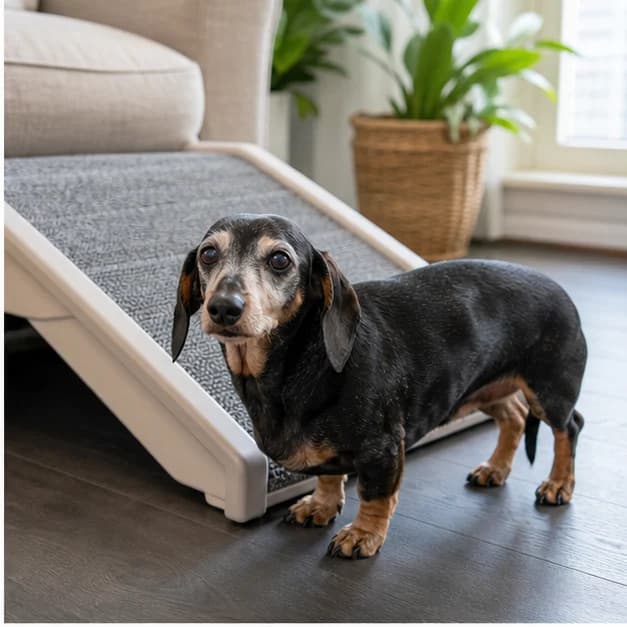
A ramp may reduce the need to jump in a particular setting, but it only helps if the dog uses it steadily and the surface has traction. A steep, narrow, or unstable ramp can create a new hazard. Introduce equipment with positive reinforcement before the dog urgently needs it, and do not force a painful dog to practice.
Know your dog’s baseline
Watch your Dachshund walk away from you, toward you, and across a room when healthy. Notice the usual position of the head and back, how smoothly the rear feet move, and whether the dog hesitates at thresholds. A brief video can give your veterinarian useful comparison footage if something changes.
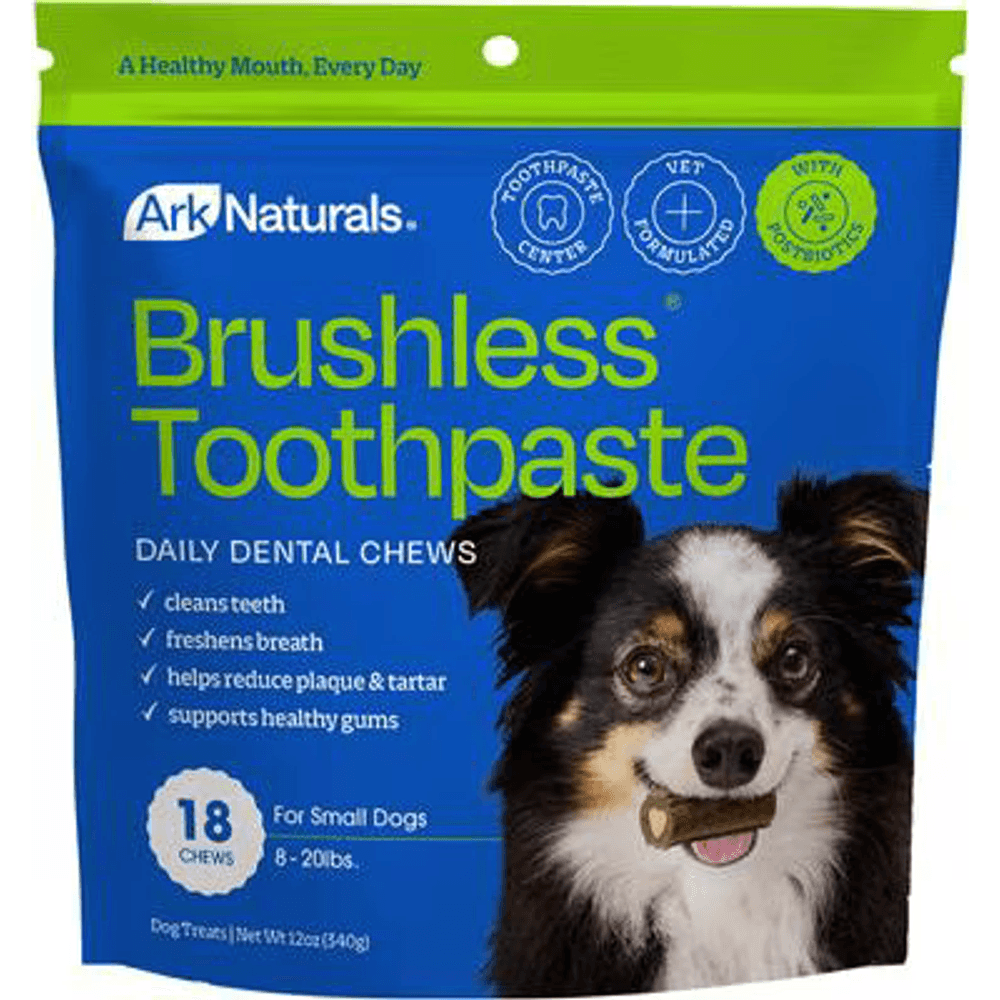
Brushless dental chews for small dogs with a toothpaste center that cleans teeth, reduces plaque and tartar, and freshens breath as they chew. A no-brushing daily option for dogs 8 to 20 pounds.
Petful may earn a commission when you click through to Chewy, at no extra cost to you.
Do not repeatedly test a dog who seems painful by making them walk, climb, or jump. Restrict unnecessary movement, keep them calm, and call a veterinarian for instructions. The urgency section below lists signs that should not wait for a routine appointment.
Body condition, nutrition, and muscle
Body weight alone cannot tell you whether a Dachshund is too thin, in an appropriate condition, or carrying excess fat. The number on a scale needs context from body-condition scoring and muscle assessment.
The World Small Animal Veterinary Association nutrition guidelines distinguish body-condition score, which estimates fat stores, from muscle-condition score, which assesses muscle. A dog can lose muscle while maintaining or gaining fat, so stable scale weight does not always mean stable physical condition.
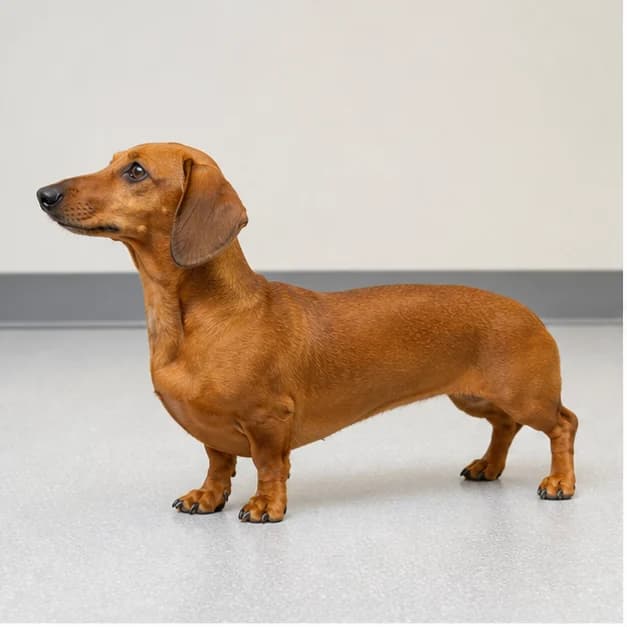
What owners can monitor at home
At an appropriate condition, many dogs have ribs that are easy to feel under a light fat covering, a visible waist from above, and an abdominal tuck from the side. Breed shape and individual variation matter, so ask your veterinary team to show you what a target looks and feels like for your Dachshund.
Check the same way every few weeks:
- Weigh your dog on the same reliable scale when possible.
- Feel over the ribs without pressing hard.
- Look for a waist from above and a tuck from the side.
- Feel over the spine, shoulders, skull, and hips for new muscle loss or prominence.
- Note appetite, chewing comfort, stool quality, thirst, and activity alongside the number.
A rapid change deserves veterinary attention. Weight loss can reflect reduced intake, dental pain, gastrointestinal disease, kidney disease, diabetes, cancer, or another problem. Weight gain may relate to portions and activity, but fluid accumulation, endocrine disease, or medication effects can also change appearance.
Feed the individual, not the package estimate
Feeding guides are starting points. Energy needs vary with age, neuter status, activity, environment, health, and the food’s calorie density. Measure meals, count treats and chews, and adjust with your veterinary team’s guidance.
For a Dachshund who gulps meals, a slow feeder such as the Outward Hound Non-Skid Plastic Slow Feeder Interactive Dog Bowl may slow access to kibble. Choose an appropriate size and pattern, supervise use, and stop if it causes frustration or damages teeth. A slow feeder does not cause weight loss by itself; total daily calories still determine the portion.
Senior dogs may need changes in calorie density, protein, texture, or nutrient profile, but older age does not create one universal diet. Kidney disease, heart disease, gastrointestinal disease, dental pain, and other conditions can change the appropriate choice. Do not add supplements or switch to a restricted diet solely because a dog has reached a certain birthday.
Preserve safe, comfortable activity
Muscle maintenance needs both adequate nutrition and suitable movement. Shorter, more frequent outings may suit an older Dachshund better than one long walk. Gentle sniffing, controlled walking, and veterinarian-approved strengthening can provide value without demanding speed.
If your dog tires more quickly, do not assume it is “just old age.” Pain, heart or lung disease, anemia, endocrine disease, and neurologic problems can all reduce stamina. A clinical assessment is the right starting point before increasing exercise or deciding that decline is inevitable.
Dental health and comfort
Dental disease can be painful even when a dog continues to eat. Dachshunds and other small dogs may need especially diligent prevention because small mouths can have crowded teeth and periodontal problems.
Petful may earn a commission when you click through to Chewy, at no extra cost to you.
The AAHA dental-care guidelines support a combination of home prevention and professional veterinary care. Brushing is most effective when introduced gradually and performed safely with dog-specific toothpaste. Human toothpaste should not be used. A small handling bridge such as the Jasper 360 Dog Finger Toothbrush may help some dogs accept brief brushing, but stop if the mouth is painful or the dog is distressed.
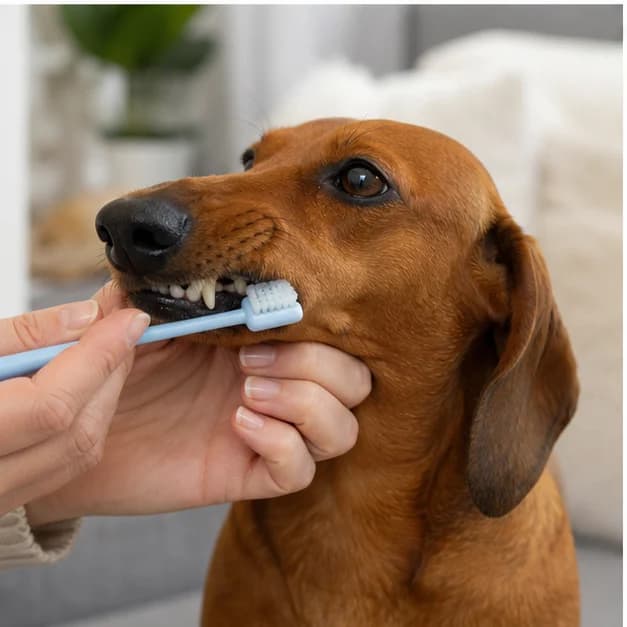
Start by helping your dog accept brief handling around the muzzle. Add a small amount of dog toothpaste, then a soft brush, without forcing the mouth open. Stop if the dog is frightened or painful and ask the veterinary team for a gentler plan.
Dental chews can be an adjunct, not a substitute for brushing, exams, or indicated professional treatment. The Ark Naturals Brushless Toothpaste Small Dental Dog Treats are sized for small dogs, but confirm that the product fits your dog’s calorie plan and chewing style. Supervise any chew and ask your veterinarian whether it is appropriate if your dog has dental disease, a restricted diet, or swallowing concerns.
Signs the mouth needs attention
Arrange an examination for persistent bad breath, red or bleeding gums, loose or broken teeth, facial swelling, pawing at the mouth, dropping food, chewing on one side, or reluctance to eat hard food. A Dachshund who suddenly refuses food or appears acutely painful needs prompt care.
An awake visual check cannot reveal all disease below the gumline. Professional dental assessment may include anesthesia and dental radiographs when indicated. Do not attempt to scrape tartar at home, because that can injure the gums, leave disease untreated, and create a false sense that the mouth is healthy.
For more detail, see Petful’s practical guide to dog dental care.
When is a Dachshund a senior?
There is no universal birthday when every Dachshund becomes senior. The AAHA senior-care guidelines describe the senior life stage as roughly the last 25% of an animal’s estimated lifespan, while emphasizing that aging differs by species, breed, size, and individual.
If a Dachshund were to live 12–16 years, that framework might place the beginning of the senior stage somewhere around 9–12 years. This is an illustrative planning estimate, not a diagnosis or cutoff. A dog may develop age-related needs earlier or remain vigorous later.
Senior is a care stage, not a disease
Labeling a dog “senior” should open the door to closer observation and individualized preventive care. It should not make pain, confusion, incontinence, weight loss, or reduced mobility seem normal and untreatable.
Age-related changes can overlap with treatable disease. Reduced hearing may be gradual, for example, while reluctance to walk may reflect pain. New nighttime restlessness can have medical, sensory, pain-related, or cognitive causes. Report changes rather than writing them off.
Petful’s overview of senior dog health can help you organize questions for an appointment.
Senior Dachshund care checklist
Senior care works best as a repeatable system. Track what is normal, adapt the home as needs change, and involve the veterinary team before a small issue becomes a crisis.
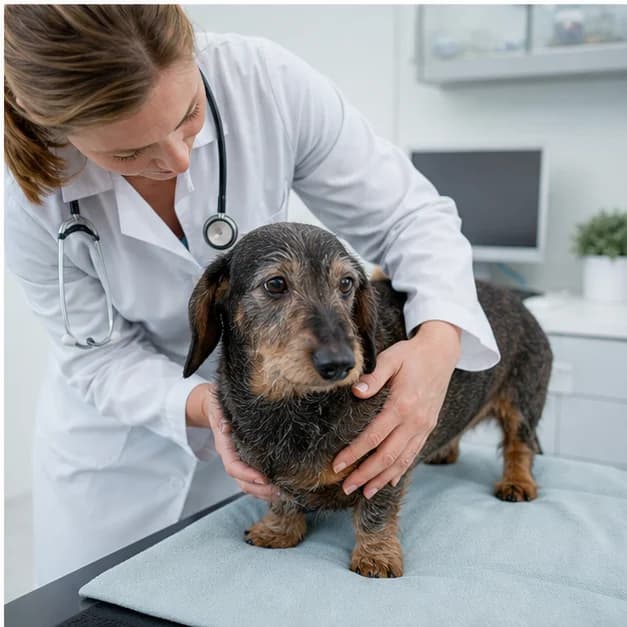
The AAHA guidance for evaluating healthy senior pets highlights careful attention to the mouth, eyes, skin masses, spine, joints, and muscle. It notes that medical workups may be appropriate once or twice yearly depending on the patient. Your veterinarian should set the interval and tests for your dog.
Senior Dachshund care checklist
| Area | What to monitor at home | What to discuss with the veterinary team |
|---|---|---|
| Weight and body condition | Monthly weight trend, ribs, waist, appetite, and muscle | Target condition, calorie plan, unexplained change, and muscle loss |
| Mobility | Gait, rising, stairs, slips, willingness to walk, and posture | Pain assessment, neurologic exam, medication, rehabilitation, and home changes |
| Mouth | Breath, gums, chewing, dropped food, and facial swelling | Dental exam, home care, radiographs, and professional treatment |
| Senses and behavior | Vision, hearing, sleep, house training, interaction, and anxiety | Eye and ear exam, pain, medical causes, and cognitive assessment |
| Toileting | Urine volume, accidents, stool, straining, and continence | Urinalysis, bloodwork, imaging, diet, and medication where indicated |
| Comfort and joy | Rest, social interest, favorite activities, and good versus difficult days | Quality-of-life plan and thresholds for reassessment |
Veterinary visits and screening
Do not wait for an annual date if something changes. Depending on age, history, medications, and findings, a senior visit may include a full examination, weight and body-condition assessment, muscle scoring, dental evaluation, blood pressure, bloodwork, urinalysis, or other tests.
Screening does not guarantee that every disease will be found early. It can, however, establish trends and reveal changes before they are obvious at home. Ask what each recommended test is looking for and how the result could change the plan.
Bring a concise record:

Multiple ridges and valleys slow eating, reduce gas and bloating, and turn mealtime into a fun puzzle. Non-skid base, dishwasher safe, 4-cup capacity.
Petful may earn a commission when you click through to Chewy, at no extra cost to you.
- current foods, treats, chews, and supplements with amounts;
- all medications and when they are given;
- recent weight changes;
- appetite, thirst, urination, and stool changes;
- videos of altered gait, coughing, confusion, or unusual episodes;
- a list of activities your dog can no longer do comfortably; and
- two or three questions you most need answered.
Home setup
Traction is often the first practical improvement. Place secured nonslip runners along common routes and keep food, water, beds, and toileting access easy to reach. Block unsafe furniture access if your dog cannot use it steadily, and supervise equipment until you know it is reliable.
Keep nails at a functional length. Check paw pads and the fur between them. A dog who suddenly begins slipping despite a stable setup may have pain, weakness, vision loss, or another medical problem that needs assessment. For dogs comfortable with powered tools, the Casfuy Upgraded Quiet 6 Speed Nail Grinder is one option to compare with clippers or professional nail care; avoid heat, pressure, and the quick.
Comfortable temperature and quiet rest also matter. Older Dachshunds may seek warmth, but heating pads and hot-water bottles can burn skin, especially when mobility or sensation is reduced. Use veterinary-approved warming options and ensure the dog can move away.
Movement and enrichment
Adjust activity rather than removing it automatically. Several short, comfortable walks may preserve routine and interest better than a long outing that leaves the dog sore. Let pace, gait quality, recovery, and veterinary advice guide you.
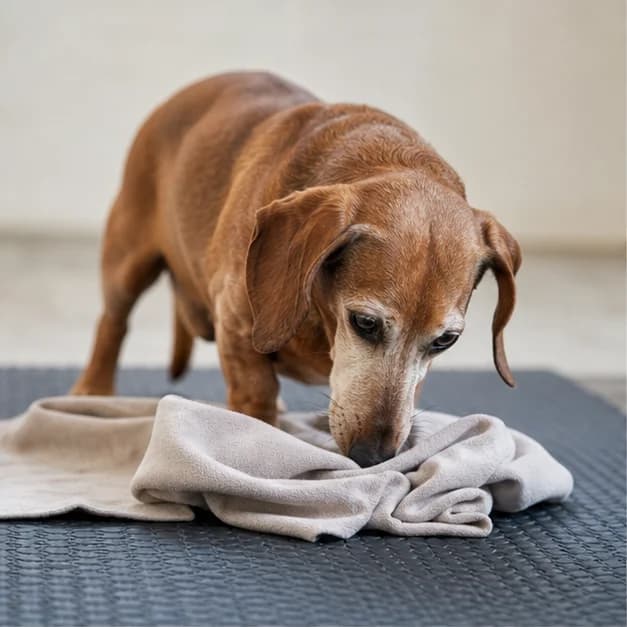
Low-impact enrichment can include sniffing games, food searches, simple choice-based training, and calm social time. Use part of the measured daily food allowance when appropriate, and avoid games that encourage frantic twisting or repeated jumping. The Outward Hound Nina Ottosson Lick N’ Flip Treat Puzzle is one supervised food-enrichment option when its difficulty and calories fit the individual.
Make quality of life observable
Choose several things that make your dog recognizably themselves: greeting you, eating willingly, resting comfortably, sniffing outdoors, seeking affection, or enjoying a favorite toy. Record whether those experiences are present and whether discomfort prevents them.
A calendar of good, mixed, and difficult days is not a verdict by itself. It is evidence for a conversation. Include pain control, mobility, appetite, hydration, hygiene, breathing, sleep, anxiety, and connection rather than judging quality of life from one cheerful moment.
If you are facing a serious decline, Petful’s guide on when it may be time to put a dog down can help you prepare questions. The decision should be made with your veterinarian, based on the individual dog’s condition and welfare.
Changes that need veterinary care now
Some changes in a Dachshund should not wait for a routine senior appointment. Spinal-cord problems can progress, and severe weakness or loss of function may be time sensitive.
Possible spinal emergency
- Contact a veterinarian or emergency clinic immediately if your Dachshund suddenly cannot stand or walk, drags the rear legs, develops marked weakness or wobbliness, cries out with back or neck pain, loses bladder or bowel control, or cannot urinate. Keep the dog quiet, limit movement, support the body level during transport, and follow the clinic’s instructions. Do not give human pain medicine.
The Cornell University College of Veterinary Medicine IVDD guide identifies back discomfort, a wobbly gait, rear-limb weakness, paralysis, and incontinence among possible signs and recommends contacting a veterinarian at the first sign. The Merck Veterinary Manual likewise describes pain, weakness, loss of movement, paralysis, and incontinence with spinal disorders.
Other urgent signs
Seek prompt veterinary or emergency advice for:
- difficulty breathing, blue or very pale gums, or collapse;
- repeated unproductive retching or a suddenly enlarged abdomen;
- a seizure lasting several minutes or repeated seizures without recovery;
- severe bleeding, major trauma, or suspected poisoning;
- repeated vomiting with weakness or inability to keep water down;
- straining without producing urine;
- sudden blindness, severe disorientation, or loss of balance;
- refusal of food accompanied by pain, lethargy, or another significant change; or
- any rapid decline that makes you concerned your dog is suffering.
Call ahead when possible so the clinic can advise safe transport and prepare for arrival. If you are unsure whether a sign is urgent, describe exactly what you see, when it began, and whether it is worsening.
Cause-of-death evidence and limitations
Owners often ask for the leading cause of death in Dachshunds, but there is no single current global registry that can answer for every country, variety, and time period.
One frequently cited source is a 2004 UK owner survey summarized by Dachshund Health UK. Among 245 reported deaths, the leading category was “old age” at 21.6%, followed by cancer at 16.7%, cardiac disease at 14.3%, neurologic disease at 11.0%, and IVDD at 4.1%.
Those figures need substantial context. The survey was owner reported, the sample was small, the dogs were in the UK, categories may reflect owners’ understanding rather than a veterinary postmortem diagnosis, and care has changed since 2004. “Old age” also describes a category, not a specific biological cause.
How to use the mortality survey
The original Dachshund Health UK mortality report is useful historical evidence. It is not proof that old age, cancer, heart disease, or IVDD is the leading cause for today’s US Dachshunds or for your dog.
What this evidence is good for
Mortality studies can identify questions worth studying and remind owners that Dachshund health is broader than the spine. They can also support balanced preventive care that includes dental, cardiac, metabolic, cancer, and mobility awareness.
They should not be used to rank one dog’s fate. A veterinarian’s assessment of current findings, diagnostic results, and response to treatment is far more relevant to an individual prognosis.
Frequently asked questions about Dachshund lifespan
Frequently Asked Questions
A large 2024 UK study estimated a 14.0-year median for Miniature Dachshunds, but it did not publish a directly comparable standard-Dachshund figure in the same breed table. That means it cannot prove that miniatures always live longer. Individual health and care matter more than a size label.
There is no fixed age for every Dachshund. AAHA describes the senior stage as roughly the final 25% of expected lifespan. Using a 12–16-year planning range might place the transition around age 9–12, but your veterinarian should assess the individual dog.
An appropriate body condition supports general health and mobility, but no responsible source can promise that it will add a specific number of years. The 2015 DachsLife study did not find a significant link between body-condition score and IVDD in its analysis, so leanness should not be presented as a guarantee against disc disease.
There is no universal duration. The right amount depends on health, conditioning, gait, pain, weather, and veterinary restrictions. Many seniors benefit from regular, shorter, comfortable walks and low-impact enrichment, adjusted if they become sore or unusually tired.
Dental disease can cause pain, infection, and difficulty eating even when a dog does not stop eating entirely. Home prevention, veterinary examinations, and professional treatment when indicated protect comfort and function.
Track pain, mobility, appetite, hydration, hygiene, breathing, sleep, anxiety, social connection, and access to favorite activities. A good-day and difficult-day calendar can reveal trends, but it should support a veterinary conversation rather than replace one.
The interval should be individualized. AAHA notes that senior medical workups may be appropriate once or twice yearly depending on the patient, and any new symptom warrants earlier contact. Your veterinarian may recommend different exams or tests based on history and medications.
There is no permanent, definitive breed record that predicts normal Dachshund longevity. Guinness World Records verified a Miniature Dachshund named Funny as the oldest living dog at 21 years and 169 days on November 12, 2020. That exceptional age is an outlier, not a realistic expectation for every Dachshund.
A longevity statistic can help you prepare, but it cannot tell you how much time one dog has. The best plan is both hopeful and realistic: protect everyday comfort, watch for change, use evidence without turning it into certainty, and involve your veterinarian early.

BVMS, MRCVS
Dr. Pippa Elliott, BVMS, MRCVS, is a veterinarian with nearly 30 years of experience in companion animal practice. Dr. Elliott earned her Bachelor of Veterinary Medicine and Surgery from the University of Glasgow. She was also designated a Member of the Royal College of Veterinary Surgeons. Married with 2 grown-up kids, Dr. Elliott has a naughty Puggle named Poggle, 3 cats and a bearded dragon.