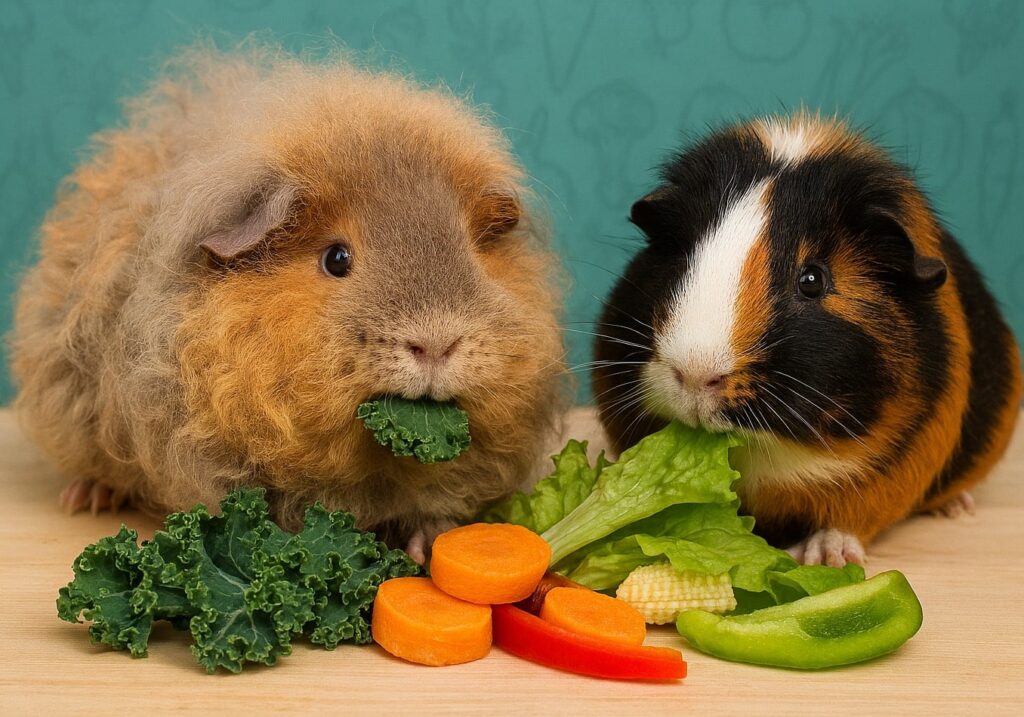

Guinea pigs need fresh vegetables every day because their bodies can’t produce vitamin C on their own. A healthy guinea pig diet should include around 1 cup (80–100 g) of safe vegetables per guinea pig daily.
Feeding the best vegetables for guinea pigs provides them with the vitamin C, fibre, hydration, and other key nutrients they need to stay active and healthy.
Offering a variety of safe vegetables helps prevent illness, supports good digestion, and keeps mealtimes fun and enriching — your guinea pigs will enjoy exploring different tastes and textures.
For the best results, rotate leafy greens and colourful, nutrient-rich vegetables throughout the week. This variety is the gold standard for guinea pig care, ensuring a balanced and enjoyable diet.
Best Vegetables for Guinea Pigs (Essential List)
The best vegetables for guinea pigs are leafy greens and nutritious options like bell peppers and cucumber, which provide vitamin C, fibre, and hydration. These safe vegetables for guinea pigs can be fed daily, forming the base of their fresh food portion while keeping meals varied and enriching.
🌿 Best Leafy Greens
- Bok Choy – crisp and refreshing; a tasty leafy green to include in a varied mix
- Dandelion Leaves & Flowers – natural favourite full of fibre and nutrients; safe from the garden if pesticide-free
- Kale – nutrient-dense, high in vitamin C and fibre; best rotated with other leafy greens
- Lettuce (except iceberg) – romaine, little gem, and red/green leaf lettuces are excellent daily staples; iceberg has little nutrition and should be avoided
- Rocket (Arugula) – peppery, antioxidant-rich green; guinea pigs often prefer it mixed with milder leaves
- Collard Greens – hearty, fibre-rich leafy veg; a reliable option to include regularly
- Watercress – fresh and nutrient-rich; strong flavour that some guinea pigs particularly enjoy
❤️ Leafy Greens Guinea Pigs Love Most
Most guinea pigs enjoy a variety of leafy greens, but lettuce, dandelion leaves, and kale are the clear favourites with my guinea pigs. 🌿
🌈 Colourful & Nutrient-Rich Vegetables
- Bell Peppers – safe daily and one of the best sources of vitamin C; all colours are enjoyed, especially red
- Carrots – crunchy and naturally sweet; best offered as a small chunk treat a few times per week
- Celeriac – a fibre-rich root veggie, often preferred over other roots.
- Celery – hydrating and refreshing; guinea pigs often enjoy the leafy tops as much as the stalk
- Corn on the Cob & Baby Corn – sweet and starchy; feed in small quantities although husks and silk provide extra fibre
- Cucumber – hydrating, low-calorie, and safe for daily feeding; a refreshing choice in warmer weather
- Fennel – aromatic and crunchy; adds interest to the mix when fed in small amounts
- Green Beans – fibre-rich and nutrient-boosting; safe raw in moderation as part of a mixed vegetable selection
- Tomato (ripe fruit only) – juicy and refreshing; a popular occasional treat, but never feed the leaves or vine

🐹 Are Your Guinea Pigs Picky Eaters?
I’ve found that guinea pigs can go off a food if they’re offered too much of it too often. 🌈 Rotating vegetables keeps them interested and ensures a healthier, more balanced diet.
Vegetables to Limit in a Guinea Pig’s Diet
Some vegetables are safe for guinea pigs but should only be fed in small amounts or occasionally. Overfeeding certain foods can lead to gas, digestive upset, or other imbalances. Including these vegetables once in a while adds variety, but they shouldn’t make up the main portion of your guinea pigs’ fresh diet.
- Beetroot – well-liked sweet root; feed in small amounts as an occasional treat
- Broccoli – nutritious but can cause gas if overfed; offer only a small floret occasionally
- Brussels Sprouts – strong flavour and can cause bloating; feed only a very small sprout once in a while
- Cabbage (white, red, savoy) – may cause digestive discomfort and isn’t always well liked; best in tiny portions if at all
- Cauliflower – can cause gas; feed just a small floret occasionally, though the leaves are also safe to eat
- Spinach – loved by many guinea pigs but best limited to occasional small servings as high in oxalates
- Swiss Chard – nutrient-rich but best given sparingly due to compounds that may affect urinary health
- Turnip – cruciferous root vegetable that can cause gas; offer rarely and only in small amounts
🎃 Unpopular Vegetables
Every guinea pig has their own tastes. I’ve found that vegetables such as Brussels sprouts, butternut squash, cabbage, cauliflower, courgette (zucchini), parsnip, pumpkin, radish, swede (rutabaga), and turnip are less popular, so don’t be surprised if your guinea pigs turn up their noses at them.
❌ Vegetables Guinea Pigs Must Never Eat (Potato, Onion…)
Some vegetables and plants are toxic to guinea pigs and must never be fed under any circumstances. These foods can cause serious illness or even be fatal. Always double-check if a food is safe before offering it, and stick to proven safe vegetables for guinea pigs to keep your pets healthy. See the RSPCA’s advice on guinea pig diets for more information.
- Avocado – contains persin, which is toxic to guinea pigs and can cause severe illness
- Chilli peppers (hot peppers) – unsafe due to capsaicin; can burn the mouth and digestive tract (sweet bell peppers are safe)
- Chives – part of the onion family; harmful to guinea pigs’ red blood cells
- Garlic – toxic and can damage blood cells, leading to serious health issues
- Ginger – not considered toxic but too strong and irritating for guinea pigs’ digestive system; best avoided completely
- Leeks – related to onions and chives; can cause poisoning in guinea pigs
- Onion – extremely toxic; can cause blood cell damage and digestive upset
- Potato and potato leaves – contain solanine, a natural toxin that is highly dangerous (sweet potato is safe in small amounts but not a favourite)
- Shallots – from the onion family; toxic to guinea pigs just like onions and garlic
- Spring onions – unsafe; also part of the onion family and toxic
- Tomato plant leaves and vine – contain poisonous alkaloids; only the ripe tomato fruit is safe
- Wild garlic leaves – toxic, even though they resemble edible herbs; never feed to guinea pigs
☠️ Vegetables That Look Safe but Aren’t for Guinea Pigs
Some vegetables may seem harmless but are actually toxic:
❌ Avocado – toxic to guinea pigs.
❌ Onions, garlic, leeks, chives – toxic to guinea pigs.
❌ Potatoes and potato leaves – unsafe and can be poisonous.
❌ Tomato plant leaves & vines – fruit is safe, but the plant is toxic.
👉 See the full Unsafe Foods Guide for Guinea Pigs ›
✅ Safe Vegetable Chart for Guinea Pigs
Feeding Frequency Guide
Vitamin C, Calcium & Sugar Content
📖 Sources: USDA FoodData Central; AFCD – Australian Food Composition Database and other reliable sources. Nutrition values may vary between sources.
👉 Want an Easy Reference?
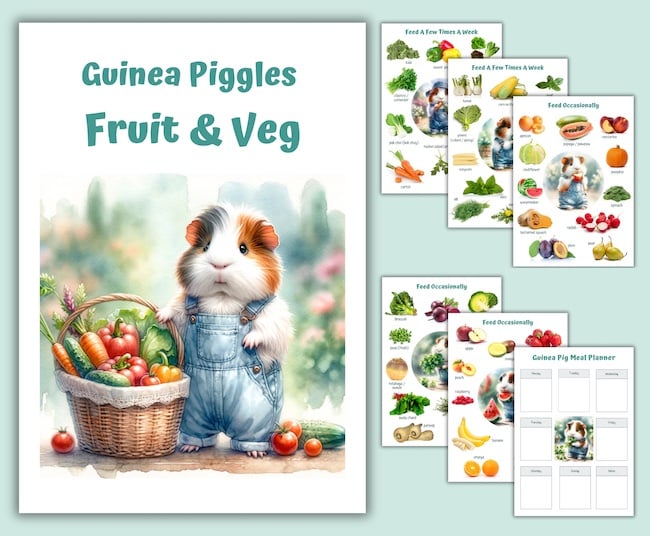
Make feeding simple with my Printable Food Charts Pack — includes a meal planner, safe food charts, and nutrition tables.
Top 5 Veggies Highest in Vitamin C for Guinea Pigs
Guinea pigs are unable to produce or store vitamin C in their bodies, so it must be obtained daily via fresh vegetables. The following are among the best vegetables high in vitamin C for guinea pigs, which can be fed frequently as part of a healthy, balanced diet—but should not be given in excess and should always be mixed with other recommended vegetables.
⭐ Quick Reference: Best Vitamin C Veggies
📖 Sources: USDA FoodData Central; https://afcd.foodstandards.gov.au/; MyFoodData
Rotating these vitamin C-rich vegetables for guinea pigs helps prevent deficiencies, supports strong immunity, and keeps their daily meals varied and enjoyable.
Individual Vegetables Information
Want to go beyond the basics? Click below for full guides to each vegetable — including nutritional benefits, portion tips, and risks to watch for.
🫑 Bell Peppers → Read the Bell Pepper guide ›
🥬 Bok Choy → Read the Bok Choy (Pak Choi / Chinese Leaf) guide ›
🥦 Broccoli → Read the Broccoli guide ›
🥕 Carrots → Read the Carrot guide ›
🌱 Celeriac→ Read the Celeriac guide ›
🌱 Celery → Read the Celery guide ›
🥬 Collard Greens → Read the Collard Greens guide ›
🌾 Corn on the Cob → Read the Corn guide ›
🥒 Cucumber → Read the Cucumber guide ›
🌼 Dandelion → Read the Dandelion guide ›
🌿 Fennel → Read the Fennel guide ›
🌿 French Beans (Fine Green Beans) → Read the French Beans guide ›
🥬 Kale → Read the Kale guide ›
🥬 Lettuce → Read the Lettuce guide ›
🌿 Spinach → Read the Spinach guide ›
🍅 Tomato→ Read the Tomato guide ›
🍃 Watercress→ Read the Watercress guide ›
Meal Planning Guide for Guinea Pigs
Feeding a variety of vegetables each week keeps your guinea pigs healthy, prevents boredom, and ensures they get a balance of nutrients. A simple meal plan helps you rotate foods, avoid repetition, and makes daily feeding much easier.
Weekly Vegetable Plan Example
Here’s an example of how to structure a weekly vegetable plan for your guinea pigs, including some herbs for added nutrition and a small amount of fruit as an occasional treat.
| Day | Vegetables (plus herbs & fruit) |
|---|---|
| Monday | Lettuce, Kale, Celery, Carrot, Parsley (herb) |
| Tuesday | Spring Greens, Bok Choy, Cucumber, Bell Pepper, Basil (herb) |
| Wednesday | Lettuce, Cauliflower Leaves, Celeriac, Tomato, Mint (herb) |
| Thursday | Kale, Bok Choy, Bell Pepper, Apple (fruit), Dill (herb) |
| Friday | Spring Greens, Romaine Lettuce, Celery, Carrot, Coriander/Cilantro (herb) |
| Saturday | Cauliflower Leaves, Kale, Cucumber, Bell Pepper, Mint (herb) |
| Sunday | Romaine Lettuce, Bok Choy, Parsley, Carrot, Blueberry |
Notes for Owners
- Veg rotation: Mix leafy greens and colourful vegetables varying daily to prevent boredom and balance nutrients.
- Herbs: Highly nutritious food for guinea pigs – rotate for variety.
- Fruit: 3-5 times a week in small portions due to sugar content.
- This is just an example — adjust based on what’s fresh, seasonal, and what your guinea pigs enjoy.

👉 Want a ready-to-use template? My Printable Food Charts Pack includes a full-colour Meal Planner, safe food charts, and nutrition tables — everything you need to plan balanced meals with confidence. Download the pack here.
Frequently Asked Questions About Vegetables for Guinea Pigs
1. What Vegetables Can Guinea Pigs Eat Daily?
Guinea pigs can eat leafy greens like romaine lettuce, kale, and daily staples such as bell peppers and cucumber. These provide fibre, hydration, and vitamin C, which guinea pigs cannot produce themselves.
2. Can Guinea Pigs Eat Aubergine (Eggplant)?
Yes, guinea pigs can eat aubergine but it is high in oxalates which can contribute to bladder stones and is not one of their favourite vegetables.
3. Can Guinea Pigs Eat Baby Corn?
Yes, guinea pigs can eat baby corn and most enjoy this sweet vegetable. It has less sugar than sweetcorn on the cob and can be fed in small amounts a couple of times each week.
4. Can Guinea Pigs Eat Brussel Sprouts?
Yes, guinea pigs can eat brussel sprouts but they are often disliked and can cause bloating if fed too often or in large quantities.
5. Can Guinea Pigs Eat Iceberg Lettuce?
Iceberg lettuce is not toxic but has very little nutritional value and can cause diarrhoea due to its high water content. Romaine or other leafy lettuces are much better options.
6. Can Guinea Pigs Eat Frozen Vegetables?
No, guinea pigs should not eat frozen vegetables of any kind. Even when defrosted, frozen veg can cause diarrhoea and digestive upset. Always offer fresh, raw vegetables instead.
7. Can Guinea Pigs Eat Cooked Vegetables?
No, guinea pigs should only eat fresh, raw vegetables as this is closer to their natural diet.
8. Can Guinea Pigs Eat Courgette (Zucchini)?
Yes, guinea pigs can eat raw courgette including the flesh, seeds and skin but this vegetable is often disliked by guinea pigs.
9. Can Guinea Pigs Eat Cabbage?
Guinea pigs can eat cabbage, but it’s not usually a favourite and can cause gas or bloating. Leafy greens like kale, Romaine lettuce, and collard greens are better choices.
10. How Much Vegetable Should I Feed My Guinea Pig Each Day?
Each guinea pig needs about 1 cup (80–100g) of fresh vegetables daily, made up of a variety of leafy greens and safe veggies. Rotate different foods to keep their diet balanced and interesting. See our full Vegetable Feeding Guide for details.
Safe Fruits
Full information on safe fruit for guinea pigs and feeding guide ›
🍎 Apple →Read the Apple guide ›
🍌 Banana →Read the Banana guide ›
🫐 Blueberries →Read the Blueberries guide ›
🍇 Grapes →Read the Grape guide ›
🍈 Melon →Read the Melon guide ›
🍓 Strawberries →Read the Strawberry guide ›
🍉 Watermelon →Read the Watermelon guide ›
Safe Herbs
Full information on safe herbs for guinea pigs and feeding guide ›
🌿 Basil → Read the Basil guide ›
🌱 Coriander (Cilantro) → Read the Coriander guide ›
🌿 Dill → Read the Dill guide ›
🌱 Mint → Read the Mint guide ›
🌿 Parsley → Read the Parsley guide ›