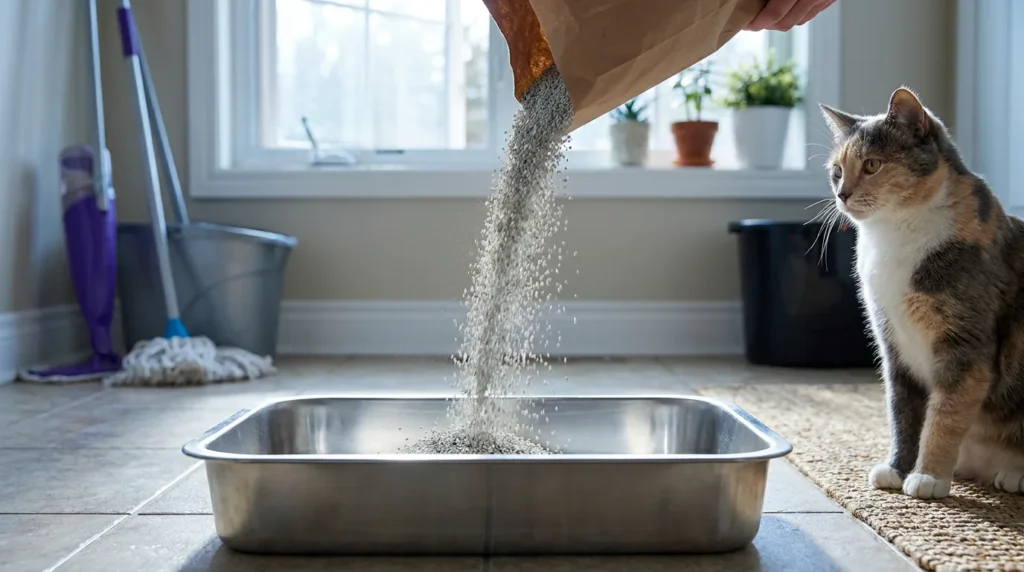

Looking for the best cat litter for odor control? You’ve come to the right place. The difference between a litter that actually works and one that just masks the smell is the difference between a happy home and a guest who never visits twice.
We compared seven litters across the four formula families that dominate the category right now: clumping clay, natural softwood, corn, and silica crystal. Each was rated on ammonia control, clumping strength, dust output, tracking, and value, based on formula analysis and thousands of verified buyer reviews. Below you’ll find the comparison table, a mechanism-first buying guide, and our overall winner.
Petful may earn a commission if you click on our links and make a purchase. This comes at no extra cost to you and helps us continue providing trusted pet product reviews.
Our Top 7 Picks for the Best Cat Litter for Odor Control
The best cat litter for odor control overall is Ever Clean Extra-Strength, an unscented clumping clay that uses activated carbon to absorb ammonia before it leaves the box. Catalyst Pet Softwood is the top natural alternative, with pine fiber that traps ammonia at the source, and PrettyLitter is the pick for single-cat homes that want health monitoring built into the litter itself. Every pick below either absorbs, neutralizes, or locks away urine odor at the source, which is what separates genuine odor control from perfume in a bag.
- 1Ammonia control is the single biggest factor: most odor complaints trace back to urine, not feces.
- 2Our overall winner is Ever Clean Extra-Strength: carbon-based ammonia blocking plus clumps that hold together. Best natural: Catalyst Pet Softwood.
- 3Match the mechanism to the problem: activated carbon for ammonia, silica crystals for between-scoop dryness, plant fiber for a lighter eco footprint.
- 4Broken clumps re-release smell as the box sits, so clumping strength matters as much as odor additives.
- 5Daily scooping doubles the effective life of any litter, no matter the formula.
These seven cover every major formula and budget, whether you shop for cat litter or type “best kitty litter for smell” into a search bar at 2 a.m. The rankings weigh how each top rated formula handles ammonia in real homes, how its clumps survive scooping, how much dust it throws, and what you actually pay per week of a fresh-smelling box. Where a manufacturer makes a measurable claim (dust percentages, odor guarantees, coverage per pound), we checked it against the label and against long-term owner reviews, and we say so when a claim only holds under ideal conditions.
Shoppers come at this from different directions: some want an odor absorber that keeps a small apartment smelling clean, some want the least smelly setup for a hallway box, and some are hunting a genuinely odorless, no smell litter that doesn’t smell even on day five. The mechanics are the same in every case. A litter earns those descriptions by absorbing or reducing the ammonia it can release, by locking odors inside the clump, or by neutralizing them chemically. That is what makes a formula a real odor neutralizer and smell remover rather than a fragrance layer, it is what odor removal actually means on a label, and it is what keeps a natural or non smelling formula controlling smells in week three, when reviews are written and opinions harden.
How the 7 Picks Stack Up
| Product | Type | Odor Mechanism | Clumping | Best For |
|---|---|---|---|---|
| Ever Clean Extra-Strength | Clumping clay | Activated carbon | Strong | Overall winner for most homes |
| Catalyst Pet Softwood | Natural softwood | Pine fiber absorption | Strong | Natural households, low dust |
| Nature’s Miracle Corn | Natural corn | Bio-enzymatic corn cob | Good | Eco-minded buyers |
| OdorLock Unscented | Clumping clay | 4-in-1 ammonia block | Strong | Value clay, sensitive noses |
| Arm & Hammer Slide Multi-Cat | Clumping clay | Baking soda plus odor sealers | Strong | Budget multi-cat homes |
| PrettyLitter | Silica crystal | Moisture-trapping crystals | Non-clumping | Single cats, health monitoring |
| Dr. Elsey’s Ultra | Clumping clay | Fast rock-hard clump seal | Very strong | Heavy ammonia, multi-cat |
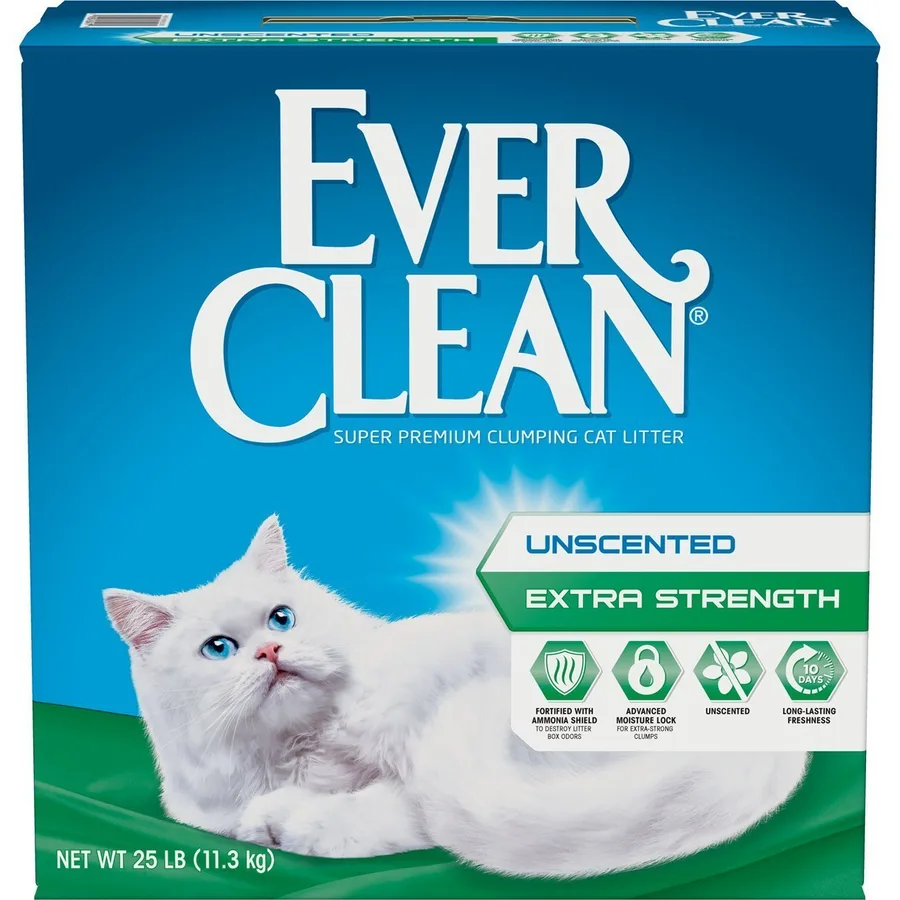
Ever Clean has spent years at or near the top of every serious odor-control comparison, and it earns the spot the boring way: the 25-lb box of Extra Strength Unscented pairs activated carbon with a moisture-locking clay that grabs urine before ammonia can form. There is no perfume overlay here, which is exactly the point: the unscented formula removes smell instead of negotiating with it.
Buyers echo the same story. One long-running review reads, “I was concerned that no-scent cat litter would mean horrible pee smell after my cats used the box. I was pleasantly surprised that odor is controlled amazingly well.” The box also advertises a 10-day odor guarantee, and while every guarantee assumes daily scooping, this is one of the few litters where the claim holds up in multi-cat homes.
- Activated carbon absorbs ammonia instead of masking it
- Clumps stay intact through scooping
- Unscented, with no perfume overlay
- 10-day odor guarantee on the box
- Premium price for a clay litter
- Heavy box to haul and pour
- Standard clay dust levels, not the lowest here
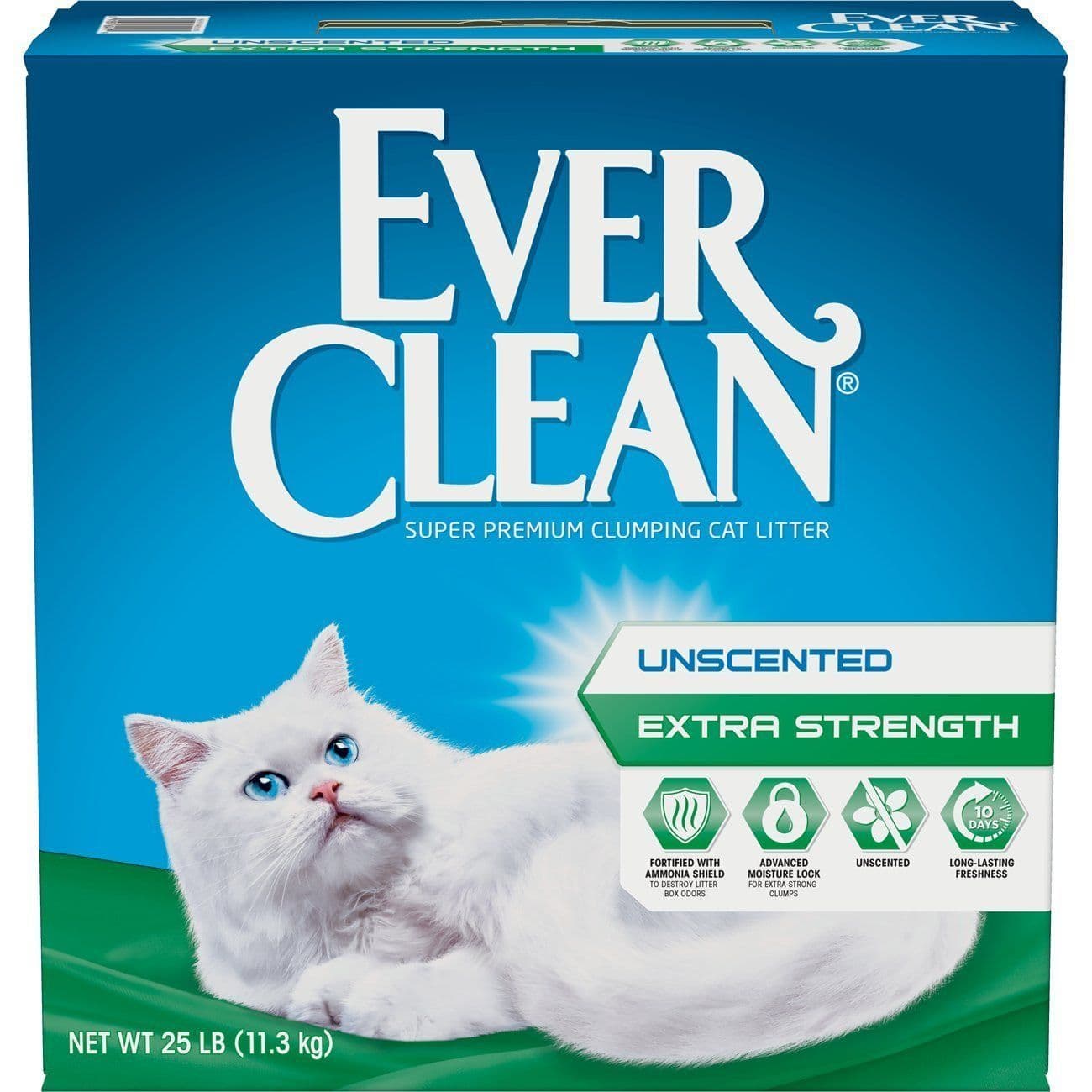
Activated-carbon clumping clay that absorbs ammonia instead of perfuming over it; our Best Overall odor-control pick.
Check current price →
Petful may earn a commission when you click through to Chewy, at no extra cost to you.
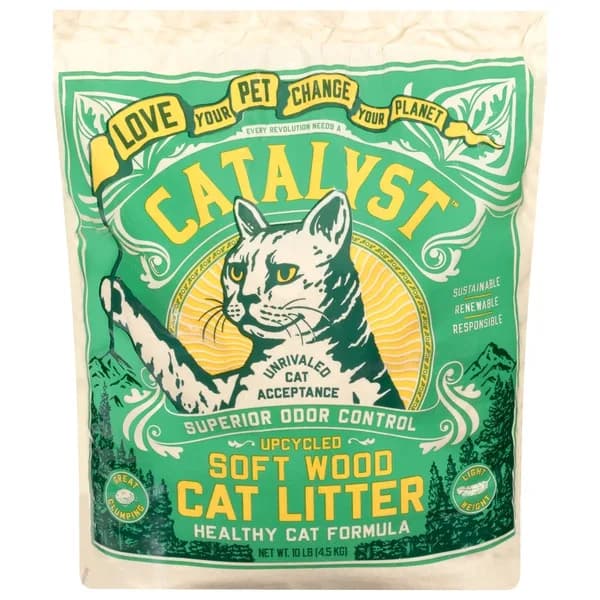
If you’ve watched the litter aisle lately, you’ve seen natural and wood-based formulas pulling ahead, and Catalyst Pet is the standout of that group. It’s the natural pick that finally gets clumping right (the historical knock against pine litters), and our full Catalyst Pet litter review goes deeper on how it held up in daily use.
Catalyst upcycles softwood fiber that would otherwise go to waste. The pine traps ammonia at the source rather than masking it, the same basic mechanism that makes silica so effective, except this one is biodegradable and light in the bag. Catalyst claims one pound goes as far as four pounds of clay, which lines up with what long-term users report: less hauling, fewer full changes. The Original 15-lb bag at Walmart is the classic formula; the Multi-Cat version on Chewy is the one to grab for two or more cats.
For multi-cat households, or anyone tired of clay dust on the floor, this is the one to try first.
- One pound replaces roughly four pounds of clay
- Pine fiber absorbs ammonia at the source
- Near dust-free and biodegradable
- Real clumping, unlike old-school pine pellets
- Higher upfront price than budget clay
- Clumps are firm but softer than the best clay
- Some cats need a gradual texture transition
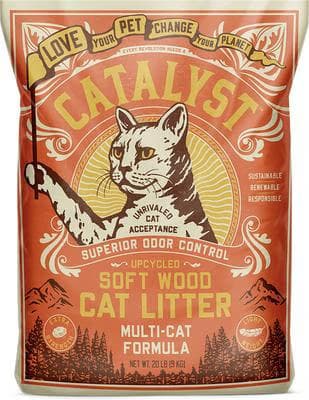
Upcycled soft-wood cat litter with superior odor control, very low dust, and a simple natural composition (no clay, no synthetic fragrance) – a gentler box for cats that nibble at their litter.
Petful may earn a commission when you click through to Chewy, at no extra cost to you.
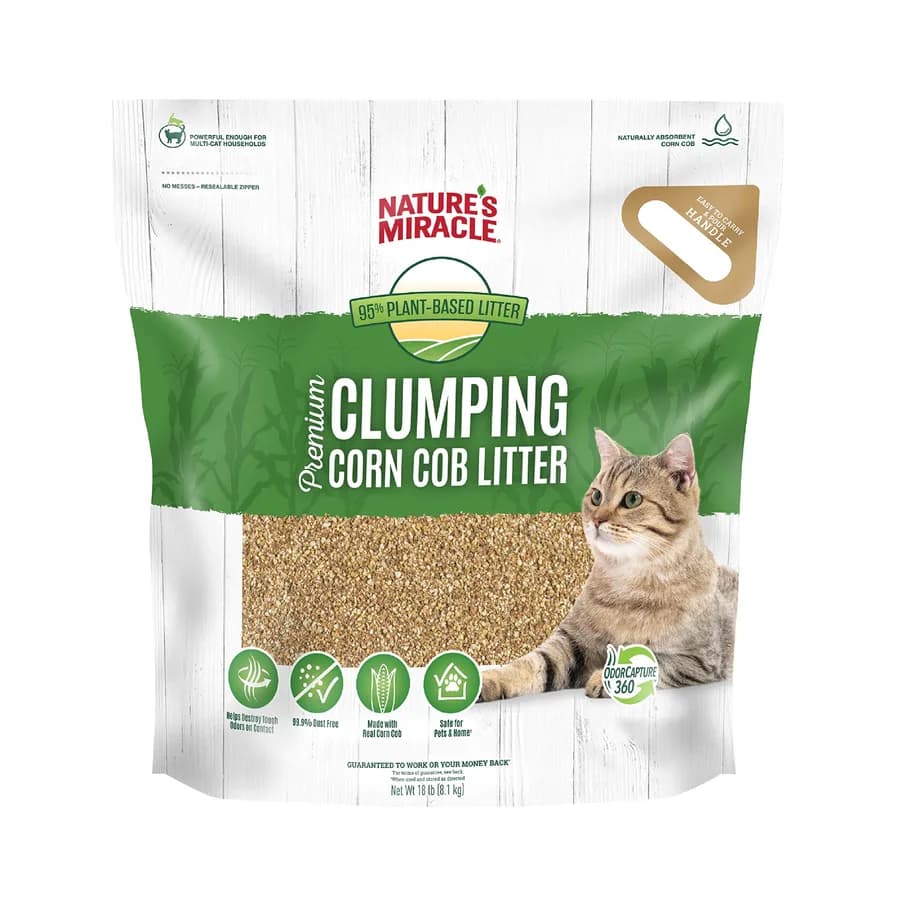
Nature’s Miracle Premium Clumping Corn Cob Litter is the priciest entry on our list, and the pitch justifies it for the right buyer: a 95 percent plant-based, bio-enzymatic formula built on corn cob granules that clumps surprisingly well for a non-clay litter and breaks odors down at the source instead of covering them.
Reviewers consistently flag the low dust, the easy-carry handle, and a pleasant, non-chemical scent. One favorite line from the reviews: “So superior to any other litter we have ever had.” A clear best-in-class for households that want a corn-based formula and are not shopping primarily on price.
- 95 percent plant-based corn cob granules
- Bio-enzymatic action breaks down odor compounds
- Very low dust for a clumping litter
- Resealable bag with a carry handle
- Priciest pick on this list
- Scented, which some cats reject
- Clumps are good, not clay-strong
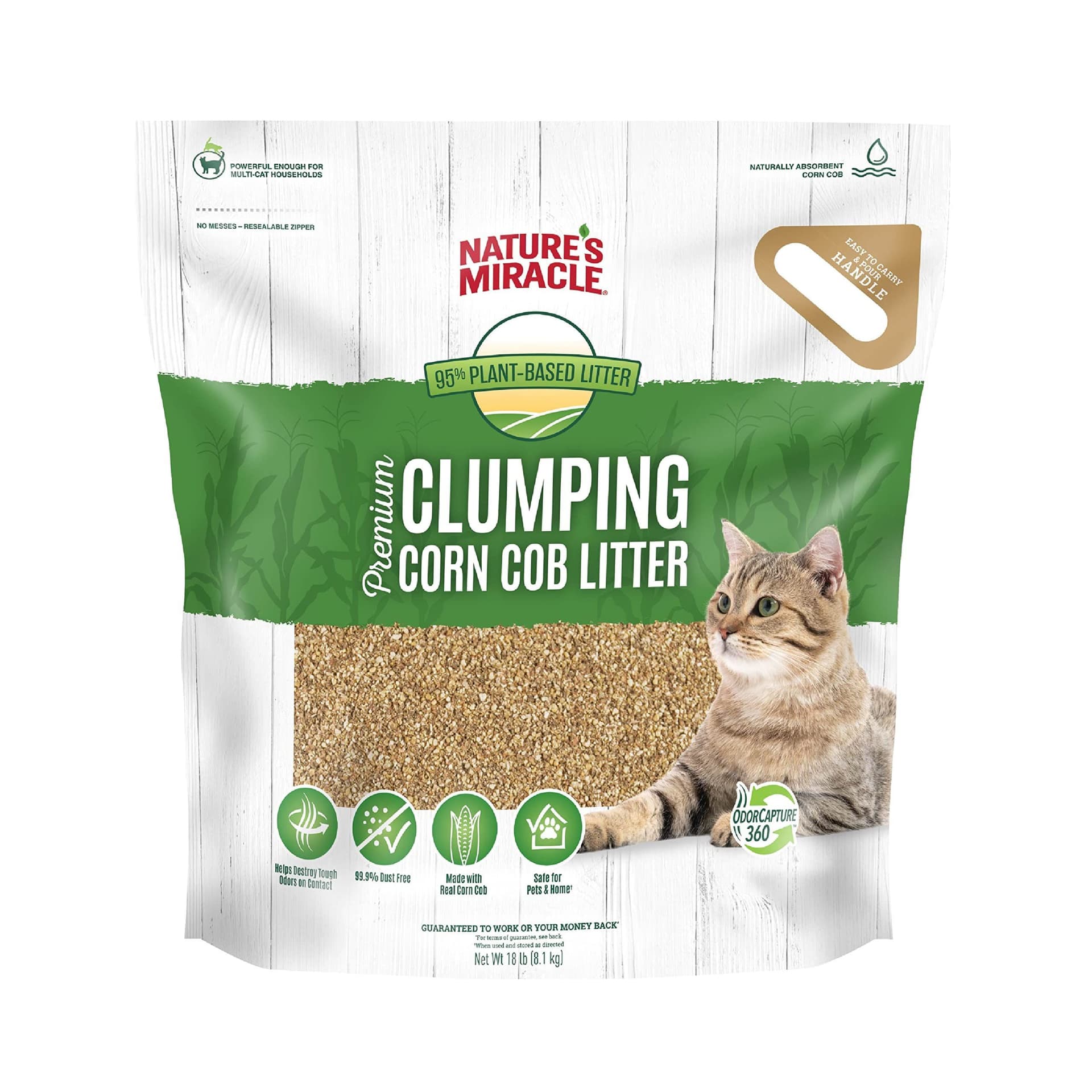
95 percent plant-based corn cob litter with bio-enzymatic odor breakdown and very low dust.
Check current price →
Petful may earn a commission when you click through to Chewy, at no extra cost to you.
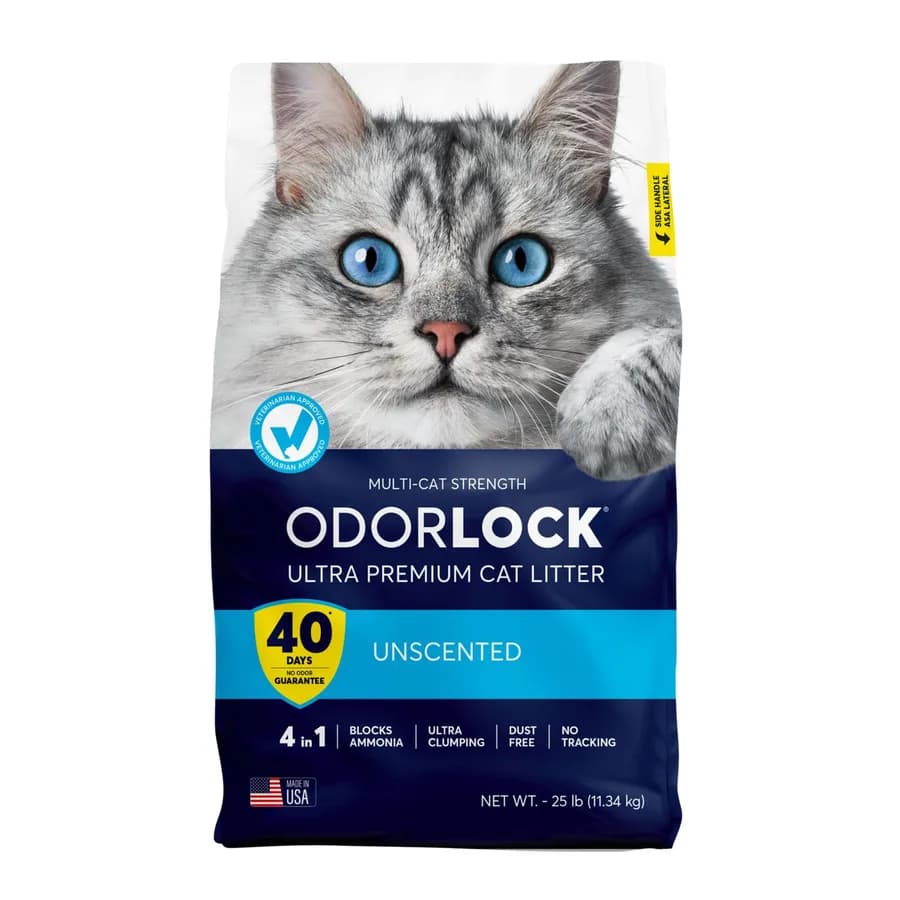
OdorLock is built around a 4-in-1 formula: ammonia blocking, fast clumping, near dust-free processing, and low tracking. The clay is mined in Wyoming and processed in the USA, and the unscented formula is built for cats and humans with sensitivities to perfumed litters.
One reviewer summed it up: “I have tried a lot of litters, this one is by far the best I have tried. We have very dark wood floors and I haven’t seen any dust or pebbles in the last two weeks.” The 40-day odor guarantee assumes a single cat, but the clumping, low tracking, and dust control hold up in multi-cat homes too.
- 4-in-1: blocks ammonia, clumps fast, low dust, low tracking
- Unscented for sensitive cats and people
- 40-day odor guarantee for single-cat boxes
- Strong value for a premium-performing clay
- PetSmart-exclusive brand, so fewer places to buy
- Heavy bags, like all dense clay
- No natural or biodegradable angle
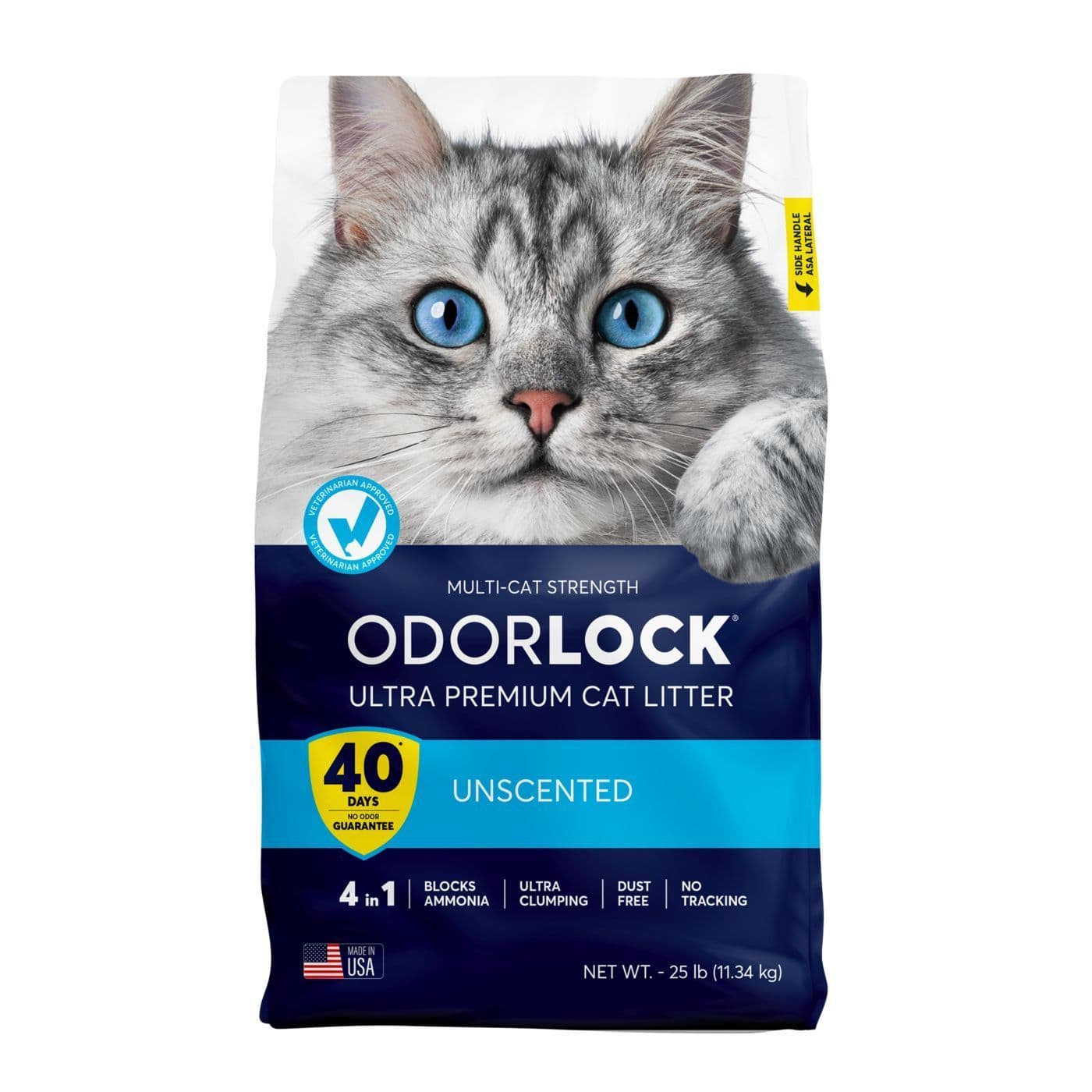
4-in-1 value clay: blocks ammonia, clumps fast, low dust, low tracking, unscented for sensitive noses.
Check current price →
Petful may earn a commission when you click through to PetSmart, at no extra cost to you.
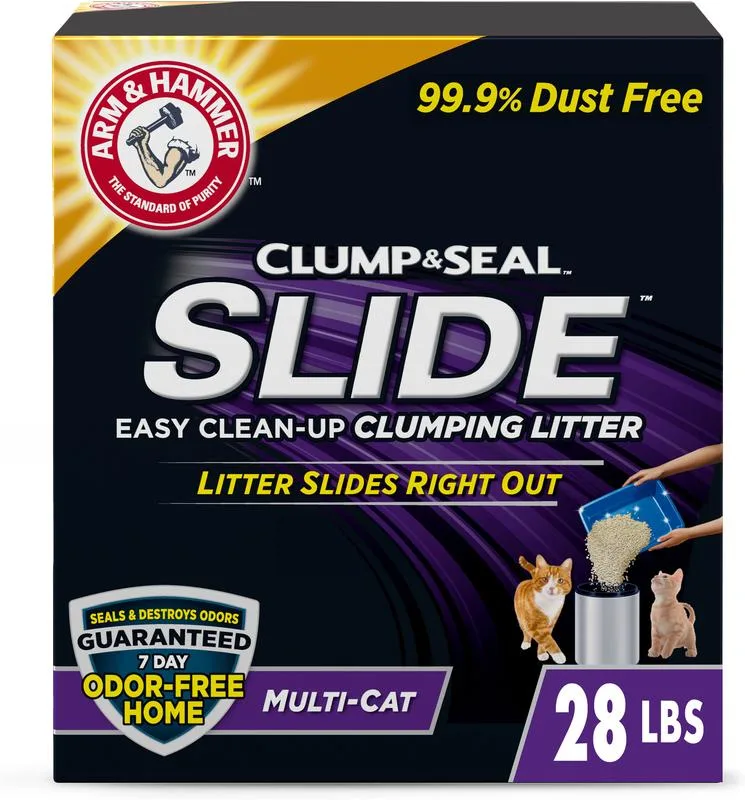
If you are shopping the budget aisle and need something that punches above its weight, Arm & Hammer Slide Multi-Cat is the easy call, and the cheapest entry on our list per pound. The formula leans on Arm & Hammer’s signature baking soda plus odor sealers to lock smell into the clump, and the 28-lb box advertises 99.9 percent dust free.
The party trick is cleanup: clumps release and slide out of the pan instead of cementing to the bottom, so you are not scraping concrete off a litter box every week (the full shelf name is Arm & Hammer Clump & Seal Slide Multi-Cat, if you are matching boxes in the aisle). Ammonia and odor control are very good rather than best-in-class, which is the honest trade at this price. For one- and two-cat homes with a regular scooping habit, it simply gets the job done.
- Lowest cost per pound of our seven picks
- Slide-out cleanup with no pan scraping
- 99.9 percent dust free
- Baking soda formula tuned for multi-cat volume
- Scented formula, which perfume-averse cats may reject
- Ammonia control trails the carbon and hard-clump specialists
- Clumps are a step softer than Ever Clean or Dr. Elsey’s
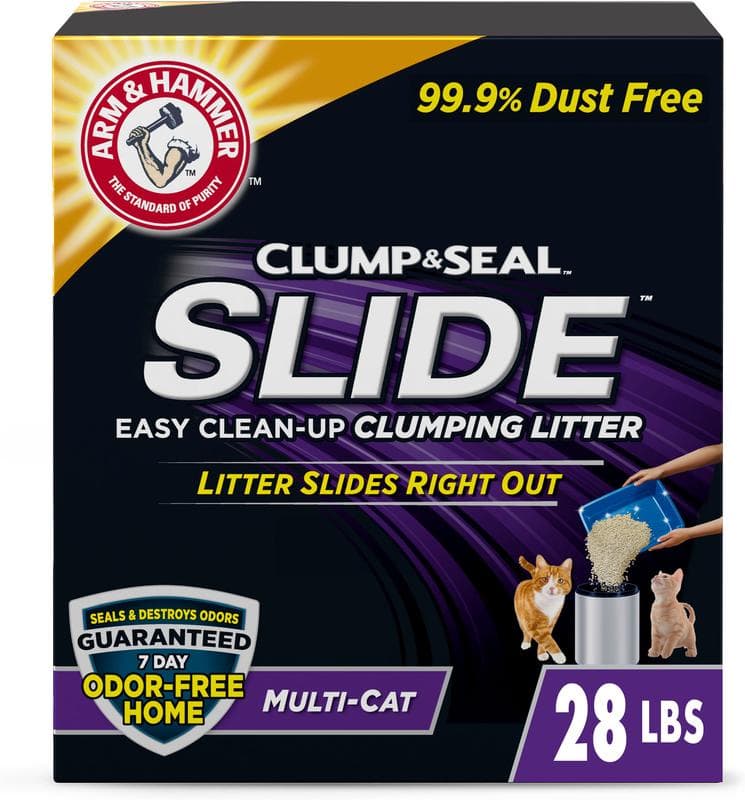
Budget multi-cat clay with baking soda odor sealing and slide-out cleanup that never cements to the pan.
Check current price →
Petful may earn a commission when you click through to Chewy, at no extra cost to you.
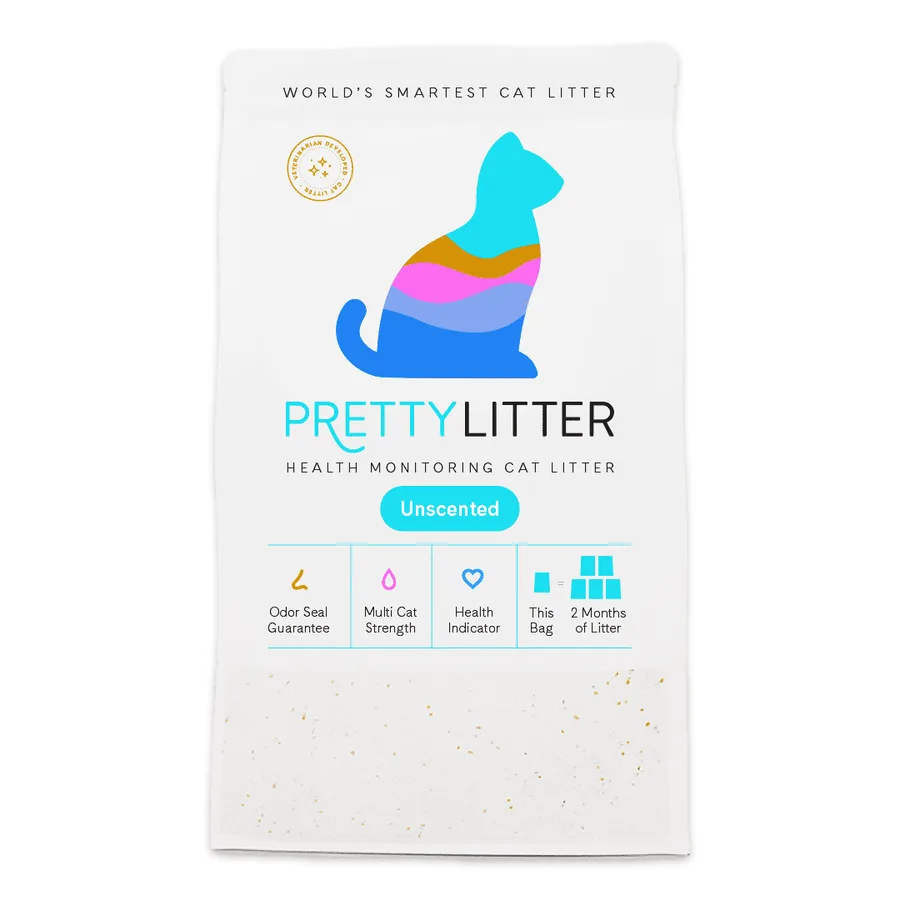
PrettyLitter is the outlier on this list: an unscented silica crystal litter whose color-changing crystals double as an early-warning system. The crystals shift color when urine acidity or alkalinity moves outside the normal range, a health monitoring cue that can prompt a vet conversation before other symptoms show. Our full PrettyLitter review covers a real household trial of the color system.
On pure odor control, the crystals work by trapping urine moisture inside the granules, which keeps the box dry and the smell locked down between full changes. The maker sizes one 8-lb bag at roughly two months for a single cat. The honest limits: it does not clump, solids still need daily removal, and in busy multi-cat boxes the crystals saturate faster than the marketing implies. For a one-cat home that wants dryness plus a daily health read, nothing else here does what it does.
- Silica crystals keep the box dry between changes
- Color-changing crystals flag possible urinary issues early
- Lightweight 8-lb bag replaces a month or more of clay
- Unscented, low-dust silica formula
- Non-clumping, so solids need daily scooping
- Priciest way to fill a multi-cat box
- Color cues are a prompt to call your vet, not a diagnosis
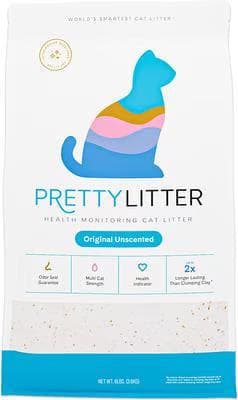
Color-changing crystal litter that flags pH shifts in your cat’s urine, an early warning sign of UTIs, kidney issues, and more.
Petful may earn a commission when you click through to Chewy, at no extra cost to you.
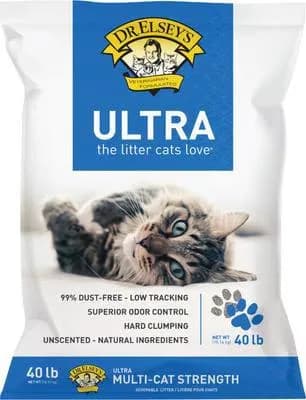
Dr. Elsey’s Ultra is the cult favorite of heavy-duty clay: a veterinarian-formulated, unscented sodium bentonite that forms rock-hard clumps almost on contact. That speed is its odor mechanism. Urine gets sealed inside the clump before bacteria can convert urea into ammonia, so there is nothing for your nose to find later.
The bag promises 99 percent dust-free, low tracking, and multi-cat strength, and the 40-lb size makes it one of the best value plays for multi-cat households that burn through litter. Texture is fine-grained, which most cats accept readily. If sharp ammonia smell is your specific complaint, start here or with Ever Clean.
- Rock-hard clumps seal urine before ammonia forms
- 99 percent dust-free and low tracking
- Unscented with natural ingredients
- 40-lb bag is a strong multi-cat value
- Very heavy bag to move and pour
- No carbon or additive backup if scooping slips
- Fine grains can track on smooth floors
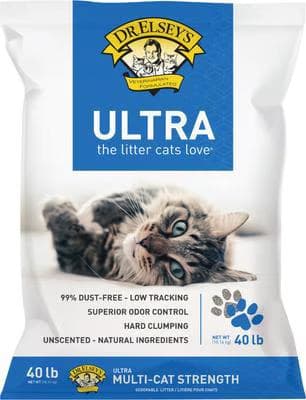
99% dust-free, low-tracking clumping clay litter with superior odor control and hard clumping. Unscented, natural ingredients, multi-cat strength.
Petful may earn a commission when you click through to Chewy, at no extra cost to you.
How to Choose the Right Cat Litter for Odor Control
Most odor complaints come down to two things: how the litter handles ammonia, and how often you scoop. Once you’ve nailed scooping cadence (daily is the gold standard, and multi-cat households need extra care here), the choice comes down to formula. Here is how the main types compare.
How Litter Actually Controls Odor
Every litter on this list attacks smell with one of six mechanisms, and this odor mechanism framework is what the ranked slate above is built on. Activated carbon physically absorbs ammonia molecules (Ever Clean). Baking soda neutralizes acidic odor compounds (Arm & Hammer). Silica gel traps urine moisture, and the smell with it, inside the crystal (PrettyLitter). Plant fiber traps ammonia at the source as it absorbs liquid (Catalyst, corn formulas). Bio-enzymatic formulas break down the odor-producing compounds themselves (Nature’s Miracle). And probiotic litters seed the box with beneficial bacteria that out-compete the odor-producing kind before smell ever forms.
The probiotic approach is genuinely different and worth knowing about even though it did not crack our seven: Boxie’s BoxiePro probiotic clumping clay is the standout there, an unscented, hypoallergenic clay whose live cultures keep working between scoops, at a premium price that kept it off the value-conscious slate. We also weighed Fresh Step Odor Shield with Febreze, an activated-charcoal clay with strong raw odor numbers whose heavy fragrance load runs against the unscented-first standard this list is built on. Both are credible alternatives if their trade-offs read differently to you.
Match the mechanism to your complaint. Sharp ammonia smell calls for activated carbon or a fast hard-clumping clay. General mustiness responds to silica dryness. Perfume headaches mean you want an unscented formula that removes odor instead of layering fragrance over it. Marketing language changes every season; these mechanisms do not.
Clumping Clay (Bentonite)
The category leader by volume. Sodium bentonite clay swells and traps urine before it spreads, and most modern formulas add carbon or zeolite for odor neutralization. The best clumping cat litter for odor control pairs fast, tight clump formation with one of those additives: bentonite does the grabbing, carbon handles the ammonia. Non-clumping clay still sits at the bottom of the price ladder, but for odor control the clumping version wins every time, because sealed urine cannot off-gas. Downsides: dust, weight, and the environmental cost of strip-mining clay. It is also the formula to be careful with around very young cats: see our guide to whether clumping litter is safe for kittens. Good fit for: most households, multi-cat homes, anyone who scoops daily.
Natural Wood and Softwood (Pine)
Wood litter has come a long way from the loose-pellet days. Modern softwood formulas like Catalyst Pet clump tight and trap ammonia at the source. Lighter than clay, lung-friendly, and biodegradable. Downsides: higher upfront cost (offset by longer life), and not every cat takes to the texture immediately. Our explainer on wood cat litter covers the switch in detail. Good fit for: sustainability-minded homes and apartments where clay weight is a real burden.
Silica Gel (Crystal)
The most aggressive moisture absorber per pound. The crystals lock urine inside instead of clumping, so the box stays dry between full changes, and PrettyLitter adds the health-monitoring color layer on top of the same mechanism. Downsides: higher price, no clumping action (solids still need daily scooping), and saturation comes fast in multi-cat boxes. Good fit for: single-cat households that change the whole box on schedule.
Corn and Plant-Based
A mid-priced natural alternative that clumps and biodegrades. Odor control is good but not best-in-class, and a small percentage of cats develop a taste for corn litter (literally: they eat it). If the eco angle is what draws you, our guides to eco-friendly cat litter and tofu cat litter cover the wider plant-based field. Good fit for: eco-conscious households that do not want to commit to wood.
Scented vs. Unscented: Which Controls Odor Better?
Unscented wins for most homes, and it is not close. Perfume masks odor for humans while doing nothing to the ammonia underneath, and a cat’s far more sensitive nose has to live inside that fragrance cloud with every visit. Litters that actually neutralize smell (carbon, baking soda, silica, pine) do their work without any scent at all, which is why five of our seven picks are unscented formulas.
Scented litter is not evil: in a well-scooped box it adds a fresh top note some owners like, and if you specifically want a cat litter that smells good out of the bag, a lightly scented formula is fine when your cat tolerates it. From our slate, Nature’s Miracle Corn (pick 3) is the scented option we would hand that shopper: its light, non-chemical scent is the kind cats tolerate best. But the best smelling cat litter, long term, is the one that smells like nothing at all, which is why unscented budget clays (Tidy Cats Free & Clean is the common example) have such loyal followings. If a strong perfume is the only thing standing between your nose and the box, the litter is failing, and if your cat starts avoiding the box after a scented switch, the fragrance is the first suspect.
Switching Litters Without a Cat Strike
Cats are texture and scent conservatives, and an abrupt litter swap is the fastest way to turn an odor project into an accident problem. Switch over seven to ten days: start with roughly one quarter new litter mixed into three quarters old, shift the ratio every two to three days, and slow down if your cat hesitates at the box. Keep one box on the old formula during the transition in multi-cat homes so nobody stages a protest on the carpet. If the new litter triggers outright avoidance after a fair trial, that veto is final: an odor-control formula only works when the cat actually uses it.
What Kind of Litter Do Vets Recommend?
Ask what kind of litter vets recommend and the answers converge on a boring-but-effective recipe: most vets recommend an unscented, fine-grained clumping litter, in a large open box, scooped daily and kept meticulously clean. The AAFP and ISFM house-soiling guidelines make litter box optimization the first step in fixing almost every elimination problem, ahead of any product swap. Brands built by veterinarians, like Dr. Elsey’s, lean into exactly that formula profile: unscented, hard-clumping, low dust.
The caveat every vet adds: the best litter is the one your cat reliably uses. A premium formula your cat boycotts controls exactly zero odor. If a switch triggers avoidance, go back to what worked and change one variable at a time.
Best Cat Litter for Ammonia Smell Specifically
Ammonia is the single biggest source of cat-litter odor complaints. Cat urine contains urea, which bacteria in the box convert into ammonia within 24 to 48 hours. If your cat litter smells like ammonia within a day or two of a full change, the formula (or the routine) is losing that race. The smell intensifies fast, especially in warm or poorly ventilated spaces.
The strongest ammonia fighters from our seven picks:
- Ever Clean Extra-Strength uses activated carbon to absorb ammonia at the molecular level. Best for clay-loving households.
- Dr. Elsey’s Ultra seals urine inside rock-hard clumps before bacteria can make ammonia at all. Best for heavy-ammonia, multi-cat boxes.
- Catalyst Pet Softwood absorbs ammonia at the source through natural pine fibers. Best natural alternative.
- OdorLock is engineered as a 4-in-1 ammonia blocker in a value clay.
- Tidy Cats Free & Clean pairs unscented clay with activated charcoal if you want the same no-perfume approach in a budget pail.
The fastest ammonia fix
- Scoop daily, switch to a carbon or hard-clumping formula, and give the box airflow. A covered box without ventilation concentrates ammonia instead of hiding it.
Best Cat Litter for Dust Control (and Why It Matters)
Dust is the second-most common complaint after odor, and it is a real health concern. Clay litter dust contains trace silica, which can irritate feline asthma, trigger allergies in humans, and settle on every surface in the house. Tracking is dust’s travel-sized sibling: low tracking formulas use heavier granules that stay in the box instead of riding out on paws. The best clumping formulas for odor control now ship in dust-free, low tracking versions, so you rarely have to trade one problem for another. If anyone in your household (cat or human) has respiratory sensitivities, dust-free litter is not optional.
The lowest-dust options from our seven picks:
- Catalyst Pet Softwood is near dust-free by design: natural pine fibers, no clay.
- OdorLock and Dr. Elsey’s Ultra are the lowest-dust clay options here, both engineered for dust suppression and low tracking.
- Nature’s Miracle Corn produces minimal dust because corn cob granules are larger and heavier than clay particles.
If dust is the deciding factor, look for “99% dust-free” or “low dust” on the bag, and stick to natural softwood, silica gel, or premium engineered clay. Avoid budget clay litters and anything labeled “economy” if dust matters to you.
Best Litter for Multi-Cat Households
Multiple cats multiply urine volume, and volume is what breaks weak litters. For the best odor control cat litter for multiple cats, prioritize fast, hard clumping (so the litter at the bottom stays usable), unscented formulas (perfume intensifies in high-traffic boxes), and multi-cat strength ammonia handling. From our picks: Dr. Elsey’s Ultra, Arm & Hammer Slide Multi-Cat, and Catalyst’s Multi-Cat formula are the three built for that workload.
Household size changes the right answer. A single cat can run a silica crystal box happily for weeks, which is why PrettyLitter suits one-cat homes. Two or more cats need clump-and-scoop throughput, and the n+1 rule (one box per cat, plus one) matters as much as the litter in the boxes. Whatever the best cat litter for odor control is on paper, in a multi-cat home the version that wins is the one that still has intact clumps at the bottom of the box on day ten.
Best Cat Litter for Odor Control: The Verdict
The best cat litter for odor control is Ever Clean Extra-Strength: its activated carbon absorbs ammonia instead of perfuming over it, its clumps survive scooping without crumbling, and it delivers that combination at a price real households can sustain. Runner-up honors go to Catalyst Pet Softwood as the best natural formula and to Dr. Elsey’s Ultra for heavy-ammonia, multi-cat homes.
If you want the one-line version by household:
- One cat, small space: PrettyLitter for dryness plus the health-monitoring bonus, or Ever Clean if you prefer a classic clump.
- Two or more cats: Dr. Elsey’s Ultra or Arm & Hammer Slide Multi-Cat, with a box per cat plus one.
- Natural-first households: Catalyst Pet Softwood, with Nature’s Miracle Corn as the plant-based runner-up.
- Asthma, allergies, or dust worries: Catalyst Pet Softwood or OdorLock, both engineered for minimal dust.
Whichever formula you choose, the secret weapon is daily scooping. Pair the right litter with the right routine and you will forget the box exists, which is the whole point. (Need a refresher on why box cleanliness matters for your cat’s health? We have you covered. And if you are new to cat ownership, here are some facts worth knowing.)
How to Stop Your Litter Box from Smelling (Beyond Choosing the Right Litter)
To stop your cat litter from smelling in the house, scoop at least daily, keep the litter 2 to 3 inches deep, replace the whole box of litter on schedule, wash the pan itself, give the box airflow, and run one more box than you have cats. Even the best litter cannot outrun a poor routine: these six fixes are how you keep any box or tray from turning smelly, prevent odor from building between changes, and make the room smell better without spending another dollar.
- Scoop daily. Twice a day in multi-cat homes. The single highest-impact change you can make, no matter what litter you use.
- Use the right amount of litter: 2 to 3 inches deep. Less and urine pools at the bottom; more and you waste litter without odor benefit.
- Add a thin layer of baking soda under fresh litter. Cheap, safe, and it neutralizes acid odors at the source.
- Replace the entire box on schedule: every 1 to 2 weeks for clumping clay, 2 to 4 weeks for wood or corn, 3 to 4 weeks for silica gel. Smelling ammonia between changes means you waited too long.
- Wash the box itself at every full change: hot water and unscented dish soap, skipping bleach (residue can repel cats). Our guide to how to clean a litter box covers the full deep-clean.
- Follow the n+1 rule: one litter box per cat plus one extra, in different rooms. A guarded box gets used less, which means more accidents elsewhere.
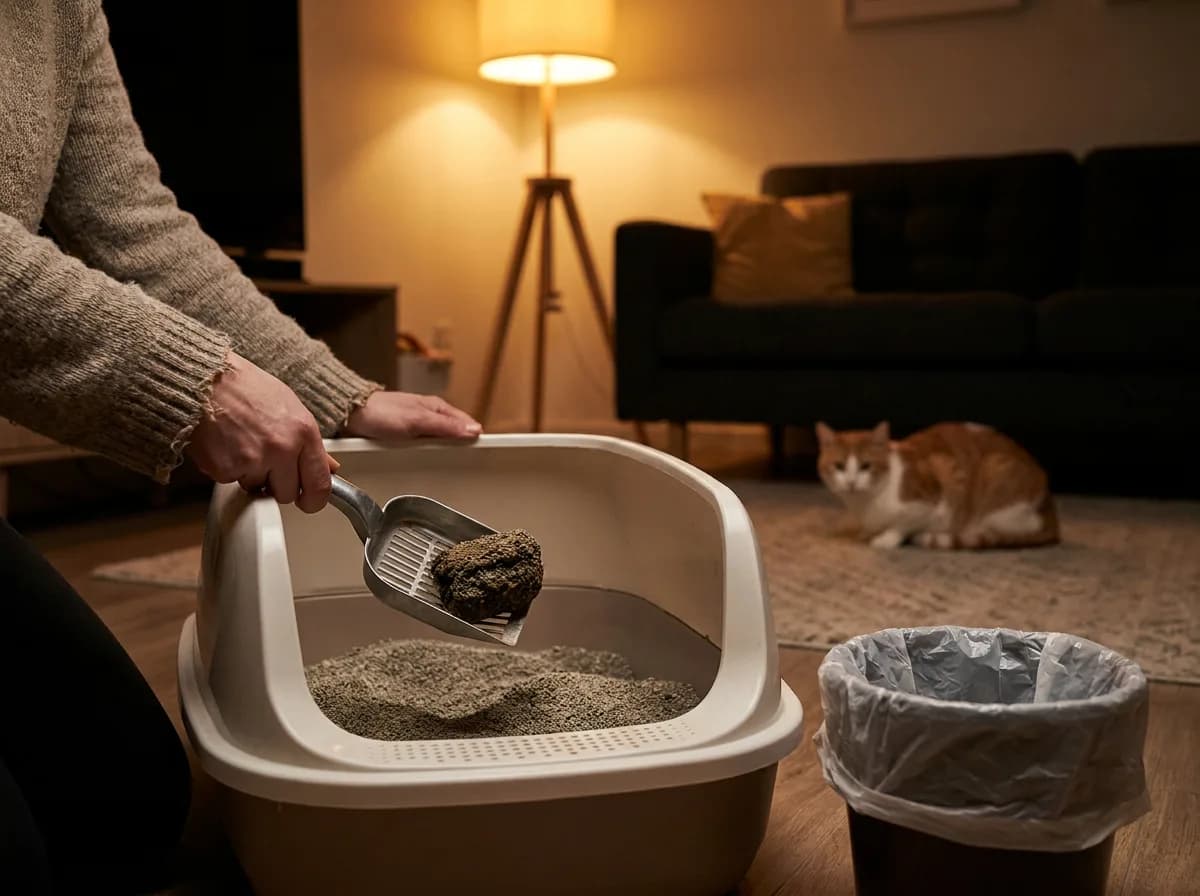
What about cat litter deodorizer powders and sprays? A litter box deodorizer (baking-soda-based powders are the common type) can reduce odor for a day or two between scoops, and deodorizing additives are fine as a supplement when boxes sit in tight quarters. If you want a ready-made product, the default answer to “best cat litter deodorizer” is Arm & Hammer’s Double Duty baking soda powder, the category staple. But even the best cat litter deodorizer cannot fix a routine problem: to truly deodorize a smelly box, the fastest way to get rid of cat litter smell is a full change plus a pan wash, not more powder. The best natural option is a thin layer of plain baking soda under fresh litter, which helps you avoid buying an extra product and keeps the box odor free for pennies.
When smell is a medical signal
- Increased urine volume, blood in the box, straining, or a sudden refusal to use the box can signal a urinary issue that needs a vet visit before you blame the litter.
If the routine is airtight and the odor pattern still changed recently, rule out behavior and health first: our guide to why cats pee outside the litter box walks through the warning signs worth acting on.
Poop Smell vs. Urine Smell: Different Fixes
If your cat’s poop smells bad enough to clear a room, the litter is rarely the main culprit. Solid-waste smell is a scoop-timing and diet problem: remove solids as soon as practical (litter cannot seal them the way it seals urine), and look at food quality, since sudden diet changes and low-grade fillers are the usual causes of unusually foul stool. A new, persistent change in stool smell alongside soft stool is worth a parasite check with your vet. Urine smell, by contrast, is the ammonia problem this whole guide is built around: clumping speed, carbon, and scooping cadence.
What About Urine Odor Eliminators?
For urine smell that has escaped the box (accidents on floors, rugs, or fabric), the most powerful odor eliminator for cat urine is an enzymatic cleaner. Enzymes digest the uric acid crystals that ordinary cleaners leave behind, and those leftover crystals are what keep the smell coming back on humid days; they are also why cat urine is widely considered the hardest household smell to get rid of, outlasting smoke and cooking odors by months. The best odor eliminator for cat litter smell inside the box, though, is the litter itself: a formula that eliminates odors at the source beats any spray, so skip in-box eliminator sprays that mask rather than remove. Match the tool to the job: enzymes are how you eliminate the smell that keeps returning from soaked carpet fibers, and mechanism-driven litter handles everything inside the box. For fabric and rugs, let the enzymatic cleaner dwell overnight before blotting; a quick wipe leaves the crystals behind and the smell returns.