
Petful is reader supported. As an affiliate of platforms like Amazon and Chewy, we may earn a commission when you buy through links on this page. There is no extra cost to you.
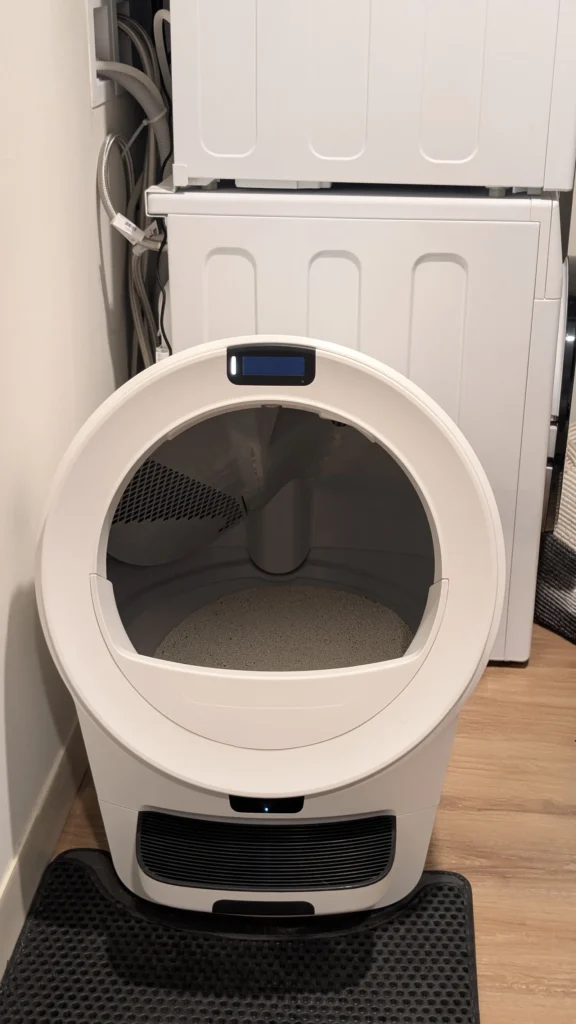
The best litter for Litter-Robot is a standard-weight, fast-clumping, low-dust formula that creates firm clumps and passes cleanly through the globe’s sifting screen. Whisker’s current guidance centers on clay-clumping litter with low dust, low tracking, and dependable odor locking. Original photos of the white Litter-Robot 5 Pro also show the practical part many guides miss: litter belongs at or just below the molded fill line, not packed above it.
This guide is positive about Whisker’s own GreatLitter and the co-developed Tidy Cats Designed for Litter-Robot because those products match the machine’s intended profile. Other standard-weight clumping clays can also work when they form hard, fast clumps and sift cleanly. Petful did not run a comparative litter laboratory test for this article, so we distinguish current manufacturer guidance and physical compatibility from unmeasured brand-versus-brand performance.
The goal is not to crown a universal cat litter for every animal. It is to help a Litter-Robot owner avoid the combinations most likely to undermine sifting, sensing, or the cat’s comfort. That means looking at clump strength, particle size, weight, dust, tracking, scent, opacity, and fill level as one system.
- 1Use a high-quality, standard-weight clumping clay that forms hard, fast clumps and produces little dust.
- 2Whisker’s current official picks are GreatLitter and Tidy Cats Designed for Litter-Robot.
- 3Fill at or just below the molded line. The original photographs in this guide show both the empty globe marker and a practical filled level.
- 4Avoid non-clumping absorbent litter and pellets that cannot pass the screen. Whisker also does not recommend PrettyLitter for the Litter-Robot 4, 5, 5 Pro, or EVO because light, translucent material can affect readings.
- 5Some tofu, walnut, or other alternatives may work only when particle size and clumping strength fit the sifting design. Test cautiously and watch the actual cycle.

Don’t Guess When It Comes To Your Pet’s Care
Sign up for expert-backed reviews and safety alerts all in one place.
What litter works best in a Litter-Robot
The best litter for Litter-Robot is a hard, fast-clumping, standard-weight clay with low dust and low tracking. That profile is not arbitrary. The globe rotates after use, carries clean litter across a screen, and sends the solid clump into the drawer. A weak clump breaks apart, a pellet cannot pass through the screen, and overly light or translucent material can make sensing less predictable.
Everything in this guide flows from one fact about how the machine works. A Litter-Robot is not a tray you scoop. It is a rotating globe that uses gravity and a sifting screen to do the scooping for you, automatically, after every visit. That design is the whole appeal of the unit, and it shines when the litter cooperates. The litter cooperates only when it matches a specific physical profile: hard enough to clump fast, heavy enough to sift and to keep the sensors honest, fine enough to fall through the screen, and clean enough not to choke the electronics with dust. Each of those properties earns its own short section below.
Why the sifting screen needs hard, fast, tight clumps
The Litter-Robot does not scoop. It rotates the globe so gravity carries solid waste across a sifting screen, dropping clumps into a sealed waste drawer while clean litter falls back through. That mechanism works best when a clump holds its shape under tumbling. A litter that forms a soft or slow clump can break apart mid-cycle, the screen passes the crumbs back into the clean bed, and you are left with a semi-cleaned globe. Hard, fast-setting clumps are how the machine earns its keep, which is why Whisker requires clumping litter in the first place.
Clump speed matters as much as clump strength. The Litter-Robot waits a set time after your cat leaves, then cycles, so the litter has only minutes to lock liquid into a solid mass before the globe tips. A premium sodium bentonite clay sets up almost on contact, which is why it survives the tumble intact. A bargain clay that takes longer to firm up can still be mid-set when the cycle fires, and a half-formed clump shears apart on the screen. When owners report a Litter-Robot that smells or leaves wet patches in otherwise clean litter, slow or weak clumping is one of the first things to check, and switching to a faster clay usually clears it up.
The clump test in one line
- If a clump holds its shape when you lift it, it will survive the globe’s tumble and drop cleanly into the drawer. Hard, fast-setting clay passes this test, which is exactly the profile Whisker designed the Litter-Robot around.
Standard-weight clay, not lightweight
Whisker recommends standard-weight clay-clumping litter for the most predictable sifting. When a brand sells both standard and lightweight versions, choose the standard formula unless the manufacturer specifically confirms another option for your model. The heavier granules and firm clumps are easier for the rotating screen to separate consistently.
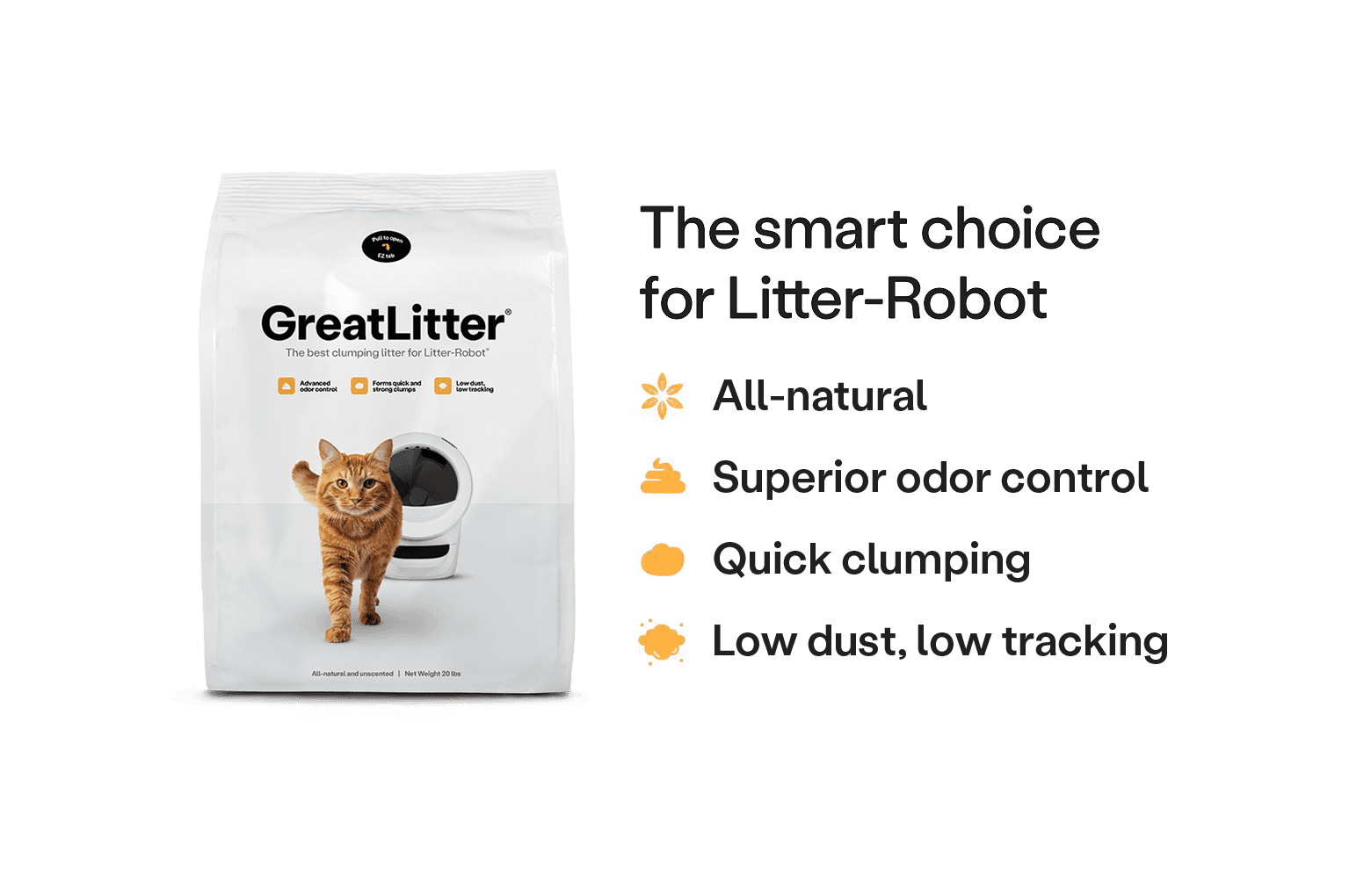
Whisker’s own low-dust, low-tracking clumping clay litter, designed for Litter-Robot’s sifting screen: fast, firm clumps that keep sensors accurate and odor locked down.
Petful may earn a commission when you click through to Whisker, at no extra cost to you.
Weight also affects the litter bed’s stability. A very light formula can move differently during rotation and may not create the same clean separation. That does not mean every non-clay material fails automatically, but it does mean alternatives should be judged by actual clumping strength, particle size, opacity, and a complete observed cycle rather than by an eco or lightweight label alone.
Standard weight, every time
- When a brand offers both a standard and a lightweight version of the same litter, choose the standard one for any sifting automatic box. The extra heft is what helps clumps drop cleanly and keeps the unit’s weight-based readings accurate.
Why low dust matters in an automatic box
Every automatic cycle moves the litter, so a dusty formula gets agitated more often than it would in a pan scooped once or twice a day. Lower dust helps keep the globe, entry, camera area, and nearby floor cleaner. It can also make routine sensor wiping easier. No bag is literally dust-free, so compare the real pour and cycle rather than relying only on a front-of-package claim.
Why low tracking matters
Low-tracking granules reduce the amount carried out on paws and help the automatic station feel as tidy as the hands-off promise suggests. A litter mat still helps, especially with a tall-entry globe, but a heavier, low-tracking formula usually stays closer to the machine than very fine lightweight particles.
Odor locking without overwhelming fragrance
A Litter-Robot moves clumps into a drawer instead of leaving them exposed in the litter bed. The litter still matters because firm clumps contain moisture and residue before and during the cycle. Choose odor control that does not depend on a fragrance your cat dislikes, and clean the drawer and globe on a schedule appropriate for the number of cats using the unit. Petful’s best cat litter for odor control guide covers the broader product decision.
Strong fragrance is not a substitute for clean cycling. If a cat resists a scented formula, the theoretically stronger odor product can create a worse household outcome by reducing box acceptance. Unscented or lightly scented clumping clay is the safer default when you do not already know the cat’s preference.
The litter Whisker recommends
Whisker’s July 2026 guide names GreatLitter and Tidy Cats Designed for Litter-Robot as its recommended options. Both are designed around the same operating profile: hard and fast clumping, low dust, controlled tracking, and compatibility with the rotating sift. That brand alignment makes them simple starting points, not proof that every other standard-weight clumping clay is unsuitable.
GreatLitter by Whisker (designed for the machine)
GreatLitter is Whisker’s own sodium-bentonite clumping clay. The company positions it as low dust, low tracking, unscented, and built for firm clumps in the Litter-Robot. The clearest reason to choose it is reduced guesswork: it was developed around the same sifting system you are trying to support.
That does not require a claim that GreatLitter beats every alternative in a controlled test. Petful did not run one. It means the product matches Whisker’s published compatibility profile and offers a direct, brand-designed option for owners who prefer a single recommended starting point.
- Designed by Whisker specifically for the Litter-Robot
- Single all-natural ingredient (sun-dried sodium bentonite), no additives or fillers
- Subscription sizes (20 lb, 40 lb, 60 lb) for set-and-forget refills
- Low-dust, low-tracking, unscented odor control
- Sold mainly through Whisker’s subscription channel, which is ideal if you want refills delivered on a schedule rather than buying ad hoc in stores
Current published details from Whisker describe GreatLitter as a single-ingredient sodium-bentonite clay with no added fillers. Confirm bag size, subscription options, and current pricing directly before ordering because commercial terms change more quickly than the compatibility rule.
Tidy Cats Designed for Litter-Robot (The Perfect Cycle)
Tidy Cats Designed for Litter-Robot is a clumping clay co-developed by Whisker and Tidy Cats for the automatic cycle. Whisker highlights hard, fast clumping and its Perfect Cycle setting. It is the natural choice for owners who want a widely recognized litter brand with a product explicitly designed for this machine.
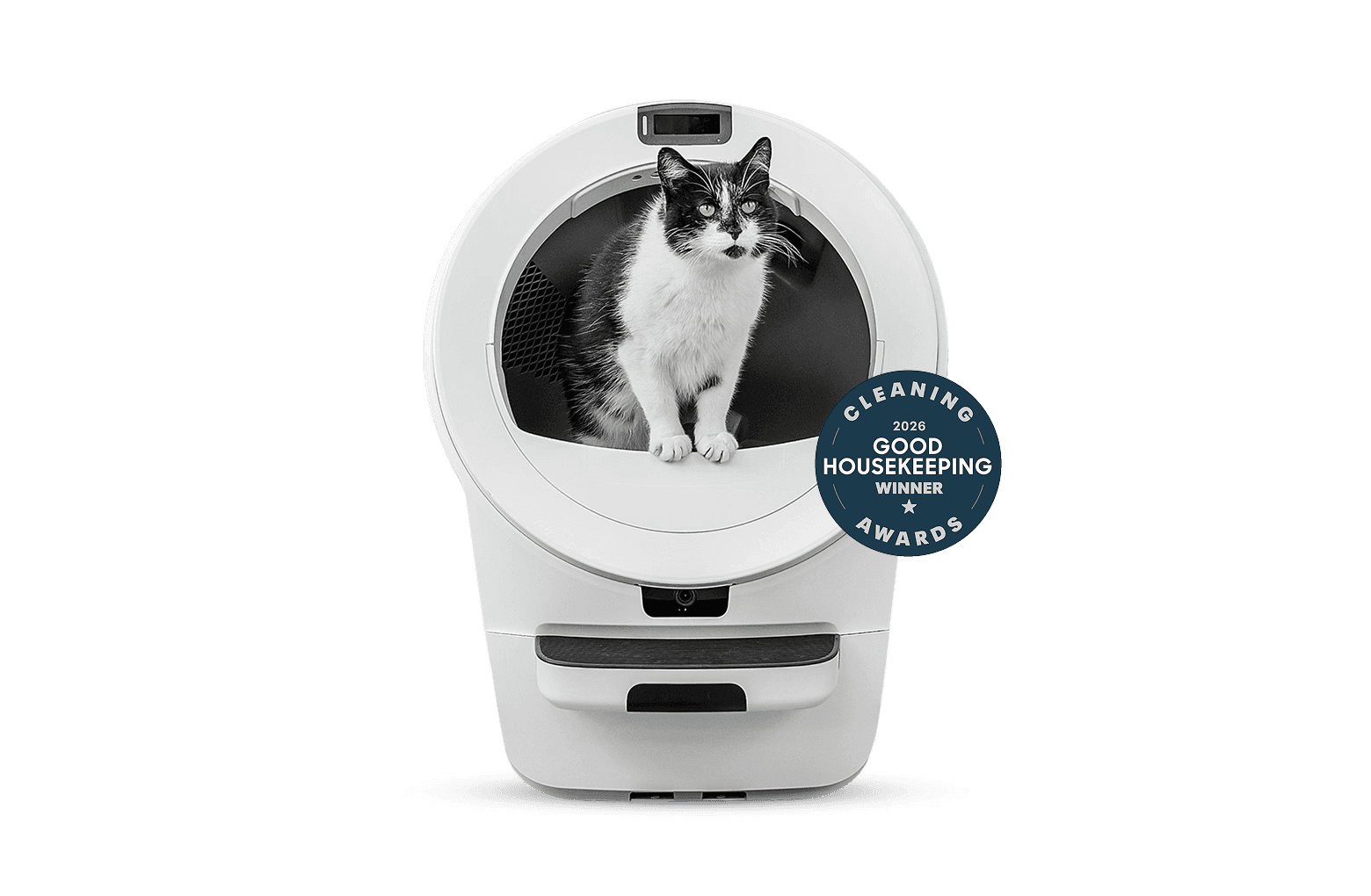
The flagship AI-powered Litter-Robot with dual cameras, WasteID, SmartScale weight tracking, and low-light monitoring. Backed by a 90-day in-home trial and WhiskerCare warranty.
Petful may earn a commission when you click through to Whisker, at no extra cost to you.
The co-development matters because the litter and cycle timing can be evaluated together. Still, scent preference and household availability may decide between it and GreatLitter. A cat that strongly prefers unscented litter may be happier with GreatLitter or another compatible unscented standard-weight clay.
- Co-engineered by Whisker and Tidy Cats for The Perfect Cycle app setting
- Hard and fast clumping that holds throughout the cycle
- Motion-activated scent releases only when the unit runs
- Sold widely (Chewy, Amazon, PetSmart, Target, Walmart)
- Carries a light freshening scent, so the fully unscented GreatLitter is the better pick for the most fragrance-averse cats
- At its best when paired with the Perfect Cycle setting in the Whisker app
Verify the current bag description and Perfect Cycle instructions before use. The key compatibility facts are the clumping-clay base and the product’s specific Litter-Robot positioning, not a broad assumption that every Tidy Cats product works the same way.
Which recommended litter should you pick?
Choose GreatLitter when you want Whisker’s direct, unscented, single-ingredient option. Choose Tidy Cats Designed for Litter-Robot when you prefer the co-developed formula and its Perfect Cycle positioning. Choose another standard-weight clumping clay when it forms firm clumps, stays acceptably low dust, and passes a real cycle cleanly. The cat’s acceptance remains the final test.
A compatible alternative still has to pass the cycle
- Other standard-weight clumping clays can work when they form a firm clump, use granules small enough to sift, stay opaque enough for the sensors, and do not create excessive dust. Test one change at a time and inspect the drawer and globe after the first cycles.
Litter types to avoid or use cautiously
Whisker says strictly absorbent, non-clumping, loose-clumping, newspaper-based, and wood-pellet litters should not be used because they do not sift properly. The company also warns that translucent or white litter can affect the litter level and Drawer Full Indicator on the Litter-Robot 4, 5, 5 Pro, and EVO. The practical rule is to avoid materials that do not create a solid, screen-compatible clump.
Crystal litter, PrettyLitter, and sensor visibility
Whisker’s current guide specifically says PrettyLitter is not recommended for the Litter-Robot 4, 5, 5 Pro, or EVO because its white, translucent material can affect readings. Many crystal litters are also absorbent rather than clumping, which means urine may not form the solid mass the globe expects to remove.
Whisker notes that some crystals small enough to pass the screen may physically sift, but particle size is only one requirement. If the material stays translucent, fails to clump, or produces unreliable litter and drawer readings, it is still a poor fit. For the newer monitored models, standard-weight opaque clumping clay is the lower-risk choice.
Paper and wood pellets
Paper and wood pellets are generally too large for the globe’s sifting screen and are usually designed to absorb or break down rather than form a firm clay-like clump. That combination prevents clean separation. Use them in a manual or purpose-built pellet system rather than forcing them through the Litter-Robot cycle.
The issue is mechanical rather than a judgment about sustainability. A pellet can be a reasonable manual-box choice while remaining incompatible with this rotating screen. The machine needs clean litter to pass through while one solid waste clump stays behind.
Lightweight clay
Lightweight clays are easier to carry, but the same low mass can make the bed and clumps behave differently during rotation. Unless a specific lightweight product is documented as compatible, standard-weight clumping clay is the more predictable choice for sifting and sensing.
Non-clumping, tofu, walnut, and other alternatives
Non-clumping litter fails the core task because there is no solid urine clump to separate. Tofu, walnut, corn, and other natural alternatives need a more nuanced judgment. Some products may work when they clump firmly and use particles small enough for the screen, while others crumble, swell, or move poorly. Whisker recommends clay for the most reliable result, so test alternatives cautiously rather than treating the category name as a guarantee.
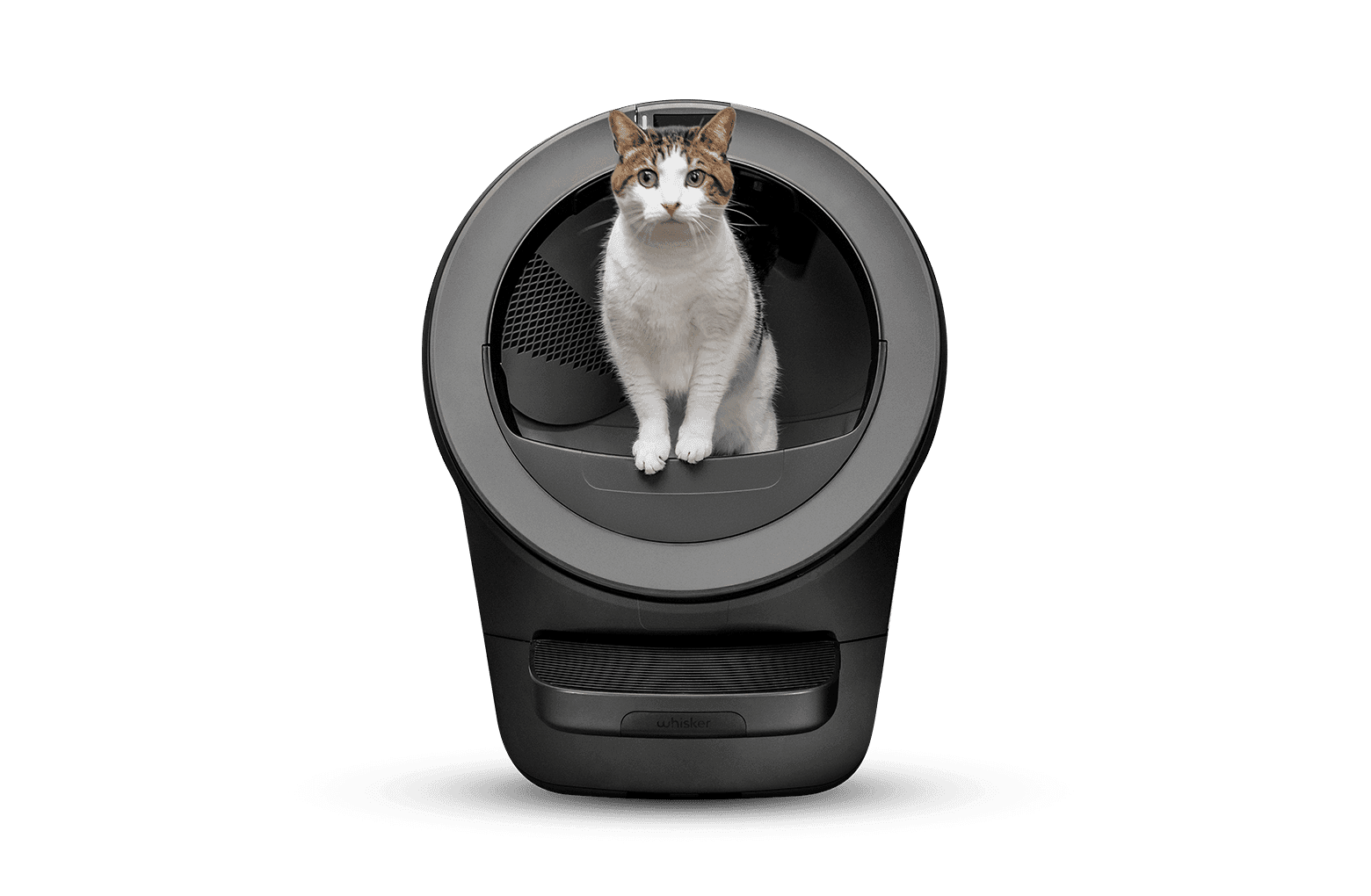
Next-generation Litter-Robot with WasteID, upgraded sensing, and support for up to 5 cats, without the Pro’s cameras. Includes the 90-day in-home trial and WhiskerCare warranty.
Petful may earn a commission when you click through to Whisker, at no extra cost to you.
Across these problem types, the same questions decide compatibility: does it form a firm clump, does the clean material pass through the screen, is it heavy and opaque enough for consistent sensing, and does the cat accept it? A failure on any one of those points can undermine the cycle.
- 1Clump: urine must become a firm mass that survives rotation.
- 2Sift: clean particles must pass through the screen instead of jamming it.
- 3Sense: the bed should be stable and opaque enough for consistent level and drawer readings.
- 4Accept: the cat must willingly use the texture and scent.
The safe default
- Use standard-weight, opaque clumping clay at or just below the molded fill line. Avoid non-clumping absorbent litter and pellets, and do not use PrettyLitter in the Litter-Robot 4, 5, 5 Pro, or EVO because Whisker warns that the light, translucent material can affect readings.
The four traits that matter most
The four traits that matter most
| Trait | What good performance looks like | Why it matters |
|---|---|---|
| Fast, firm clumping | A lifted clump keeps its shape | The globe can separate waste without smearing or crumbling |
| Standard weight | The litter bed settles predictably after rotation | Sifting and weight-based readings are more consistent |
| Low dust and low tracking | Minimal cloud during pouring and less litter carried out | The globe, sensors, entry, and floor stay easier to maintain |
| Opaque, screen-compatible particles | Clean litter passes the screen and remains readable to sensors | Level and drawer indicators are less likely to be disrupted |
1. Fast clumping
A fast-setting clump reduces the chance that the rotating globe reaches urine before the mass is ready to move. Cycle delay and litter performance work together, so a formula that stays loose for a long time can leave residue even when the machine operates correctly. Start with the manufacturer’s timing guidance and judge the returned bed after a real cycle.
Fast does not mean brittle. The goal is a clump that forms promptly and stays intact when lifted or rotated. If the drawer contains many small fragments and the globe retains damp residue, the litter may not be setting firmly enough for the chosen delay or household conditions.
2. Firm clump strength
Clump strength determines whether the waste reaches the drawer as one removable mass. A weak clump breaks across the screen and returns dirty fragments to the bed. A firm clump separates cleanly and removes only the litter that captured the waste. That mechanical difference is why a good formula can improve both cleanliness and refill efficiency.
You can perform a simple household check without calling it a laboratory test. After the normal set time, lift one clump during a manual inspection. If it holds together with gentle handling, it is more likely to survive rotation. If it crumbles immediately, watch the next cycle closely or try a more suitable clumping clay.
3. Standard weight with manageable dust
Standard-weight granules give the bed enough mass to settle predictably while still moving through the screen. Low dust keeps the repeated motion from coating the interior, cameras, entry, and nearby floor. These traits can conflict, since some very fine clays clump tightly but create more dust. The practical winner balances both rather than maximizing one package claim.
Pour slowly, keep the bag close to the globe, and observe the first cycles. Visible clouds, heavy residue, or rapid sensor-area buildup are reasons to consider a lower-dust compatible formula. The original white globe photographs make that residue easier to notice over time.
4. Screen-compatible size and sensor visibility
Clean particles must pass through the screen while waste stays behind. Oversized pellets fail physically, while very light or translucent material can create a different problem by making level and drawer readings less dependable. Opaque standard-weight clay fits both the mechanical and sensing requirements most consistently.
This is also why a blanket answer about natural litter is not useful. A tofu or walnut product with small particles and strong clumping may behave differently from a coarse, crumbly product in the same broad category. The operating test is particle size, clump behavior, opacity, dust, and cat acceptance, not the marketing label.
Best litter for other self-cleaning litter boxes
The best litter for a self-cleaning litter box depends on its mechanism. A rotating globe or rake usually needs a compatible clumping formula. A crystal-tray machine uses its proprietary crystal system. A self-washing unit may use permanent granules and plumbing. Never transfer the Litter-Robot clay rule to a machine designed around a different material.
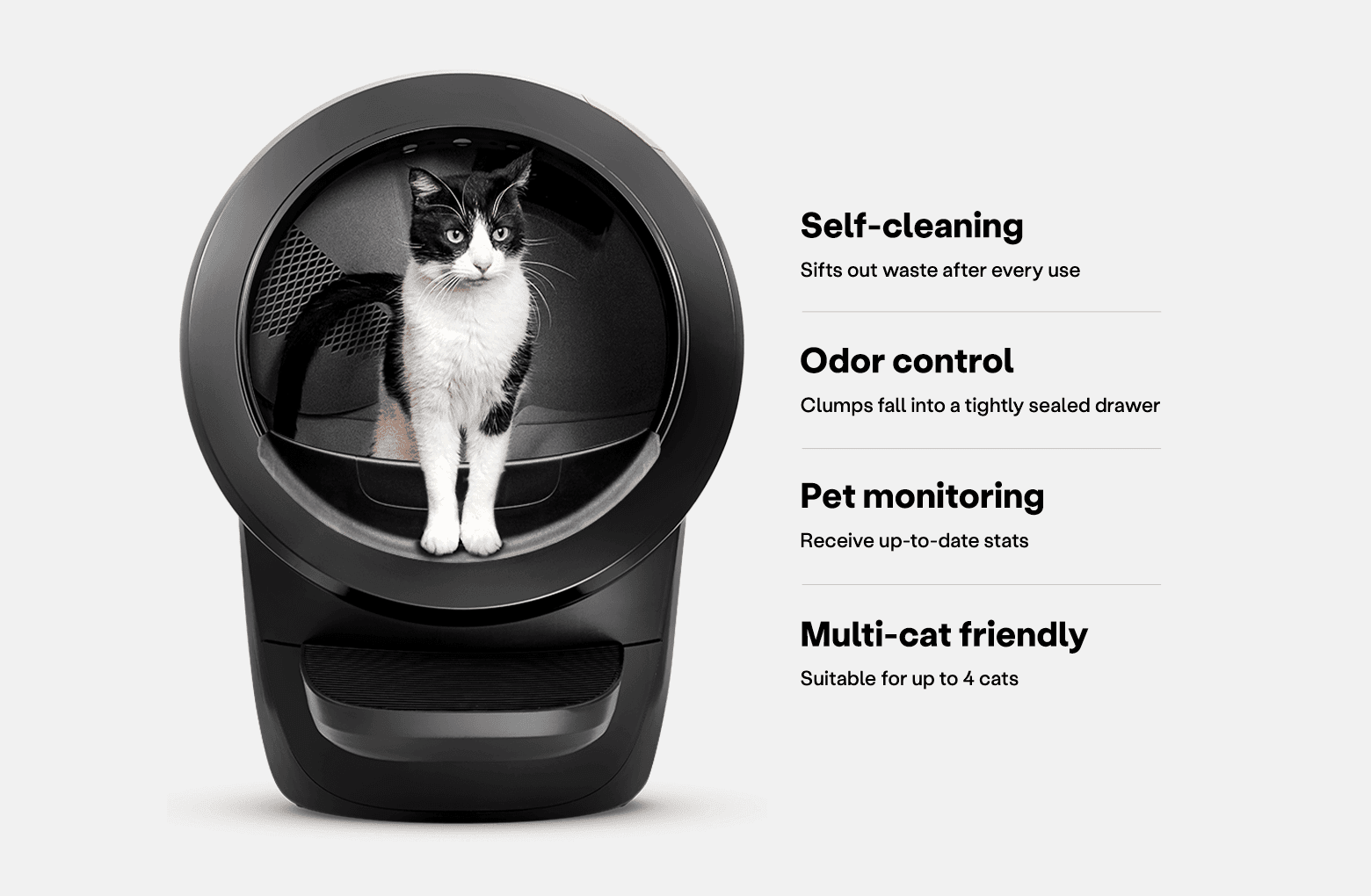
The proven Litter-Robot trusted by 1.8M+ households, with real-time litter and waste tracking in the Whisker app. The established pick if you want Litter-Robot reliability for less.
Petful may earn a commission when you click through to Whisker, at no extra cost to you.
For a sifting globe, however, the physics remain consistent: waste has to become a solid clump, clean litter has to pass through a screen, and the returned bed has to settle evenly. That is why hard-clumping standard-weight clay appears so often in automatic-box guidance.
Choosing the right Litter-Robot model
The litter profile stays broadly consistent across the Litter-Robot 4, 5, 5 Pro, and EVO, but newer sensors make opacity and level readings especially important. Model choice should be based on capacity, monitoring, cameras, and footprint rather than a plan to use a fundamentally different litter. See Petful’s Litter-Robot model comparison for that decision.
For the full premium product perspective, read our Litter-Robot 5 Pro review. The model decision and the litter decision are related but separate: first choose the machine that fits the household, then give its sifting system the material it was designed to handle.
How much litter to use and what to avoid
Fill a Litter-Robot at or just below the molded line inside the globe. Whisker’s current guidance treats that point as the optimal level. The original empty-globe photograph below makes the marker easier to identify, while the featured image shows a practical filled bed in the real white Litter-Robot 5 Pro.
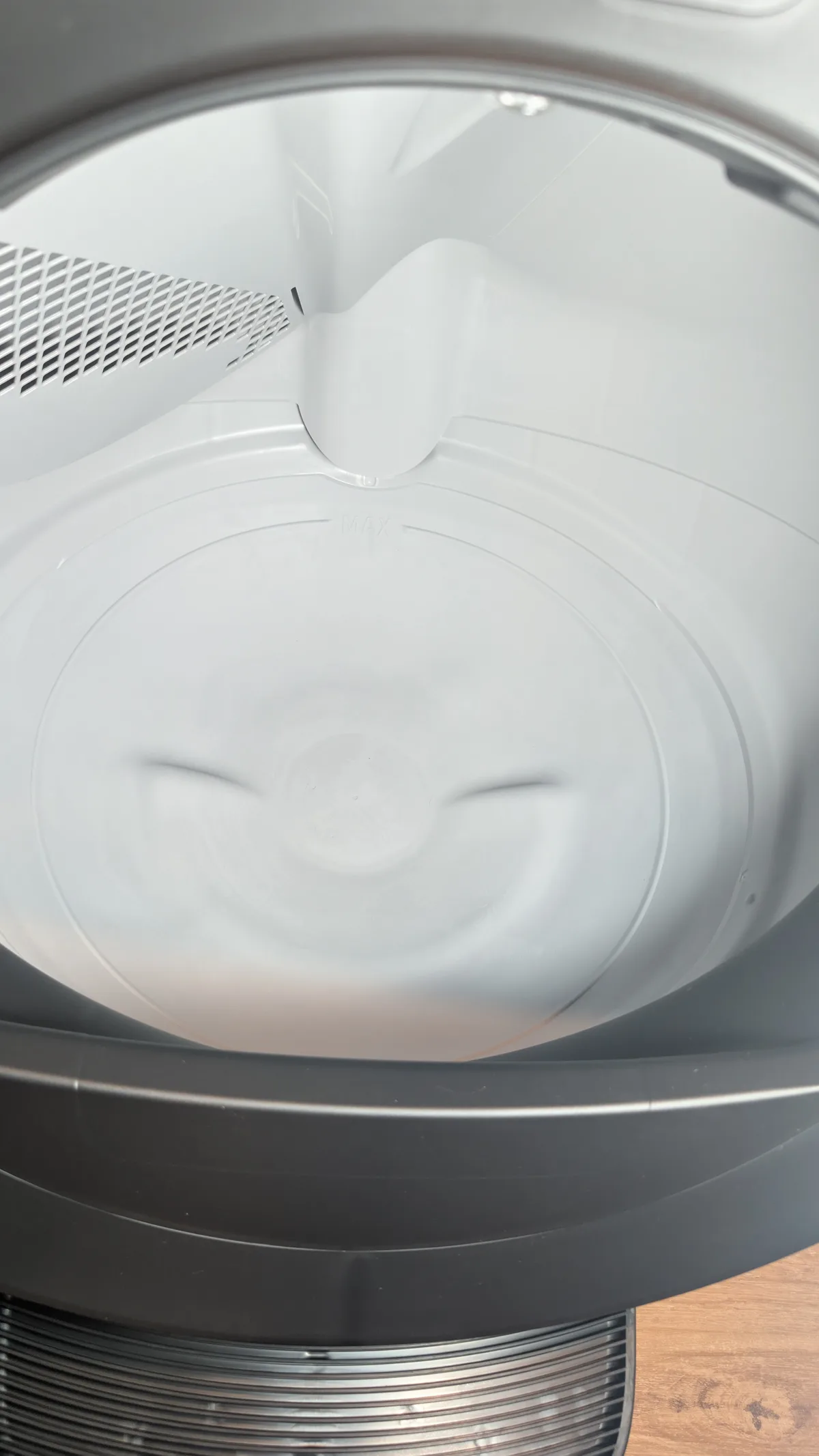
Filling to the globe fill line
The raised marker inside the globe is the reference point. Add litter gradually and stop at or just below it. Overfilling gives the rotating bed more material than the screen is intended to manage, while chronic underfilling can leave too little depth for normal digging and clumping.
Treat the line as a repeatable maintenance check. As cycles remove clumps, top up the clean litter rather than waiting until the bed is visibly shallow. The app’s litter status can help, but the molded marker is still the direct physical reference.
How often to top off
The right top-off rhythm depends on cat count, clump size, and how much clean litter leaves with each cycle. Check the bed regularly during the first weeks and add only enough to return to the line. A fixed calendar can be less useful than watching the actual level and cycle results.
How to switch litter gradually
Change texture and scent gradually when possible. Mix a small portion of the new compatible litter into the familiar litter, then increase it over several days while confirming that the cat continues to use the box and the machine continues to create clean cycles.
Two checks run in parallel during a switch: cat acceptance and machine compatibility. A litter can clump perfectly and still be rejected by the cat, or feel familiar to the cat and still crumble during rotation. Stop and reconsider if either side of that test fails.
Keeping both products within the standard-weight clumping-clay family reduces the number of variables. If you are moving to tofu, walnut, or another alternative, change slowly and inspect the actual screen, drawer, and returned bed after each early cycle.
A practical first-week litter checklist
- Fill the globe at or just below the molded line with a known compatible clumping litter.
- Confirm that the unit senses the cat’s visit and waits for the selected cycle delay.
- Inspect whether the clump reaches the drawer intact and the returned bed is even.
- Watch visible dust, tracking, litter level, and the cat’s willingness to enter the globe.
- Change only one variable at a time if clumps break, residue remains, or a sensor warning appears.
- Keep the previous acceptable litter and box available while the cat adjusts to the new routine.
Begin with a known compatible litter and keep the bed at or just below the line. Confirm that the cat enters comfortably, the unit senses the visit, the clump has enough time to set, the cycle returns an even bed, and the drawer receives an intact clump. Inspect rather than assuming. The first week establishes what normal looks like for that box, litter, delay, and cat.
Record only the variables that change decisions: litter brand and formula, fill level, cycle delay, visible dust, clump integrity, tracking, cat acceptance, and any sensor warning. If something goes wrong, change one variable at a time. That discipline is more useful than cycling through several highly rated bags without knowing which trait caused the problem.
After the routine stabilizes, the checklist becomes shorter. Keep the fill level consistent, top off before the bed is shallow, wipe dust from relevant surfaces, empty the drawer based on real household use, and revisit the formula if clumps begin breaking or the cat’s acceptance changes. The best litter is the compatible one that keeps producing that stable result.
Change one variable at a time
- Keep the box location and transition routine stable while changing litter. A gradual mix lets you see whether the cat dislikes the new texture or the machine is struggling with the new clump, rather than guessing between several changes at once.
Multi-cat litter and dust considerations
A multi-cat home does not need a different litter chemistry, but it does expose weak performance faster. More visits mean more clumps, more cycles, faster depletion, and more dust movement. Firm clumps and regular top-offs matter more as use increases.
Watch the litter bed, drawer percentage, cycle cleanliness, and whether every cat has comfortable access. If cats queue, avoid the unit, or eliminate elsewhere, adding another acceptable box may matter more than changing brands. Petful’s automatic-box safety guide covers the broader household setup.
Litter cannot solve a box-access problem
- If several cats are waiting, avoiding the globe, or having accidents, evaluate the number and placement of available boxes. The perfect clumping formula cannot compensate for a resource setup the cats do not accept.
Low dust is also a practical maintenance advantage because every automatic cycle moves the material. Keep the globe, camera area, entry, and sensors clean according to the manual, and move to a lower-dust compatible formula if residue builds quickly.
Cost and value of compatible litter
Compatible litter does not have to be the most expensive bag on the shelf. Its value comes from forming a firm clump the machine removes cleanly, preserving the returned litter bed, and avoiding repeated messy cycles. Compare cost per usable cycle and household satisfaction, not only cost per pound.
A cheaper litter that crumbles can send more material into the drawer and require more cleanup. A premium litter that your cat refuses is also poor value. Start with a clearly compatible profile, then evaluate clump integrity, tracking, dust, scent acceptance, and refill rate in your own home.
Whisker’s own GreatLitter and Tidy Cats Designed for Litter-Robot offer the least ambiguous starting point. Other clumping clays may be better values locally. Because Petful did not run a controlled price-and-performance test, this guide does not claim a universal cost winner.
How we chose this guidance
Petful did not run a comparative litter laboratory test, and we will not imply one. This guide uses Whisker’s current July 2026 compatibility guidance, the operating requirements of the rotating sift, and Corey’s original photographs of the exact white Litter-Robot 5 Pro globe and fill line. Product-specific performance beyond those boundaries remains a household test.
The research was refreshed against the current live search results and Whisker’s official guide rather than copied from older community consensus. That source hierarchy matters because compatibility advice changes as new Litter-Robot sensors and models appear. The article therefore treats the July 2026 manufacturer guidance as authoritative for supported materials, uses Petful’s original photos for the physical fill-line evidence, and labels every broader household judgment as a practical test rather than a verified universal result. It also avoids turning one compatible brand, price, or owner anecdote into a universal ranking without controlled comparative evidence.
The short- and long-term keyword plan follows the same boundary. Head terms such as best litter for Litter-Robot receive a direct profile answer, while lower-volume questions about clumping, low dust, low tracking, model compatibility, non-clay materials, crystals, and fill level are answered where they change a real setup decision. The article does not repeat those phrases mechanically or turn every modifier into a separate product ranking. Search coverage is useful only when the section still helps an owner choose, fill, or troubleshoot the machine. That approach also keeps older model queries useful without implying the Litter-Robot 4 and 5 need fundamentally different litter chemistry. The core sifting test remains clump, sift, sense, and accept, with the cat’s comfort consistently controlling the final choice in every home over time.
Best litter for Litter-Robot FAQs
Frequently Asked Questions
A high-quality, standard-weight clumping clay works best because it forms a firm waste clump while clean particles pass through the rotating screen. Whisker also recommends low dust, low tracking, and good odor locking. GreatLitter and Tidy Cats Designed for Litter-Robot are the company’s named options, but another clay can work when it meets the same physical profile.
It does not require one proprietary brand, but it does require compatible behavior. The litter should clump firmly, sift through the screen, remain stable during rotation, and work with the unit’s sensors. Standard-weight clumping clay is the safest default. Non-clumping litter and pellets generally do not work because they cannot create or separate the solid clump the globe expects.
The best starting choices in 2026 are Whisker’s GreatLitter and Tidy Cats Designed for Litter-Robot because Whisker names both in its current official guide. The broader best profile is standard-weight, fast-clumping, low-dust, low-tracking clay. Petful did not run a brand-comparison lab test, so the final winner depends on cat acceptance, local price, and real cycle results. Begin at the molded fill line, then inspect how the formula clumps and sifts.
Match the litter to the mechanism. A rotating globe or rake usually needs a firm clumping formula, a crystal-tray box uses its specified crystals, and a self-washing unit may use permanent granules. For a Litter-Robot, standard-weight clumping clay is the most reliable choice because it creates a solid clump and lets clean litter pass through the screen.
The bottom line on the best litter for Litter-Robot
The best litter for Litter-Robot is a standard-weight, fast-clumping, low-dust clay filled at or just below the molded line. GreatLitter and Tidy Cats Designed for Litter-Robot are Whisker’s named starting points. Other formulas can work when they meet the same clumping, sifting, sensing, and cat-acceptance tests.
Use the original fill-line photograph as your setup reference, change litter gradually, and judge the result by the actual returned bed and drawer. For the premium unit that appears in these photos, see Petful’s Litter-Robot 5 Pro review.

Coreen Saito is a pet writer and longtime shelter volunteer with more than a decade in animal rescue. She covers cat behavior, breed care, and the small, ordinary science of sharing a life with companion animals, with a particular focus on honest takes about the products and decisions that actually matter. At home in Arizona, she’s outranked by Mac (a dog with the loudest opinion in the house), Rebel (a cat who governs by quiet authority), and Meri (an orange tabby who runs the late shift and the laundry basket). She writes about all three, plus the rescues that keep coming through her life, at LifeWithMinty.com.