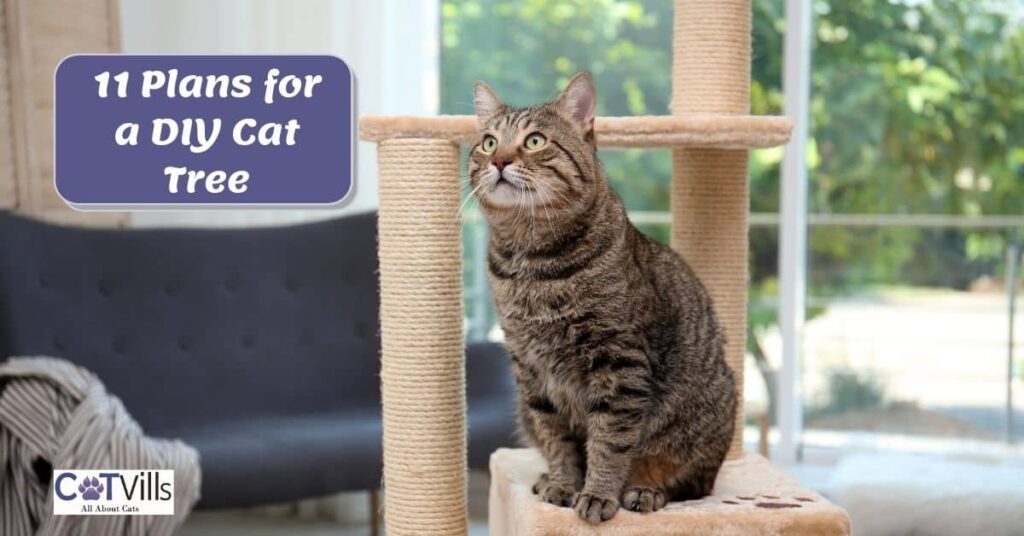

If you are looking for a fun project and something that will bring your feline friends endless joy, you can’t go wrong with a DIY cat tree! There are hundreds of cat tree plans available online, and I picked out my favorites to share with you.
From your basic scratching posts to designs that incorporate a cat condo and more, there’s really so much to choose from. Let’s dive in and take a look!
FYI, this post includes affiliate links. If you buy anything through our links, CatVills earns a commission at no extra cost to you.

This sisal rope is a very durable replacement that will give your old, scratched up post new life and save it from the trash heap. With this rope and some glue (sold separately), you can save your furry friend’s beloved post and save yourself some money as well!

Measuring 39.3″(or 78.7″ can also choose)x15.8″, this extra-large mat is easy to cut to your desired shape, ensuring a perfect fit for different spaces and cat furniture configurations. The edges remain intact and neat after cutting.
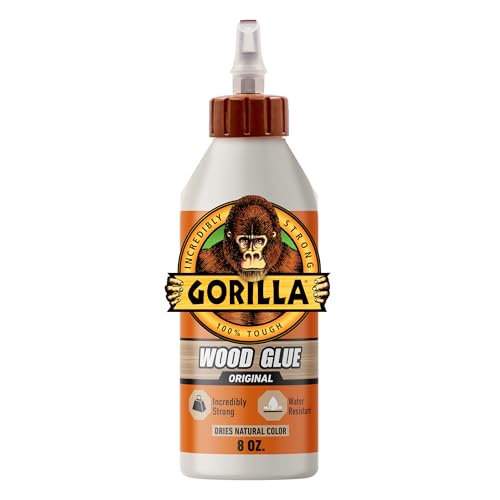
Ideal for use on hardwoods; softwoods; and natural wood composites. Requires only 20-30 minutes of clamp time; fully cured in 24 hours.
11 Plans for a DIY Cat Tree
I tried to include a good mix of simple and more complex plans. That way, no matter how handy you are, you can make the perfect tree for your kitty!
1. Nature-Inspired Cat Tree
A nature-inspired cat tree is our number one pick for more than just its great aesthetics.
While many cat tree plans require special materials, this design uses stuff you probably already have lying around.
However, the best thing about this plan is that you can choose the tree branches you are going to use. It guarantees that your creation will be a one-of-a-kind design.
Similar cat trees sell for around $800 online, but you can make your own using only the following:
- Tree branches
- 1 or 2, 1″x3″x8′ furring strips
- 1, 2″x2″x6′ furring strip.
- 4, 1″x2″x8′ furring strips
- 1, 1/4″ 4’x4′ plywood
- 1 box of 1-5/8″ drywall or wood screws
- 1 box of 3-1/2″ screws
- 1 box of 1-3/8″ drywall screws
- Wood Glue
- Wood filler
- Hot glue
- Carpeting
- A non-toxic general-purpose adhesive
- Bushy Greenery or fake tree leaves
You can find the full plan here, or check out the tutorial video below for one made of driftwood.
2. Kitty Loft With Concealed Litter Box

This stylish cat tree was designed with functionality in mind.
Its appealing symmetrical design boasts a cat loft and feeding area, room for play, and a concealed compartment of a kitty litter tray.
It comes second on our list for its aesthetically appealing yet functional design. All you need to construct it is the following:
- Wood (all size, all shape)
- Sisal rope
- PVC tube (like for gutters)
- Hose clamps
- Angle brackets
- Flexible fences
- Carpet flooring (buy remnants from a home repair store, or go with something like this)
- Staples
- Hinges
- Screws
You can find the complete plan here.
3. Simple Wall Mounted Cat Tree

This beautiful design strikes a balance between simple design and the multi-level cat tree concept. With the platforms mounted to the wall, the tree’s base acts only as a climbing post.
This gives you many options to make an amazing cat tree that isn’t ugly that scales to the amount of space you have available.
You will need the following to make your own simple wall-mounted cat tree:
- square edge timber (2400 x 44 x 44 mm)
- plywood (16 mm thick) cut into four 20 x 40 cm and one 40 x 40 cm pieces
- sisal rope (10 mm diameter)
- angle brackets
- screws and wall plugs
- double-sided tape
- optional: carpet underlay
- carpet
You can find the complete plan here.
4. Eiffel Tower Cat Tree

This Eiffel Tower design makes for an awesome cat tree. However, the project is a bit more involved than others on our list.
Rather than using a list of items to construct it, the design needs to be printed or laser cut from cardboard.
After that, you will need to follow a couple of instructions to put on the finishing touches.
After that, you will need to cover the structure in the carpeting of your choice.
You can purchase the digital print-ready files here.
5. Repurposed Bookshelf Cat Tree
One of the easiest ways to create a custom cat tree is to transform an old bookshelf into a climbing and lounging station.
This project works especially well if you have an unused bookcase collecting dust in the garage or basement. By adding carpet, scratching surfaces, ramps, and cozy sleeping areas, you can turn a basic shelf into a multi-level cat playground.
The best part is that the structure is already built, which makes this one of the more beginner-friendly DIY options on our list.
You can customize the design to suit your cat’s needs, whether that means adding enclosed hideaways, extra scratching posts, or elevated observation decks.
Basic materials include:
- A sturdy bookshelf
- Carpet remnants
- Sisal rope
- Wood screws
- Pet-safe adhesive
- Fabric or cushions (optional)
The cool thing about this one is that you can go as simple or as creative as you want. If you prefer the easy route, I like this tutorial from HGTV:
6. Cat Wall Playground
The cat wall playground might not be a “cat tree” in the traditional sense.
Instead of one freestanding structure, you’re creating an entire climbing and lounging area across your walls. Think shelves, perches, bridges, scratching surfaces, and cozy spots to nap, all connected into one feline adventure zone.
This idea works especially well if you have a dedicated cat room, but it can also be adapted for a living room, home office, or any space where your cats spend a lot of time. You can start small with a few shelves and expand over time, or go all out and create a true cat highway around the room.
What Ilove most about this approach is how customizable it is. No two cat wall playgrounds end up looking exactly alike because they’re designed around your space and your cats’ preferences.
If you have active cats who love to climb, explore, and survey their kingdom from above, a cat wall playground can provide hours of enrichment while freeing up valuable floor space. It’s easily one of the most impressive DIY cat projects we’ve seen, and one that your cats will probably appreciate far more than your carefully chosen décor. (Cats have priorities, after all.)
Again, there are a TON of ways you can go with this. I like the tutorial below because it uses inexpensive supplies and isn’t crazy hard to pull off.
7. Homey Double Chair Cat Tree

The following tree on our list is ideal for anyone looking for a simple, easy DIY project.
It’s pretty much two chairs stacked, one upside down on the other.
While that may sound a bit makeshift, you can build something exceptional for your feline friend with a bit of craftsmanship and careful design.
You can add a disused wooden ladder to the design and even natural tree branches to make a custom cat tree. The basic instructions require the following:
- Wood (The Chairs)
- carpet
- Pieces of fabric (Optional)
You can find the complete plan here.
8. The Custom Modular Cat House/Tree
This is one of our favorite options. It would have ranked higher on our list if it weren’t a bit on the pricey side.
The beauty of a modular cat house is that you can build it one section at a time and customize it to fit both your cats and your home. Rather than creating a single cat tree, you’re designing a collection of connected cubes, platforms, ramps, and hideaways that can be rearranged as needed.
It’s also one of the few DIY cat tree ideas that can easily blend in with modern décor. While traditional carpet-covered cat trees definitely serve their purpose, they’re not always the most stylish addition to a room. A modular design gives you a cleaner, more furniture-like look.
For a basic modular cat house, you’ll need:
- Plywood or pre-cut wooden panels
- Wood screws
- Wood glue
- Sandpaper
- Paint or stain (pet-safe once fully cured)
- Carpet remnants, sisal mats, or cushions
- A drill and screwdriver
To build it, start by creating a simple cube-shaped box large enough for your cat to comfortably sit or nap inside. Add a circular or square entrance on one side, then sand all edges smooth. Once your first module is complete, build additional cubes and connect them using screws, brackets, or short ramps.
You can leave some cubes open as lounging platforms and enclose others to create cozy hideaways. Add scratching surfaces to the sides, cushions to the tops, and extra shelves between modules for even more climbing opportunities.
One of the best things about this design is that you’re never really finished. You can keep adding new sections whenever inspiration strikes (or whenever your cat decides they need an even bigger kingdom).
You can even build this out of cardboard cubes if you want to go the budget route (which I absolutely would do). Here’s a great tutorial that will help:
9. The Cat Condo
This is our favorite budget-friendly design. This simple-to-follow plan should apparently set you back less than $25.
It is a beautiful, simple cat tree and condo combo. The free plan includes instructions and a list of the required materials.
You can get the free plan here.
10. Upcycled Cat Tree (Made for free from “trash”)
If you’re looking for a DIY cat tree that’s 100% cheaper than buying a storebought one and still really nifty, this tutorial is awesome. The Simple Environmentalist built everything from top to bottom out of materials that would have ended up in the trash.
11. DIY Cat Shelves
We have already seen how convenient DIY bookshelf cat trees can be. The great thing about this approach is that you can better utilize the space you have available.
You can create a wall-mounted cat tree from various wall mounts. Better yet, you can then use these as the base from which to add scratch posts, faux vines, natural branches, and natural carpet.
If an average cat tree just isn’t your style, and you want to create a custom area for your indoor kitties, this is the way to go. For the bare shelves, you will need the following:
- Plywood
- Carpet
- brackets
- Screws
You can find a great video tutorial on DIY cat shelves here.
How to Choose the Right DIY Cat Tree
Before you grab your tools and start building, take a minute to think about what your cat actually needs. The “best” DIY cat tree isn’t necessarily the biggest, tallest, or most elaborate one. It’s the one your cat will actually use.
A young, energetic kitten may love a floor-to-ceiling climbing wall, while a senior cat with arthritis would probably appreciate lower platforms and easy access ramps. Likewise, a single cat household has very different needs than a home with three cats all competing for the best nap spot in the house.
Here are a few things to consider before choosing a plan:
Consider Your Cat’s Age
- Kittens tend to enjoy climbing, exploring, and jumping between levels.
- Adult cats usually appreciate a mix of climbing areas, scratching surfaces, and comfortable resting spots.
- Senior cats often need lower platforms and easier ways to reach elevated perches.
Think About Your Cat’s Personality
Some cats want to be as high as possible at all times. Others prefer cozy hiding spots near the ground.
If your cat spends most of the day sitting in the highest spot they can find, a tall tree with multiple levels is probably a good choice. If they prefer hiding under furniture, look for plans that include enclosed condos or cubbies.
Measure Your Available Space
A massive cat playground might look amazing on Pinterest, but it won’t do you much good if it takes over your entire living room.
Wall-mounted shelves and climbing systems are excellent options for smaller homes because they take advantage of vertical space without using much floor space.
Consider How Many Cats You Have
Multi-cat households often benefit from larger structures with multiple perches and resting spots. Cats may enjoy each other’s company, but most still appreciate having their own place to lounge and supervise the household.
As a general rule, the more cats you have, the more elevated resting areas you’ll want to provide.
Is it Really Cheaper to DIY a Cat Tree Than Buy One?

Honestly? It depends. In some cases, yes, it can be cheaper to buy the materials and do it yourself, especially if you’re going for a high-end fancy look or really have your heart set on real wood. Those types of cat trees can run you several hundred dollars. If you don’t really care whether it looks like a work of art, though, a storebought one can be cheaper.
That said, it’s not so much just about cost of materials vs cost of an actual pre-designed cat tree. Don’t forget to factor in your time AND your patience. I can tell you right now that while I love the idea of getting crafty with my own DIY cat tree I would probably give up halfway through and just end up buying something on Chewy. I’m notorious for that (ask me how my DIY snuffle mat project is coming for my dog…although the fact that I started it 7 years ago and it’s still half-done in my closet should tell you everything you need to know).
DIY Cat Tree Safety Tips
A homemade cat tree can save money and allow for endless customization, but safety should always come first.
Cats are incredibly athletic, but they’re also surprisingly talented at finding weaknesses in furniture. If there’s a loose platform, a wobbly support, or a poorly secured shelf, your cat will probably discover it long before you do.
Before introducing your cat to a new DIY tree, keep these safety tips in mind:
Prioritize Stability
The taller the cat tree, the more important stability becomes.
Large bases, secure joints, and wall anchors can help prevent tipping. If your design stands more than a few feet tall, anchoring it to the wall is usually a smart idea.
Use Pet-Safe Materials
Not all building materials are pet-friendly.
Choose untreated wood whenever possible and avoid paints, stains, or adhesives that may contain harmful chemicals. If you plan to finish the wood, look for products labeled as non-toxic once cured.
Check Every Surface
Run your hands over all platforms, corners, and climbing areas before letting your cat explore.
Look for:
- Exposed screws or nails
- Sharp edges
- Splinters
- Loose carpet
- Protruding staples
Test It Before Your Cat Does
Every platform should comfortably support more than your cat’s weight.
Give the structure a good shake. Climb on lower platforms if possible. If anything shifts, creaks excessively, or feels unstable, make adjustments before your cat takes it for a test drive.
Inspect It Regularly
Even well-built cat trees experience wear and tear over time.
Check rope-wrapped scratching posts, carpeted surfaces, and fasteners every few months. Replacing worn materials early can help extend the life of your cat tree and keep it safe.
FAQs
WHAT CAN I USE INSTEAD OF A CAT TREE?
Many people prefer an ‘outdoor real cat tree.’ This is as the name suggests. If you have trees in your yard, you can add platforms, scratching posts, and many of the features from the cat trees on our list.
Alternatively, a scratching post, small perch, and a cat bed are all you need to meet your kitties’ basic needs. Some kitty nook designs incorporate natural branches and sisal rope.
You can combine your cat’s feeding and water bowls. The point is to give them a comfortable little nook that will keep your kitties happy.
WHAT DO YOU DO WITH OLD CAT TREES?
The great thing about old, worn cat trees is that the materials can be reused in new DIY projects. You can usually reuse the base pieces, some soft pieces, like carpet and sponge, strips of wood, and any wood discs.
With this material, you can easily construct a smaller cat tree or use the materials in a brand new project. You can also donate an old cat tree to a local shelter or rescue center.
Conclusion
DIY cat trees make for a rewarding project, save you money, and allow you to express your creativity.
In addition, they work out cheaper than buying ready-made cat trees and cat furniture.
The only limits are how comfortable you are with tackling the project, and in some cases, access to specialized equipment.
Have you tried making your own DIY cat tree? We’d love to hear your experiences in the comment section below!