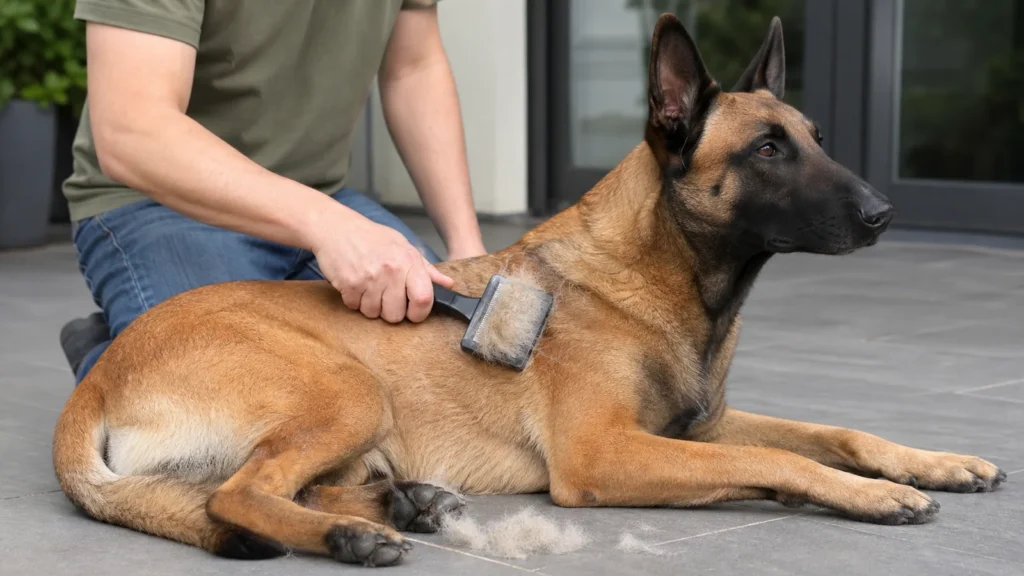

Do Belgian Malinois shed? Yes. A Belgian Malinois has a short double coat that releases some hair throughout the year and usually sheds more heavily during seasonal coat changes. The hair is shorter than a German Shepherd’s, but it still lands on clothing, upholstery, floors, and car seats.
Most healthy Malinois coats are manageable with consistent brushing, occasional bathing, and a simple home-cleaning rhythm. This guide separates normal loose coat from changes worth discussing with a veterinarian. For a broader overview of the breed, start with Petful’s Belgian Malinois breed guide.
How much Belgian Malinois shed
Belgian Malinois shed moderately year-round, with a heavier seasonal coat blow as the undercoat adjusts to changes in daylight and weather. Indoor climate, geography, health, age, and time spent outdoors affect how obvious the cycle looks. Some owners see two pronounced high-shed periods; others notice a steadier trickle.
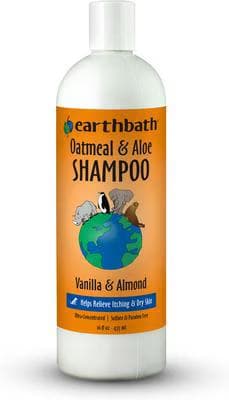
Bathing can loosen coat before brushing, but frequent shampooing is not a cure for shedding. If your dog needs a routine bath and tolerates the fragrance, Earthbath Oatmeal and Aloe dog shampoo is one existing option. Follow the label, rinse completely, and stop if irritation develops.
Petful may earn a commission when you click through to Chewy, at no extra cost to you.
The concise summary is that a Malinois is not a low-shedding breed, but its short coat is usually simpler to maintain than a long, feathered coat. The source boundary matters: no responsible guide can promise an exact amount for one dog based only on breed. Diet, parasites, skin irritation, hormonal conditions, and other health factors can change coat loss.
- 1Belgian Malinois have year-round shedding with a heavier seasonal coat blow
- 2Brush once or twice weekly in ordinary weeks and more often when loose undercoat increases
- 3Sudden, patchy, itchy, or inflamed hair loss is not a routine grooming problem
Do Belgian Malinois shed a lot?
The answer depends on what you are comparing them with. Expect more loose hair than from a single-coated, very low-shedding dog. Expect less length and fewer tangles than with many longhaired double-coated breeds. Short guard hair can weave into fabric, so a moderate amount may feel substantial on dark clothes or cloth seats.
Compared with German Shepherds, Malinois often appear to leave less overall hair because the coat is shorter and generally less profuse. Individual dogs can reverse that impression. The useful comparison is not which breed is “hair-free,” because neither is. It is whether your routine can absorb weekly brushing and extra cleaning during coat blows.
When Belgian Malinois shedding peaks
Seasonal shedding often becomes more noticeable in spring and fall, when the undercoat adjusts for warmer or cooler conditions. Dogs living mostly indoors may follow a less dramatic schedule because artificial light and controlled temperature soften seasonal cues. Females, seniors, puppies changing coats, and dogs after illness or major stress can show different patterns.
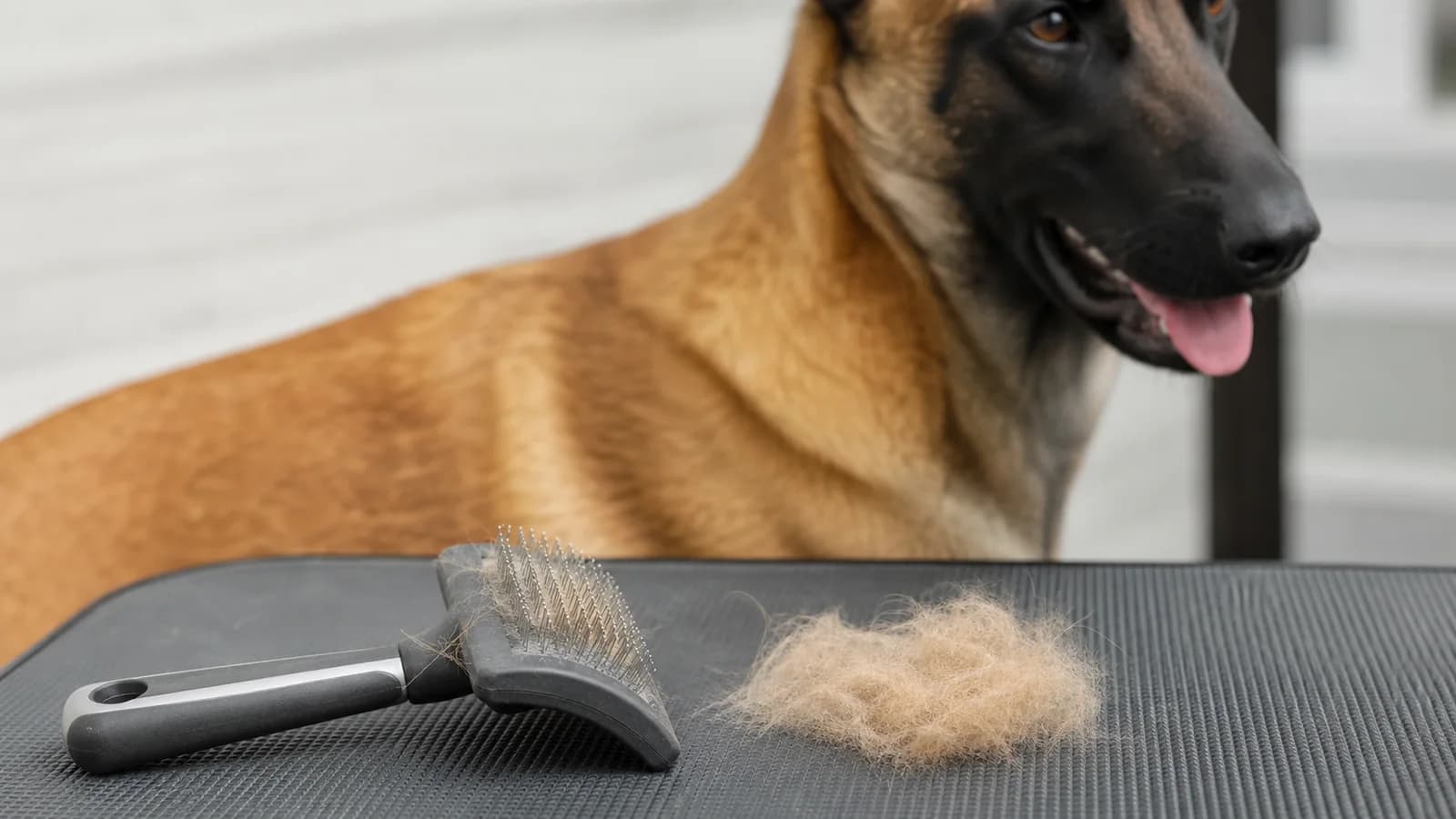
Use what comes off the brush as measured guidance, not a calendar date. When each pass fills the brush quickly and loose tufts lift from the flanks, move temporarily from weekly maintenance to short daily sessions. When output falls, return to the normal schedule. That owner context prevents over-brushing a coat that no longer needs intensive work.
Never scrape repeatedly at one spot just to fill a brush. A self-cleaning slicker brush can make short sessions easier, but use light pressure and inspect the skin as you work.
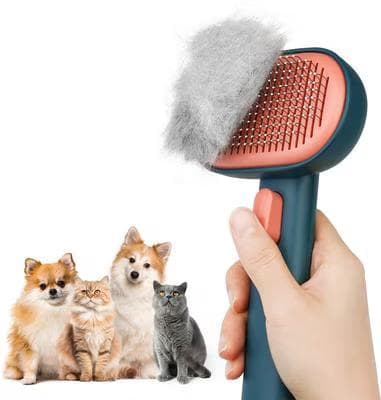
Petful may earn a commission when you click through to Chewy, at no extra cost to you.
A seven-day high-shed cleanup routine
This practical method separates care of the dog from care of the house:
- Day 1: Brush outside or on an easy-clean floor for 10 to 15 minutes, then vacuum the main resting area.
- Day 2: Wipe hard floors and wash the dog’s most-used blanket or crate pad.
- Day 3: Use a grooming glove for a light pass and clean the car or doorway where hair collects.
- Day 4: Give the coat and skin a rest while vacuuming upholstery and baseboards.
- Day 5: Repeat a gentle brush, stopping when the tool brings up little loose coat.
- Day 6: Wash removable furniture covers and shake bedding outdoors before laundering.
- Day 7: Check the skin and reassess. Continue daily only if loose undercoat is still coming away easily.
Are Belgian Malinois hypoallergenic?
No, Belgian Malinois are not hypoallergenic. They shed fur and dander, and allergy-triggering proteins can also come from saliva and skin secretions. A short coat does not make those proteins disappear. This is the direct answer; the practical context is that reaction level varies by person and by dog, so breed labels cannot guarantee safety.
If allergies are a serious concern, speak with a medical professional and spend time around the specific dog before adopting when possible. Grooming and cleaning may reduce loose hair in the home, but they do not turn a Malinois into an allergen-free dog. Do not rely on a seller’s claim that a particular color or bloodline is hypoallergenic.
The same-release guide to Belgian Malinois colors explains coat shades and markings. Color changes appearance, not the basic double-coat maintenance requirement.
The best brushing routine for a Belgian Malinois
In ordinary weeks, brush a healthy adult once or twice. During an active coat blow, brief daily sessions may be appropriate until the loose undercoat tapers. The best routine is gentle, systematic, and short enough that the dog can remain comfortable.
A pair of grooming and deshedding gloves can help a touch-sensitive dog accept a light surface pass. The gloves will not reach dense loose undercoat as efficiently as the right brush, so treat them as one tool, not a complete solution. The Four Paws Magic Coat wet-and-dry glove and curry brush is another existing option for light surface-hair or bath-time work, not a substitute for a tool that reaches loose undercoat.
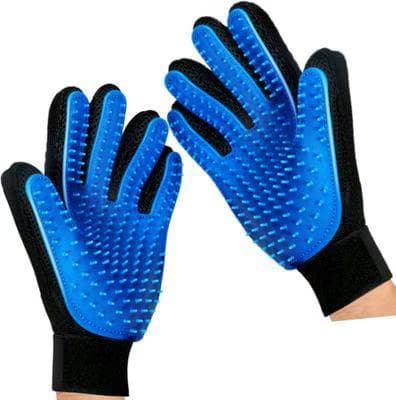
Petful may earn a commission when you click through to Chewy, at no extra cost to you.
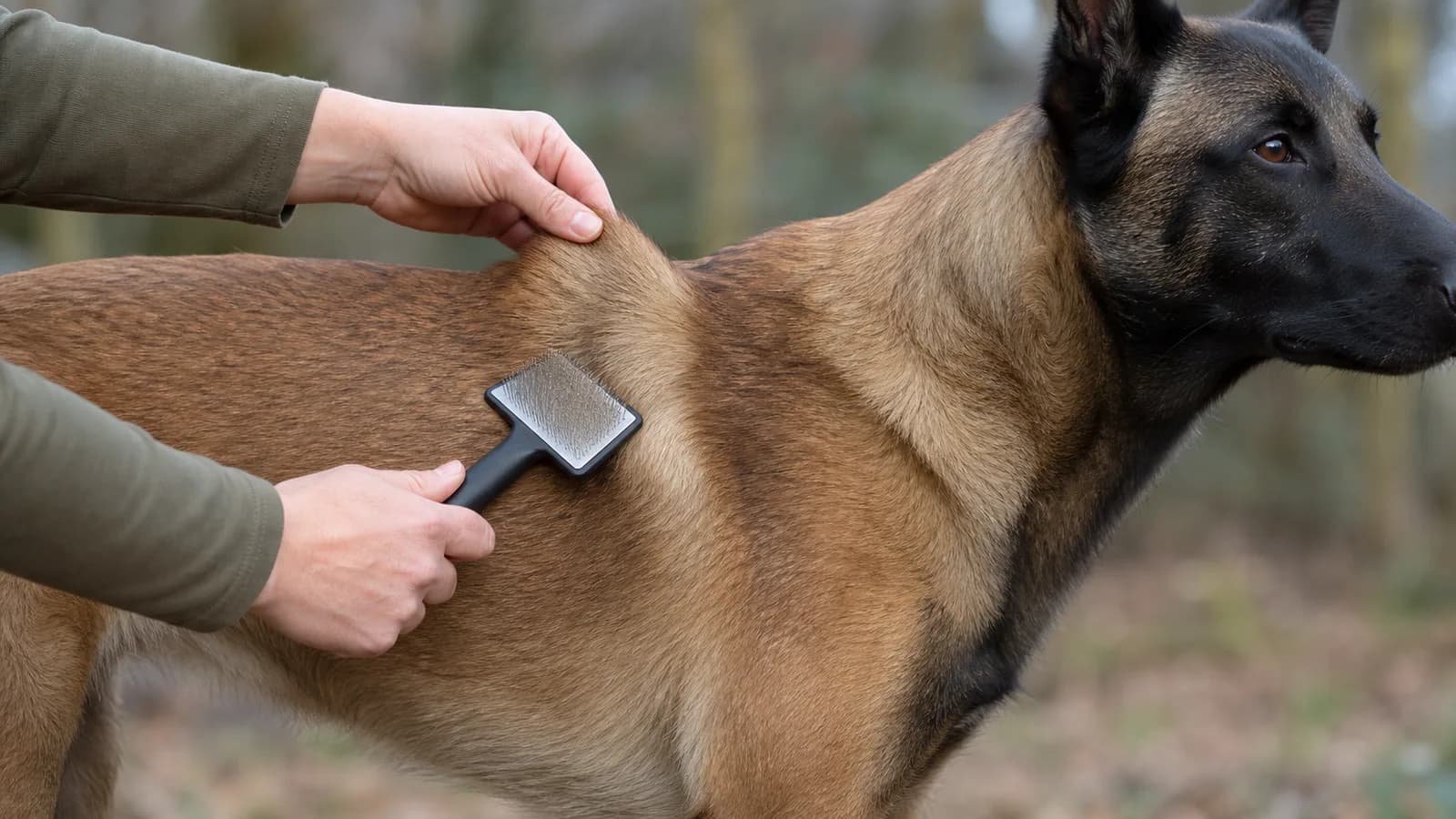
Belgian Malinois grooming tools by job
| Tool | Best use | How to use it |
|---|---|---|
| Grooming glove | Surface hair, sensitive dogs, quick maintenance | Stroke with the direction of coat growth and empty it often |
| Soft or flexible slicker brush | Loose hair through the short double coat | Use light pressure in small sections and avoid repeated scraping |
| Deshedding brush | Dense loose undercoat during a coat blow | Use sparingly, follow coat direction, and stop when output drops |
| Rubber curry brush | Bath-time massage and loose surface hair | Use gently on wet coat only if the product is made for dogs |
| Damp microfiber cloth | Final surface pass | Wipe the coat after brushing to collect remaining hair |
A 10-minute brushing sequence
Give the dog a stable, nonslip place to stand or lie down. Spend the first minute letting the dog inspect the tools and rewarding calm contact. Use the next six or seven minutes for small sections, alternating several brush strokes with a pause. Check behind the ears, at the collar line, around the shoulders, along the flanks, and over the thighs without dragging across bony points.
Use the final minutes for a damp-cloth pass and a skin check. Separate the coat enough to see whether the skin is pale and calm rather than red or flaky. End while the dog is still comfortable, then reward a quiet release from the station. That routine teaches cooperative care and makes it easier to notice a new lump, sore, tick, or tender area early.
How to brush without irritating the skin
Start at the neck and shoulder, then work through the chest, sides, back, hindquarters, and tail. Part the hair with your free hand so you can see the skin. Brush in the direction of growth with enough pressure to catch loose coat, not enough to drag the skin.
Use these stop signals:
- Redness or scratch marks
- Flinching, turning, or trying to leave
- A brush snagging rather than gliding
- Repeated passes producing little additional hair
- Existing sores, scabs, or tender areas
A medium deshedding brush can be reserved for periods when loose undercoat is clearly present. Because this model is listed for medium to long hair, confirm that its tooth length and pressure suit your short-coated dog before use.
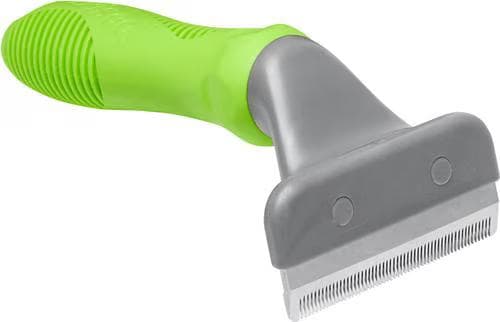
Petful may earn a commission when you click through to Chewy, at no extra cost to you.
This is the clear boundary between useful grooming and too much grooming: removing hair that is already loose is helpful; forcing attached coat out can irritate skin and damage the coat. The responsible choice is to stop before the dog becomes uncomfortable, even if online videos make huge piles of fur look like the goal.
Bathing, odor, and wet-coat care
A healthy Belgian Malinois generally needs a bath when dirty, after swimming in questionable water, or when odor and debris cannot be brushed away. There is no universal weekly schedule. Too-frequent washing or incomplete rinsing can dry or irritate skin, while leaving mud, salt, or pool residue in the coat can also cause problems.
Before bathing, brush out loose hair. Use lukewarm water and a dog-formulated shampoo, keep product out of the eyes and ears, and rinse until the water runs clear. Towel-dry thoroughly, then let the undercoat dry completely in a warm, draft-free space. Damp undercoat can hold odor and make irritation harder to notice.
Swimming, rinsing, and coat odor
Some Malinois enjoy water and become capable swimmers, while others avoid it. Preference is individual, not a breed guarantee. Around pools, lakes, or moving water, supervise closely, provide an easy exit, and use suitable safety equipment. The breed’s exercise needs may include outdoor adventures, which makes a post-activity coat check useful.
A healthy Malinois should not have a strong persistent odor. A wet-dog smell after rain can be normal, but ongoing odor accompanied by greasy coat, redness, debris, ear discomfort, or itching deserves veterinary attention rather than repeated deodorizing baths.
Safe bathing frequency follows condition, not a calendar. If the coat is clean, the skin is calm, and routine brushing removes loose hair, another bath adds little. After salt water, pool chemicals, road salt, or heavy mud, a thorough fresh-water rinse may be enough unless residue or odor remains. For a small amount of ordinary surface dirt between baths, unscented Earth Rated grooming wipes are one existing option when used according to the label. Record the product and date if irritation follows any grooming product. That small history helps separate a grooming reaction from an unrelated change and prevents repeated trial-and-error washing.
How to control Belgian Malinois hair at home
The lowest-effort system captures hair close to the dog and makes the dog’s favorite surfaces washable. Place a cover where the dog sleeps, keep one grooming station stocked, and clean small amounts frequently instead of waiting for a major coat blow to spread through the house. A Pet Parents Pawtect waterproof blanket can protect a small favorite spot when its dimensions fit the surface, while a FurHaven orthopedic bed with a removable cover can make the dog’s own sleeping area easier to launder if its jumbo dimensions suit the dog and room. Any washable cover or correctly sized removable-cover bed can serve the same jobs.
Try this division of labor:
- Dog care: Brush, inspect skin, wash bedding, and rinse outdoor debris from the coat.
- Floor care: Vacuum high-traffic routes twice weekly during ordinary periods and more often during a coat blow.
- Fabric care: Use washable covers and a rubber lint tool on upholstery.
- Laundry care: Shake heavily haired items outdoors, then clean the washer filter as directed by the manufacturer.
- Car care: Keep a fitted seat cover or cargo liner and vacuum seams before hair becomes packed in.
Air filtration may help with airborne dust and dander, but it will not collect every guard hair. Put most effort into the surfaces the dog touches. A five-minute vacuum routine repeated often is usually more effective than one exhausting whole-house session.
When shedding needs a veterinary check
Normal coat turnover is generally even, leaves the skin looking calm, and does not make the dog intensely itchy or uncomfortable. Hair loss that is sudden, patchy, painful, inflamed, greasy, smelly, or accompanied by a behavior or appetite change is different. Parasites, infection, allergies, hormonal disease, nutrition problems, and other conditions can affect skin and coat, and a veterinarian must sort out the cause.
Do not groom through abnormal hair loss
- Stop intensive brushing and contact your veterinarian if you see bald patches, inflamed skin, sores, heavy scaling, persistent odor, or a sudden change in shedding. Do not apply human medicated products or assume more brushing will fix the cause.
Take clear photos, note when the change began, and record recent food, medication, environment, or grooming-product changes. That history can be more useful than arriving with a bag of removed hair.
Shedding versus behavior and owner fit
Shedding is only one small part of life with this breed. Questions about whether a Belgian Malinois is a good house dog, can stay alone through a workday, or fits a first-time home belong in Petful’s detailed guide to Belgian Malinois owner and family fit. This section deliberately does not compete with that owner.
The grooming-specific takeaway is simple: a busy dog still needs calm handling, cooperative-care practice, and a protected rest routine. Hair on the furniture is usually solvable. A mismatch in exercise, training, and supervision is a much larger commitment problem.