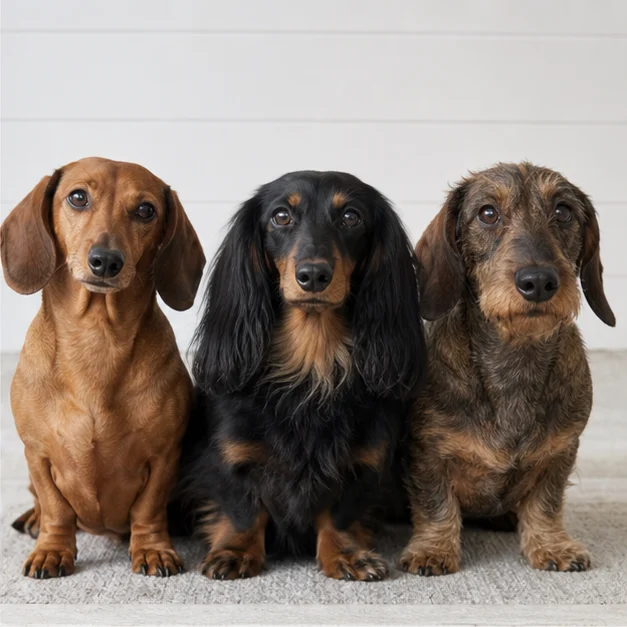

Do Dachshunds shed? Yes. Smooth, longhaired, and wirehaired Dachshunds all release old hair, and the breed is generally considered a moderate shedder. Dachshunds are not hypoallergenic, although the amount of loose hair you notice can vary by coat, season, grooming, home environment, and individual dog.
The most useful Dachshund shedding routine depends on what the coat is doing. A smooth coat usually needs quick loose-hair removal. A longhaired coat needs brushing and a comb check to prevent tangles in the feathering. A wirehaired coat may retain dead hair and benefit from an experienced groomer’s assessment rather than aggressive do-it-yourself stripping.
Do Dachshunds shed?
All three Dachshund coat varieties shed. The American Kennel Club describes Dachshunds as moderate shedders that are not hypoallergenic. Coat type changes how released hair looks, where it collects, and how much hands-on grooming is needed.
- 1Smooth, longhaired, and wirehaired Dachshunds all shed
- 2The breed is generally a moderate shedder and is not hypoallergenic
- 3Coat structure changes visible loose hair, retained dead coat, tangling risk, and grooming workload
A Dachshund can leave hair on clothing, furniture, floors, and bedding even when the coat looks sleek. Regular grooming gathers some loose coat on a brush or glove before it lands around the home, but it cannot and should not stop the normal hair-growth cycle.
Coat care is only one part of choosing this breed. Petful’s complete Dachshund breed guide covers temperament, size, exercise, training, and health without turning this focused shedding guide into a general breed profile.
How much do Dachshunds shed?
“Moderate” is a realistic starting expectation, not a measured amount for every dog. One smooth Dachshund may leave visible short hairs on a light sofa, while another’s hair blends into the fabric. A longhaired dog may appear to shed more because each strand is longer, even if the total amount of released hair is similar.
The amount you see can change with:
- coat variety and individual coat density;
- season and indoor temperature or light exposure;
- how recently the dog was brushed or bathed;
- bedding, upholstery, and flooring color and texture;
- age, nutrition, and overall health; and
- skin irritation or abnormal hair loss, which is not the same thing as ordinary shedding.
There is no useful household unit for predicting exactly how many hairs one Dachshund will release. If low visible hair is essential to your home or allergy plan, spend time indoors with adult Dachshunds rather than relying on a coat label or a photo.
Petful may earn a commission when you click through to Chewy, at no extra cost to you.
A practical expectation
Plan for a light but recurring layer of short hair from a smooth coat, longer strands plus tangle-prone feathering from a longhaired coat, or less immediately visible loose hair paired with more specialized coat maintenance from some wirehaired dogs. Individual dogs can fall outside those patterns.
Most owners can keep loose hair manageable with brief, consistent grooming and simple cleanup. A sudden marked increase, obvious thinning, or skin discomfort belongs in the veterinary section, not in a more-forceful brushing routine.
Why shedding answers conflict
Online rankings often confuse four separate questions:
- How much old hair is released from follicles?
- How visible is that hair on floors, clothing, and furniture?
- How much released or dead coat remains caught among other hairs?
- How much work is needed to keep the coat clean, untangled, and comfortable?
A wire coat that drops relatively little obvious hair onto a sofa can still hold dead coat that needs removal. A smooth coat may be easy to brush yet leave short, stiff hairs that stand out on fabric. A long strand is easier to see than a short strand, but visibility is not a controlled measurement of total shedding.
Less hair on the sofa does not always mean less shedding
- There is no reliable universal ranking of the three Dachshund coats from least to most shedding. Some dead hair can remain caught in a wire or long coat until grooming, while short smooth hairs may fall freely and appear more noticeable around the home.
That is why two owners can describe the same coat variety differently without either being dishonest. Coat density, season, household surfaces, and grooming habits shape the experience.
Three Dachshund coat types at a glance
The Dachshund Club of America breed standard recognizes Smooth, Wirehaired, and Longhaired varieties. The standard describes coat structure and appearance; it is not a study that ranks how much each variety sheds.
Dachshund coat types and grooming jobs
| Coat | Structure and visible loose hair | Main grooming risk | Useful tool or professional help |
|---|---|---|---|
| Smooth | Short, close, shining coat; small hairs can show clearly on fabric | Loose hair and surface debris | Soft rubber grooming brush or grooming glove used gently |
| Longhaired | Sleek longer coat with feathering on ears, legs, underside, and tail; longer strands are easy to see | Tangles and mats in feathering, plus retained loose hair | Pin or gentle slicker brush followed by a metal comb check |
| Wirehaired | Coarse outer coat with undercoat, beard, and eyebrows; dead hair may remain in the coat | Packed undercoat or coat texture altered by the wrong technique | Brush and comb maintenance plus coat assessment by an experienced groomer |
Grooming difficulty is not the same as shedding amount. Smooth coats generally require the least coat work. Longhaired and wirehaired coats usually need more frequent, coat-specific attention, even when owners see less loose hair on the floor.
Petful may earn a commission when you click through to Chewy, at no extra cost to you.
Coat color and pattern can make shed hair more or less obvious against furnishings, but they do not create a fourth coat variety. Petful’s same-release guide to Dachshund colors owns color and pattern identification.
Smooth Dachshund shedding
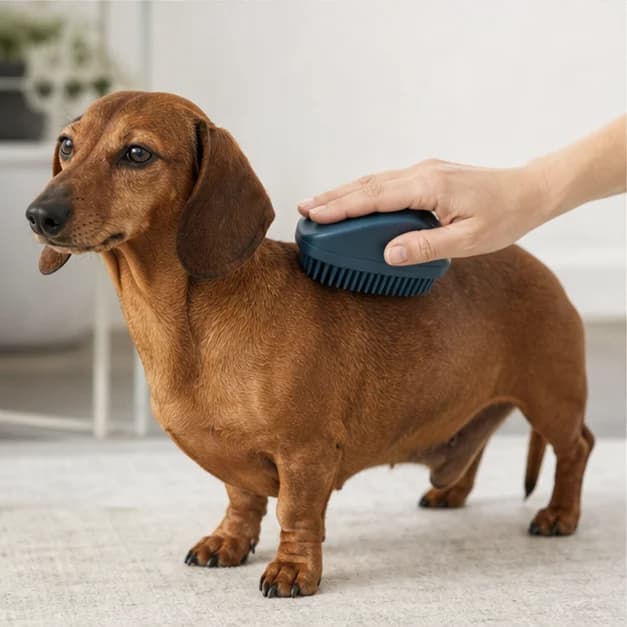
The smooth Dachshund has a short, close coat that is usually quick to maintain. Released hairs tend to fall away rather than becoming tangled in long feathering. Because they are short and sometimes stiff, they can work into upholstery and cling to clothing.
A soft rubber grooming brush or flexible grooming glove can lift loose hair and distribute natural oils without scraping the skin. Use gentle strokes in the direction the hair grows, avoid repeated pressure over the spine, and stop if the skin becomes red or the dog seems uncomfortable. The Four Paws Magic Coat Wet and Dry Glove and Curry Brush is one smooth-coat tool to compare, using gentle pressure and short sessions.
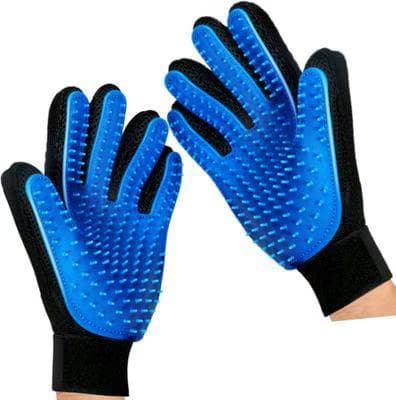
For a dog who prefers hand contact to a handled brush, Mr. Peanut’s Hand Gloves Grooming and Deshedding Aid is one gentle tool option. Fit and flexibility matter more than speed. A grooming glove should move over the coat, not be used to rub one patch of skin forcefully.
A simple smooth-coat routine
- Check the skin for bumps, tenderness, redness, flakes, or thin patches before brushing.
- Make a few light passes from neck toward tail, then along the sides and chest.
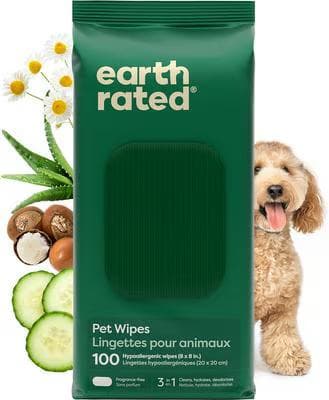
- Wipe the coat with a slightly damp, soft cloth if fine hair or surface dust remains. For occasional surface cleanup, Earth Rated Thick Hypoallergenic 3-in-1 Grooming Wipes are one existing option, but stop if the skin becomes irritated.
- Check ears, nails, paws, and skin folds separately rather than treating brushing as the whole grooming session.
- Wash the tool and stop while the experience is still calm.
Once or twice weekly may be enough for many smooth coats, with extra brief sessions during a seasonal increase. The right cadence is the shortest routine that keeps the coat comfortable without irritating the skin.
Do Miniature Dachshunds shed?
Miniature Dachshunds shed just as standard Dachshunds do. The miniature size describes the dog’s size variety, not a different coat biology. Miniatures can also be smooth, longhaired, or wirehaired, so coat type remains the more useful guide to grooming.
A smaller body may release fewer total hairs than a much larger dog’s body, but it does not make a Miniature Dachshund hypoallergenic. Allergy-triggering proteins can be present in dander, saliva, and urine, not only in visible hair.
If you are considering the smaller size, Petful’s same-release Miniature Dachshund guide covers size, care, and ownership questions. For an allergy concern, a medical professional can advise the person affected; no breeder or grooming product can guarantee that an individual will not react.
Longhaired Dachshund shedding
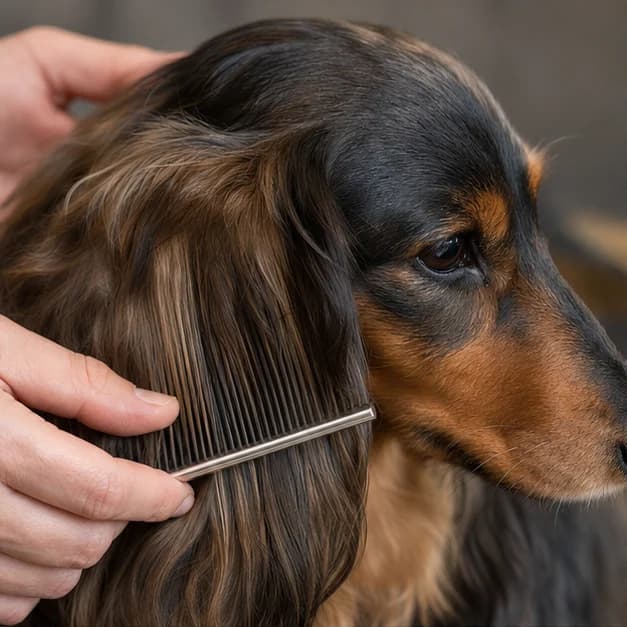
Longhaired Dachshunds shed, and their longer strands may be easier to notice around the home. The coat’s feathering behind the ears, on the legs, under the body, and along the tail can catch loose hair and form tangles if it is not checked.
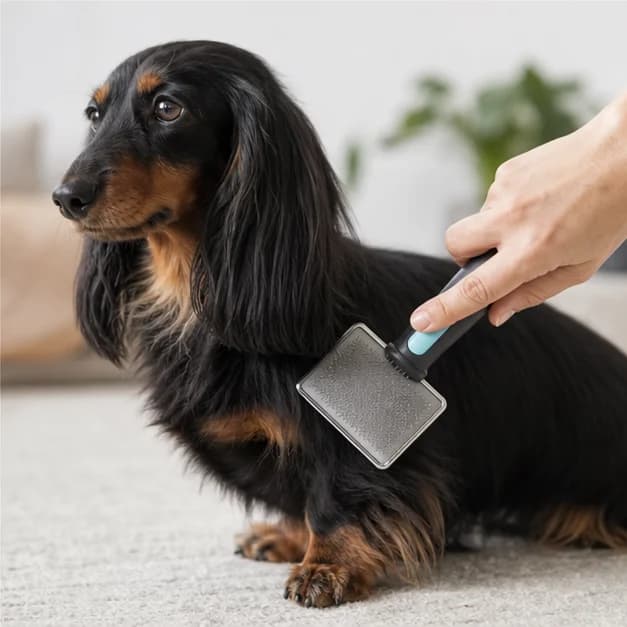
Work in small sections and support the hair near the skin so you are not pulling. A pin brush or gentle slicker brush can separate and lift coat, while a metal comb confirms whether a tangle remains. The comb is a check, not a tool for ripping through resistance.
Petful may earn a commission when you click through to Chewy, at no extra cost to you.
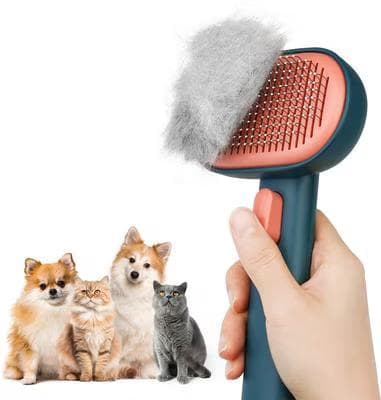
The aumuca Self Cleaning Slicker Brush is an existing option for longhaired coat maintenance. Use only light contact, keep the pins away from eyes and sensitive skin, and choose a brush size that is easy to control on a small, low-bodied dog. Product design does not replace technique.
Where tangles hide
Pay close attention to:
- behind and below the ears;
- the armpits and where a harness rests;
- feathering on the back of the legs;
- the underside and groin;
- the tail and the area beneath it; and
- any spot that stays damp after an outing or bath.
If a mat is tight to the skin, do not cut it with scissors. Skin can be pulled up into the mat and cut accidentally. A professional groomer or veterinary team can choose a safer removal method, especially if the area is painful, damp, odorous, or inflamed.
Wirehaired Dachshund shedding
Wirehaired Dachshunds have a coarse outer coat and a softer undercoat, along with characteristic facial furnishings. They shed, but some released hair may remain within the coat until brushing, combing, or professional grooming removes it.
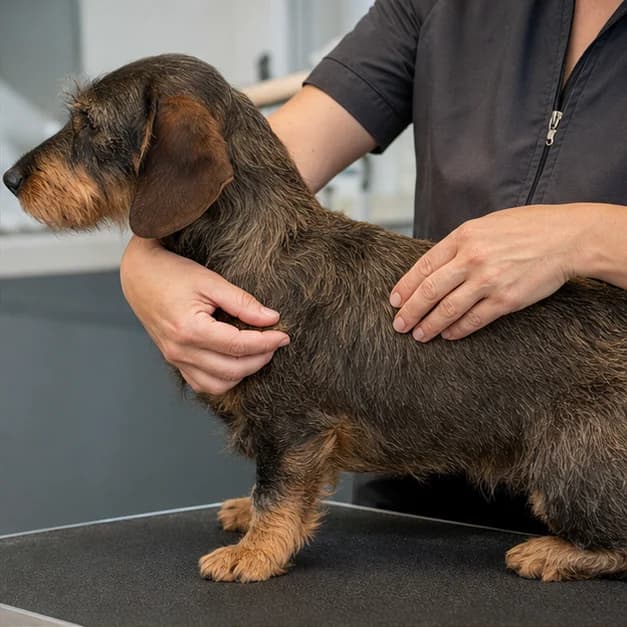
That retained hair is one reason wirehaired Dachshunds are sometimes labeled the lowest-shedding variety. The label overstates the evidence. Less hair noticed on furniture does not prove that the follicles release less hair, and coat density varies from dog to dog.
Hand-stripping needs an individual assessment
Hand-stripping removes ready-to-release dead outer hairs from certain wire coats. The AKC guide to hand-stripping explains that the technique is coat dependent and best discussed with an experienced groomer. It is not mandatory for every wirehaired pet.
Clipping and stripping can produce different texture and appearance results. The right choice depends on the individual coat, the dog’s comfort, health, lifestyle, and whether the goal is practical pet maintenance or show presentation.
Do not learn by pulling large amounts of coat from an unwilling dog. Ask a groomer familiar with wirehaired Dachshunds to assess whether the coat is ready, demonstrate safe maintenance between visits, and explain when brushing and combing are sufficient.
Seasonal shedding
Some Dachshunds release more hair during seasonal transitions, often in spring or fall. The change may be more obvious in a dog with a denser undercoat. Indoor lighting, heating, air conditioning, local climate, and time spent outside can make the pattern less predictable than a twice-yearly calendar.
Petful may earn a commission when you click through to Chewy, at no extra cost to you.
Keep the normal hair-growth cycle in perspective. The Merck Veterinary Manual overview of hair loss notes that normal new-hair growth is accompanied by shedding of old hair. Normal shedding should not leave obvious bald areas or inflamed, painful skin.
Respond with consistency, not force
During a temporary increase, add a brief grooming session rather than pressing harder or using a sharp tool. Remove what comes away easily. If the tool snags, scratches, or seems to pull healthy hair, stop and reassess the tool and technique.
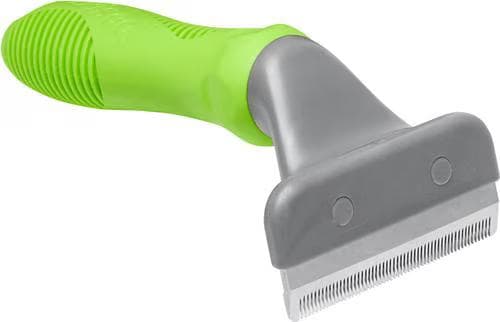
For medium-to-long coats where a groomer confirms that a deshedding tool is suitable, the Frisco Deshedding Cat & Dog Brush for Medium to Long Hair may help collect loose coat. It is not the default choice for every Dachshund. Avoid repeated passes over one area and do not use it over irritated skin, mats, or a smooth coat simply because “deshedding” appears in the name.
Track duration as well as amount. A familiar short seasonal increase is different from a sudden change that persists, exposes skin, or arrives with itching, odor, sores, discomfort, low energy, or another health change.
A coat-specific brushing routine
Set up on a nonslip surface with good light. Let the Dachshund stand, sit, or lie in a comfortable position without being held in a spinally awkward posture. Keep sessions short enough that calm behavior is easy to reward.
For a smooth coat
Use a rubber brush, soft bristle brush, or flexible grooming glove to lift surface hair. Follow the coat direction and use a damp cloth for remaining fine hairs. A few minutes is more useful than a long session that reddens the skin.
For a longhaired coat
Part the hair into manageable sections. Brush from the ends toward the roots when working through a minor tangle, supporting the coat above it so the skin is not pulled. Finish with a wide-to-fine metal comb check in feathered areas.
For a wirehaired coat
Use a suitable brush and comb to check the furnishings and undercoat without flattening or scraping the skin. Ask an experienced groomer whether this particular coat benefits from professional hand-stripping, clipping, or routine brush-and-comb care.
Stop points matter
End the session and seek help when:
- a tangle is tight against the skin;
- the dog cries, snaps, freezes, or repeatedly tries to escape;
- the skin is red, broken, damp, odorous, or painful;
- a bald or distinctly thin patch appears;
- a tool cannot pass without force; or
- grooming triggers an unusual amount of hair release in one area.
Grooming should reveal information, not override it. A coat problem that cannot be handled gently is a reason to involve a qualified groomer or veterinarian.
Petful may earn a commission when you click through to Chewy, at no extra cost to you.
Bathing and drying
Bathing helps remove dirt and some loose hair, but more bathing is not automatically better. Frequent washing, a poorly tolerated product, incomplete rinsing, or very hot drying can irritate skin and make the coat feel dry.
Choose a dog shampoo that suits the individual, dilute only if the label directs it, keep product out of the eyes and ears, and rinse thoroughly. If your dog already has itching, sores, recurrent skin problems, or a prescribed bathing plan, ask the veterinarian before changing products. A second routine-bath comparison is Burt’s Bees Oatmeal Dog Shampoo; neither an oatmeal label nor an affiliate link makes a shampoo a treatment for unexplained itching.
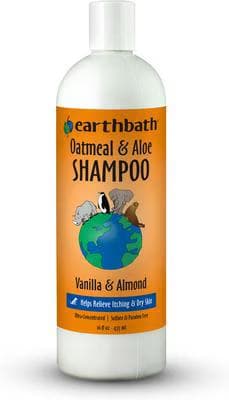
For routine bathing in a dog whose veterinarian has not recommended a medicated product, Earthbath Oatmeal & Aloe Itch Relief Vanilla Almond Shampoo is one existing-library option. Despite the product name, shampoo should not be presented as treatment for unexplained itch or hair loss. Stop using any product that seems to worsen redness or discomfort.
Dry the coat all the way through
Towel-blot instead of rubbing long hair into tangles. Use a dryer only on a cool or comfortably warm setting, keep it moving, and allow the dog to move away. High heat and concentrated air can frighten a dog or irritate skin.
Longhaired feathering and a dense wire coat can remain damp near the skin after the surface looks dry. Gently separate the coat and check the underside, armpits, behind the ears, and furnishings. Do not brush a difficult tangle harder simply because the coat is wet.
Normal shedding vs. concerning hair loss
Normal shedding releases old hair while the overall coat continues to cover the skin. It may fluctuate, and more hair can collect on the brush, but it should not create an obvious bare patch or come with persistent skin discomfort.
Hair loss, also called alopecia, is a sign rather than a diagnosis. Its appearance alone cannot tell you the cause, and a non-clinical grooming article cannot safely distinguish medical conditions from a photo or description.
When shedding needs veterinary assessment
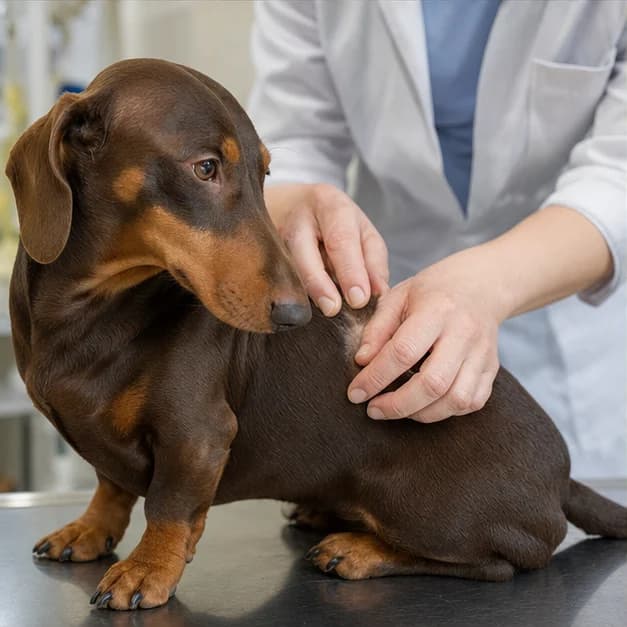
- Book a veterinary visit for bald patches, obvious or spreading thinning, persistent itching, pain, inflamed or scaly skin, color change, odor, discharge, sores, or a sudden marked change in the coat. Seek faster advice if the dog seems unwell or the change is rapidly worsening. Do not try to diagnose or treat the cause from coat appearance alone.
Merck’s veterinary guidance identifies obvious hair loss or bald spots, itching, pain, inflammation, scaling, color change, and discharge as reasons for assessment. The pattern can help a veterinarian, but it should not be used at home to select a diagnosis or medication.
What to record before the appointment
Take clear photos in consistent lighting and note:
- when the change began and whether it is spreading;
- whether the dog scratches, licks, rubs, or seems painful;
- changes in odor, flakes, redness, moisture, or discharge;
- recent grooming, bathing, diet, medications, or environmental changes;
- whether another pet or person in the home has skin symptoms; and
- changes in appetite, thirst, energy, weight, or behavior.
Avoid applying human creams, essential oils, or leftover pet medication unless a veterinarian directs you. Groom around a suspicious area only if it can be done without pulling, scraping, or hiding what the veterinarian needs to examine.
Keeping loose hair manageable at home
The most effective cleanup plan catches hair in several places instead of demanding that one brush solve everything.
Start with the dog
Brush on a washable mat or outdoors in a secure area when weather permits. Use the coat-specific routine above and stop before the skin is irritated. Consistency removes manageable amounts at a time.
Petful’s broader guide to managing pet shedding adds general household strategies that apply beyond Dachshunds.
Make fabrics easier to maintain
Use washable covers on the dog’s favorite resting spots. Launder bedding on the care-label setting and remove loose hair before it blocks a washer filter. A slightly damp rubber glove or fabric-safe lint tool can gather hair from some upholstery, but test a hidden area first.
Match the vacuum to the surface
Vacuum slowly in overlapping passes. Short smooth-coat hairs can embed in woven fabric, while long strands may wrap around a rotating brush. Clean the vacuum head and filter according to the manufacturer’s directions rather than waiting for performance to drop.
Reduce hair transfer
Keep a washable throw where the dog rides in the car and a lint roller near the door. Wipe paws and the underside after outdoor trips when needed. These small routines reduce dirt and loose hair without adding unnecessary baths.
If cleanup suddenly becomes much harder, examine the dog before buying a stronger tool. A seasonal change may explain it, but visible thinning, irritation, or a major break from the dog’s baseline needs veterinary attention.