
Does your dog only listen when you have treats in your hand? Well, you’re not alone. Many dog owners struggle to phase food out of training. This can lead to your dog only following cues in the kitchen or living room, but not in the real world. Without a reward, your dog might ignore you on walks if you don’t have your treat bag.
Treats are convenient and motivating rewards when you’re teaching a new behavior. But it’s also important to move beyond food for the reliable relationship with your dog.
How Dogs Become Reliant on Food
Dogs repeat behaviors that are rewarding, which is why positive reinforcement training works so well. If you give your dog a piece of chicken or a cookie when they sit, they’ll be more likely to sit the next time you ask. However, food can quickly become a cue in itself. Its presence tells your dog when it’s time to train, and its absence can mean it’s time to do their own thing.
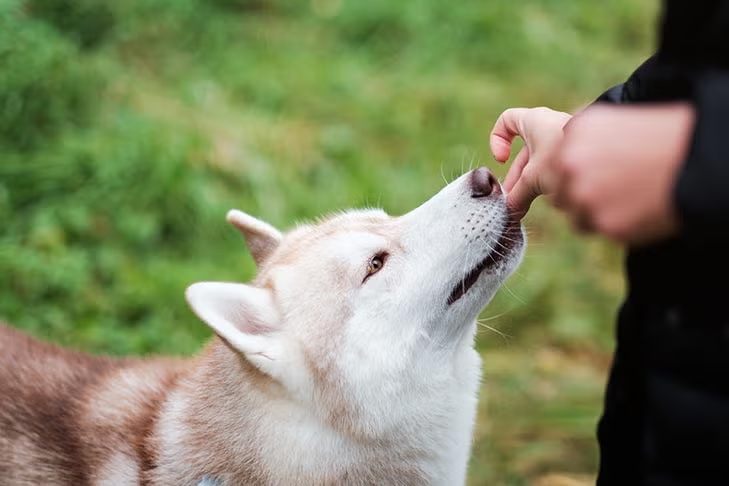
In fact, there’s an easy way you might be promoting this kind of thinking. If you’re showing your dog the food before you ask for a behavior, you’re bribing your dog, not rewarding them. Bribes will quickly make your dog a selective listener, only working when the food is in sight. It’s best to keep treats hidden, such as in a pocket or behind your back, until after your dog has done what you want.
Fading the Lure When Training
Of course, with lure-and-reward training you use a treat to lure your dog into position. An example of this is moving food to the ground so your dog will follow and lie down. This is an easy and effective way to train new behaviors, but your dog sees the food before they do the action. To prevent the treat lure from becoming a bribe, you need to wait to fade the lure as soon as your dog understands what you want.
To do that, make the lure less and less obvious. You can do this by:
- Reward your dog with a different treat than the one you used as a lure.
- Hide the treat in your hand so your dog follows the scent, rather than seeing it
- Lure with an empty hand. Once your dog starts to catch on, produce a hidden treat as a reward
The sooner you’re luring with hand signals rather than food, the less likely your dog will only listen when you have treats in sight.
Using Praise as a Reward
Don’t discount the power of praise. Dogs love an enthusiastic and high-pitched “good dog!” to show them they’re on the right track. And if you pair your praise with treats in the early days of training, your dog will come to associate the two. This helps supercharge your words.
Then, even when you don’t have food, your dog will work for praise alone. Some dogs even find interacting with their humans and earning their praise more rewarding than food.
Using Life Rewards to Reinforce Good Behavior
Because food is fast and efficient, it’s perfect to teach new behaviors in the early days of training. But there are many other ways to reinforce behavior besides rewarding with treats. Learn what motivates your dog and add those things to your training toolbelt. Maybe your dog loves to play fetch or tug-of-war. Offer one of these activities after your dog does as you ask, instead of offering food.
Don’t forget, life rewards can be as easy as greeting another dog or going outside. Want your dog to practice a new trick? Ask for it before you approach another dog or open the door. Use walks to help polish behaviors. Every few feet, stop for a training break and reward your dog’s good performance with more walking or a chance to sniff.
Helping Your Dog Learn to Generalize Cues
Dogs are very specific when learning. If you teach your dog to roll over in the living room, they’ll think “roll over” means do that action in the living room. That will work for that room, but it also means your dog may not roll over in the backyard. It’s the same line of thinking: you pull out the treats, and wonder why your dog only listens if you have a cookie in your hand.
If you want your dog to generalize cues to the world at large, then you need to teach your dog that those cues mean the same thing everywhere. It helps to train your dog in as many places as you can. And remember, to them, each new location is like starting from scratch. You can use treats in the beginning, then switch to other rewards when your dog understands the new parameters.
Using Random Rewards to Strengthen Good Behavior
You don’t have to stop using treats entirely. Even when your dog is performing like a champion, it’s a great idea to continue to provide tasty paychecks for a job well done every now and then. The trick? Provide those treats at random. Known as a “variable ratio schedule of reinforcement,” this is the way slot machines work – you never know when they’re going to pay off.
If your dog can’t predict when the next treat is coming, they’ will work harder and longer for the chance of a reward. And next thing you know, your dog will listen reliably and predictably even with no food in sight.