
Petful is reader supported. As an affiliate of platforms like Amazon and Chewy, we may earn a commission when you buy through links on this page. There is no extra cost to you.
Most dog grooming tips you find online stop at “brush your dog regularly,” which is a bit like telling someone to “eat better.” True, and almost useless. What a coat actually needs depends on whether it is short and smooth, dense and double, wiry, or curly, and getting that one thing right changes everything that follows.
I have groomed dogs professionally for years, and the same handful of avoidable problems come through the door every week: mats that started as a missed week of brushing, nails so long they changed how a dog walks, ear infections that a two-minute weekly check would have caught. None of that is about looks. It is about comfort and health.
This guide covers the whole at-home routine, task by task, with the frequencies and techniques that actually apply to your dog. It also covers the part almost nobody writes about honestly, which is what happens on the other side of the salon counter, and how to tell a good groomer from one you should walk away from.
- 1Brush before every bath. Water turns a small tangle into a solid mat that usually has to be shaved out.
- 2Frequency follows coat type, not the calendar. A short smooth coat can go 8 weeks between baths; a curly coat needs brushing almost daily.
- 3Trim only the clear tip of the nail, in small slivers, and keep styptic powder within reach before you start.
- 4Never bathe or clip a matted coat. Work the mat out dry, or let a professional groomer shave it safely.
- 5Never shave a double coat to “keep them cool.” It does not work that way and the coat may not grow back properly.

Don’t Guess When It Comes To Your Pet’s Care
Sign up for expert-backed reviews and safety alerts all in one place.
How to groom a dog at home
Grooming your dog at home is mostly a scheduling problem, not a skill problem. The individual tasks are simple. The reason coats fall apart is that brushing gets skipped for three weeks, and by then you are no longer brushing, you are de-matting, which is a different and much less pleasant job.
So start with the only question that matters: what coat type is your dog? Everything below flows from that answer. A weekly brushing routine that keeps a Beagle immaculate will leave a Bernese Mountain Dog carrying a pound of dead undercoat, and will let a Cockapoo felt solid behind the ears.
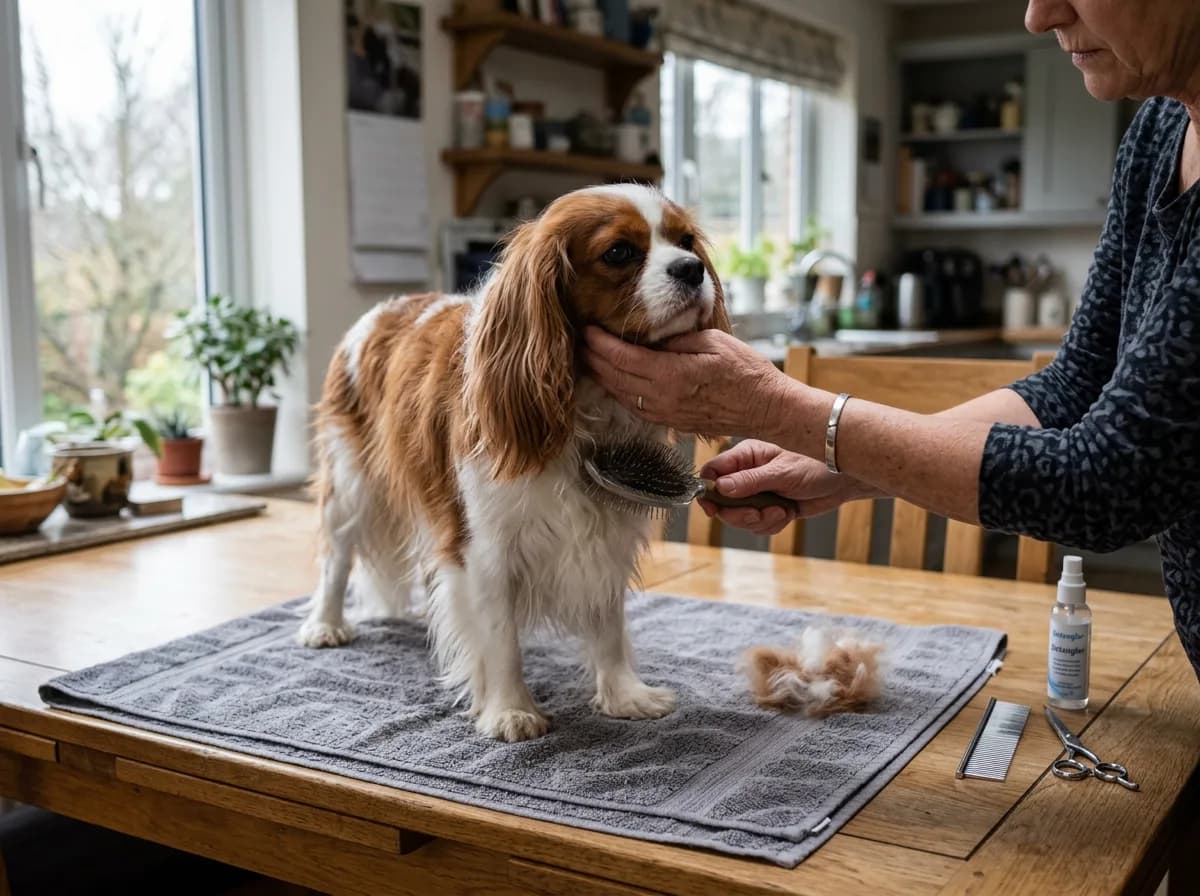
Here is the grooming cadence that at-home dog grooming actually runs on, and it is deliberately organised by coat type rather than given as one blanket number. A single average is why bathing frequency advice contradicts itself so wildly from one source to the next: a figure that suits a smooth coat is wrong for a curly coat, and the reader is left to guess. Find your dog’s coat type in the table below and the brushing, bathing and full-groom intervals all follow from that one row.
Dog grooming frequency by coat type
| Coat type | Brushing | Bath | Full groom | Watch for |
|---|---|---|---|---|
| Short and smooth (Beagle, Boxer, Vizsla) | Weekly | Every 6 to 8 weeks | Rarely needed | Dry skin from over-bathing |
| Short and dense (Labrador, Pug) | Twice a week | Every 6 to 8 weeks | Rarely needed | Skin folds, heavy seasonal shedding |
| Double coat (Husky, Bernese, German Shepherd) | 2 to 3 times a week, daily when blowing coat | Every 8 to 12 weeks | De-shed treatment seasonally | Packed undercoat, trapped damp near skin |
| Long and silky (Yorkie, Cocker Spaniel, Cavalier) | Daily | Every 4 to 6 weeks | Every 6 to 8 weeks | Mats behind ears and in armpits |
| Curly coat (Poodle, Doodle, Bichon) | Daily, down to the skin | Every 4 weeks | Every 6 to 8 weeks | Felting close to the skin |
| Wiry (Terriers, Schnauzer) | Twice a week | Every 8 weeks | Hand-strip or clip every 8 to 12 weeks | Coat softening and colour fading if clipped |
If your dog is a doodle or any other curly coat crossbreed, take the daily line in that table literally. Curly coats do not shed loose hair out of the coat, they hold it in, and that trapped hair is what felts into a solid mat against the skin within days. It is the single most common reason a dog arrives for a trim and leaves shaved.
Dog grooming for beginners at home goes best if you split the work rather than attempting a full session. Two minutes of brushing most evenings, nails every few weeks, ears on a Sunday. Nobody has the patience for a two-hour spa day, least of all the dog.
Start where your dog already relaxes
- Do the first few sessions somewhere your dog is already comfortable, like the spot on the rug where they nap, rather than hoisting them onto an unfamiliar table. Handling comes first, tools come second.
Not sure which coat type you have?
Crossbreeds make this genuinely confusing, and plenty of owners get it wrong. Here is the quick physical test, which is more reliable than guessing from breed name alone.
- Part the coat and look at the base. If you see a second, softer, denser layer underneath the longer outer hairs, that is a double coat.
- If the hair is short enough that you cannot part it and it lies flat against the body, that is a smooth coat.
- If the hair keeps growing rather than reaching a set length and shedding out, it is a curly or continuously growing coat, and it needs haircuts.
- If the outer hairs feel coarse and bristly, almost crunchy between your fingers, that is a wire coat.
Doodle crosses are the hardest to call because a single litter can produce flat, wavy and tightly curled coats. Judge the dog in front of you, not the breed label, and re-check at around 9 to 12 months when the adult coat comes in, because that transition is when a huge number of first-time doodle owners get ambushed by matting.
You can spend a fortune on dog grooming tools and still own nothing that suits your dog. A slicker brush does very little on a smooth-coated Boxer. A soft bristle brush will never reach the undercoat on a Husky. Buy for the coat in front of you, not for the picture on the box.
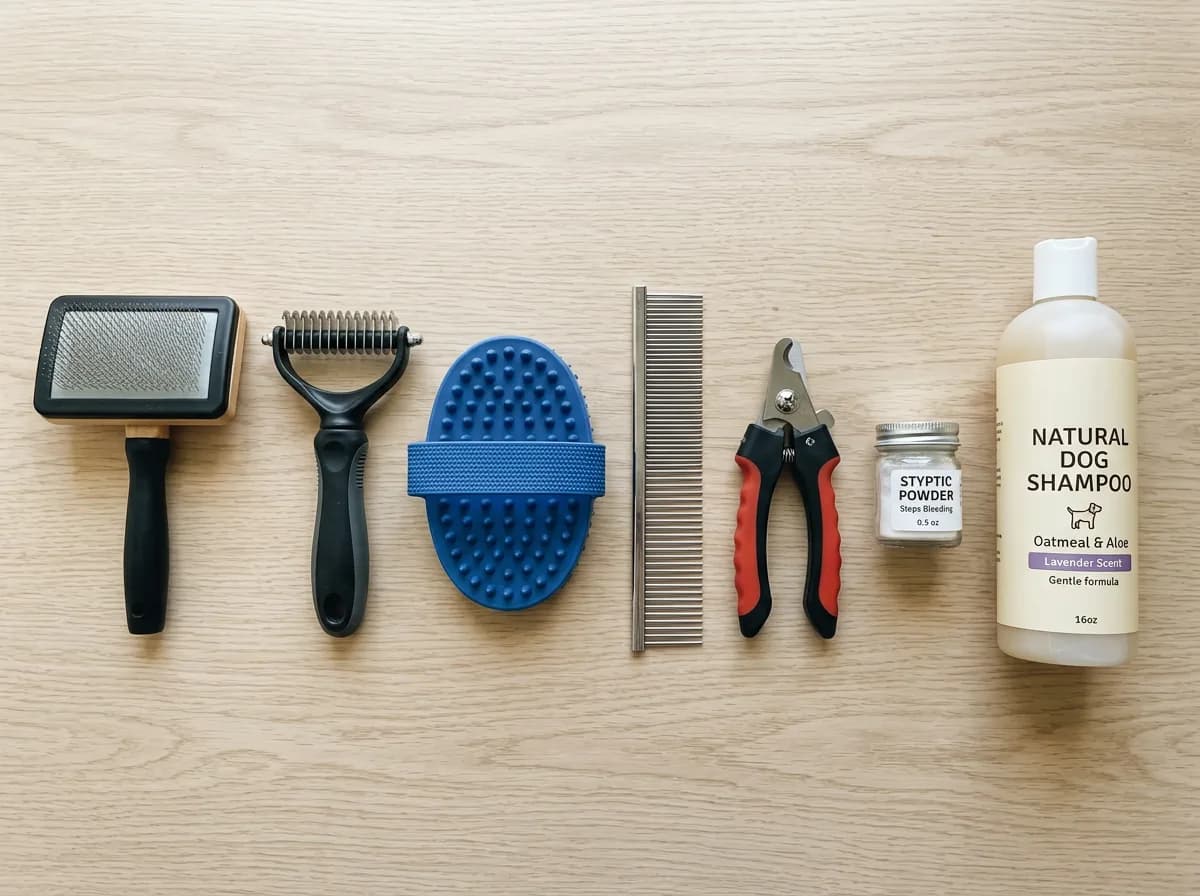
A workable grooming kit for dog owners comes down to about eight items. This is the short list I would tell any client to build before they buy anything else.
- A brush matched to the coat: a slicker brush for long, curly or double coats, a rubber curry brush or grooming glove for short smooth coats.
- A steel comb. This is the tool that tells the truth: if the comb will not pass cleanly from skin to tip, the coat is not brushed out, whatever the brush suggests.
- An undercoat rake if you have a double-coated breed, or a deshedding brush for heavy seasonal shedding.
- Nail clippers or a nail grinder, plus styptic powder. Buy the styptic powder at the same time, not after the first accident.
- A dog-specific shampoo, and a conditioner if the coat is long or curly.
- A veterinary ear cleaner with cotton balls or gauze, never cotton swabs.
- A dog toothbrush and dog toothpaste. Human toothpaste is not an option, and the reason is in the ears and teeth section below.
- A non-slip bath mat, two absorbent towels, and clippers if you plan to do haircuts at home.
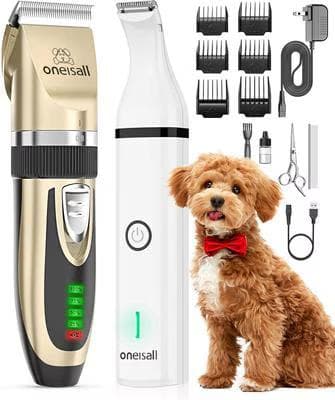
Petful may earn a commission when you click through to Chewy, at no extra cost to you.
If you are assembling a kit from scratch, a combined clipper and paw-trimmer set covers both the body work and the fiddly bits between the pads, which is where most single-tool kits leave you stuck. Our full breakdown of the best dog grooming tools for short and long hair goes deeper on choosing between them, and we put a full set through a month of real use in our hands-on at-home grooming case study.
Grooming a cat is a genuinely different job with different tools and a much lower tolerance for error, so if you have both, read our separate guide to grooming a cat rather than reusing this routine.
The 7 steps of grooming a dog, in order
Order matters more than people expect. Doing these seven steps out of sequence is how a small tangle becomes a shave-down, and how a clean dog ends up smelling worse than when you started. The seven steps below are the sequence professional groomers work through on every dog, and the two that people most often move are brushing and the nail trim. Keep them where they are and the rest of the session gets easier.
- Brush the coat out completely, while it is dry. Every mat and tangle must be gone before water touches the dog.
- Do the nail trim now, while the coat is dry and your dog is fresh and still patient.
- Clean the ears and check the eyes, before the bath rather than after, so you can keep water out of a canal you have just cleaned.
- Bathe, working shampoo down to the skin, then rinse for longer than feels necessary.
- Dry thoroughly, brushing as you go on double and curly coats so the coat dries straight rather than curling in on itself.
- Clip or trim, if the dog needs a haircut. Clippers only ever go through a clean, dry, fully brushed coat.
- Finish: brush teeth, check paws and pads, and go over the whole dog once more with the comb.
The two steps people reverse most often are the first and the fourth. Bathing before brushing is the single most expensive mistake in home grooming, because water tightens loose hair into felt, and felt does not brush out.
The other common sequencing error is clipping a damp coat. Clipper blades skip and drag through moisture, so the finish comes out ridged and uneven, and the pulling is uncomfortable enough that some dogs decide then and there that they hate clippers. Let the coat dry completely and give it one more brush before the blade goes anywhere near it.
You do not have to do all seven in one sitting. Most owners who keep a coat in genuinely good condition split them across the week: brushing most evenings, nails and ears one weekend morning, a bath and trim once a month. The order still holds within whatever grouping you choose.
Brushing: the habit that prevents almost everything else
If you only ever do one grooming job, do this one. Weekly brushing at minimum, daily on long and curly coats, prevents mats, spreads the skin’s natural oils, pulls dead undercoat out before it packs down, and gives you a reason to run your hands over every inch of your dog often enough to notice a lump or a sore spot early.
The technique that separates a real brush-out from a cosmetic one is called line brushing. Part the coat with your free hand so you can see a clean line of skin, then brush the exposed layer outward from the skin. Drop the parting an inch and repeat. It is slower, and it is the only way to reach the bottom layer where mats actually form.
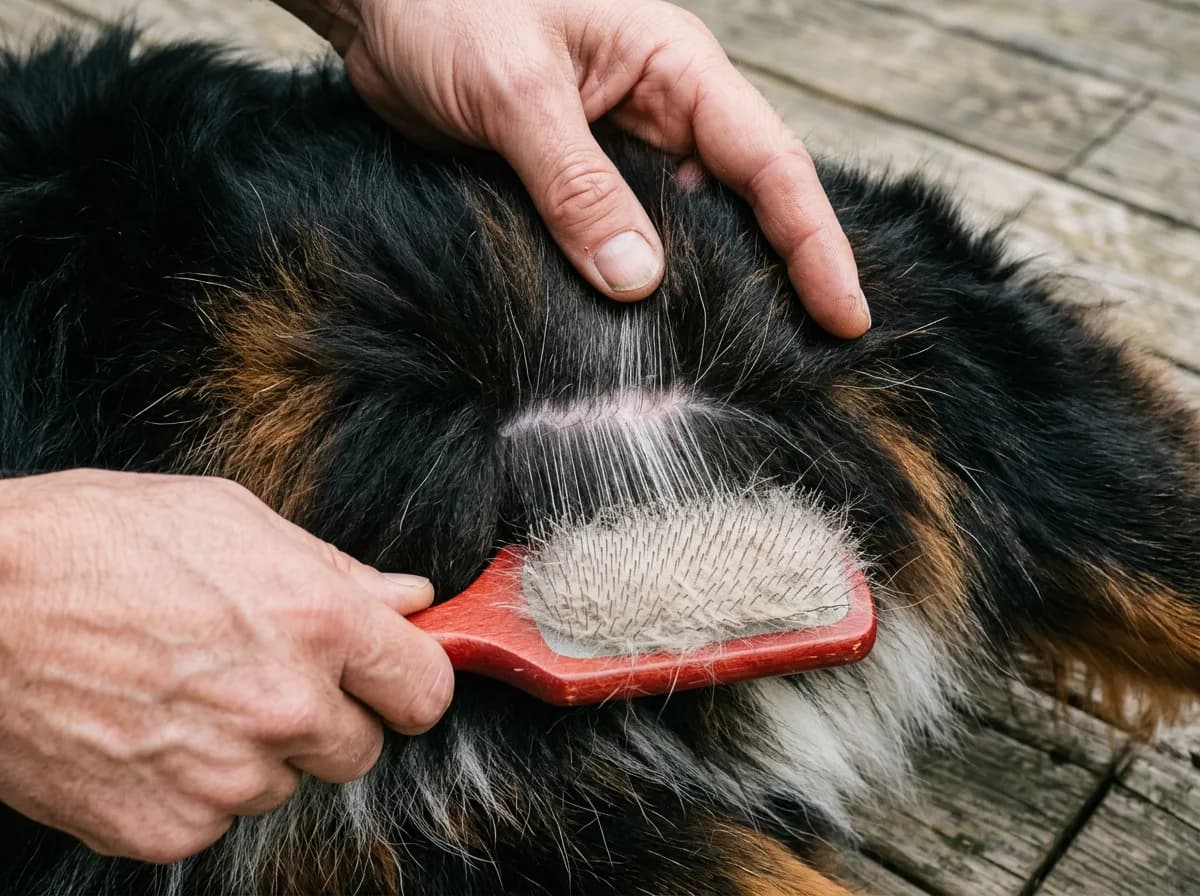
Brush in the direction the hair grows, with light pressure. Pressing a slicker hard into the skin causes the raw, irritated patches groomers call brush burn, and dogs remember it. If your dog starts flinching when the brush appears, pressure is usually the reason.
Petful may earn a commission when you click through to Chewy, at no extra cost to you.
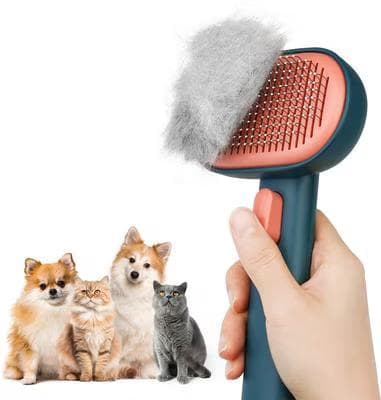
A self-cleaning slicker earns its place in a home kit for one unglamorous reason: the retract button pushes the collected hair off the pins in a second, so you keep brushing instead of stopping every minute to pick fluff out of the brush. On a double coat that is the difference between finishing the job and abandoning it.
When you find a mat
Never reach for scissors. A matted coat sits far tighter to the skin than it looks, and skin lifts into the mat, which is exactly how dogs get cut. Emergency vet visits from owners cutting out mats are routine, and they are all preventable.
- Work a dog-safe detangling spray into the mat and let it sit for a minute.
- Hold the base of the mat against the skin so you are not pulling on the dog, then tease it apart from the outer edge inward with your fingers or the end tooth of a comb.
- Take it in small sections. If the mat is bigger than a coin, sits flat against the skin, or the dog reacts, stop and book a professional groomer.
During spring and autumn, double-coated breeds blow their undercoat and the volume is genuinely startling. Daily work with an undercoat rake or a dedicated deshedding brush through those few weeks keeps most of it out of your house and out of your dog’s coat. For a dog who dislikes brushes entirely, grooming gloves let you strip loose hair while it just feels like being stroked. Our guide to managing heavy shedding covers the seasonal cycle in more detail, and there are more ideas for keeping a long coat manageable in our longhaired dog grooming guide.
Bathing your dog without wrecking their coat
Most dogs need a bath every four to six weeks, and plenty of short smooth coats are fine going eight. Dog grooming bathing advice varies wildly, but the failure modes are consistent: bathing too often strips protective oils and leaves skin itchy and flaky, while leaving it too long lets oil and dead hair build up into odour and irritation.
Set up before you get the dog. A non-slip mat in the tub matters more than any product, because a dog scrabbling on wet enamel is a frightened dog, and frightened dogs remember bath time. Use lukewarm water, never hot: a dog’s skin burns more easily than ours.
Wet the coat all the way down to the skin, which on a thick coat takes longer than you would think. Lather with a gentle dog shampoo, work it in with your fingertips rather than swirling it around on top, and keep it away from the eyes and out of the ear canals.
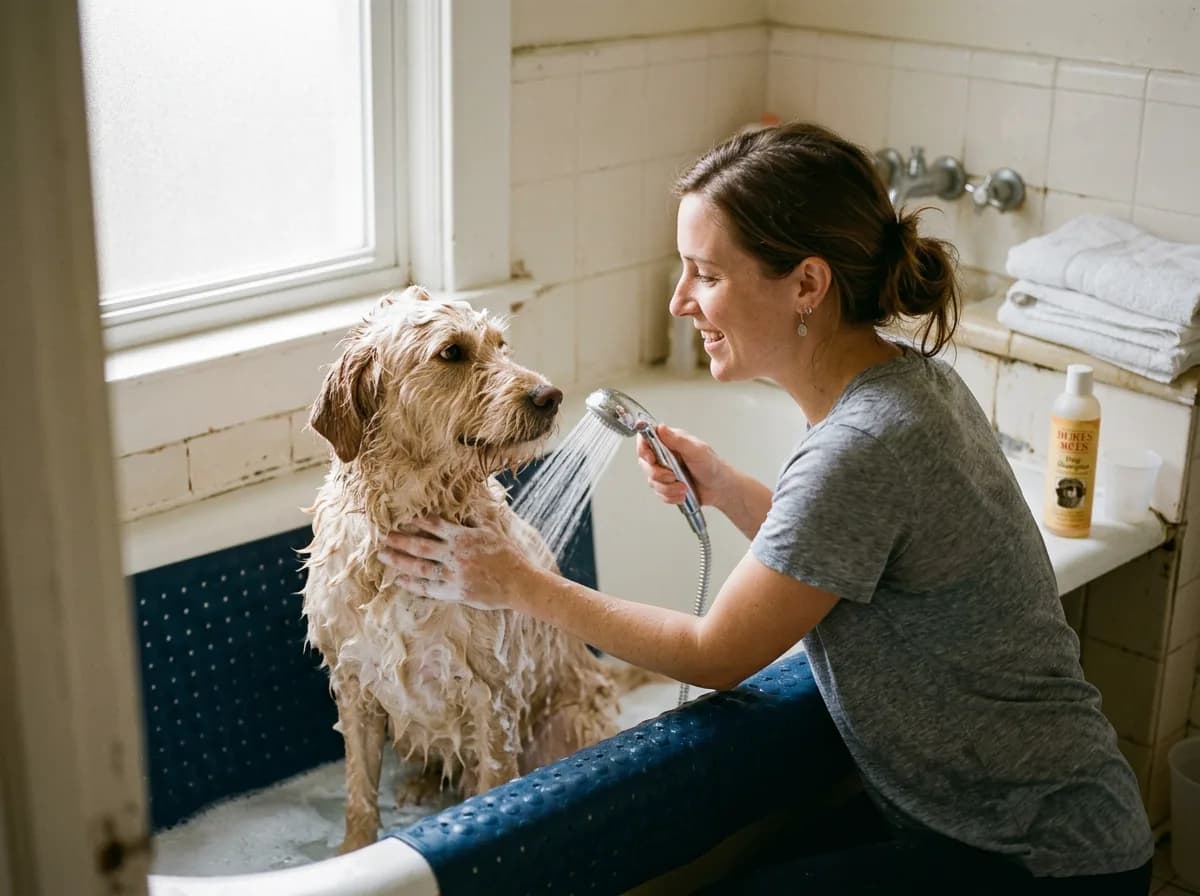
Then rinse, and keep rinsing. Shampoo residue left in the coat is one of the most common causes of post-bath itching, and it is invisible. Rinse until the water runs completely clear, then do the underside and the armpits again, because that is where it hides.
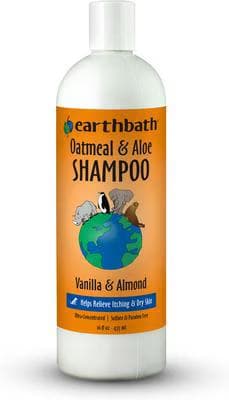
Petful may earn a commission when you click through to Chewy, at no extra cost to you.
An oatmeal and aloe formula is the sensible default for a dog with normal-to-itchy skin, because colloidal oatmeal soothes rather than strips. Human shampoo is not a substitute at any price. Dog skin sits at a different pH, and human products leave it dry and reactive. If your dog has a genuine skin condition, ask your vet about a medicated shampoo instead of guessing in the pet aisle.
Choosing a dog shampoo, by what is actually wrong
The pet aisle is deliberately confusing. Shampoo choice is simpler if you pick by problem rather than by scent or packaging.
- Normal coat, no issues: a gentle dog shampoo with no strong fragrance. Nothing clever required.
- Dry, flaky or itchy skin: oatmeal and aloe. It soothes and helps the skin hold moisture.
- Fleas confirmed on the dog: a flea and tick shampoo kills what is on them right now, but it is a first step, not a plan. Pair it with a proper preventive.
- Diagnosed infection, ringworm or persistent yeast: a medicated shampoo, chosen by your vet and used exactly as they direct. This is not a shelf-picking decision, and the instructions vary by product.
- Long or curly coat: add a conditioner. It reduces friction between hairs, which is what makes the next brush-out easier.
- White or light coats with staining: a brightening shampoo, used occasionally rather than every wash.
Bathing frequency and shampoo choice are the two decisions that matter most here, and both should be guided by your dog’s skin rather than the calendar. The ASPCA suggests most dogs need bathing at least every three months, which is a floor rather than a target, and active dogs with a normal coat comfortably handle every four to six weeks. If the coat looks dull and the skin flakes after washing, you are bathing too often, or the shampoo is too harsh for that coat. If your dog smells doggy within a week of a bath, something else is going on and that is worth a vet conversation rather than a second wash.
Drying, and why it matters more than you think
Letting a double-coated or curly dog air-dry traps moisture against the skin, and damp skin under a dense coat is how hot spots start. Blot with a towel first, then use a dryer on cool or the lowest heat setting, keeping it moving and brushing as you go.
Keep the heat down
- A dog’s skin burns more easily than a person’s. If you use a household hair dryer, keep it on cool or the lowest heat setting, keep it moving constantly, and never hold it close to the skin or aim it into the ears.
Between baths, grooming wipes handle muddy paws and a dirty undercarriage without another full wash, and deodorising glove wipes will get a dog through a week they were not due a bath in. Our step-by-step on how to give your dog a bath walks through the whole process if this is your first time.
Nail trimming, including black nails
Overgrown nails are not cosmetic. Once a nail touches the ground on every step it pushes the toe back, changes how the dog distributes weight, and over months that shows up as splayed toes, strained joints and a reluctance to walk on hard floors. The test is audible: if you can hear clicking on tile, they are too long.
Dog nail trimming goes wrong when people try to take too much at once. Inside every nail is the quick, the living core carrying the blood supply and the nerve. Cut it and it hurts and bleeds, and the dog will remember the clippers for a long time afterwards.
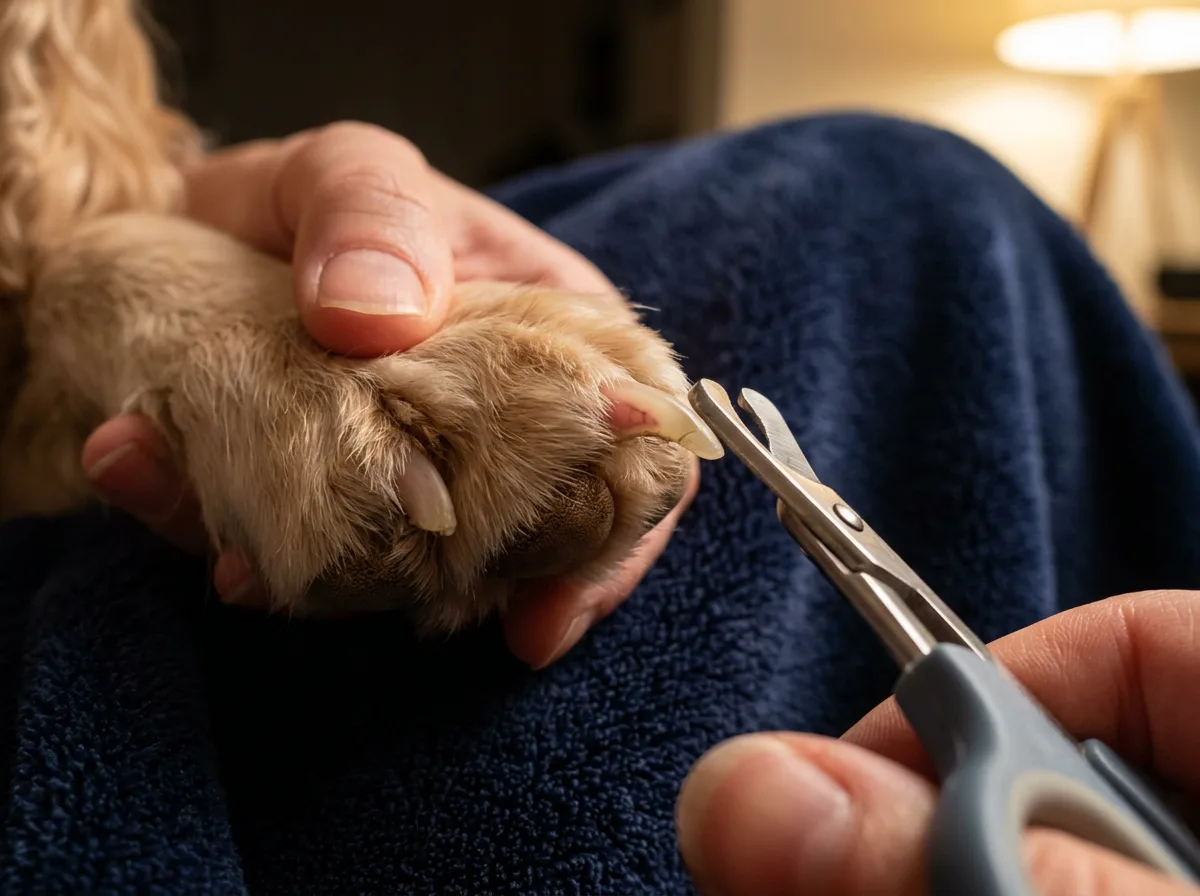
On pale nails, hold the paw up to the light and you can see the quick as a pink core. Cut the clear section beyond it, at a slight angle, and stop well short.
Tool choice mostly comes down to size and nerve. Scissor-style clippers with a safety stop suit most dogs, and the stop is what prevents the over-cut that causes the whole problem. If it is your nerve rather than the nail that is the issue, clippers with a quick sensor light up as the blade approaches the quick, which takes the guesswork out while you build confidence. A nail file afterwards knocks the sharp edge off so a fresh cut does not snag on carpet.
Black nails, where you cannot see the quick
This is where most owners freeze, and it is a fair worry. The method is to stop guessing and read the cut surface instead.
- Take very thin slivers off the tip, one at a time. Thin enough that it feels like too little.
- After each sliver, look at the freshly cut end. It starts out chalky and white all the way through.
- When a small grey or black dot appears in the centre of the cut surface, you have reached the start of the quick. Stop there.
- If the nails are very overgrown, trim a little every week or two. The quick recedes over time, which lets you get them back to a healthy length without ever cutting into it.
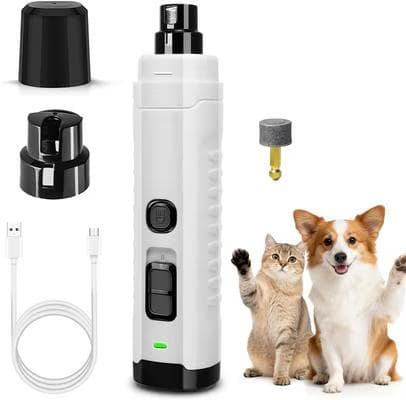
Petful may earn a commission when you click through to Chewy, at no extra cost to you.
A grinder is genuinely the better tool for black nails and for any dog that has already had a bad experience with clippers. It takes the nail down in small increments so you can keep checking the cut surface, it leaves a smooth edge that will not snag, and the pressure of a clipper closing is often what dogs object to rather than the trim itself. Introduce it running, at a distance, with treats, before it ever touches a nail.
If noise is the sticking point, a quiet multi-speed grinder is the version to buy, and for thick large-breed nails a rotary grinder kit has the torque to get through without stalling and dragging.
Have styptic powder open before you start
- Keep styptic powder within arm’s reach and the lid already off. If you catch the quick, press a pinch firmly against the nail tip for about 30 seconds. Cornstarch works if that is all you have. If bleeding continues past a few minutes, call your vet.
A tub of styptic powder costs less than a takeaway coffee and is the one item nobody regrets owning before they need it. Our full walkthrough on trimming your dog’s nails covers restraint and desensitisation in more depth, and if things do go wrong, here is how to treat a broken or bleeding nail.
Clippers, blades and at-home haircuts
Grooming a dog with clippers at home is very doable on a straightforward pet trim, and it is where home groomers save the most money. It is also where the worst results happen, almost always for the same three reasons: a dirty coat, a coat that was not fully brushed out, or the wrong clipper blade.
Clippers only ever go through a clean, dry, completely brushed coat. Dirt blunts blades fast, and a blunt blade pulls hair instead of cutting it, which is uncomfortable and produces a ragged finish. Work in the direction the coat grows, in long smooth passes, letting the clipper do the work rather than pushing it.
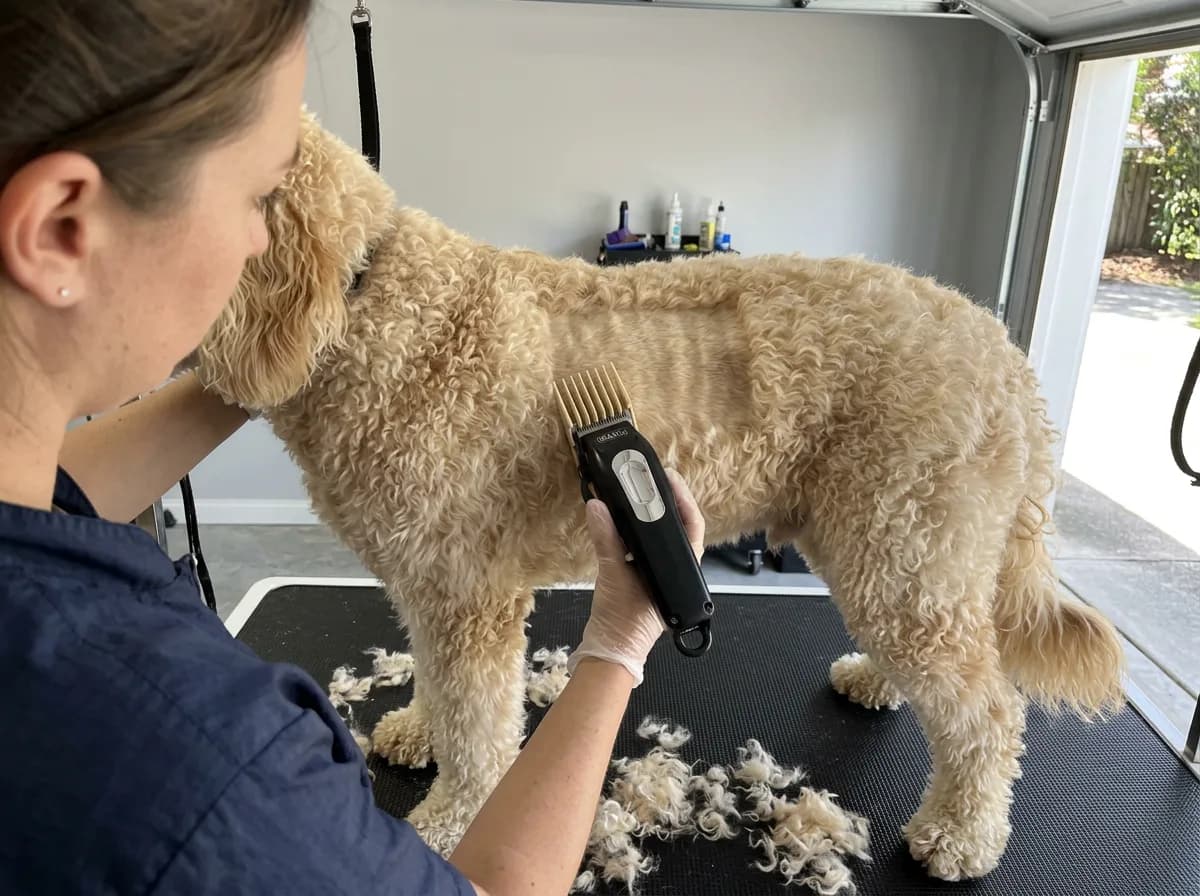
Clipper blade numbering confuses almost everyone, and almost nobody explains it, so here it is plainly. The higher the blade number, the shorter the cut it leaves. A guard comb clips over the blade to leave the coat longer, and for home use that is what you want, because a longer guard comb is far more forgiving of an uneven pass than a bare blade. The reference below maps each clipper blade and guard comb to the length it actually leaves.
Clipper blade and guard comb reference
| Blade or guard | Leaves roughly | Typical use | Home use? |
|---|---|---|---|
| #40 / #30 | Under 1 mm | Surgical prep, under a guard comb only | No |
| #10 | 1.5 mm | Sanitary areas, belly, pads | Yes, with care |
| #7F | 3 mm | Short summer body clip | Experienced only |
| #5F | 6 mm | Short, tidy body clip | Experienced only |
| #4F | 9 mm | Common all-over pet trim | Yes |
| Guard comb, half inch | 13 mm | Forgiving body length on doodles | Best first choice |
| Guard comb, one inch | 25 mm | Long teddy-bear trim | Best first choice |
Around the face, feet and tail, put the clippers down and use round-tipped safety shears. Grooming a dog with scissors near the eyes is a slow, deliberate job: rest the hand holding the shears against the dog’s head so that if they move, your hand moves with them and the blades stay put.
Check the blade temperature on your own wrist
- Clipper blades get hot fast, especially on a dense coat, and clipper burn is a genuine injury. Stop every few minutes and touch the blade to the inside of your wrist. If it is too warm for you, it is too warm for your dog.
Two things never to clip: a matted coat, and a double coat. Clipping into mats catches skin. Shaving a double coat to keep a dog cool is a myth that damages the coat, since that undercoat insulates against heat as well as cold, and on many breeds it grows back patchy or never properly at all. Our beginner’s guide to dog clippers covers technique in more detail.
Wire coats and why clipping ruins them
Terriers, Schnauzers and other wire-coated breeds are the exception nobody warns new owners about. That coarse, weather-resistant outer coat only stays coarse if the dead hairs are pulled out rather than cut off, a technique called hand-stripping.
Clip a wire coat instead and you cut the hard outer hair, leaving the soft undercoat to take over. The result is a coat that turns woolly, fades from crisp black-and-tan to a washed-out grey, and holds dirt far more readily. It is not damage you can undo quickly, since it takes months of stripping to bring the texture back.
Hand-stripping is slow, and most salons charge accordingly. If you love the classic look of a wire breed it is worth finding a groomer who offers it. If you would rather clip, that is a legitimate choice, just make it knowing the coat will change permanently in texture and colour.
Ears, teeth, eyes and paws
These are the jobs that get skipped, and they are the ones with the clearest health payoff. None of them takes more than a couple of minutes.
Ears
Ear cleaning is a weekly job, and more often for floppy-eared and water-loving breeds where trapped moisture invites infection. Healthy ears look pale pink and smell of essentially nothing. Redness, a yeasty or sour smell, dark discharge, or a dog shaking their head and scratching all point to a problem that needs a vet rather than more cleaning.
To clean, dampen a cotton ball or gauze with a veterinary ear cleaner and wipe only the parts of the outer ear you can see. Pre-moistened ear wipes are a tidier option for a quick weekly check. Never push a cotton swab into the canal: a dog’s ear canal bends, so anything you push in packs debris further down rather than removing it. Our guide on how to clean a dog’s ears has the full method.
Teeth
Dental disease is the most common health problem in adult dogs and the most preventable. Brush several times a week if you can, daily if you are able, using a dog toothbrush or a finger brush and a toothpaste made for dogs. For a dog who will not tolerate a brush at all, dental wipes remove some plaque and are far better than doing nothing.
Never use human toothpaste
- Human toothpaste is not safe for dogs. Many varieties contain xylitol, which is highly toxic to dogs even in small amounts, and the fluoride and foaming agents are not meant to be swallowed. Use a dog-specific toothpaste only.
The reason human toothpaste is off the table is worth stating plainly, because plenty of people reach for it without thinking. Many brands contain xylitol, a sweetener that is highly toxic to dogs even in small doses, and the foaming agents in the rest are not designed to be swallowed. Dog toothpaste is made to be swallowed, which is the entire point.
Build up to it. Start by letting your dog lick the paste off your finger, then rub a finger along the outside of the teeth, and only then introduce the brush. Angle the bristles toward the gumline, where plaque actually accumulates, and concentrate on the outer surfaces. There is more detail in our guide to caring for your dog’s teeth.
Eyes and paws
Wipe away routine eye discharge with a damp cloth or a dedicated eye wipe, working from the inner corner outward, and use a fresh section for each eye. Sterile eye wash pads are the gentler option for daily cleaning around a sensitive eye. If the eye itself is red, sore, squinting or weeping more than usual, stop cleaning and call your vet: that is not a grooming problem. On light-coloured faces, trimming the hair around the eyes with round-tipped shears stops it wicking moisture and staining.
It is also worth putting a drop of eye lubricant in before a bath, which gives the eye a protective film if shampoo runs. Ask your vet which product suits your dog before the first time.
Check paws for grass seeds, grit and cracked pads, and keep the hair between the pads trimmed level with them so it does not ball up with mud or ice. That trim is free and it does most of the work. If the pads are genuinely dry and cracked in winter, when de-icing salt and dry indoor air both take a toll, a paw balm worked in at night helps, and on heavily salted pavements waterproof boots keep the grit off the pads entirely.
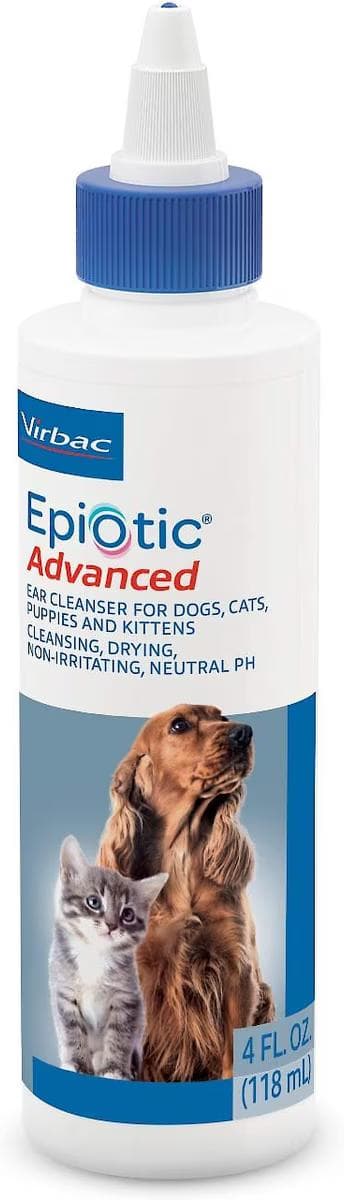
Petful may earn a commission when you click through to Chewy, at no extra cost to you.
A veterinary ear cleaner is worth keeping in the cupboard rather than improvising. The drying agents in a proper formulation are what stop moisture sitting in the canal after a bath or a swim, which is the single most common trigger for the ear infections that floppy-eared breeds get again and again.
If you only have time for three things
- Prioritise brushing, nail trims and dental care. Those three habits prevent the most common and most expensive problems, and everything else can flex around your week.
Doodle and curly coat maintenance between grooms
Doodles deserve their own section because they are the most common shave-down in every salon in the country, and the owners are almost never being careless. They have simply been sold a coat that needs daily work and told it is low maintenance.
A curly coat holds shed hair instead of dropping it. That trapped hair twists around the growing hair and felts, and it does it from the skin outward, which is why a doodle can look fluffy and beautiful on the surface while carrying a solid layer underneath. By the time the surface looks bad, the mat has usually been there for weeks.
Line brushing is not optional on these coats, and the comb is what audits your work. If a steel comb will not pass from skin to tip anywhere on the dog, the coat is not brushed out yet, whatever the brush told you.
- Brush daily, in sections, down to the skin with a slicker brush and check your work with a steel comb. Ten minutes beats an hour on Sunday.
- Concentrate on the friction points where mats always start: behind the ears, in the armpits, where a collar or harness sits, the back of the thighs, and the tail base.
- Take the collar off between walks if you can, or at least brush underneath it every time.
- Brush after every swim or bath, without exception. Water is what sets a loose tangle solid.
- Book a professional groom every 6 to 8 weeks and keep the appointment. Stretching to 12 weeks is what forces a shave-down.
Ask your groomer for a slightly longer length than you think you want. A one-inch guard comb trim looks like the fluffy doodle in the photos and is far more forgiving between appointments than a close trim growing out unevenly.
Grooming a puppy: when to start and what to do
Start far earlier than most people do, and start with handling rather than tools. The goal for the first few months is not a tidy puppy, it is a dog who finds being touched all over completely unremarkable.
From the day they come home, spend a minute a day touching feet, holding each paw, looking in ears, lifting lips, and running a hand down the tail. Pair it with something good. This costs almost nothing now and saves years of struggle later, because a dog who objects to having their feet held at eight is a dog who was never asked at eight weeks.
- 8 to 12 weeks: daily handling, a soft brush introduced as a game, and letting them investigate the tools while switched off.
- 10 to 12 weeks: first nail trim, even if the nails barely need it. Take one or two nails and stop. The point is the experience, not the result.
- 12 to 16 weeks: first bath at home, short and warm and unremarkable, and the first introduction to the sound of a dryer from across the room.
- Around 16 weeks, once vaccinations are complete: a first short visit to a professional groomer. Ask for an introductory session rather than a full groom.
- 9 to 12 months: watch for the adult coat coming in, especially on curly and double coats. Matting risk jumps sharply during this change.
A first grooming appointment that is short, boring and positive is worth more than a perfect haircut. Any groomer who does not offer puppy introduction sessions is telling you something about how they work.
Grooming a senior or arthritic dog
Older dogs still need grooming, often more than they used to, because reduced mobility means they groom themselves less and stiff joints make standing for long periods genuinely painful. The routine has to change even though the tasks do not.
Keep sessions short and let them lie down. There is no rule that says a dog must stand on a table to be brushed, and most of a senior dog can be done comfortably while they lie on their bed. Split a full groom across two or three days rather than asking an arthritic dog to hold a position for an hour.
- Watch nails closely. Less walking means less natural wear, so senior nails overgrow faster and are a common hidden cause of a wobbly, splayed gait.
- Check pressure points, hips and elbows for calluses, thinning hair and sores.
- Be gentle around lumps. Older dogs accumulate them, and a brush catching one is painful. Learn where they are so you can work around them, and get new ones checked.
- Non-slip everything. A mat in the tub and a rug underfoot matter far more for a dog whose back end is unsteady.
- Trim the hair between the pads more often. It provides grip on hard floors, and a senior dog needs all the traction available.
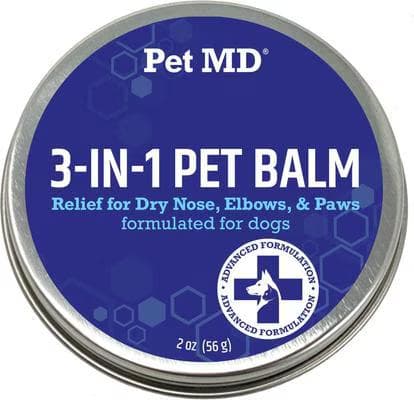
Petful may earn a commission when you click through to Chewy, at no extra cost to you.
Dry, cracked pads are close to universal in older dogs, and they matter more than they sound: a cracked pad hurts on every step, and a smooth worn pad grips badly on hard floors. A balm worked in a few times a week keeps the pad pliable, and it is one of the few grooming jobs a stiff old dog will happily lie still for. If your dog is slipping on hard floors, rubber boots give back a surprising amount of confidence.
Tell your groomer about arthritis, deafness, failing sight or heart conditions before the appointment, not after. A good groomer will adapt the whole session, and some will do a lie-down groom or split it across visits.
How to groom a dog who hates being groomed
Almost every dog who fights grooming learned to. Usually it was a nail cut too short, a mat pulled hard, or a session that went on long past the point they asked to stop. The fix is not more restraint, it is going back a step and rebuilding.
Work below the threshold where your dog reacts. If they tense when the clippers come out of the drawer, that drawer is where you start, and you do not progress until the drawer is boring.
- Day 1 to 3: put the tool on the floor. Treat. Put it away. That is the whole session.
- Day 4 to 7: touch the tool to their shoulder without using it. Treat. Stop.
- Week 2: run the grinder or clipper nearby so they hear it, without touching them. Treat while it runs, stop the treats when it stops.
- Week 3: one nail, or one pass of the brush in the easy spot. Then stop, even though you could do more. Especially because you could do more.
- Build from there, always ending while it is still going well.
The rule that matters most is to stop early. Ending a session two minutes in, calm and rewarded, teaches a dog that grooming is short and survivable. Pushing through to a finish while they struggle teaches the opposite, and it takes months to undo.
For a dog who winds up before you have touched them, a calming chew given 30 to 60 minutes ahead can take the edge off enough for the training above to land. It is a bridge while you build the habit, not a substitute for it, and it is worth checking with your vet first if your dog takes any other medication.
If your dog is genuinely aggressive about grooming
- Do not push through it and do not use force. Talk to your vet first to rule out pain, which is a common hidden cause, then work with a qualified behaviourist. Some dogs also do far better being groomed under veterinary sedation than being fought with every eight weeks.
What grooming tells you about your dog’s health
A thorough brush-out is the most regular full-body examination your dog will ever get, and it is the reason groomers are so often the first to spot something. You have your hands on every inch of the dog. Pay attention to what they find.
None of this makes you a diagnostician. It makes you the person who notices early, which is usually what determines how easy something is to treat.
- A new lump or bump: note where it is and how big, and get it checked. Most are harmless, and the ones that are not are far easier to treat small.
- Flaky, greasy or thickened skin, or a coat that has gone dull: often diet, allergies or a thyroid problem rather than a grooming issue.
- Hair loss in a symmetrical pattern on both sides: worth a vet visit, since that pattern often points to a hormonal cause rather than a skin one.
- A sudden change in shedding volume: stress, illness and diet all show up in the coat before they show up anywhere else.
- A yeasty or sour smell from ears or paws, or reddish-brown staining on light fur where the dog licks: usually yeast, and worth treating properly.
- Flinching when you touch a specific spot that never used to bother them: pain until proven otherwise.
- Black specks like ground pepper in the coat that turn rust-red on a damp tissue: that is flea dirt, and it means fleas even if you cannot find one. A flea and tick shampoo deals with what is on the dog today, then talk to your vet about a preventive.
- An attached tick: remove it with fine-tipped tweezers or a proper tick removal kit, gripping close to the skin and pulling straight out without twisting.
The American Kennel Club, or AKC, and most veterinary sources make the same point about grooming that working groomers do: it is a health check that happens to leave the dog looking tidy, not a beauty routine that happens to be good for them. That reframing is the part of the job that actually pays for itself, because the owner brushing weekly is the person most likely to find a problem while it is still small and cheap to fix.
Grooming needs also shift with the seasons, and the health side of that deserves its own read. Our vet-written companion piece on year-round coat health and seasonal comfort covers coat blowing, winter skin, summer heat and the medical signals to watch for across the year, where this guide stays focused on the hands-on technique.
10 dog grooming mistakes that cost owners the most
These are the common mistakes that come through a grooming salon week after week, and the most expensive of them by far is shaving a double coat in summer. Every one of them is easy to avoid once you know it is a mistake, and several are things owners were actively told to do by someone who should have known better. None of them require special skill to fix, only knowing which way round to do things.
- Bathing before brushing. Water tightens loose hair into felt. Brush the coat out completely first, every time.
- Shaving a double coat in summer. The undercoat insulates against heat as well as cold, and it may grow back patchy or not at all.
- Cutting mats out with scissors. Skin pulls up into a tight mat and gets cut with it. This is the most common home grooming injury.
- Using human shampoo. Different skin pH, and it leaves dogs dry, flaky and itchy.
- Not rinsing for long enough. Leftover shampoo is invisible and is a leading cause of post-bath itching.
- Cotton swabs in ear canals. They pack debris deeper instead of removing it, and can damage the eardrum.
- Taking too much nail at once instead of thin slivers, then wondering why the dog fights the clippers forever after.
- Letting a coat air-dry under a thick or curly coat, which traps damp against the skin and invites hot spots.
- Brushing only the top layer. If a steel comb will not pass from skin to tip, the coat is not brushed, however good it looks.
- Turning grooming into a wrestling match. Ending a session early and calm builds far more cooperation than forcing it through to the end.
The thread running through most of these is impatience, which is understandable and fixable. Two calm minutes several times a week will always beat one long session that both of you dread.
What professional dog grooming costs, and what you are paying for
Grooming prices are quoted so vaguely that most owners have no idea whether they are being overcharged. The honest answer is that price tracks time, and time tracks size, coat condition and temperament far more than it tracks the haircut you asked for.
As a general guide in the United States, a full groom runs roughly $40 to $75 for a small dog, $60 to $100 for a medium dog, and $75 to $150 or more for a large or heavily coated breed. A bath and tidy without a full haircut is usually about half that. Prices run higher in major cities and for mobile services that come to you.
A full groom normally includes a bath, a blow-dry, a brush-out, a haircut or tidy, nails, ears and a sanitary trim. Anything beyond that is typically charged separately.
- De-matting: charged by time, often $15 to $25 per extra 15 minutes. This is the surcharge owners find most annoying and the one most within their control.
- Hand-stripping a wire coat: substantially more than a clip, because it takes hours rather than one hour.
- Flea baths, de-shed treatments and teeth brushing: usually add-ons.
- Difficult or aggressive dogs: some salons charge a handling fee, and a good one will tell you up front rather than surprising you at pickup.
The cheapest way to lower your grooming bill is not to shop for a cheaper groomer. It is to brush your dog between appointments so no de-matting time gets added, and to keep a regular schedule so the coat never reaches the state where the only humane option is starting over.
How to choose a groomer, and the red flags to walk away from
Dog grooming is unregulated in most of the United States, which means anyone can open a salon without a single hour of training. The difference between a good groomer and a bad one is therefore entirely on you to assess, and it is worth doing properly, because your dog cannot tell you what happened while you were out.
Ask to see the space before you book. A good salon will say yes without hesitating. These are the red flags that should end the conversation:
- They will not let you see where the dogs are held or groomed. This is the biggest one.
- Dogs left unattended in cages with heated dryers running. This has killed dogs and no reputable salon does it.
- Vague or evasive answers about how they handle a frightened or difficult dog.
- No questions for you. A good groomer asks about age, health, past grooming, and any sore spots before touching your dog.
- Pressure to shave a double coat, or a promise to de-matt a badly matted dog with no mention of the risks or the extra time.
- Any injury explained away vaguely, or brushed off entirely, rather than told to you plainly.
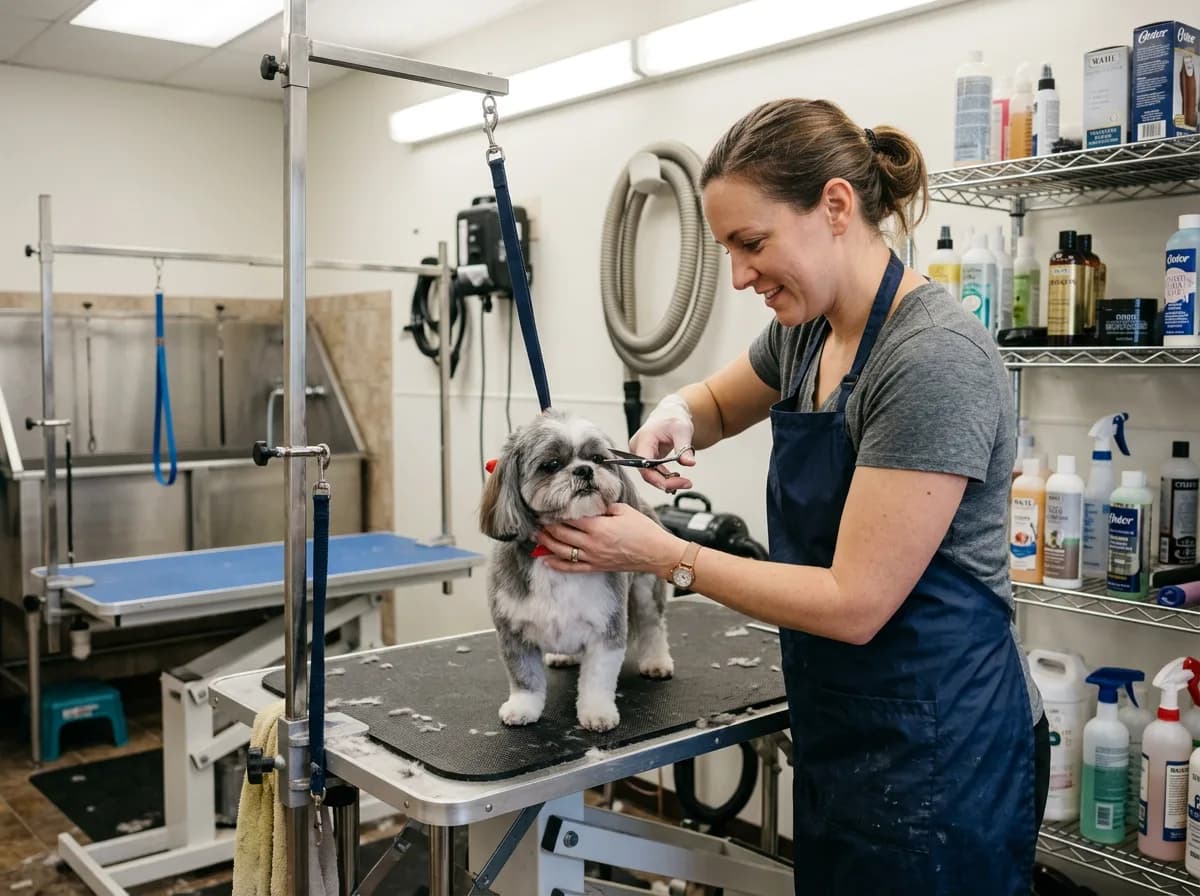
The green flags are just as clear. Good groomers ask a lot of questions, tell you honestly when a coat is too matted to save, show you nicks or irritation rather than hiding them, and will say no to a cut that is not right for the coat. A groomer who tells you something you did not want to hear is usually the one to keep.
What to tip your dog groomer
Tipping a groomer works the same way as any other personal service: the standard is 15 to 20 percent of the grooming cost. So on a $100 groom, a normal tip is $15 to $20, and $20 to $25 if the job was harder than usual.
Go toward the upper end, or above it, when the work was genuinely more difficult: a large or elderly dog, a badly matted coat that took an extra hour to save, a dog who is difficult to handle, or a groomer who fitted you in at short notice. How much to tip for dog grooming also shifts at the holidays, when a little extra is customary for a regular groomer you see all year.
If you are wondering whether you tip for dog grooming at all when the groomer owns the salon, the answer is that it is still appreciated and still normal, even though it is less expected than with an employee. We break down the going rates for every pet professional in our guide to how much to tip groomers, walkers, sitters and vet staff.
What your dog groomer wishes you knew
Groomers are, as a group, patient and fond of dogs to a slightly unreasonable degree. There are still a few things most of them are too polite to say out loud, so here they are.
Brushing between appointments is the whole game
The single most useful thing you can do happens at home. A coat that is brushed through a few times a week arrives at a grooming appointment ready to be styled. A coat that has not been touched in six weeks arrives as a de-matting job, which costs more, takes longer, and is far less comfortable for the dog.
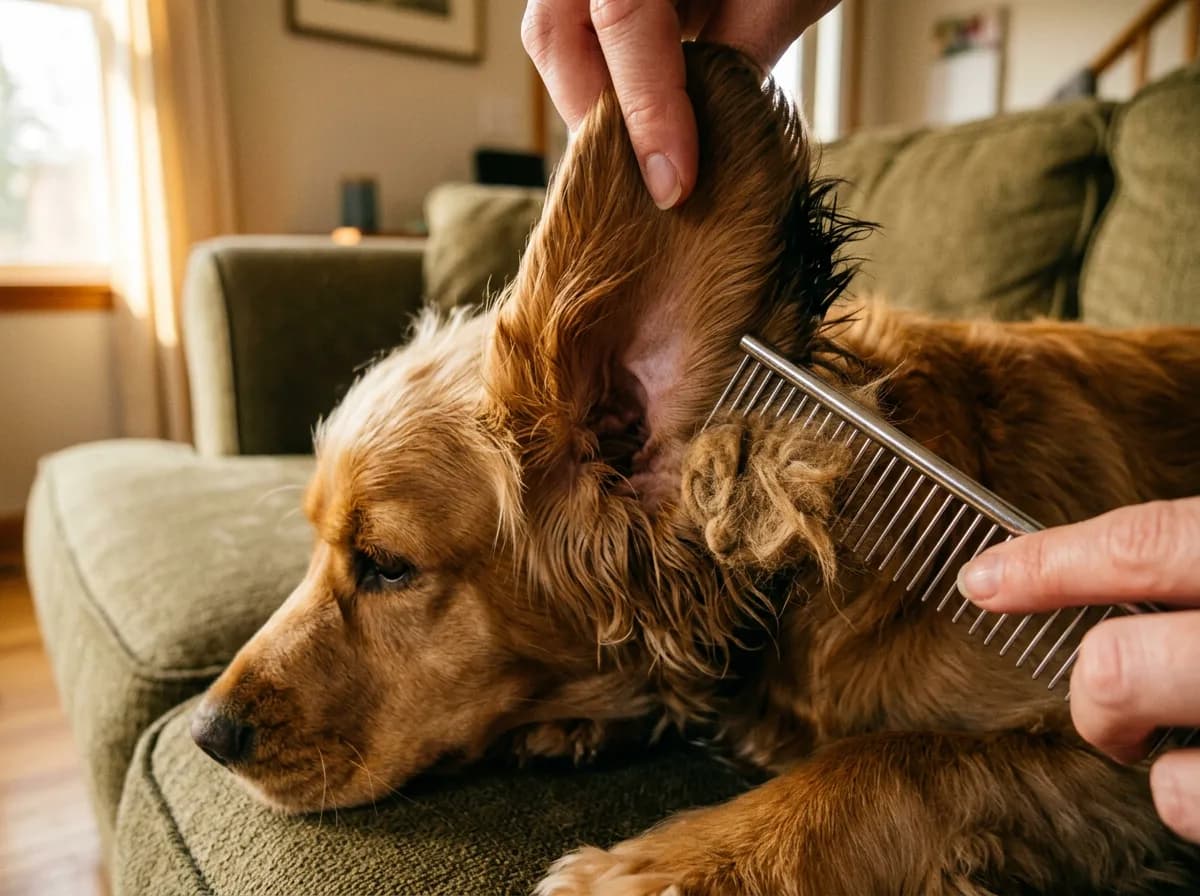
When a groomer says a matted coat has to come off, they are not being lazy or upselling. Pulling a tight mat off skin causes real pain and can tear it, and the humane option is to clip underneath and start again.
Accidents happen, and honesty about them matters
Groomers work with sharp tools on animals that move without warning. Even with great care, nicks occasionally happen, especially on a matted or wriggly dog. A good groomer tells you immediately and shows you. Most feel far worse about it than the owner does.
Be realistic about the coat you have
You cannot get a Poodle finish on a Labrador, and a photo of a show-groomed dog is a photo of a coat that has been maintained daily for months. Bring pictures by all means, but let the groomer tell you what your dog’s coat can actually hold.
One phone call, not five
Most salons have no dedicated phone person, which means every call pulls a groomer away from a dog standing on a table. Call once. They will ring you when your dog is ready or if the job needs longer.
Be punctual, at both ends
Arriving late compresses the whole day, and collecting late leaves a dog waiting in a crate long after they are finished. Turning up on time is genuinely one of the kindest things you can do for both of them.
When to see a professional groomer or your vet
At-home grooming covers everyday upkeep. Some jobs belong with a professional groomer, and a few belong with a veterinarian instead.
Knowing when a job belongs to a professional groomer rather than to you is a skill in itself, and it usually comes down to safety rather than skill. Book a professional groomer for a coat that is matted beyond a small tangle, for a breed-specific haircut you are not confident cutting, for hand-stripping a wire coat, for a dog who genuinely will not tolerate you doing it, and for the seasonal de-shed on a heavy double coat. Each of those jobs carries a real risk of hurting your dog if it goes wrong.
Call your vet, not your groomer, when grooming turns up a health problem. Watch for these:
- Red, swollen or smelly ears, or constant head-shaking, which usually means infection.
- Itchy, flaky, greasy or inflamed skin, or new bald patches.
- A nail cut into the quick that will not stop bleeding after a few minutes, or a limp afterwards.
- Lumps, scabs or sore spots you find while brushing.
- Anal gland problems. Scooting or a strong odour is a vet job, and expressing glands at home can cause real damage.
There is no prize for doing everything yourself. Plenty of owners handle brushing, nails and baths at home and hand the haircut to a professional groomer four or five times a year, which is a sensible split rather than an admission of defeat. The coat stays in good condition either way, which is the only thing that actually matters.
The one situation where waiting genuinely costs you is matting. A coat that is starting to felt gets worse every single day, and the gap between a groom that saves the coat and a groom that has to shave it is usually about two weeks. If you are unsure which side of that line your dog is on, book the grooming appointment now rather than after the weekend.
When in doubt, asking is always cheaper and kinder than guessing.
Frequently asked questions
Frequently Asked Questions
It depends on coat type. Short smooth coats need weekly brushing and a bath every 6 to 8 weeks. Long silky coats need daily brushing and a bath every 4 to 6 weeks. Curly coats need daily brushing down to the skin and a full groom every 6 to 8 weeks. Double coats need brushing 2 to 3 times a week, and daily while they are blowing coat.
Brush the coat out dry, trim nails, clean ears and check eyes, bathe, dry thoroughly, clip or trim if needed, then finish with teeth and a final comb-through. The order matters: brushing must come before bathing, because water turns loose tangles into solid mats.
Tip 15 to 20 percent, so $15 to $20 on a $100 groom. Go to $20 to $25 or more if your dog is large, elderly, heavily matted or difficult to handle, or if the groomer squeezed you in at short notice. Holiday tips for a regular groomer are customary too.
No. Dog skin has a different pH than human skin, and human shampoo strips protective oils and leaves dogs dry, flaky and itchy. Use a shampoo formulated for dogs, and ask your vet about a medicated option if your dog has a skin condition.
Take very thin slivers off the tip one at a time and look at the cut surface after each one. It will look chalky and white at first. When a small grey or black dot appears in the centre, you have reached the start of the quick and should stop. A grinder makes this easier because it removes nail gradually.
Not if they have a double coat. That undercoat insulates against heat as well as cold, and shaving it removes protection from sun and can cause it to grow back patchy or not at all. Single-coated breeds can be clipped shorter safely. Shade, water and avoiding midday walks do more for heat than clipping.
Refusing to show you where dogs are held or groomed is the biggest one. Also watch for unattended dogs under heated cage dryers, vague answers about handling frightened dogs, no questions about your dog’s age or health, pressure to shave a double coat, and any injury that is explained away rather than shown to you plainly.
Work on a dry coat. Apply a detangling spray, hold the base of the mat against the skin so you are not pulling, then tease it apart from the outside in with your fingers or a comb tooth. Never use scissors, because skin lifts into a tight mat and gets cut. If the mat is larger than a coin or sits flat against the skin, see a professional groomer.

Jet Perreault, a professional dog groomer of 18 years, graduated from Michigan State University, where she earned a bachelor’s degree in English. She has spent time on the dog show circuit, working groomer trade shows, and managing grooming salons and pet shops.