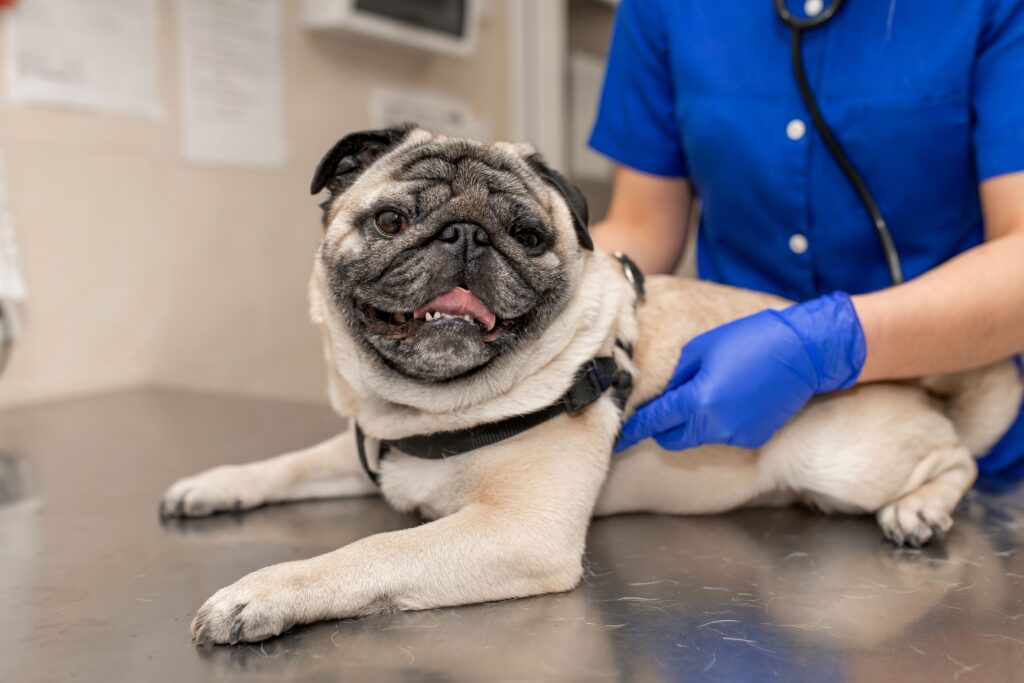

Beyond stenotic nares and everted saccules, Johnson emphasized the turbinates, which remain after surgery and help explain why procedures sometimes fail. A large tongue, floppy trachea, small epiglottis, and vocal-fold granulomas compound the problem. Halving airway diameter increases resistance and work of breathing 16-fold, she said, and the resulting negative intrathoracic pressure worsens edema and can contribute to pulmonary edema, pushing PaCO₂ up and PaO₂ down. Johnson also emphasized that postoperative inflammation from the endotracheal tube itself can further narrow an already compromised airway, underscoring the importance of using appropriately sized tubes and minimizing trauma during intubation. High vagal tone, ventricular arrhythmias, chronic hypoxia, and gastrointestinal disease including hiatal hernia and reflux add further risk, with a history of GI disease raising the chance of aspiration.
Planning begins before the patient arrives
Because stress releases catecholamines that worsen many of these problems, Johnson recommended minimizing time in the waiting room, scheduling procedures first thing in the morning, signing consent ahead of the visit and, where appropriate and permitted by state regulations, considering whether patients could wait in the owner’s car rather than in the clinic. Her behavioral modification, she said, is pharmacology: gabapentin the day before and morning of, plus “chill protocol” medications selected for the individual patient. She also discussed sending owners home ahead of time with pre-anesthetic medication kits that may include drugs such as gabapentin, trazodone, melatonin, maropitant, ondansetron or cisapride, depending on the patient’s needs, to help reduce stress and gastrointestinal complications before the procedure.
She advised fasting for 4 to 6 hours with a small, digestible last meal, moving away from longer fasts, and stressed generous eye lubrication given proptosis and corneal ulcer risk. Johnson said preoxygenating patients for 3 minutes can extend the time before desaturation from about 1 minute to about 5 minutes, provided the mask remains in place.
Premedication and induction aim to reduce reliance on inhalants
When it comes to anticholinergics, Johnson said, “Anticholinergics are really controversial. I don’t use them very often because what they do is they take the watery part of the secretions away, but they leave the sticky part. And then it gets really sticky and hard to clear, so I don’t use them very often.”
Johnson also reviewed opioid options ranging from butorphanol for short-duration, mild analgesia to fentanyl for short-duration, profound analgesia. She described using intravenous lidocaine or fentanyl to reduce coughing during intubation and a ketamine-propofol co-induction technique, while emphasizing, “We are not going to mask these guys down.”
She also cautioned against sedating brachycephalic patients and leaving them unattended because muscle relaxation can quickly lead to airway obstruction. “Somebody needs to stand there because as they get muscle relaxed with their sedatives, they’re going to obstruct,” she said.
“Our goal is balanced anesthesia,” Johnson said. She explained that using balanced anesthetic techniques and multimodal analgesia allows clinicians to use lower doses of individual drugs and reduce side effects.
Calling inhalants “the bad drugs,” she described incorporating local anesthetic techniques, constant-rate infusions and other adjunctive analgesic strategies to reduce inhalant anesthetic requirements.
Recovery is the most dangerous period
“Recovery is always going to be our most dangerous period,” Johnson said, describing patients that obstruct, become hypoxic and hyperthermic, and aspirate. She walked through distinguishing pain from dysphoria and emergence delirium because each requires a different response. She recommended keeping patients sternal, extubating only once they can protect their airway, and closely monitoring them until they are fully awake, noting that many complications occur after extubation rather than during anesthesia.
Among the techniques Johnson discussed for managing postoperative airway obstruction were dexamethasone when appropriate, nebulized epinephrine, airway packing and, as a last resort, tracheostomy, as the procedure is very invasive.
Johnson encouraged practices to develop hospital-specific protocols for brachycephalic patients, highlighting one example in which a hospital’s protocol was associated with fewer postoperative respiratory distress events, although aspiration still occurred.
Johnson ended the session by returning to 3 key takeaways: brachycephalic animals are at increased peri-anesthetic risk, patient management is just as important as drug choice, and most complications occur during recovery. “It’s not so much about the drugs as it is the management,” she said.
Reference
Johnson R. From Pugs to Persians … Unique Anesthetic and Analgesic Considerations and Concerns for Brachycephalic Animals. Presented at: 2026 American Veterinary Medical Association Convention; July 10-14, 2026; Anaheim, CA.