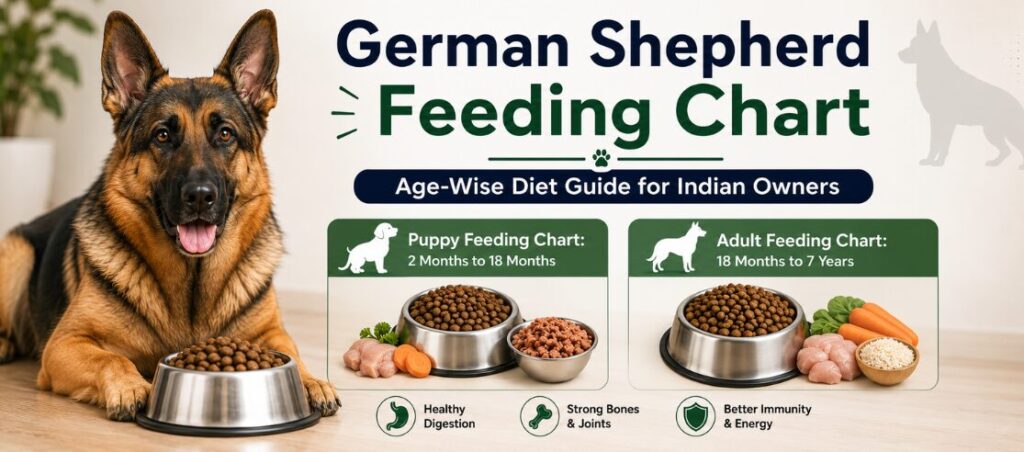

If you’ve ever seen a German Shepherd devour their food and then look up at you as if they haven’t eaten at all, you understand the real struggle of feeding them. German Shepherds are athletic, high-energy dogs that require consistent and well-planned nutrition. If you get their diet right, you’ll have a lean, sharp, and thriving dog. However, if you get it wrong, you may end up with a restless, underweight puppy or an overweight adult that is at risk of developing hip problems sooner than expected.
This age-wise German Shepherd feeding chart is built specifically for Indian conditions, including the heat, the food options we actually have access to, and the way most Indian households feed their dogs.
How a German Shepherd’s Nutritional Needs Change Over Time
German Shepherds are a large breed, which means their growth and metabolism go through distinct phases. Puppy food for a 2-month-old GSD is not the same as what a 4-year-old working dog or a 10-year-old senior needs.
Growth phase (2 to 18 months): The dog is building bone, muscle, and organ mass. Caloric needs are high, but overfeeding is actually a risk here because rapid weight gain puts stress on developing joints. GSDs are particularly prone to hip dysplasia, and diet during puppyhood directly influences long-term joint health.
Maintenance phase (18 months to 7 years): Growth has stopped. The dog needs enough energy to stay active without gaining fat. Protein remains the priority, but total calories should be calibrated to activity level.
Senior phase (7 years and above): Metabolism slows down. The dog needs fewer calories but more joint support, and may start developing sensitivities to certain proteins or grains.
German Shepherd Feeding Chart by Age
The quantities below are for dry commercial food (kibble). Home-cooked portions will differ and are covered in the next section.
Puppy Feeding Chart: 2 Months to 18 Months
| Age | Daily Meals | Approx. Daily Quantity (Dry Food) |
| 2–3 months | 4 meals | 160–220g |
| 3–6 months | 3 meals | 220–300g |
| 6–12 months | 3 meals | 300–380g |
| 12–18 months | 2–3 meals | 350–420g |
GSD puppies between 6 and 12 months go through a rapid growth spurt. Many owners under-feed during this phase because the dog looks fine — but this is when bone density and joint development need consistent nutritional support. Don’t cut portions during this window.
Adult Feeding Chart: 18 Months to 7 Years
| Weight of Dog | Daily Dry Food (Moderate Activity) | Daily Dry Food (High Activity) |
| 25–30 kg | 300–360g | 380–430g |
| 30–35 kg | 360–420g | 430–490g |
| 35–40 kg | 400–460g | 470–530g |
| 40+ kg | 450–510g | 510–580g |
GSDs used for protection training, agility, or any kind of working role sit firmly in the high-activity bracket. Pet GSDs with two daily walks fall under moderate activity.
Senior Feeding Chart: 7 Years and Above
| Age | Daily Dry Food | Notes |
| 7–9 years | 280–340g | Reduce if weight is creeping up |
| 9+ years | 250–310g | Add joint supplements; divide into 2–3 smaller meals |
Senior GSDs often slow down before their owners notice. If your 8-year-old dog is eating the same quantity they were at 4, and you’re starting to feel more padding over their ribs than bone, it’s time to adjust.
Kibble vs Home-Cooked: What Works for Indian GSD Owners
Commercial Dry Food (Kibble)
For many Indian households, high-quality kibble serves as the main component of a German Shepherd’s diet. Choose foods that list chicken, lamb, or fish as the first ingredient. While corn-based formulas are often less expensive, they are less digestible and may result in larger and more frequent stools.
Recommended: Purepet Adult Dry Dog Food 10kg
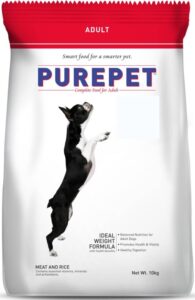
It is a solid mid-range option that covers the protein basics for large breeds without breaking the bank. Reliable for daily feeding of adult GSDs.
Home-Cooked Diets
A well-planned home-cooked diet can absolutely work for German Shepherds. The typical structure that works in Indian kitchens:
- Protein (45–50%): Boiled chicken (no bones), eggs, fish like rohu or surmai, paneer in moderation
- Carbohydrates (30–35%): Rice is the most digestible option; avoid maida-based foods
- Vegetables (15–20%): Pumpkin, carrots, spinach, sweet potato; skip onion, garlic, and grapes entirely
- Fat: A teaspoon of coconut oil a few times a week; fish oil capsules for omega-3 support
The gap in most home-cooked diets is calcium and micronutrients. If your GSD is eating mostly home food, a vet-recommended supplement is worth adding.
Recommended: Henlo Everyday Nutrition Topper
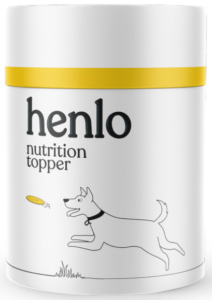
Mixes directly into meals and provides the daily vitamins and minerals that home-cooked food typically doesn’t cover on its own, especially useful for large breeds with high nutritional demands.
Raw Diets (BARF)
Raw feeding has a growing community in India. Raw chicken bones (not cooked) are generally safe. BARF diets require careful planning and aren’t recommended for households with very young children due to bacterial contamination risks.
Feeding Tips Specific to India
Manage heat-related appetite changes: During April to June, GSDs often eat 10–20% less. Offer food in the early morning or after 7pm when temperatures drop.
Watch for bloat in large males: Two meals a day and a 30-minute rest after eating significantly reduces bloat risk.
Adjust for working and guard roles: A dog that’s physically active for 4–6 hours needs closer to the high-activity portion, not the moderate one.
What to Absolutely Avoid
These are common Indian household foods that are toxic to GSDs:
- Onion and garlic in any form, including cooked curries and dal
- Grapes, raisins, and certain dried fruits
- Excessive salt and spiced foods
- Cooked bones of any kind (they splinter)
- Chocolate, tea, and coffee
How to Read Your Dog’s Body Condition
Rib test: Run both hands down your dog’s ribcage. You should feel each rib clearly without pressing hard. If you see ribs, increase food. If you can’t feel them, reduce portions.
Waist check: Standing above your dog, you should see a visible narrowing behind the ribcage. If the silhouette is a rectangle, the dog is overweight.
Conclusion
A structured German Shepherd feeding chart tailored to your dog’s current life stage is one of the most direct ways to protect their long-term health. Start with the portion guidelines here, then adjust based on your dog’s body condition score, activity level, and how they respond to the food.
FAQs
Can I feed my German Shepherd rice and chicken every day?
Rice and boiled chicken is a suitable base for a German Shepherd Dog’s (GSD) diet. However, plain rice and chicken alone do not provide enough calcium, vitamins, or fat-soluble nutrients for long-term health. If this is your dog’s primary diet, it’s important to add a veterinarian-recommended supplement and incorporate some vegetables along with a source of fat, such as fish oil.
My GSD is underweight despite eating well. What could be causing it?
Underweight despite a good appetite is often a sign of intestinal parasites, which are common in India. A deworming schedule every 3 months is standard for most Indian GSDs. If deworming doesn’t resolve it, a vet check for thyroid or digestive absorption issues is the next step.
How much protein does a German Shepherd need daily?
Adult German Shepherds generally need a diet where protein makes up at least 22–26% of dry matter content. Puppies need 28–30%. Aim for at least 40–45% of your dog’s meal to come from a quality animal protein source.
Should I feed my GSD once or twice a day?
Twice a day is strongly recommended for German Shepherds. A single large meal increases bloat risk. Morning and evening meals of equal portions work best.
At what age should I switch my GSD from puppy to adult food?
Switch to adult food at 18 months, not 12. German Shepherds are a large breed and mature more slowly than small dogs.