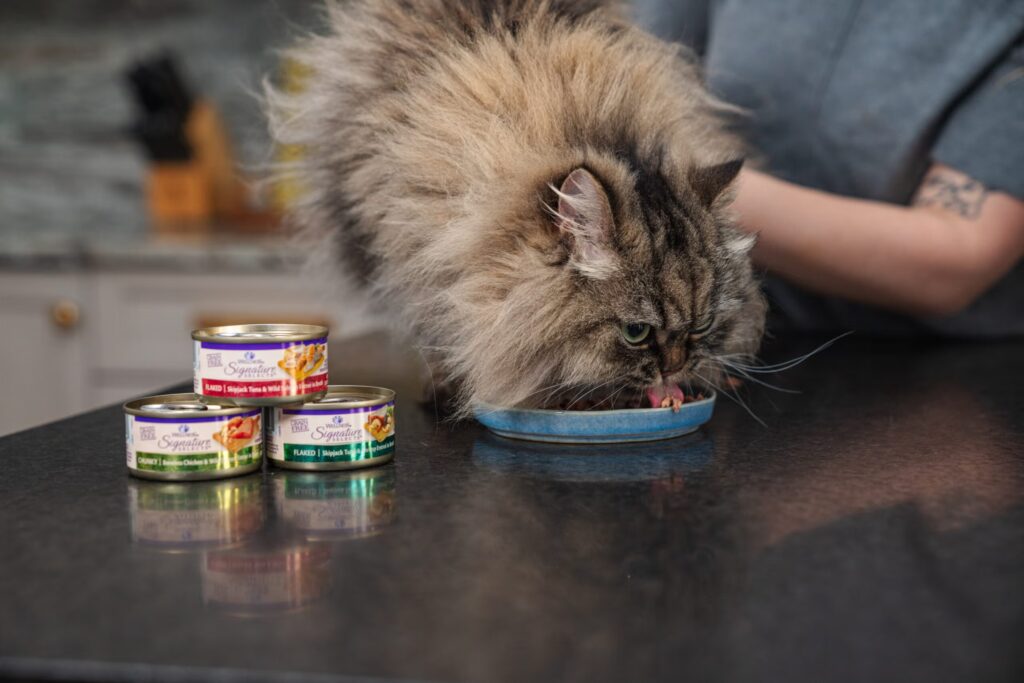

Yesterday, your cat couldn’t wait for dinner.
Today they’re sniffing the bowl like you’ve served cardboard.
Sound familiar? You’re not alone. Many cat parents assume they have a finicky feline on their hands. But in many cases, that’s only part of the story. Cats can lose interest in eating the same meal day after day. This isn’t them being difficult. Instincts tell our feline friends that mealtime should be a richer sensory experience.
Think about it from your perspective. Imagine being served the same chicken dinner seven days a week for months on end. Even if it’s nutritious and delicious, eventually, you’d crave a little variety.
Cats aren’t so different.
In fact, many feline experts believe a cat’s interest in food depends on much more than what’s in the bowl.
Animal behaviorists sometimes refer to this as behavioral menu fatigue—a gradual loss of enthusiasm when every meal looks, smells, and tastes the same. While it isn’t a medical diagnosis, it helps explain why some cats become less engaged at mealtime. Veterinary behaviorists increasingly recognize that feeding is not only about nutrition. It’s also an opportunity for enrichment that supports natural feline behaviors.
Cats thrive on routine. But routine doesn’t have to mean monotony. Their wild ancestors encountered different prey, textures, aromas, and flavors throughout the day. Today’s indoor cats may no longer hunt for their meals, but many still benefit from that same sensory variety.
According to the Association for Pet Obesity Prevention, approximately 60% of U.S. pet cats are overweight or obese. While many factors contribute, making mealtime more engaging may help encourage healthier feeding habits.
At Wellness, we call this approach Gourmet Variety. By rotating complementary flavors, textures, and formats, you can create a richer mealtime experience while maintaining complete and balanced nutrition.
Can Cats Really Get Bored with Their Food?
Cats don’t crave novelty the way humans do. In fact, they’re often cautious around unfamiliar foods, a behavior known as food neophobia. Evolutionarily, that caution helped protect wild cats from eating something potentially dangerous.
At the same time, feline behaviorists recognize another phenomenon called sensory-specific satiety. After eating the same aroma, flavor, or texture repeatedly, cats may show less interest in that particular food even when they’re still hungry.
That’s why a cat may eagerly clean their bowl one day and seem indifferent the next. It doesn’t necessarily mean they’ve become “picky.” They may simply be ready for a different sensory experience.
Researchers studying feline feeding behavior have found that aroma, texture, temperature, and moisture all influence how appealing a meal is to cats. Because cats rely on their sense of smell far more than humans do, even subtle changes can make mealtime feel new again.
That’s where thoughtfully introducing variety can help.
Why Wet Food Naturally Adds Variety
One of the easiest ways to keep meals exciting is by incorporating wet cat food into your cat’s routine.
Unlike dry kibble, wet recipes naturally provide a wider range of textures, aromas, and serving experiences. From silky pâtés and tender morsels to delicate flakes and shredded meats in savory sauces, every meal can feel like something special.
There’s another benefit, too.
Cats evolved from desert-dwelling ancestors and have a naturally low thirst drive. According to the American Association of Feline Practitioners (AAFP) and the International Society of Feline Medicine, many cats consume much of their daily water through food rather than from a water bowl. Feeding high moisture wet cat food can help support hydration, particularly for cats that don’t drink enough water on their own.
That doesn’t mean every cat needs an exclusively wet diet. Many veterinarians recommend feeding combinations of wet and dry food, allowing pet parents to enjoy the benefits of both while adding variety to mealtime.
For cats that thrive on wet diets, choosing a healthy wet cat food made with high-quality ingredients and complete, balanced nutrition helps ensure every meal supports long-term wellbeing.
Veterinary behaviorists increasingly recognize that mealtime is about enrichment. The American Association of Feline Practitioners encourages indoor environments that stimulate natural feline behaviors like hunting, stalking, and exploring. Rotating flavors, textures, and serving formats can provide that enrichment by giving cats a chance to engage their senses at every meal rather than simply consuming calories.
Gourmet Variety Means More Than New Flavors
When people think about variety, they usually think about different proteins.
But your cat notices far more than flavor alone.
Researchers have found that texture can significantly influence food acceptance in cats. By incorporating Gourmet Variety, the mealtime experience becomes more appealing while offering complete and balanced nutrition.
Some cats love smooth Wellness pâté cat food that melts across the tongue. Others prefer hearty minced cat food, tender morsels cat food, or delicate flaked cat food suspended in savory broth.
If your cat routinely turns away from dinner, experimenting with different textures may be just as important as trying a new flavor. Our blog, From Pâté to Morsels: Exploring the Different Textures of Wet Cat Food, explains how texture influences feline food preferences and why switching formats sometimes succeeds where changing proteins alone doesn’t.
That’s why our portfolio of Wellness® wet cat food includes a variety of recipes, textures, and serving formats designed to keep mealtime interesting without sacrificing nutritional balance.
Think of it as creating your cat’s own gourmet tasting menu.
Create a Simple Rotation
The goal isn’t to spoil your cat. Instead, it’s to engage the instincts they’ve carried with them for thousands of years. Breakfast doesn’t have to look exactly like dinner, and Tuesday doesn’t have to taste like Friday. Here’s a simple menu plan for just about any fussy feline:
The goal isn’t to overwhelm your cat with constant change. It’s to offer enough variety to keep mealtime exciting while maintaining digestive consistency.
If your cat already has favorite recipes, start by rotating one meal a day rather than changing everything at once.
Gourmet Variety Can Encourage Healthy Eating
Introducing Gourmet Variety can also encourage healthy eating behaviors. After all, variety isn’t just the spice of life. For many cats, it’s the secret ingredient that turns an ordinary meal into something worth purring about.
Whether you’re looking for grain-free wet cat food, grain free canned cat food, high protein canned cat food, or simply the best wet cat food, the goal is the same: finding recipes your cat loves and that you can feel confident serving every day.
Cats that stay interested in their food are less likely to skip meals, and maintaining consistent food intake is especially important because cats should never go extended periods without eating. According to the Cornell Feline Health Center, prolonged food refusal can increase the risk of serious health complications, particularly in overweight cats.
That’s where rotating premium recipes can make a difference. Wellness CORE Signature Selects was created to bring chef-inspired variety to your cat’s bowl with tender shredded meats and seafood in rich sauces. Your cat can enjoy unique flavor combinations like Shredded Chicken & Quail Egg one day, Skipjack Tuna & Salmon the next, followed by Duck & Turkey Liver or Yellowfin Tuna & Tilapia. Rotating distinctive recipes like these introduces new aromas, proteins, and textures while still providing complete and balanced nutrition.
Gourmet Variety is also practical. Single-serve pouches reduce waste, rotating recipes helps maintain interest, and every Wellness recipe provides complete and balanced nutrition, giving pet parents the flexibility to offer new flavors and textures without sacrificing consistency.
Variety At Every Life Stage
Growing kittens benefit from early exposure to different flavors and textures, helping them become more adaptable eaters later in life. If you’re feeding Wellness CORE kitten food, introducing different wet food formats alongside your kitten’s primary diet can help build positive feeding experiences from the very beginning.
Senior cats can benefit, too.
As cats age, changes in smell, taste, or dental health may make softer foods more appealing. Rotating among flavorful wet recipes can help maintain interest at mealtime while providing the moisture many older cats benefit from.
Whether you’re shopping for high quality wet kitten food, the best wet food for indoor cats, or the best wet food for elderly cats, offering thoughtful variety can help support healthy eating habits at every life stage.
Choosing High-Quality Wet Cat Food
With so many choices available, how do you know which recipes deserve a place in your cat’s rotation?
No matter if you’re shopping for grain-free wet cat food, high protein canned cat food, or cat wet food for a sensitive stomach, look for recipes that deliver complete and balanced nutrition, high-quality protein, appealing textures, hydration, and ingredients backed by nutritional science.
Create a Mealtime Worth Looking Forward To
Every meal is an opportunity to nourish more than your cat’s body. It’s a chance to engage their instincts, satisfy their curiosity, and turn an everyday routine into one of the most rewarding moments of the day.
From the perfectly portioned convenience of Wellness CORE Tiny Tasters to the shredded meats and savory sauces of Wellness CORE Signature Selects, Wellness makes it easy to build a gourmet menu that’s as nutritious as it is exciting.
Looking to expand your cat’s culinary horizons even further? These resources are a great place to start: