
Editor’s Lead-In
In Part 1 of her story, regular contributor Kay Clarke shared the confusing, isolated landscape of her early childhood—a time of undiagnosed neurodivergence and a desperate struggle to understand the rules of human interaction.
In Part 2, Kay enters the crucible of secondary school. Here, she explains the concept of “The Beacon”—the invisible signal that draws bullies to anyone who is different—and how the intense anxiety of her teenage years ultimately pushed her out of the human social sphere and fully into the healing, structured world of horses and dogs.
Please note that this article contains frank discussions of severe bullying and its impact on mental and physical health.
Part 2: The Beacon
By Year 7, my childhood strategy of fighting back shifted to a new goal: trying to be invisible.
But invisibility doesn’t work. Bullies have a “beacon”—they know exactly who is different, even if you don’t fully understand it yourself. My reality quickly became physical. I was slammed into walls and windows.
I had food, pens, and pencils thrown at me. Kids would ball up small pieces of paper in their mouths and blow them at me through straws, or try to trip me as I walked by. In the winter, I was a constant target for snowballs.

I had no safe environment to learn. While kids today often have one-on-one support and designated safe spaces, my “safe space” was hiding in classrooms, doing favors and jobs for teachers just so I could eat my lunch indoors.
There was a support room, and I would go in there hoping the teachers would understand—via telepathic communication—that I needed to stay, even though I wasn’t on the official list of students allowed inside. Inevitably, they would tell me to leave.
Invisibility doesn’t work. Bullies have a ‘beacon’—they know exactly who is different.
The Social Minefield
It is difficult to explain why I want to put this out there, but I think it’s time to address a reality that affected me deeply, and that continues to destroy kids today—especially with the rise of social media.
If shining a light on my experiences helps even one person, it’s a win.
Bullying causes immense mental damage, which inevitably takes a physical toll. My self-confidence was nonexistent. I spent countless nights awake, unable to sleep because I knew what was coming the next day.
The anxiety was so severe that it made me physically sick through the night. My attendance plummeted, and my grades followed.
I would avoid the canteen and social areas to prevent bumping into anyone. One memory from the Year 7 canteen line still sticks with me.
A family member in my year marched up to me with a friend. She demanded to know why I was telling people we were related. Confused, I said, “Because we are.”
Her response was cold: “Well… hardly related. STOP telling people that we are.” A dinner lady overheard, shocked, and told her it was a horrible thing to say.
My relative just shrugged and said, “So what, it’s true.” I was paralyzed with embarrassment, thinking: What is wrong with me? I am so worthless that even my own family doesn’t want to be associated with me.
The remarks on my physical appearance and clothes were relentless. After our school prom, the same individual told me I looked “nice and girly” for a change, because I usually looked like a “grebe”—referencing my pulled-back ponytail and clothes I would usually wear.

From my early teens, I became hyper-conscious of my weight and what I ate, to the point of skipping meals. I became so fixated on eating less that I would leave the crusts on my packed lunch sandwiches just to reduce my intake.
Even the classroom offered no respite. For an entire year in math class, two boys would loudly announce embarrassing things about me, causing the whole room to stare and laugh.
When the attention is on me, I blush bright red and have no control over it, which only fuels their entertainment. The teacher witnessed this constantly and did nothing until I finally reported it to the headteacher.
The next lesson, the boys hummed the insults instead, and the teacher simply sighed, “Stop it, you know she doesn’t like it”—as if I was the inconvenience.
The Sanctuary of the Stables
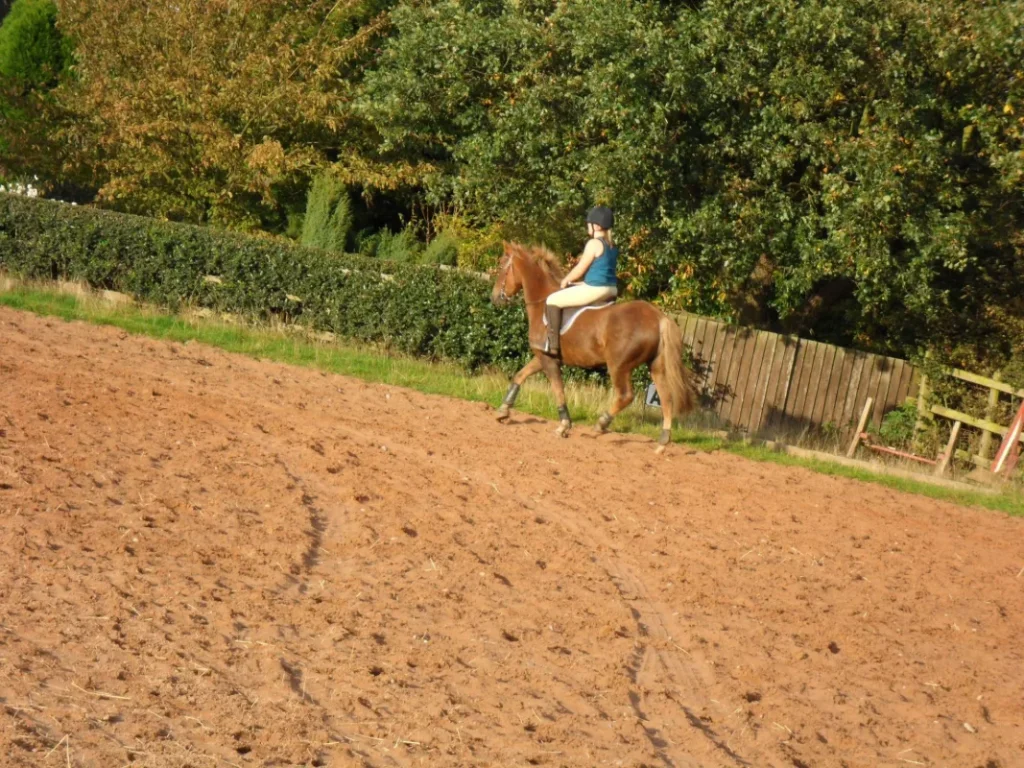
When I wasn’t at school, I survived by escaping. Going horse riding, grooming horses, or just sitting in a field with them made the problems at school disappear.
I finally made a friend at school who shared my interests. We would take her collie cross and German Pointer puppy, Dylon, along with my dog, on long walks through the woods and bridleways.
When her mum bought a three-year-old traditional gypsy cob mare, my friend and I broke her in together. We had incredible adventures, participating in charity and endurance rides.
I practically lived outdoors. I would take my nanna’s Shih Tzus or a friend’s Labrador out for hours. I threw myself into work experience at a vet’s, riding stables, kennels, and a cattery.
For four and a half years, I did a mix of voluntary and paid work at the kennels and cattery where I did work experience. If I helped out in the kennels, I earned riding lessons in return.
The kennel owner also trained gundogs and police sniffer dogs for narcotics and explosives, and I eagerly volunteered to learn how to train them.
Finding My Footing (And Losing It)
Working with animals wasn’t always easy, and I constantly wondered why I still struggled to gain confidence. I had great days where I successfully re-schooled and broke in two Norwegian Fjord ponies.
But I also learned the hard way with an ex-pointer Thoroughbred who had no brakes—I literally had to turn his head into the arena fence to make an emergency stop.

Later, I was tasked with riding a 17.1-hand Dutch Warmblood cross thoroughbred gelding brought in as a project known for rearing and bucking. He was incredibly sensitive to hand, leg, and seat pressure.
I lost my confidence entirely, a situation made worse by being shouted at and sworn at when I made a mistake. When I am put under pressure and yelled at, my neurodivergence takes over: I freeze up and completely dissociate.
Max: The First Step Forward
But alongside the horses, there was Max.
Max was my first dog, a Border Collie, and I started bringing him to work with me. We worked through basic obedience—heel, sit, down, stay, recall—and then I started teaching him gundog skills.


I would throw a toy, command him to leave it, walk him away, and then send him back to fetch. I taught him directional commands, sending him left, right, or back to retrieve hidden toys.
“With Max, there was no shouting. There was no bullying. There was just clear communication, teamwork, and trust.”
We even tackled agility, with Max jumping the horse jumps and weaving through my legs.
With Max, there was no shouting. There was no bullying. There was just clear communication, teamwork, and trust. He was my teammate, and training him planted a seed that would eventually grow into my entire life’s work.
Next Time: The Turning Point
In Part 3, Kay leaves the fraught halls of secondary school behind and begins to turn her survival mechanism—her deep connection with dogs—into a profound expertise.
Join us next time as Kay explores her transition into the professional dog world, the science behind the canine mind, and how understanding dogs finally helped her understand herself.