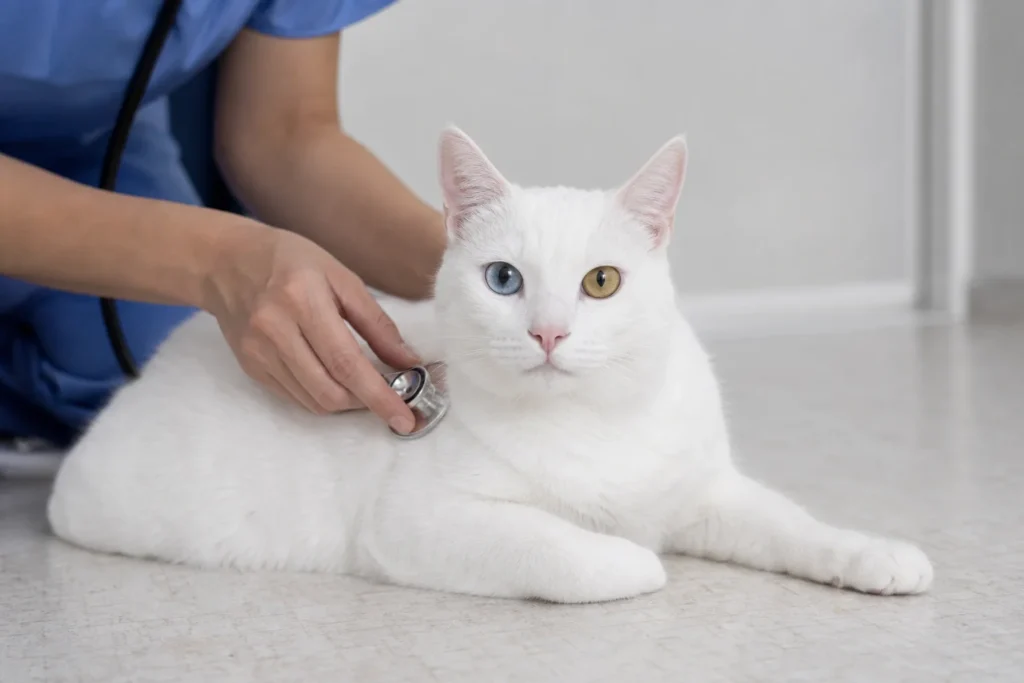

Khao Manee health information comes with an unusual evidence problem. Breed registries and secondary profiles describe generally healthy cats and commonly quote a 10-to-12-year lifespan, but large veterinary studies have not established a Khao Manee-specific deafness prevalence, disease profile, or life expectancy. The most responsible guide has to separate what is known about white cats generally from what has actually been measured in this breed.
The practical message is still useful. White pigmentation can be associated with congenital sensorineural deafness, and cats with blue irises have shown higher risk in some, but not all, studied white-cat populations. Not every white cat is deaf. Not every blue-eyed or odd-eyed cat is deaf. A BAER test is the most definitive way to assess each ear, while preventive veterinary care supports the same dental, weight, infectious-disease, and age-related needs that matter for any cat.
- 1No robust study gives a Khao Manee-specific deafness percentage or life expectancy
- 2Studies of other purebred white cats report different deafness estimates, so their numbers must not be relabeled as a Khao Manee rate
- 3Blue or odd eyes can increase concern but cannot diagnose hearing status
- 4BAER testing can assess the ears separately
- 5Use registry lifespan ranges as broad planning estimates, then build health decisions around the individual cat and regular veterinary care
This veterinarian-led guide explains the evidence, hearing tests, life expectancy uncertainty, preventive care, and safe home routines. It is educational and cannot diagnose an individual cat. A sudden hearing change, ear pain, balance problem, or other worrying sign needs veterinary assessment.

Petful may earn a commission when you click through to Lemonade, at no extra cost to you.
Khao Manee health: what is actually known?
The Khao Manee is a small-population breed outside Thailand, and published veterinary research rarely includes enough individuals to estimate breed-specific disease. The CFA Khao Manee profile says the natural breed is not known for a specific health disorder, then appropriately flags deafness as a possibility in white cats. That is a registry description, not a longitudinal medical study.
Search results often turn the absence of a known breed disorder into “the breed is healthy.” Those are not equivalent statements. An under-studied breed can have no established predisposition because the data are sparse. Individual Khao Manees can still develop common feline disease, injuries, dental problems, obesity, infections, cancer, kidney disease, hyperthyroidism, arthritis, and acquired ear disease.
The health plan should therefore have two tracks. The first is a focused hearing discussion because of white pigmentation. The second is ordinary lifelong preventive care shaped by age, indoor or outdoor exposure, diet, body condition, dental status, medical history, and the veterinarian’s findings. Khao Manee health issues should be recorded and treated at the individual level because sparse breed data cannot replace an examination.
What the evidence can and cannot tell you
Khao Manee Health Evidence Guide
| Evidence source | What it measured or states | What it supports | What it cannot prove |
|---|---|---|---|
| Khao Manee registry profiles | Breed descriptions, standard, breeder guidance, and a commonly quoted 10-12-year estimate | Useful background and a reason to discuss hearing screening | A breed-specific prevalence, prognosis, or life expectancy distribution |
| 2019 UK study of purebred white kittens | BAER results in 132 solid-white kittens from represented breeds plus 61 colored littermates | Congenital deafness occurred in the sampled white-kitten population, and blue irises were associated with higher prevalence there | A Khao Manee percentage, because the breed was not represented in the reported breed breakdown |
| 2022 Polish study of purebred white cats | BAER results in 72 white cats from six represented breeds | Congenital deafness occurred, including one-sided cases, and results differed from other samples | A universal white-cat rate or proof that iris presentation has the same association in every population |
| Merck Veterinary Manual | Clinical overview of congenital and acquired deafness and BAER testing | BAER is the most definitive assessment, and unilateral deafness may be missed without specialized testing | The cause of hearing change in an unexamined individual |
| 2024 VetCompass cat life tables | Death records from thousands of UK cats, including several breeds | General feline life-expectancy context and associations with breed status and non-ideal weight | A Khao Manee life expectancy, because the breed was not separately analyzed |
| The individual cat’s veterinary record | Examination, history, tests, body and muscle condition, dental findings, and response over time | The most relevant basis for that cat’s care plan | A guarantee about future disease or exact lifespan |
The two deafness studies are particularly important because they show why a single headline percentage is misleading. The 2019 UK study reported congenital sensorineural deafness in 30.3% of the sampled solid-white purebred kittens. The 2022 Polish study reported 16.7% among its sample of 72 purebred white cats.
Those results are not contradictory proof that one study is wrong. The studies had different populations, breed mixes, sample sizes, locations, recruitment pathways, and age ranges. Khao Manees were not identified among the reported breed groups. The correct conclusion is that congenital deafness is a real concern in white cats and that the size of the risk varies by population. It is not valid to paste either percentage onto Khao Manees.
White pigmentation, eye presentation, and deafness risk

Congenital sensorineural deafness is present from birth or develops very early as the auditory system matures. “Sensorineural” means the problem involves the inner ear or auditory pathway rather than sound being blocked by wax, inflammation, or a foreign body in the ear canal.
Pigment-producing cells called melanocytes have roles beyond fur and iris pigment. In the inner ear, they contribute to the environment needed for normal cochlear function. Genetic pathways that alter melanocyte development can therefore affect both pigmentation and hearing, although inheritance and expression are more complex than a simple rule based on fur or eyes.
Are all Khao Manee deaf? No. Khao Manee deafness cannot be diagnosed from white fur, and Khao Manee eyes cannot establish hearing status. A cat may hear with both ears, one ear, or neither, so individual testing is more informative than an assumption based on appearance.
How to interpret eye presentation
In the 2019 UK sample, solid-white kittens with one or two blue irises had a higher measured prevalence than white kittens without blue irises. In the 2022 Polish sample, the researchers did not find a statistically significant association between blue irises and deafness. The second study was smaller, and both studies had breed-composition limits.
The clinically safe interpretation is that blue or odd eyes can increase concern, but eye presentation cannot diagnose the ears. A white cat with yellow or green eyes can be affected, while a blue-eyed cat can hear normally. A registered Khao Manee with two vivid non-blue eyes does not get a free pass from screening if the breeder or veterinarian recommends it.
One-sided and two-sided deafness
Bilateral deafness affects both ears and is often easier to notice. A cat may sleep through sound, fail to orient toward a voice, vocalize differently, startle when touched, or depend heavily on visual and vibration cues.
Unilateral deafness affects one ear and can be nearly invisible at home. The cat still hears with the other ear and may respond to a clap, food packet, door, or voice. What can be impaired is localization, the ability to identify where a sound came from.
Both the UK and Polish studies found one-sided cases. That is why dropping keys behind a cat, clapping, using a vacuum, or watching for a response cannot reliably clear both ears. Startling a cat with loud sound is also stressful and offers poor information.

108-oz stainless steel pet fountain with quiet pump and water-level window. Bengals are notoriously water-obsessed; a flowing fountain encourages hydration and pulls them away from sinks and toilets.
Petful may earn a commission when you click through to Chewy, at no extra cost to you.
For budget planning, a current Lemonade pet insurance quote lets you compare the premium, deductible, reimbursement rate, waiting periods, and exclusions before a need arises. The PawsPik stainless-steel cat fountain is one water-station option to compare for capacity, cleaning access, filter cost, noise, and the cat’s actual drinking preference. If the cat accepts lip handling, the HICC PET dental wipes are one home-care format to discuss with a veterinarian and introduce gradually.
When a BAER test matters
BAER assesses each ear
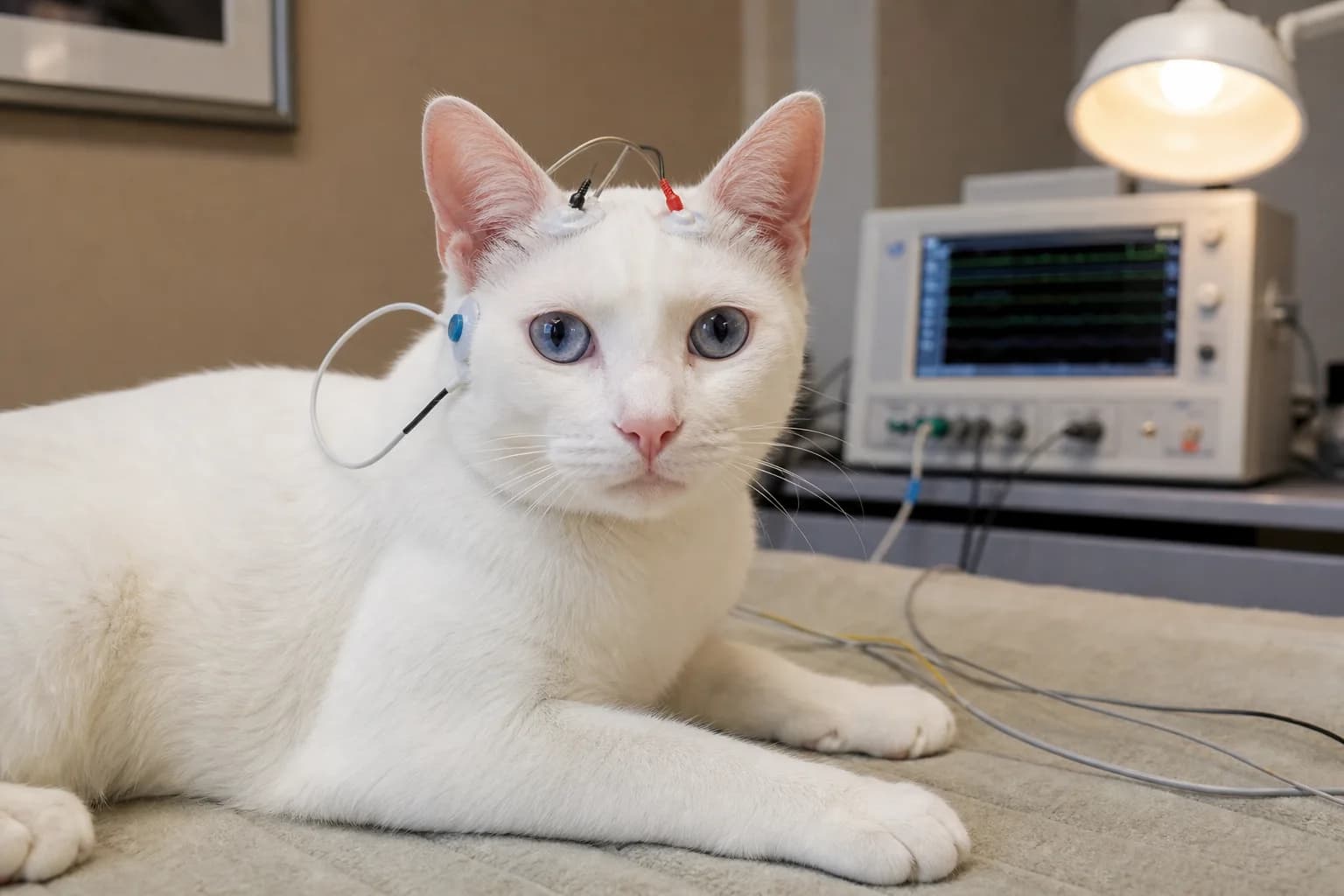
- A brainstem auditory evoked response test records electrical activity along the hearing pathway after controlled sound stimulation. It can assess the ears separately and identify hearing loss that ordinary observation may miss. Ask the testing clinic how it prepares cats, what the report means, and whether results are normal, one-sided, two-sided, or inconclusive.
How clinics use the result
The Merck Veterinary Manual calls BAER the most definitive specialized test for deafness and notes that unilateral deafness can go undetected without it. Testing is especially relevant when a white kitten is being considered for breeding, when a breeder’s contract refers to hearing status, or when an owner needs a clear answer for safety and training.
The veterinarian or referral clinic decides timing and preparation. Very young kittens are still developing predictable responses, while an older cat may have acquired ear disease that needs an examination before or alongside electrophysiologic testing. Some centers can test awake or lightly restrained cats, while others may recommend sedation based on age, temperament, and equipment. Ask the clinic rather than assuming one universal protocol.
Request the written report. It should identify the cat, date, clinic, and result for each ear. “Hearing tested” is not enough if the seller cannot say how or provide the outcome.
BAER is not the only ear assessment
BAER addresses hearing-pathway response, but a complete clinical evaluation may include an ear-canal examination, neurologic assessment, history, and additional tests when indicated. Acquired hearing loss can result from ear inflammation, middle- or inner-ear disease, trauma, toxins, age-related change, or other causes.
A cat that passed a kitten BAER test can still develop acquired hearing problems later. Conversely, an ear canal blocked by debris or affected by treatable inflammation is different from congenital sensorineural deafness. Only a veterinary examination can sort through those possibilities.
Signs that need veterinary care
Arrange an appointment if a cat stops responding to familiar sounds, startles more often, seems unable to locate sound, shakes or scratches the head, has ear odor or discharge, or vocalizes in a new way. Gradual change can still matter, especially in an older cat.
Seek prompt care for a sudden hearing change, marked head tilt, loss of balance, falling, rapid involuntary eye movement, severe ear pain, facial asymmetry, repeated vomiting with dizziness, collapse, or other acute neurologic signs. These signs do not automatically mean deafness. They can reflect conditions that need timely examination.
Do not put drops, cleaners, peroxide, oil, or home remedies into a painful ear unless a veterinarian has examined the ear and approved the exact product. A damaged eardrum or certain medications can change the risk.
Living safely with a deaf or partly deaf cat
Deaf cats can have excellent quality of life. The goal is not to make hearing normal. It is to replace sound-dependent safety and communication with predictable visual, tactile, and vibration cues.
Keep the cat indoors or in a secure catio because it cannot reliably hear traffic, dogs, people, or other danger. Use a microchip and a breakaway identification collar if the individual cat tolerates one. Tell pet sitters and veterinary staff about the hearing status before they handle the cat.

Approach within the cat’s field of vision. If it is sleeping, create a light floor vibration from a short distance or gently touch the bedding before touching the cat. Avoid grabbing from behind. Pair a hand signal or light cue with food, play, carrier entry, and recall so the cue predicts something clear and safe.
A vibrating collar is not necessary for most cats and should never be used as a punishment. If considering any device, choose a lightweight cat-appropriate design, introduce it gradually, and prioritize escape safety. Often, hand signals, a flashlight flick on a wall, routine, and floor vibration are sufficient.
Multi-cat homes can provide useful visual cues, but another animal is not a hearing aid or a treatment. Give each cat separate food, litter, resting, and escape resources. Watch for bullying that the deaf cat may not hear approaching.

Pre-moistened finger-glove dental wipes with baking soda and tea polyphenol that wipe away plaque and freshen breath. The easiest brushless option for a dog that will not tolerate a toothbrush.
Petful may earn a commission when you click through to Chewy, at no extra cost to you.
Khao Manee lifespan: estimate versus evidence
TICA’s breed profile displays a 10-to-12-year life-expectancy estimate. Several secondary pages repeat the same range. This is a reasonable planning number to encounter, but no published Khao Manee cohort or life table is cited on the profile, so it should not be treated as a measured breed average or a ceiling.
General feline research provides context, not a replacement. A 2024 VetCompass life-table study used 7,936 confirmed deaths in UK veterinary records and estimated overall life expectancy at birth at 11.74 years. It also found variation among analyzed breeds and associations between shorter lifespan and factors such as non-ideal adult weight. Khao Manee was not among the separately analyzed breeds.
Khao Manee lifespan should therefore be discussed as an estimate with uncertainty. A Khao Manee full grown needs weight and muscle monitoring just like any adult cat, while Khao Manee weight alone cannot predict longevity. Trend, body condition, medical history, and veterinary findings are more useful than comparison with a single breed number.
Why the statistics differ
Another analysis of UK primary-care records reported median longevity of 14.0 years among confirmed deaths, but median age at death and life expectancy at birth are different statistics. Neither should be attached to a Khao Manee as a promise.
For an individual cat, genetics, early life, infectious exposure, indoor safety, body and muscle condition, dental care, chronic disease, veterinary access, and chance all matter. A lifespan range helps with long-term financial and caregiving planning. It cannot predict when a specific cat will become ill or die.
What supports healthy aging
Preventive care cannot guarantee longevity, but it can identify change earlier and reduce avoidable risk. The 2021 AAHA/AAFP Feline Life Stage Guidelines frame care around life stage, lifestyle, and the individual rather than using one schedule for every cat.
Useful recurring discussions include vaccination based on risk, parasite prevention based on exposure, dental health, nutrition, body and muscle condition, behavior, mobility, urine and stool patterns, and age-appropriate laboratory screening. The veterinarian should tailor frequency and tests to the cat’s history and findings.
Healthy weight is not the lightest possible weight. A muscular Khao Manee should feel athletic without excess fat or loss of lean tissue. Ask the clinic to show you how it assigns body-condition and muscle-condition scores so you can recognize a trend between visits.
A practical preventive care plan
Preventive Care Decisions for a Khao Manee
| Area | What to monitor at home | What to discuss with the veterinarian |
|---|---|---|
| Hearing and ears | Response changes, startle pattern, localization, scratching, discharge, odor, balance | Ear examination, BAER indication, congenital versus acquired concerns, referral if needed |
| Weight and muscle | Monthly weight trend when practical, rib feel, waist, jumping strength, grooming reach | Body-condition score, muscle-condition score, calorie adjustment, pain or disease assessment |
| Teeth and mouth | Breath change, drooling, pawing at mouth, chewing change, visible redness | Dental examination, home-care technique, and whether professional treatment is indicated |
| Food and water | Appetite, meal completion, vomiting, stool, drinking, urination | Complete and balanced diet, portion size, life-stage change, and investigation of meaningful changes |
| Mobility and behavior | Play, stairs, jumping, sleep, hiding, irritability, litter-box access | Pain assessment, home modifications, behavior and medical differentials |
| Infectious and parasite risk | Indoor or outdoor access, new cats, travel, fleas, ticks, hunting | Individual vaccination schedule, testing, and parasite prevention based on actual exposure |
| Senior change | Vision, hearing, grooming, cognition, weight, thirst, urine, mobility | Visit frequency and age-appropriate blood, urine, blood-pressure, thyroid, kidney, dental, and other discussions |
At home, consistency makes change easier to notice. Use the same scale when weighing, the same method for portions, and a simple record of appetite, litter-box output, medication if prescribed, and major behavior changes. A record can be a notebook or a secure pet-care app. It should support veterinary decisions rather than encourage self-diagnosis.
Dental home care is most useful when introduced slowly and performed with cat-safe products. A small soft brush or finger brush and veterinary toothpaste can be natural product choices, but forcing the mouth can damage trust. Ask the veterinary team for a demonstration and build from a brief lip lift to a few teeth at a time.
Water bowls should be fresh and easy to access. A fountain may encourage some cats to drink, while others prefer a wide ceramic or stainless bowl. Increased thirst or urination is not a reason to buy a larger fountain and wait. It is a reason to call the clinic.
Covered, igloo-style cat bed in soft plush with a water-resistant bottom, giving cats a cozy enclosed spot to curl up. Grey.
Petful may earn a commission when you click through to Chewy, at no extra cost to you.
Health screening before buying
When evaluating Khao Manee kittens, ask the breeder for each Khao Manee kitten’s veterinary record, vaccination and parasite history, microchip information, pedigree pathway, and written hearing-test result if BAER was performed. Ask whether the parents were BAER tested and how the breeding program handles one-sided or two-sided deafness.
Do not accept a claim that odd-eyed kittens are automatically deaf in the ear beside the blue eye, or that non-blue eyes guarantee normal hearing. Research has found associations in some populations, but an individual result requires testing.
After placement
Review Petful’s Khao Manee price and responsible sourcing guide for breeder verification, contract terms, scam checks, and the total first-year budget. Health records should be part of the sourcing decision before a deposit, not an add-on after payment.
Schedule a local veterinary examination soon after placement, following the contract and clinic’s advice. Bring original reports or clear copies. The new veterinarian can establish baseline findings, verify the microchip, and plan upcoming care.

Petful may earn a commission when you click through to Chewy, at no extra cost to you.
For a private retreat, the Best Friends by Sheri covered cat bed is one enclosed option to compare after checking entry size, washability, and where the cat already chooses to rest. If a veterinarian agrees that slower eating would help, the PawsPik raised ceramic slow feeder is one format to test while watching whisker comfort and meal completion. The Greenies Feline dental treats are one treat format to ask a veterinarian about while accounting for calories, texture, and the cat’s chewing behavior.
The first year with a new Khao Manee
The first year creates the baseline against which future changes are judged. Bring every available breeder, shelter, registry, microchip, vaccination, parasite, and test record to the first appointment. If records conflict or use unfamiliar abbreviations, ask the clinic to help organize what is confirmed and what still needs clarification.
At the initial visit, discuss diet, body and muscle condition, mouth and teeth, skin and coat, heart and lungs, abdomen, joints, eyes, and ears. The veterinarian will decide which tests or vaccinations are indicated from age, history, examination, and exposure. A rare-breed label alone does not justify a fixed test panel.
If hearing status is unknown, describe specific observations rather than saying “I think the cat is deaf.” Useful examples include failing to orient toward sound from one side, sleeping through household noise, startling when touched, or relying on another animal’s reaction. Mention any ear odor, discharge, scratching, head tilt, or balance change because those details may alter the evaluation.
Build low-stress care habits
Brief handling practice can make future care safer. Touch one paw, look at one ear flap, lift a lip for a second, brush a few strokes, and reward calm participation. Stop before the cat struggles. The goal is cooperative familiarity, not completing every care task on day one.
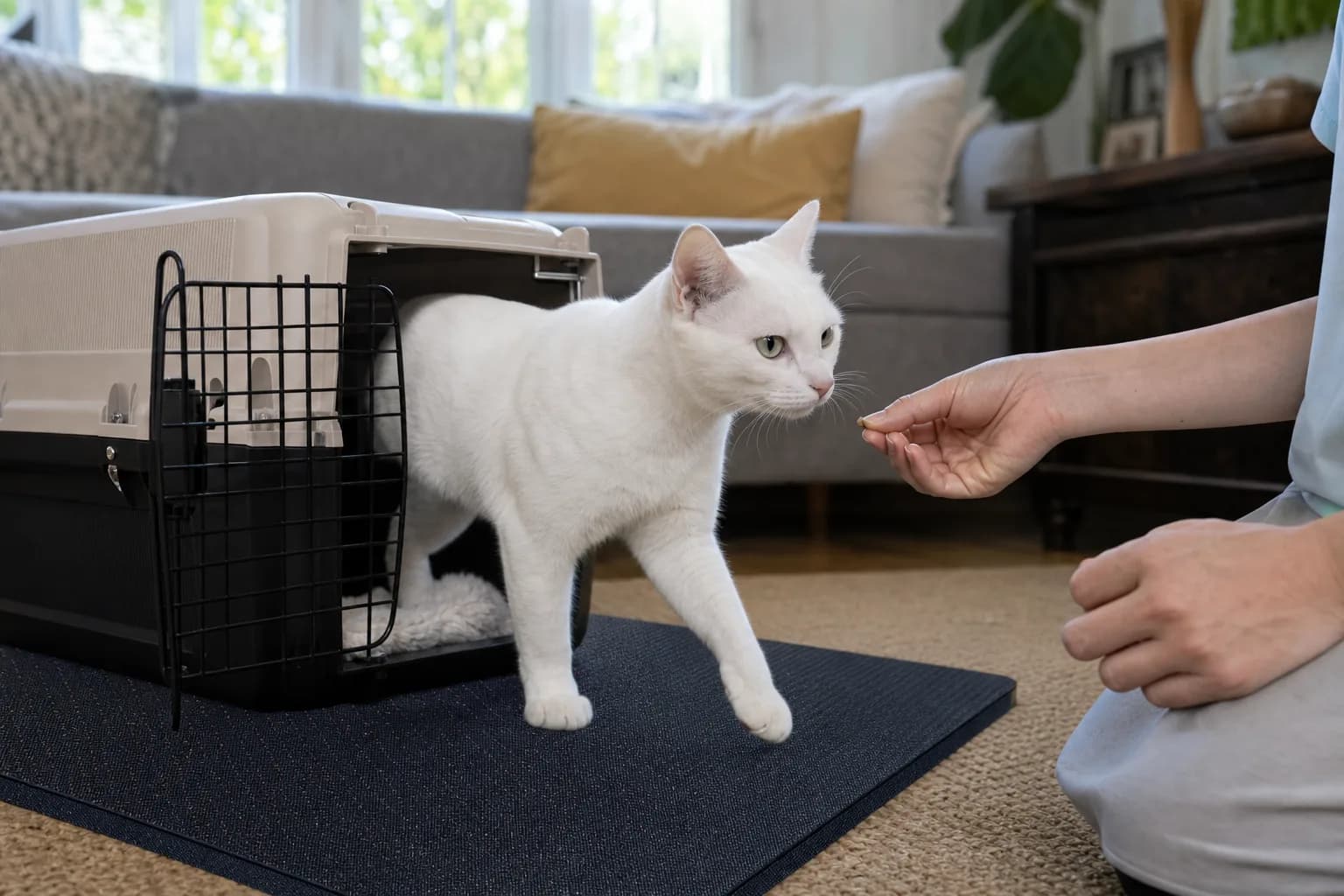
Leave the carrier open as ordinary furniture with washable bedding. Feed treats near it and occasionally inside. Practice closing the door for a second, then opening it before distress. A carrier that opens from the top or comes apart can help a veterinary team examine a worried cat with less force. The Petmate two-door top-load kennel is one carrier format to compare after checking the cat’s standing dimensions, weight limit, secure closures, and travel method.
Choose a consistent cue before touching a deaf or partly deaf cat. A floor vibration, light flick on a nearby wall, or hand signal can announce your approach. Pair it with a reward often enough that the cue predicts safety rather than surprise.
Track trends without becoming the veterinarian
A monthly weight on the same accurate scale can reveal direction, but one number does not diagnose a cause. Record appetite, water intake changes, stool and urine pattern, play, jumping, grooming, and social behavior in simple terms. Contact the clinic when a change is meaningful or persistent.
Photographs and video can help document an intermittent gait, head movement, cough, or episode, provided recording does not delay urgent care. Note the time, duration, context, and recovery. Do not provoke a symptom for the camera.
Keep medications in their original labeled containers and follow the prescribing veterinarian’s instructions. Never give a human pain reliever or leftover medication to a cat. Cats metabolize many drugs differently, and some common household medicines are dangerous.
Caring for an adult cat over time
Young adult cats can appear unchanged for years, which makes routine visits easy to postpone. Yet dental disease, weight drift, behavior change, and subtle chronic problems can develop before an owner sees an obvious crisis. The appropriate visit interval depends on the individual, but “seems healthy” is not a substitute for an examination.
Review the food portion when body condition changes, activity falls, or the diet changes. Treats count toward intake, including training rewards and dental products. A complete and balanced food should provide the nutritional foundation unless the veterinarian recommends a therapeutic plan.
Indoor life reduces traffic, fighting, and some infectious and parasite exposures, but it does not eliminate veterinary needs. Indoor cats can have dental disease, obesity, urinary problems, kidney disease, endocrine disease, cancer, arthritis, and acquired hearing loss. Parasite risk also depends on other pets, insects, travel, prey, and region.
Make the home support healthy movement
Offer stable climbing routes with more than one way down. Place scratchers near resting and activity areas. Use play that lets the cat stalk, chase, catch, and then settle. For a deaf cat, begin within view so a suddenly moving toy does not startle from behind. The Necoichi wall scratcher is one option to place near a resting or activity area after confirming secure mounting and a height that allows a full stretch.
Food puzzles can add activity, but they should not prevent a cat from eating enough or force painful movement. Start easy, watch the cat succeed, and keep an ordinary bowl available when health, age, or frustration makes the puzzle a poor fit.
Litter boxes should be large, accessible, clean, and distributed so another pet cannot block the route. As a cat ages, a low entry can protect access without removing the familiar box location.
Senior Khao Manee care
There is no evidence-based birthday at which every Khao Manee becomes senior. Life-stage guidelines are frameworks, and biological aging varies. What matters is recognizing trends in weight, muscle, mobility, senses, teeth, kidneys, thyroid, blood pressure, cognition, and behavior.
Older cats may sleep more yet should still have comfortable movement, interest, grooming, appetite, social choice, and litter access. Do not dismiss hiding, irritability, missed jumps, matting, house soiling, or nighttime calling as “just age.” Pain, sensory change, endocrine disease, kidney disease, dental problems, cognitive change, and environmental stress can overlap.
Ask the veterinarian how often the cat should be examined and which screening is appropriate. Blood and urine testing, blood pressure, thyroid evaluation, dental assessment, and other diagnostics are individualized. A normal result is useful baseline information, not a guarantee until the next visit.
Adapt the home before a crisis
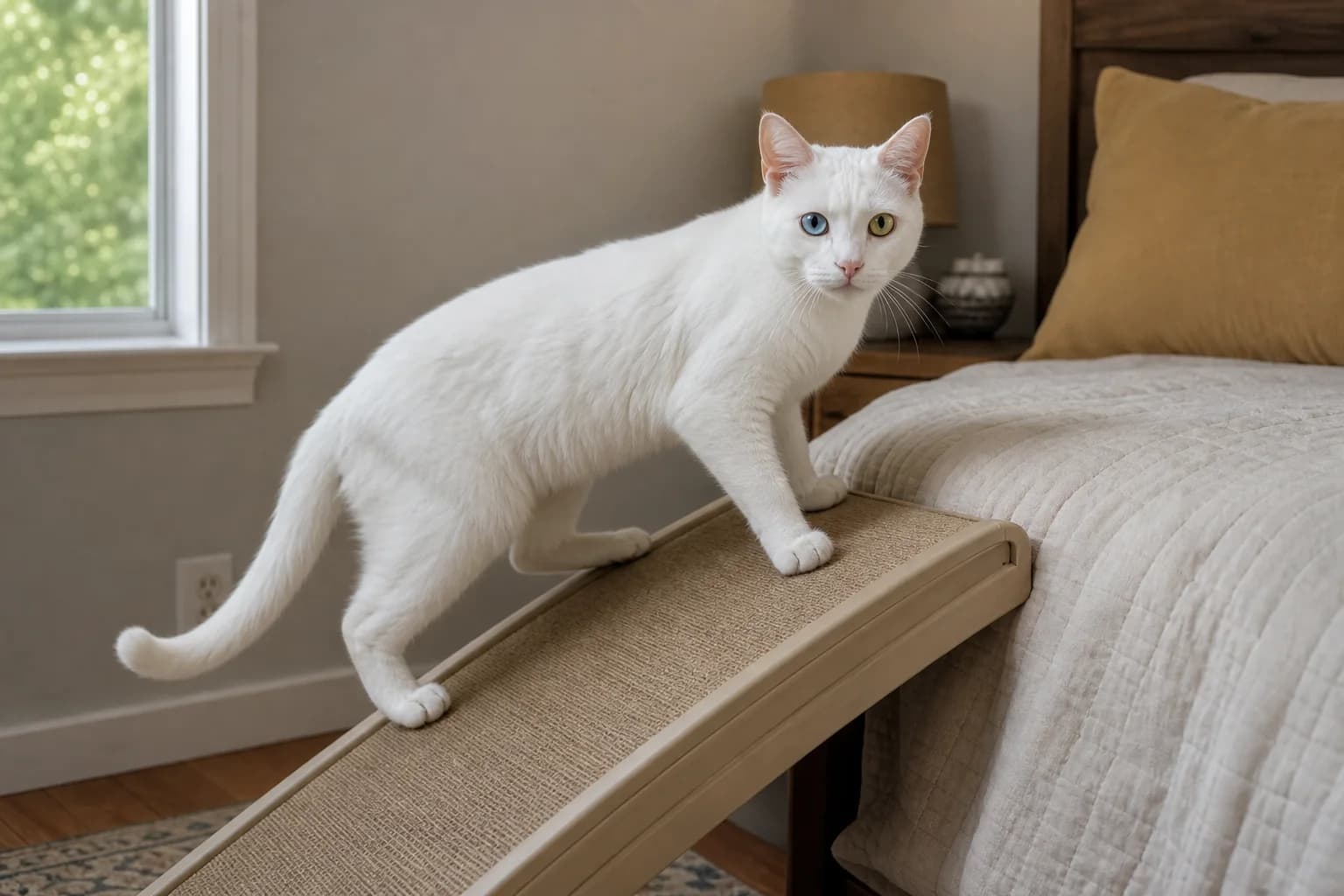
Add steps or ramps to favored furniture if jumping becomes difficult. Use nonslip runners on slick floors. Keep food, water, litter, and beds accessible without stairs, but preserve gentle movement rather than placing everything in one cramped spot.
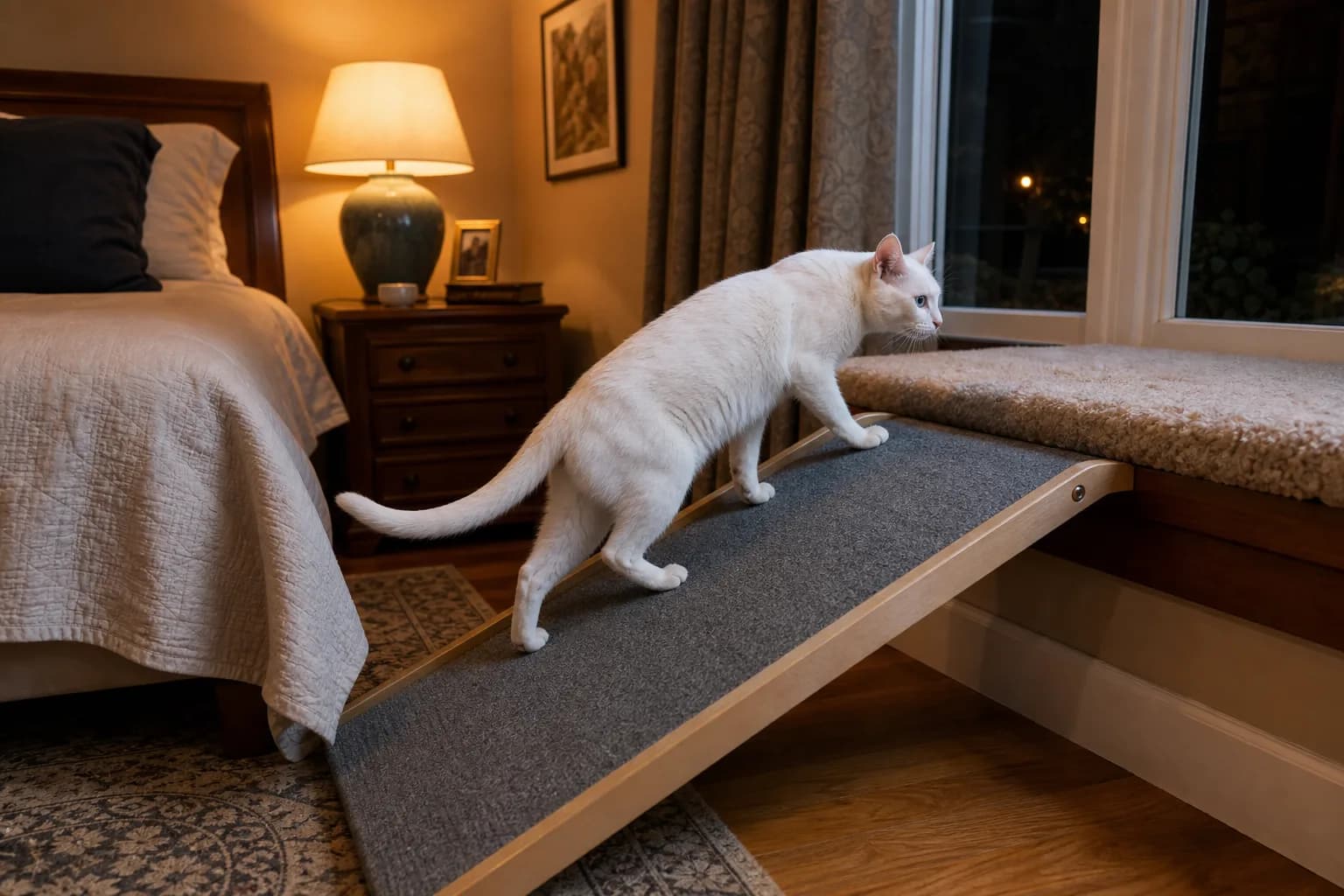
For a cat with hearing or vision change, keep furniture and resources predictable. Announce approach with the established cue. Add a night-light near litter routes if vision is reduced. Supervise outdoor enclosure time and check gates every time.
Warm, padded beds can help comfort, but heating products need strict temperature and cord safety. Choose a pet-designed low-temperature product only if the cat can move away freely, inspect it often, and follow the manufacturer and veterinarian’s guidance.
Planning for uncertainty
No preventive plan can eliminate disease or promise a long life. It can make care more deliberate. Decide who can transport the cat in an emergency, which clinic provides after-hours care, how records will be shared, and how veterinary costs will be handled.
Insurance is easiest to evaluate before major conditions are documented, but coverage, exclusions, waiting periods, deductibles, and reimbursement differ. A dedicated savings reserve is another approach. Some households use both. Choose the method that makes timely care more likely rather than the one with the most reassuring advertisement.
Discuss quality of life before a crisis, especially for an older or chronically ill cat. Your veterinarian can help identify the activities and comforts that matter to that individual, track change, and explain options when burdens outweigh benefits. This conversation is about planning and compassion, not predicting a date.
Identification is not a health test
A white domestic shorthair can share pigmentation-linked hearing risk with a Khao Manee, and a registered Khao Manee can hear normally. Breed identity and hearing status are separate questions.
Likewise, an identification app cannot assess hearing, and a physical resemblance cannot diagnose disease. Petful’s Khao Manee vs. white cat guide explains how to evaluate ancestry claims without turning appearance into proof.
If the cat has no pedigree, that uncertainty does not change the care priorities. Discuss hearing if behavior or pigmentation raises the question, establish routine prevention, and respond to the individual animal.
Start with the Khao Manee breed guide
Health is one part of fit. Khao Manees are commonly described as active, social, intelligent cats that need daily interaction and enrichment. Their short coat is easy to brush, but their household needs are not minimal.
Read Petful’s Khao Manee cat profile for temperament, size, grooming, history, and home fit. A suitable environment supports physical health through safe activity, low-stress veterinary handling, good litter-box access, social choice, and predictable routines.
Khao Manee health FAQs
Frequently Asked Questions
There is too little breed-specific veterinary research to name a reliable Khao Manee disorder prevalence. White pigmentation makes congenital sensorineural deafness the focused concern, but published BAER studies involved other purebred white-cat populations, not a Khao Manee cohort. Individual cats can also develop routine feline problems involving teeth, weight, kidneys, thyroid, joints, infections, cancer, or acquired ear disease, so preventive veterinary care matters.
TICA and several breed profiles give a 10-to-12-year estimate, but no cited Khao Manee life table or longitudinal cohort establishes that as a measured breed average or maximum. General UK veterinary studies show wide variation among cats and breeds. Use the registry estimate for broad planning, then focus on indoor safety, healthy body and muscle condition, dental care, prevention, and early assessment of change.
No. Not every Khao Manee, white cat, blue-eyed white cat, or odd-eyed cat is deaf. Blue irises were associated with higher prevalence in one studied purebred white-kitten population, while another smaller study did not find a significant association. Neither study established a Khao Manee rate. A BAER test can assess each ear and identify one-sided hearing loss that home observation may miss.
A brainstem auditory evoked response, or BAER, test records electrical activity along the hearing pathway after controlled sound stimulation. It can assess each ear separately and identify one-sided hearing loss that ordinary home observation may miss. A veterinarian or referral clinic decides when testing is appropriate and how the cat should be prepared. Request the written result for each ear. BAER evaluates hearing response, but it does not replace an examination for ear pain, inflammation, balance changes, or acquired disease.
Arrange a veterinary examination if a cat stops responding to familiar sounds, has trouble locating sound, startles more often, scratches or shakes the head, develops ear odor or discharge, or vocalizes differently. Seek prompt care for a sudden hearing change, severe ear pain, head tilt and balance loss, falling, rapid involuntary eye movement, repeated vomiting with dizziness, collapse, or other acute neurologic signs. Do not put cleaners, oils, peroxide, or unapproved drops into a painful ear before the eardrum is assessed.