
Petful is reader supported. As an affiliate of platforms like Amazon and Chewy, we may earn a commission when you buy through links on this page. There is no extra cost to you.
Ask ten cat owners whether males or females are more affectionate and you will get ten confident answers, about half of them contradicting the other half. The differences between male and female cats are real enough to be worth understanding, but they are smaller, less reliable, and far more tangled up with other factors than almost anyone admits.
This guide separates what the research actually supports from what everyone repeats. It covers what affection looks like in cats when you stop using the word as a catch-all, the surprising role coat color plays in the whole belief, and the two things that genuinely change a cat’s behavior more than sex ever does.
If you are choosing a cat, the short version is that sex belongs near the bottom of your list. The rest of this explains why, and what belongs at the top instead.
- 1Males have a mild reputation for openly seeking contact; females more often show affection through proximity rather than contact. Both patterns are averages with huge individual overlap.
- 2Neutering or spaying changes behavior more than sex does, flattening most of the differences owners notice.
- 3Early socialization, generally put at roughly 2 to 7 weeks of age, shapes adult friendliness in ways sex does not.
- 4Part of the “males are friendlier” belief may be a coat color belief, because about 80 percent of orange cats are male and calicos are almost all female.
- 5A sudden change in affection in either direction is a health signal first and a personality change second.

Don’t Guess When It Comes To Your Pet’s Care
Sign up for expert-backed reviews and safety alerts all in one place.
Are male or female cats more affectionate?
The direct answer, before any qualifying: male and female cats differ far less in affection than the question assumes. On average, neutered male cats are slightly more likely to seek out open physical contact, meaning lap-sitting, following you room to room and greeting visitors at the door. Spayed females are slightly more likely to show affection at a small distance, choosing to be in the same room and near you rather than on you. Neither pattern is strong enough to predict any individual cat, and the overlap between the two is far larger than the gap.
So are male cats more affectionate than females? Slightly more demonstrative on average is as far as the evidence goes, and the evidence is thinner than the confidence around it. González-Ramírez and Landero-Hernández (2022), surveying 211 cat owners in Mexico for the journal Animals, found significant sex differences in how owners rated their cats on being aloof, bold, friendly, intolerant and trainable, and male cats scored higher on emotional closeness (Z = 2.288, p = 0.022). Tellingly, the same study found no significant sex difference at all on the cat-owner interaction subscale. That is a real result, and it is also owner perception rather than observed behavior, from a small single-country sample. What survives is a modest average difference in how affection gets expressed, not in how much of it exists.
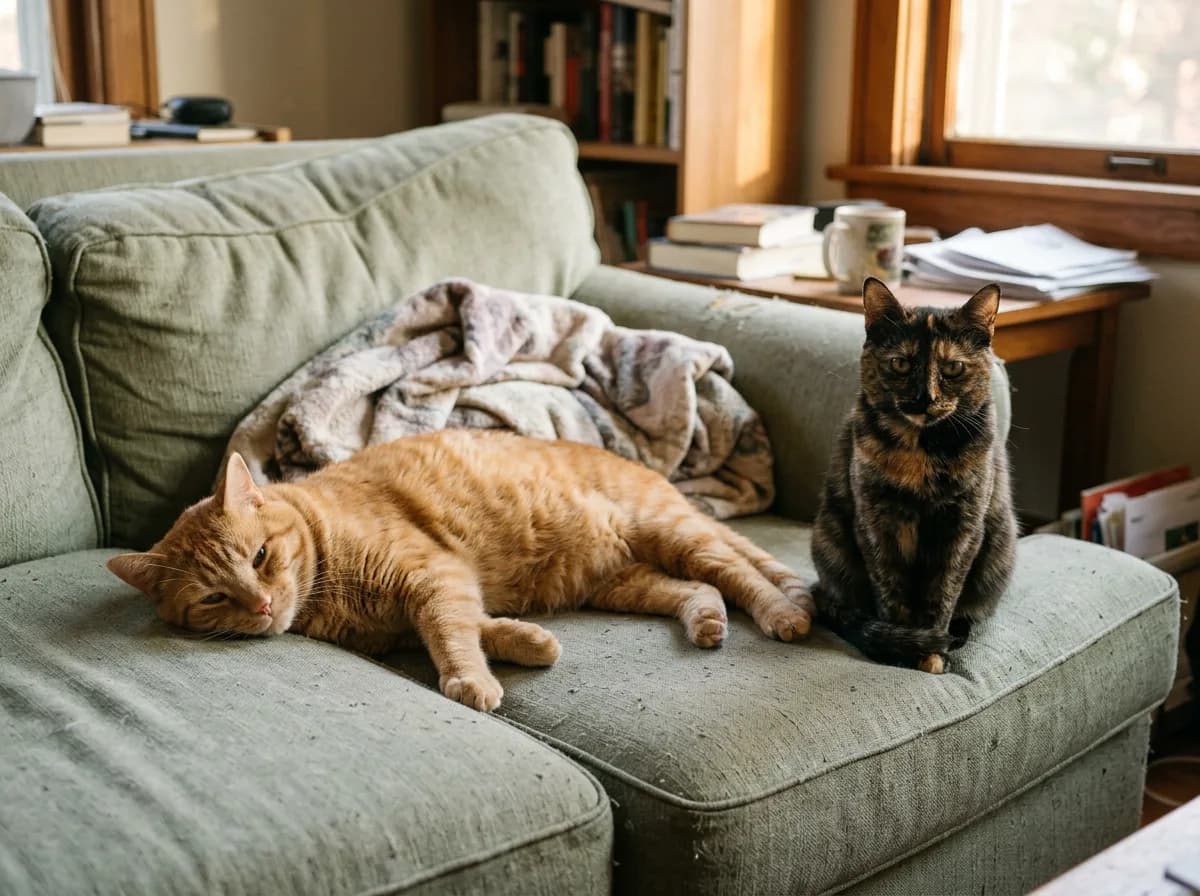
Individual personality does most of the work here. A cat’s temperament is shaped by genetics, by what happened in its first two months, and by how its current home treats it. Sex is one input among several, and it is not the loudest one. The UK charity Cats Protection reaches the same conclusion in its own guidance for people choosing between a male and a female cat.
Male vs female cats: what the evidence actually supports
| Trait | Male (neutered) | Female (spayed) | How strong is the evidence? |
|---|---|---|---|
| Seeks physical contact | Slightly more often | Slightly less often | Weak. Owner-reported, large overlap |
| Affection at a distance | Less typical | More typical | Weak. Owner-reported |
| Urine marking | Much more common | Less common but does occur | Strong and consistent |
| Roaming | More, and further, if unneutered | Less | Strong |
| Territorial aggression to other cats | Higher when unneutered | Higher around kittens | Moderate |
| Body size | Larger on average | Smaller on average | Strong |
| Effect of neuter or spay | Large. Reduces marking, roaming, fighting | Large. Ends heat cycles and related vocalizing | Strong |
Notice which rows carry the strong evidence. The reliable differences between male and female cats are about hormones and territory, not about love. The affection rows are the weak ones, and they are the rows everybody argues about.
What affection actually looks like in cats
Part of the reason this question never resolves is that “affectionate” is a vague trait label rather than a description of anything. It gets used for at least six different behaviors that have separate causes. Swap the label for observable affection markers you can actually count, and the picture sharpens immediately. These are the markers worth watching for, and together they are the closest thing there is to “I love you” in cat language.
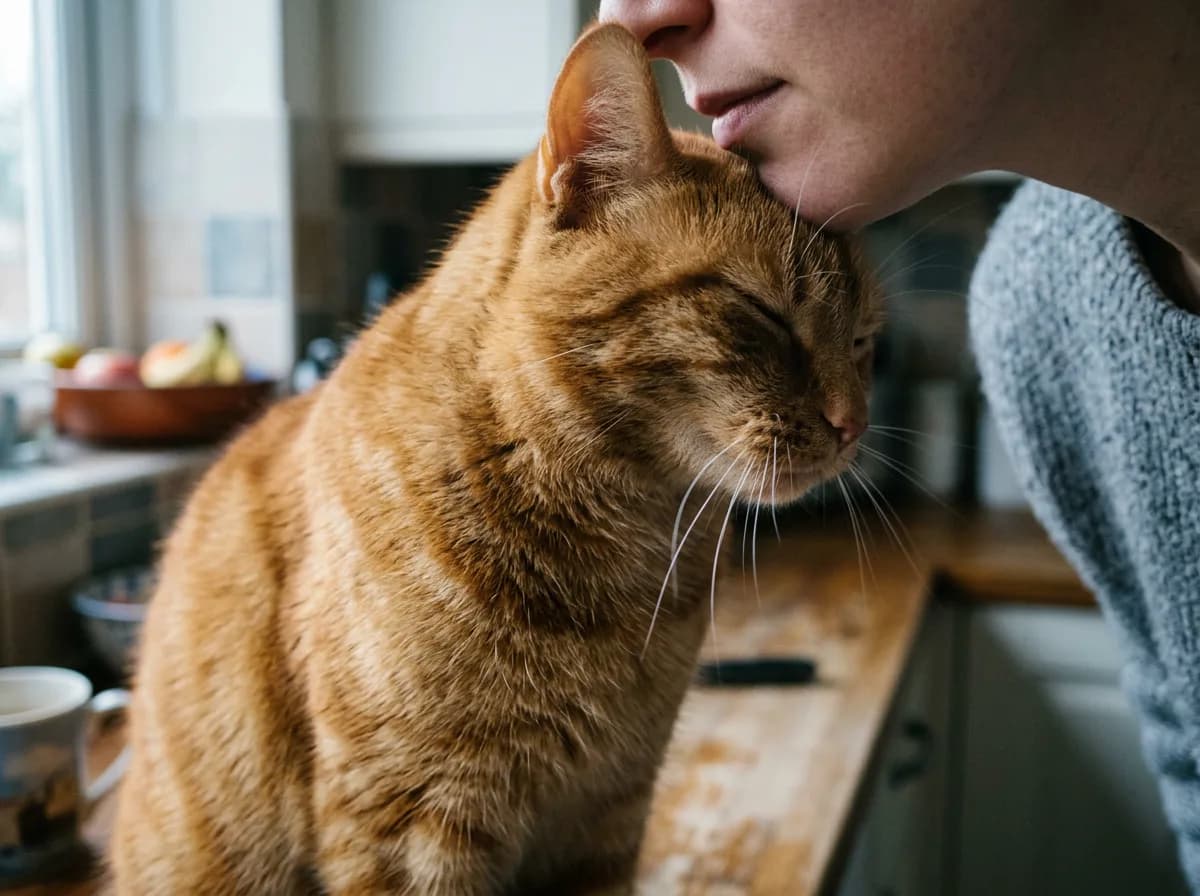
- Head bunting, where a cat presses its forehead into you. This deposits scent from glands on the face and is one of the most reliable affiliative signals a cat gives.
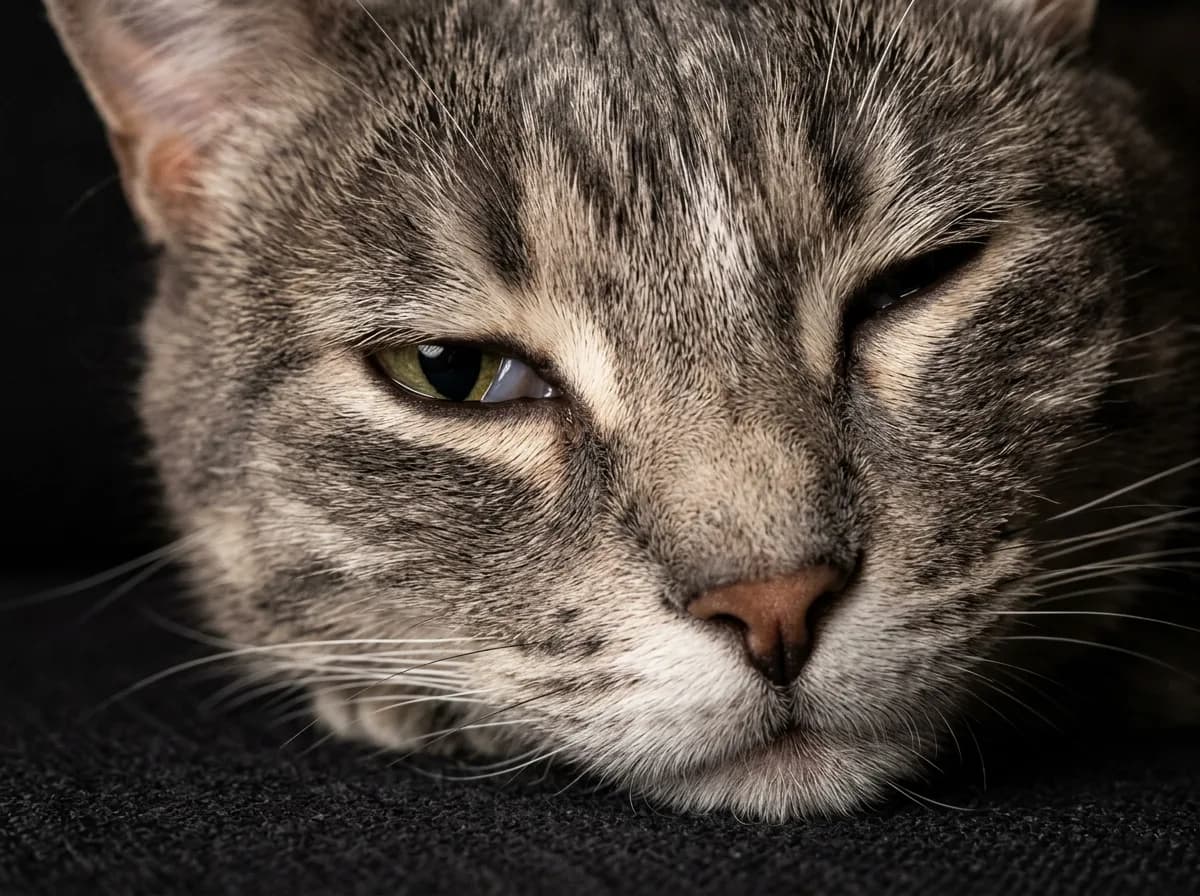
- The slow blink, a deliberate, unhurried closing and opening of the eyes. It signals that a cat is relaxed enough near you to stop watching, and cats will return it if you offer it first.
- Allogrooming, licking your hair or skin, which cats otherwise reserve for cats they consider family.
- Proximity seeking, choosing to sit in the same room without touching. This is the marker owners of female cats most often miss entirely, and it costs nothing to check: just notice which room your cat is in when you move around the house.
- Greeting behavior, coming to the door with the tail held upright. The upright tail is a friendly-intent signal used between cats too.
- Kneading and purring while in contact, usually a leftover kittenhood comfort behavior.
Score your own cat across those six rather than asking whether it is “affectionate”, and the male-versus-female question mostly dissolves. Plenty of female cats score high on proximity seeking and low on lap-sitting, which reads as aloof if lap-sitting is the only thing you are counting.

A soupy, lickable bisque treat that tempts a cat who has gone off solid food. The high-moisture, aromatic texture is easy to lap up and hard for a picky or recovering cat to resist, and it sneaks in extra hydration.
Petful may earn a commission when you click through to Chewy, at no extra cost to you.
If you want to build more of these behaviors rather than just measure them, lickable treats are the most reliable tool, because they create a repeated, positive, close-contact moment that the cat chooses to approach. Hand-feeding one a day does more for a reserved cat than any amount of picking it up. An interactive wand toy builds the same trust from the play direction, giving a cautious cat a reason to come to you on its own terms. Our guide to the signs your cat loves you goes deeper on reading the whole signal set.
Which cat is cuddlier, male or female?
Neutered males, slightly, if by cuddly you mean actively climbing onto a person. This is the one place the stereotype has some support, and it lines up with the higher emotional-closeness ratings owners gave male cats in the 2022 Animals study above. The effect is small: it shifts the odds, it does not decide the outcome, and a reserved male cat is completely unremarkable.
A caution worth stating: how cuddly a cat is with you likely says more about early socialization than about which sex it happens to be. The socialization window is generally put at roughly two to seven weeks of age, and kittens gently handled by several different people during that period tend to stay more comfortable with human contact afterwards. It is the reason two kittens from the same litter can grow into completely different cats. A cat that missed that window can still bond deeply, it just takes longer and asks for more patience.

Are girl cats as cuddly as boy cats?
Yes, girl cats are as cuddly as boy cats, they are just more likely to set the terms of it. Girl cats tend to initiate contact themselves, stay for a shorter stretch, and come back more often, where boy cats more often settle in and stay put for an hour. An owner counting only lap minutes will badly underestimate a girl cat that follows them from room to room all day and sleeps against their legs every night.
If your girl cat sits near you rather than on you, that is not a lesser bond. It is the same bond expressed in the pattern that suits her. In free-living cat colonies, females organize the social structure and manage their own associations closely, which is at least a plausible backdrop to the pattern owners describe at home. Our piece on the female social hierarchy in cat colonies covers where that instinct comes from.
Clingy is not the same as affectionate
This distinction is missing from every page that currently ranks for this question, and it matters considerably more than the male-versus-female answer does. A clingy cat is not simply a very affectionate cat that has been turned up louder. Clinginess is proximity seeking the cat cannot regulate, and it frequently carries distress with it rather than contentment. Treating the two as the same thing is how a welfare problem gets mistaken for a personality quirk and left untreated for months.
Affection looks relaxed: loose body, slow blink, the cat leaves and comes back on its own. Clinginess looks tense: following you to the bathroom, vocalizing when you leave the room, distress when you pick up your keys, sometimes soiling outside the litter box while you are out. That second pattern can be separation related anxiety, and it is a welfare issue rather than a personality trait.
On which sex is clingier there is no good evidence either way, and in practice a clingy cat usually has a more obvious explanation than its sex. Being the only cat in the home, having been weaned very early, and a recent change in the household all come up far more often than male or female does. If clinginess appeared suddenly in a cat that was previously independent, treat it as a reason for a vet visit before you treat it as a compliment, because sudden proximity seeking is one of the ways cats signal that something hurts.
A quick way to tell them apart
- Watch what happens when the cat is near you and you do nothing. A relaxed cat settles, grooms, or dozes. A cat that stays alert, keeps repositioning and tracks your movements is seeking reassurance rather than enjoying your company.
The coat color question: is it really about sex?
Here is the part almost nobody raises. Two of the most recognizable cat colors are strongly sex-linked, which means a belief about sex and a belief about color are very hard to tell apart.
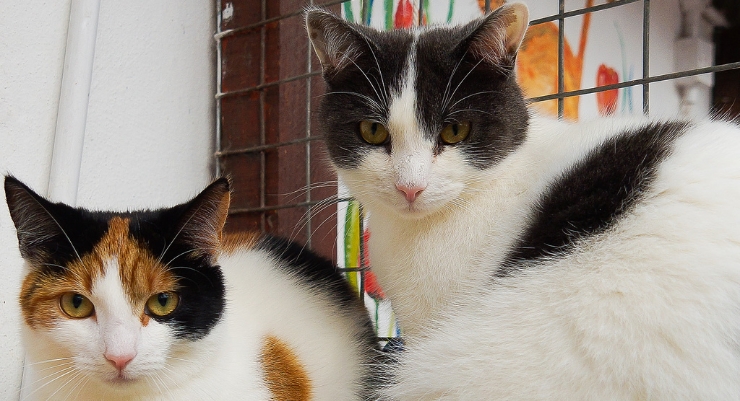
The orange gene sits on the X chromosome. A male needs only one copy to be orange, while a female needs two, so roughly 80 percent of orange tabby cats are male. Calico and tortoiseshell cats need two X chromosomes to show their pattern, so they are almost entirely female. If you have ever noticed that the orange tabby cats you meet seem friendly and the tortoiseshell cats seem to have strong opinions, you have noticed something about coat color that is also, unavoidably, something about sex.
- González-Ramírez and Landero-Hernández (2022), published in Animals, surveyed 211 cat owners in Mexico and found orange cats scored highest for being friendly, calm and trainable, while tricolor cats scored highest for stubbornness.
- Crucially, those authors flagged the problem themselves. Color and sex were significantly associated in their sample (X2 = 22.791, p = 0.001), with a predominance of males among orange cats and of females among gray, tricolor and tabby cats. They said plainly that this complicates any interpretation of color effects.
- Stelow, Bain and Kass (2016), in the Journal of Applied Animal Welfare Science, analyzed 1,274 owner surveys and found sex-linked orange females, meaning tortoiseshells, calicos and torbies, along with black-and-white and grey-and-white cats, were reported as more frequently aggressive toward people.
Put those together and a genuinely uncomfortable possibility appears: some of the “males are friendlier” belief may be an orange-cat belief in disguise, and some of the “females are difficult” belief may be a tortoiseshell belief. Both studies rest on owner perception rather than observed behavior, and 211 owners in one country is a small sample, so this is a strong hypothesis rather than a settled finding.
It is still the most interesting thing on this topic, and it is a good reason to be suspicious of your own read on a cat you have only just met. Our guides to orange tabby genetics and why calico cats are almost always female explain the inheritance in full.
How neutering and spaying change personality
This is the factor that actually moves the needle, and it moves it further than sex does. Most of the behavior people attribute to male cats is really the behavior of unneutered male cats, and it largely disappears after the procedure.
In males, neutering sharply reduces urine marking, roaming and fighting with other cats. The stereotype of the placid, sociable, lap-seeking tomcat is really a description of a neutered male. In females, spaying ends heat cycles, and with them the loud, restless, unusually demanding behavior that unspayed females show every few weeks during breeding season. A neutered male cat vs female comparison is much narrower than an intact comparison.
Cats reach sexual maturity from around four months old, which is earlier than most people expect, and it is why cat spay and neuter timing is usually recommended before that point. Ask your own vet about the right timing for your cat, since it depends on breed, weight and health.

A vet-recommended probiotic supplement (B. longum BL999) that helps cats manage anxious behaviors and stay calm during stressful events and routine changes.
Petful may earn a commission when you click through to Chewy, at no extra cost to you.
Behavior does not always settle the moment the hormones do. If a cat stays wound up after neutering, or is adjusting to a new home, a vet-formulated calming supplement can take the edge off while the routine does the real work. It is a support, not a fix, and it is worth clearing with your vet if your cat takes anything else.
Spraying and territorial marking: the clearest real difference
If you want a difference between the sexes that is actually reliable, this is it. Territorial marking is far more common in males, particularly unneutered males, and it is the single most consistent behavioral split between male and female cats.
Cat spraying is not the same as urinating. A spraying cat stands, backs up to a vertical surface, holds its tail upright and quivering, and delivers a small amount of urine at nose height. Urinating happens squatting, on a horizontal surface, in larger volume. Owners who confuse the two often treat a litter box problem as a marking problem, or the reverse, and get nowhere.
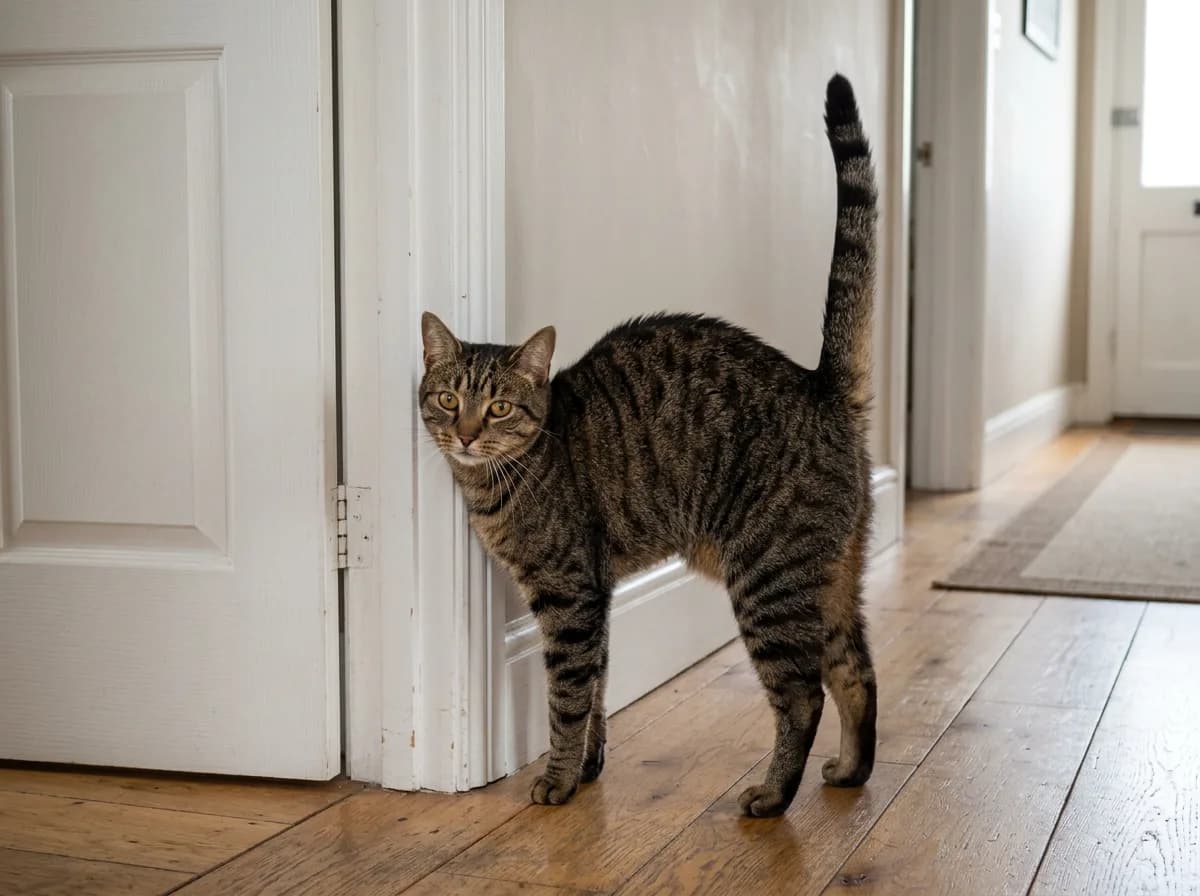
Do female cats spray? Yes, and this is where the internet consistently misleads people. Females spray less often than males, but they absolutely do it, most commonly when they are unspayed, when a new cat has appeared nearby, or when something has changed in the household. Treating spraying as a male-only behavior means missing it entirely in a female cat.
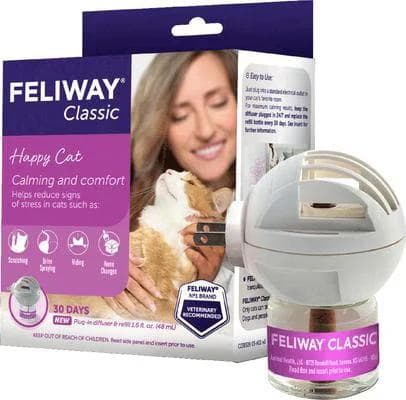
A vet-recommended plug-in diffuser that releases the drug-free Feliway Classic pheromone to reduce stress signs in cats like scratching, hiding, and urine marking. 30-day starter kit.
Petful may earn a commission when you click through to Chewy, at no extra cost to you.
The response to marking is territorial, not disciplinary. Punishment reliably makes it worse. What helps is a synthetic pheromone diffuser in the room being marked, more vertical space and hiding spots, and thorough cleaning with an enzymatic odor eliminator rather than an ammonia-based cleaner, which smells like urine to a cat and invites a repeat.
- One litter box per cat plus one spare, in separate locations rather than lined up in a row. In a multi-cat home a multi-cat formula litter handles the extra odor load.
- Unscented litter. Most cats accept a fine-grain unscented clumping litter, and strong fragrance puts many cats off the box entirely, which is the opposite of what you want when marking is already a problem.
- A tall cat tree or a wall scratcher, because vertical territory reduces the pressure that drives marking.
- Pheromone treats during a known stressor such as building work or a house move.
Rule out a medical cause first
- Urinating outside the box, straining, or blood in the urine is a veterinary problem until proven otherwise, and in male cats a urinary blockage is a genuine emergency. Confirm the cat is healthy before treating the behavior as marking.
Why your cat’s affection suddenly changed
A cat that becomes noticeably more affectionate, or noticeably less, has usually told you something. Owners search why is my cat suddenly so affectionate far more often than they search anything about sex differences, and the honest answer is that a sudden shift is worth paying attention to rather than simply enjoying.
- Pain or illness. Some cats seek contact and warmth when they feel unwell; others withdraw. Either direction can be the first sign.
- Heat cycles in an unspayed female, which produce dramatic, cyclical rubbing, vocalizing and demanding behavior every few weeks.
- A change at home: a new pet, a new baby, a house move, a change in your working hours, or building work nearby.
- Age. Older cats often become more openly affectionate as they slow down, and cognitive decline can also cause night-time clinginess and vocalizing.
- Cold weather, which is the most mundane and most common explanation of all.

Color-changing crystal litter that flags pH shifts in your cat’s urine, an early warning sign of UTIs, kidney issues, and more.
Petful may earn a commission when you click through to Chewy, at no extra cost to you.
The litter box is often where illness shows itself first, so it is worth watching closely when behavior changes. A color-changing monitoring litter can prompt you to look sooner, though these products flag possible issues rather than detect them reliably and they do produce false alarms. Nothing you can buy substitutes for a vet, and none of it should ever delay a call.
The 3-3-3 rule, and why a new cat is not cuddly yet
If you have just adopted and your cat is hiding under the bed, this is the answer you actually need, and no page ranking for the affection question provides it. The 3-3-3 rule is a rough shelter framework for how long a newly adopted cat takes to settle: three days to decompress, three weeks to learn the routine, and three months to feel genuinely at home. Almost every owner who concludes their new cat is unaffectionate is reading it somewhere inside the first three days.
- The first three days: decompression. The cat may hide, refuse food, and want nothing to do with you. This is normal and not a personality reading.
- The first three weeks: settling. The cat learns the routine, starts exploring, and begins showing its real behavior rather than its frightened behavior.
- The first three months: feeling at home. The bond consolidates and the cat you actually adopted becomes fully visible.
The timeline is a guide rather than a law, and plenty of cats run faster or slower. The practical point is that judging affection in week one tells you nothing. Give a new cat a covered bed or hut to retreat into, put a quiet water fountain somewhere it does not have to cross open floor to reach, and let it come to you. Cats that are allowed to hide settle faster than cats that are pulled out.
Which cat breeds are the clingiest?
Breed shifts the odds much more than sex does. If you want a cat that reliably seeks contact, choosing the breed is a far better lever than choosing the sex, and the most affectionate cat breeds are fairly consistent across sources: Ragdoll, Birman, Burmese, Siamese, Maine Coon and Sphynx all have strong reputations for wanting human company.
The Ragdoll is the usual answer to the clingiest question, since the breed is defined partly by going limp when picked up and following people around. Bear in mind that breed reputations describe averages within a breed, exactly like sex does, and an individual Ragdoll can still be standoffish. Our full guide to the Ragdoll personality and why it is called the puppy cat covers what affectionate cat breeds actually mean in daily life.
Breed shifts the odds, it does not guarantee anything
- Every breed reputation is an average with the same wide spread as the male-versus-female averages. If you need a cat that definitely wants contact, adopt an adult whose personality is already visible rather than betting on a kitten of the right breed.
One practical note on the clingiest breeds: most of them are also the highest-maintenance coats. Ragdolls, Birmans and Maine Coons are semi-longhaired, so a cat that wants to be on you constantly is also a cat you will be brushing several times a week. A deshedding tool and a set of precision nail clippers are worth owning before the cat arrives rather than after.
If you are working from a shelter rather than a breeder, most cats will be of no particular breed, which puts you back to assessing the individual. That is not a downgrade. It is just a different method.
Are cats happier with a second cat?
Not automatically. Whether cats are happier with a second cat depends almost entirely on the individual cat, and the popular assumption that a lonely cat needs a friend causes a great deal of avoidable stress. Cats are facultatively social, meaning they can live in groups but do not require one to be content. Plenty of adult cats rehomed as singles are genuinely happier staying that way, and forcing a second cat on them makes the household worse rather than better.
Kittens raised together and cats bonded in a shelter usually do better in pairs. An adult cat that has lived alone for years is the least likely to welcome company. Sex combinations matter less than people expect once both cats are neutered, and slow introductions matter far more than any pairing rule.
Watch for allogrooming and shared sleeping as the signs it has genuinely worked. Cats that merely tolerate each other will use the same room but keep a consistent gap, and that gap is worth respecting rather than closing. Giving each cat its own retreat and a separate scratching surface lowers the competition that turns tolerance into conflict.
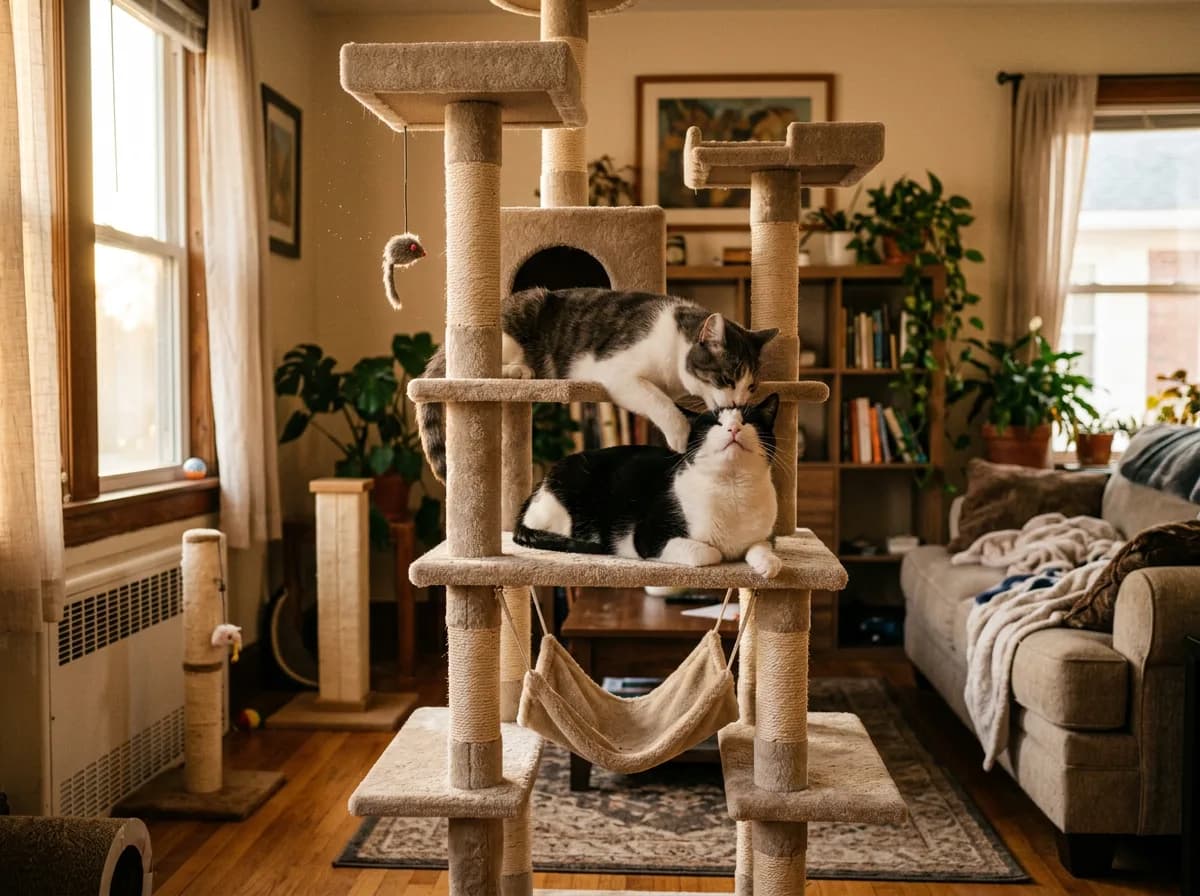

63-inch multi-level cat tree with scratch posts, hammock, plush perches, and dangling toys. Vertical territory is non-negotiable for high-energy climbing breeds like the Bengal.
Petful may earn a commission when you click through to Chewy, at no extra cost to you.
Whether you keep one cat or several, vertical territory does more for feline stress than floor space. A multi-level cat tree lets cats time-share a room by height instead of competing for it, which is why a crowded home often calms down the moment you add height rather than square footage. In multi-cat homes where one cat bolts the other’s food, or one is on a prescription diet, a microchip-activated feeder removes the flashpoint entirely.
Should you get a male or a female cat?
It is not better to have a male or female cat as a general rule, and any source that tells you otherwise is selling a stereotype. Once a cat is neutered or spayed, sex is one of the weakest predictors available of how the relationship will go.
A male cat vs female cat decision is worth making on the practical differences rather than the personality ones. Males grow larger, which matters for carriers, beds and food budget. Unneutered males mark and roam. Unspayed females cycle loudly and can become pregnant from around four months old. All of that is settled by neutering.
What to weigh instead, roughly in order of how much it will actually affect your daily life:
- The individual cat in front of you. Ask the shelter how it behaves in a quiet room, not just in the pen.
- Age. An adult cat shows you its real personality immediately; a kitten is a lottery you will not settle for a year.
- Early handling history, if anyone can tell you. It outperforms almost everything else.
- Breed, if you are choosing one, since it shifts the odds more than sex.
- Whether the cat already lives happily with other cats, if you have cats at home.
A practical tip from shelter staff that is worth more than any of the above: ask to sit in a quiet room with the cat and use a wand toy rather than your hands. A cat that engages with a moving toy and then chooses to come closer is telling you far more than its sex ever will. Bring a secure carrier to the visit, since a calm first journey home genuinely affects those first three days.
If you want the broader picture of feline temperament beyond the male and female split, our guide to the main cat personality types covers how behaviorists group cats by temperament rather than by sex.
When a change in affection means a vet visit
Cats hide illness well, and a shift in how a cat relates to you is often the earliest visible sign. This is the part of the affection question that actually carries risk, and it is worth knowing which changes justify a call.
- Sudden clinginess or sudden withdrawal in a cat whose behavior was previously stable.
- Hiding more than usual, especially in a cat that normally seeks company.
- Flinching, growling or biting when touched in a spot that never used to bother them, which is pain until proven otherwise.
- Any change in litter box habits, straining, or blood in the urine. In male cats, straining in the box without producing urine can mean a urinary blockage, which is fatal within roughly 24 to 48 hours untreated. Go to an emergency vet immediately rather than waiting for a routine appointment.
- Increased vocalizing at night in an older cat, which can indicate cognitive decline, hyperthyroidism or high blood pressure.
- Reduced grooming, or a coat that suddenly looks greasy and unkempt. A cat that stops grooming itself is usually in pain, overweight to the point of not being able to reach, or unwell. That needs a vet, not a brush.
Routine handling makes all of this easier to spot. A cat that is used to having its paws held for a nail trim and its body checked over is a cat whose changes you will notice early, and a cat that tolerates a vet exam far better when it matters.
Frequently asked questions
Frequently Asked Questions
On average neutered males are slightly more likely to seek open physical contact such as lap-sitting and following you around, while spayed females more often show affection through proximity, choosing to be near you rather than on you. The difference is small, comes from owner-reported surveys rather than measured behavior, and individual personality, early socialization and neuter status all predict affection better than sex does.
Neutered male cats, slightly. This is the one part of the stereotype with reasonable support in owner surveys. The effect only shifts the odds though, and a reserved male or an extremely cuddly female is completely normal. How a cat was handled during its first two months of life predicts cuddliness better than its sex.
There is no reliable evidence that either sex is clingier. Clinginess is better predicted by being a single cat in the household, early weaning, or a recent change at home. It is also worth distinguishing from affection: a relaxed cat that comes and goes is affectionate, while a cat that follows you constantly, vocalizes when you leave and cannot settle may be showing separation related distress that needs a vet or behaviorist.
It is a rough guide to how a newly adopted cat settles. Three days to decompress, when hiding and not eating much is normal. Three weeks to learn the routine and start showing real behavior. Three months to feel fully at home and bond. Judging a new cat’s personality or affection in the first week tells you almost nothing.
Yes. Spraying is much more common in males, especially unneutered males, but female cats do spray, most often when unspayed, when a strange cat appears near the home, or after a change in the household. Spraying is done standing against a vertical surface with the tail upright, which distinguishes it from urinating outside the litter box.
It often makes a cat calmer and easier to live with, which many owners experience as more affectionate. Neutering sharply reduces marking, roaming and fighting in males, and spaying ends the loud restless behavior of heat cycles in females. It changes behavior considerably more than sex differences do.
The slow blink is the closest equivalent, and cats will often return it if you offer it first. Head bunting, licking your skin or hair, kneading, sleeping against you and greeting you with the tail held upright are all affiliative signals cats normally reserve for cats they consider family.
Not automatically. Cats can live socially but do not need to. Kittens raised together and shelter-bonded pairs usually do well together, while an adult cat that has lived alone for years is the least likely to welcome a newcomer. If you do add a cat, a slow introduction over weeks matters far more than choosing a particular sex combination.

T.J. Banks is the author of several books, including Catsong, which received a Merial Human–Animal Bond Award. A contributing editor to laJoie, T.J. also has received writing awards from the Cat Writers’ Association (most recently a Certificate of Excellence in 2019), as well as from ByLine and The Writing Self. Her work has appeared in numerous anthologies, including Chicken Soup for the Single Parent’s Soul and A Cup of Comfort for Women in Love, and T.J. has worked as a stringer for the Associated Press, as an instructor for the Writer’s Digest School and as a columnist.