
New Kitten Checklist — Simplified
Who it’s for
Anyone bringing home a kitten for the first time — or adding a new kitten to an existing household
Day 1 essentials
Litter box, kitten food, carrier, water bowl, and a safe quiet space — these must be in place before pickup day
Biggest mistake
Buying a self-cleaning automatic litter box before your kitten reaches 5 lbs — most are not safe for small kittens
Monthly budget
Budget roughly $50–$100 per month for food and litter after initial setup costs
Best first buy
Pet insurance — get it before your first vet visit so nothing gets flagged as pre-existing
Why it’s worth your scroll
This checklist separates the genuine must-haves from the stuff that looks important but isn’t — and flags the products that can actually harm a young kitten if you buy them too soon.
The moment you say yes to a kitten, you also say yes to an impressive pile of conflicting advice. The pet store has a complete starter kit. A dozen buying guides appear in your search results. Your well-meaning friends all have strong opinions. And somewhere in that noise, the things that actually matter get buried.
That is what this checklist is for. I’ve been setting up homes for kittens and cats for more than half my life now, and I’ve made most of the classic mistakes along the way — the overpriced gear that went untouched, the well-intentioned gadgets that were not actually appropriate for a young kitten, the things I didn’t buy but really should have. This list reflects what actually matters, roughly in the order it matters.
One important note before we get into it: if you have been eyeing an automatic self-cleaning litter box, please read the litter section before you buy anything. It is the single most common — and potentially most dangerous — misstep new kitten owners make, and it is worth knowing upfront why the timing on that purchase matters.
What Makes Kitten Prep Different From Getting an Adult Cat
A new kitten has different physical, nutritional, and safety needs than an adult cat — and some products designed for adult cats are not appropriate, or are actively unsafe, for a kitten under six months. Understanding those differences before you shop saves you money and, in some cases, prevents a genuinely bad situation.
The three biggest areas where kitten prep differs from adult cat prep: litter box setup, food formulation, and equipment that has a minimum size or weight requirement. Adult cats can use top-entry litter boxes, automated self-cleaning units, and high-sided feeders without issues. Young kittens, especially those under 5 lbs, often cannot.
The other thing worth knowing: kittens are sensitive to environmental change. Coming home for the first time is stressful. The goal of your initial setup is not to give them everything all at once — it is to give them a safe, consistent space with the essentials. You can add equipment and complexity as they settle in.
A Few Things to Know Before You Start Shopping
Most kitten checklists send you straight to the product sections. I want to flag two things first that genuinely change what you should buy and when.
💡 Pro Tip
Automatic self-cleaning litter boxes are NOT suitable for young kittens. Most manufacturers — including Whisker, the maker of Litter-Robot — specify a minimum weight of 5 lbs before a cat should use these devices. Small kittens can become trapped in cleaning mechanisms, may not be reliably detected by safety sensors, and can develop lasting litter box aversion if frightened by the movement or noise. A plain open-top box with low entry sides is the correct setup until your kitten reaches at least 5 lbs — typically around 5 to 6 months of age.
The second thing: pet insurance. Most people think of insurance as something to set up after the first vet visit, once the kitten is settled in. That is actually backwards. Anything found at your kitten’s first exam — even a mild heart murmur, a minor digestive issue, or an early abnormality of any kind — can be flagged as a pre-existing condition and excluded from future coverage. Getting insured before that first appointment is one of the most financially protective things you can do for a new kitten.
How We Put This Checklist Together
This guide draws on established veterinary guidelines for kitten development and care, including resources from the Cornell Feline Health Center and the American Association of Feline Practitioners (AAFP). Product recommendations reflect Pawzitivity’s affiliate partner relationships, but we have deliberately excluded products that are not appropriate for young kittens — even where we feature those products extensively elsewhere on the site.
Where a product has a minimum age or weight requirement that affects whether a kitten can safely use it, we say so clearly. That is not a caveat buried in fine print — it is the point.
Your Complete New Kitten Checklist
1. Litter Box Basics
New kittens need a traditional open-top litter box with entry sides no higher than 2 inches — low enough for a small kitten to step over easily. One box per cat plus one extra is the standard recommendation from feline behaviorists. For a single kitten in a one- or two-bedroom home, two boxes placed in different rooms is sufficient.
Litter Box Basics at a Glance
| Supply | What to Know |
| Open-top litter box (low entry) | Sides 2 inches or lower. Plan on one box per cat plus one extra, placed in easy-to-access, low-traffic areas. |
| Unscented clumping litter | Skip scented, silica gel, and crystal litters for young kittens. They tend to groom obsessively (as kittens do), and unscented clay clumping litter is the safest default. |
| Litter scoop with holder | Scoop daily at minimum. Get something sturdy that won’t flex mid-scoop. A holder (wall-mounted or freestanding) keeps it where you’ll actually use it. |
| Litter mat (optional) | Not essential, but it cuts down on tracked litter more than you’d think. Your floors will notice. |
| Covered or top-entry box | Not yet. Wait until your kitten is bigger, more confident, and fully comfortable using an open box. |
| Self-cleaning litter box | Also not yet. Wait until at least 5+ pounds and around 6 months. (And yes, read the Pro Tip before going down that rabbit hole.) |
I have made the mistake of buying hooded litter boxes because they looked tidy and contained. Kittens typically hate them — they want to see their surroundings and have a clear exit route at all times. Open top, low sides, clean daily. That is the whole formula for the first few months.
On litter type: unscented clumping clay is boring, but it works. Fragrance deters many cats from using the box, and silica or crystal litters should be avoided with young kittens. Once your kitten is six months or older and using the box consistently, health-monitoring options like PrettyLitter — which changes color to flag potential health issues — become genuinely useful. Just not yet.
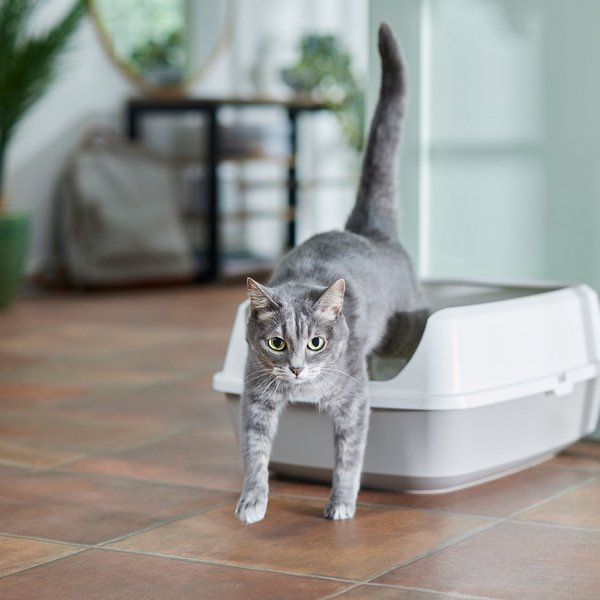
Our Favorite Kitten-Friendly Starter Litter Box: Frisco Open Top Cat Litter Box
I love this one for kittens because it’s relatively low to the ground yet still keeps litter (and spraying) inside thanks to the rim. Plus, it’s budget-friendly, which is a must if you’re planning to switch to an automatic litter box as soon as possible.
Frisco Open Top Cat Litter Box with Rim
This open-top litter box from Frisco by Chewy provides a roomy, private place for cats to do their business. Cats can step in and out of the box easily through the lowered front side, and the removable top rim and open-box design make it easy to scoop the litter or spot clean small messes. It’s made with BPA-free plastic that’s recyclable.
We earn a commission if you make a purchase, at no additional cost to you.
2. Food and Water
Kittens need food formulated specifically for growth — not adult cat food. Look for an AAFCO statement on the packaging indicating the food is complete and balanced for “growth” or “all life stages.” Wet food is strongly recommended as the primary component of a kitten’s diet because it supports hydration and is generally more digestible than dry-only feeding. Plan for three to four small meals per day until around six months of age.
Food and Water at a Glance
| Supply | What to Know |
| Kitten wet food | Look for a named protein like chicken, turkey, or salmon as the first ingredient. It should meet AAFCO standards for growth or all life stages. |
| Kitten dry food (optional) | Fine as a supplement, but wet food should do most of the heavy lifting. Dry-only diets aren’t ideal for young kittens. |
| Shallow, wide food bowls | Deep bowls can irritate whiskers (they will absolutely complain about this in their own way). Wide and shallow is more comfortable and usually means better eating. |
| Fresh water bowl | Keep it wide and shallow, and refresh at least once a day. Place it away from the litter box (they notice, even if we pretend they don’t). |
| Water fountain (optional) | A lot of cats drink more from moving water. Worth introducing at any point. The PetSafe Outlast and PETKIT Eversweet are solid, reliable options. |
| Automatic feeder (optional) | Helpful for scheduled meals if you’re out, but not necessary right away. Introduce it once your kitten has a steady routine. |
If you want to start your kitten on something better than standard kibble from day one, Smalls makes fresh cat food with real named proteins and no mystery ingredients — and they offer formulas appropriate for kittens. A fresh food diet from the start builds eating habits that persist through adulthood.
Smalls | Fresh Human-Grade Cat Food Delivery
Big Pet Food prioritizes profits over cat health and they pack cat food with preservatives and fillers. Smalls believes cats deserve better and uses natural ingredients and added vitamins and minerals in our food. The fresh food come in many delicious flavors and textures.

We earn a commission if you make a purchase, at no additional cost to you.
For water, a wide shallow bowl works perfectly to start. The reason to add a fountain eventually is that cats who drink from moving water tend to drink more overall, which has real long-term benefits for kidney health. The PetSafe Outlast is a solid option that work well for cats of all ages. Not a day-one requirement, but a worthwhile investment to make before they develop a strong preference for your bathroom faucet.
PetSafe Outlast Cat Fountain – Pumpless Water Fountain
The PetSafe® Outlast™ 90 oz Pumpless Pet Fountain uses HydroSpin™ technology to deliver continuous, fresh water without a traditional pump. Designed for durability and easy cleaning, it features an Ion-X™ Filter for pure, great-tasting water. With smart sensors and a quiet motor, it’s built to keep your cat healthy and hydrated with minimal upkeep.

We earn a commission if you make a purchase, at no additional cost to you.
3. A Safe Space to Sleep and Hide
New kittens need a small, quiet room for the first few days — not full run of the house. A bathroom or spare bedroom with their litter box, food, water, and a few comfortable spots to hide allows them to acclimate without becoming overwhelmed. A cat bed and a covered hiding spot are the two most valuable things in this space.
Sleep and Comfort at a Glance
| Supply | What to Know |
| Cat bed or soft washable blanket | Go for something easy to clean. It may be ignored in favor of a cardboard box at first (this is not a failure, just a kitten being a kitten). |
| Covered hiding spot | A simple cardboard box with a small opening works perfectly. Kittens feel safer when they’re enclosed but can still keep an eye on things. |
| Dedicated quiet room setup | Have this ready before pickup day. Keep the litter box, food, water, and hiding spot all in one calm, low-traffic space. |
| Familiar scent item | A blanket or cloth from their previous home can make a big difference. It helps them settle faster (and yes, it smells terrible to you, but that’s kind of the point). |
Here is the truth about kitten sleeping arrangements: they rarely sleep in whatever expensive bed you bought right away. Zoe slept with me when she was a kitten. Alex picked a random spot near a heater. Leia slept in a folded fleece blanket on the corner of the couch for months, and the beautiful sherpa bed I bought her sits next to it, empty and judged. I have no clue where Luke and Lily sleep. They find tucked-away spots that I didn’t even know existed in my house. My advice? Buy the bed anyway — they do sometimes come around. Or they don’t, and at least the cardboard box was free.
The hiding spot matters more than the bed. Kittens who feel like they can disappear when overwhelmed decompress faster than kittens who feel exposed. The goal is not to force interaction — it’s to let them come to you on their own schedule. It usually happens faster than you expect.
My top recommendation: Bedsure Cat Cave
I love this one because it doubles as a play cave. Even when my cats weren’t ready to sleep in a bed they still spent a lot of time running in and out of the hideaway section. Plus, my older cats liked to sit on top and judge the kittens.

We earn a commission if you make a purchase, at no additional cost to you.
4. Scratching Posts and Climbing
Scratching is instinctive and necessary — kittens scratch to stretch muscles, mark territory, and shed old claw sheaths. Providing appropriate scratching surfaces from the first week protects your furniture and establishes good habits before they develop strong preferences. Most kittens use both vertical (sisal rope) and horizontal (flat cardboard) surfaces.
Scratching and Climbing at a Glance
| Supply | What to Know |
| Vertical sisal scratching post | Needs to be tall enough for a full stretch, at least 28 inches for most cats. If it wobbles even a little, it will be rejected immediately. |
| Horizontal cardboard scratcher | A lot of kittens prefer horizontal scratching, especially first thing in the morning. They’re inexpensive, so it’s worth offering both styles. |
| Small cat tree or climber | Gives them vertical space, a safe vantage point, and extra scratching areas. Not essential on day one, but you’ll probably want it within the first month. |
| Furniture deterrent tape (optional) | A temporary fix while they figure things out. The sticky feel discourages scratching on furniture without you having to hover over them constantly. |
The most common scratching mistake is buying a post that is too short or too unstable. A kitten who reaches up on a post that tips over will never go back to it. Tall and sturdy — that is the minimum requirement. If you only buy one, get the vertical sisal post.
Our Top Pick: Frisco 33-in Heavy Duty Sisal Cat Scratching Post
This one hits pretty much all of the key points above. It’s sturdy, just the right height, and affordable (cat scratching posts have gotten weirdly pricey lately).
Frisco 33-in Heavy Duty Sisal Cat Scratching Post
This vertical scratching post tower is great for nuzzling, and it will save your furniture from becoming a favorite scratching spot. A layer of durable, woven sisal covers all four sides to entice kitties to sink their claws right in. The double-layer baseboard adds stability while your kitty exercises their nails.

We earn a commission if you make a purchase, at no additional cost to you.
5. Toys and Enrichment
Young kittens need active, interactive play — not just a pile of toys left on the floor. Wand toys that require your participation build the strongest bonds and provide the most developmentally appropriate stimulation for a kitten. Aim for at least two 10-minute interactive play sessions per day during kittenhood to burn energy and reduce the late-night chaos that new kitten owners know all too well.
Toys and Enrichment at a Glance
| Supply | What to Know |
| Wand or teaser toy | Your most important toy. Movement triggers prey drive, which is what you want. Feather wands, ribbon wands, or something like the Cat Dancer all work well. |
| Small stuffed mice or crinkle balls | Good for solo play between interactive sessions. A handful is enough. You don’t need a toy explosion in your living room. |
| Kicker toy (optional) | Larger toys they can grab and rabbit-kick. Some kittens are obsessed, others pretend they’ve never seen it before. |
| Puzzle feeder (optional) | Useful for mental stimulation and slowing down fast eaters. Usually makes sense to introduce around 3 to 4 months. |
| No string, rubber bands, or small objects unsupervised | If it’s small enough to swallow, it’s a problem. String-type toys should always be put away after play sessions (they will absolutely try something questionable the second you look away). |
FYI: most of the expensive automated toys are more impressive to us than they are to kittens. A crinkle ball and a wand will outlast three subscription toy boxes in actual play time. Start simple, see what your specific kitten responds to, then add from there.
My top recommendation: SmartyKat Welcome Home New Cat Bundle
It doesn’t have to be this exact one (I’ve bought a few others, too), but bundle deals like this are perfect for new kittens. They’re inexpensive and have a good variety of toys so you can figure out which your kitty likes best. Plus, if you have multiple cats, or older cats, everyone gets something!
SmartyKat Welcome Home New Cat Bundle
This handy bundle of two catnip-packed mice, two Fuzzy Friends, three fish toys, and a Frisky Flyer—all fun and silly enough to entice your cat into a frenzy! She can satisfy her instinctual need to bat, chase, or hunt these delightful toys made primarily with sustainable materials.

We earn a commission if you make a purchase, at no additional cost to you.
6. Health, Vet Care, and Pet Insurance
Schedule your kitten’s first veterinary exam within 72 hours of bringing them home — ideally the same day or next. The American Association of Feline Practitioners recommends early wellness exams for all new kittens to check for congenital issues, parasites, and vaccination needs. Get pet insurance in place before that first visit — not after. Anything noted at the exam can become a pre-existing condition exclusion under most policies.
Health and Vet Care at a Glance
| Supply | What to Know |
| Pet insurance | Sign up before the first vet visit. Anything noted at that exam can be considered pre-existing. Some providers allow enrollment before that first appointment. |
| First vet wellness exam | Ideally within 72 hours of bringing your kitten home. Covers a general health check, vaccine planning, and parasite screening. |
| Kitten-safe flea and parasite prevention | Always confirm with your vet. Not all flea treatments are safe for kittens, and dosing depends on age and weight. |
| Microchip | If it hasn’t already been done by the breeder or shelter. It’s quick, low-cost, and usually handled at the first vet visit. |
| Spay/neuter planning | Most vets recommend this around 5 to 6 months. It’s worth discussing timing and options at your first appointment. |
Whatever provider you choose, the single most important thing is enrolling before the first exam. One vet visit where anything out of the ordinary is noted can mean months of fighting pre-existing condition clauses later. Get covered first.
💡 Pro Tip
Get pet insurance before your kitten’s first vet visit. Anything found at that exam — a mild heart murmur, a digestive note, a minor abnormality of any kind — can be classified as pre-existing and excluded from future coverage. Doing it in your first week of ownership is one of the smartest financial decisions you can make as a new kitten owner.
7. Grooming Basics
You do not need to groom a young kitten very much — but you should start handling them for grooming from the first week anyway. Kittens who are regularly touched on their paws, ears, mouth, and belly grow into cats who tolerate grooming, nail trims, and vet exams without protest. The habits you build in kittenhood stick.
Grooming at a Glance
| Supply | What to Know |
| Soft slicker brush or grooming glove | Short-haired kittens usually need brushing once or twice a week. Long-haired kittens may need daily combing to stay ahead of mats. |
| Nail clippers (kitten-size) | Trim every 2 to 3 weeks starting early. The sooner it becomes routine, the less of a production it turns into later. |
| Dental wipes or kitten toothbrush | Dental issues are extremely common in adult cats. Starting early makes a noticeable difference (and saves you from expensive cleanings down the line). |
| Cotton balls for ear cleaning | Check ears weekly. A little light wax is normal. Dark debris, odor, or frequent scratching is your cue to call the vet. |
The dental care piece is the one most people skip, and the one that causes the most problems later. I speak from experience: I did not start brushing Zoe’s teeth until she was 3, and it was a battle for years. Alex, who I started with dental wipes as a kitten, tolerates it without complaint. Start early — even just letting them chew a flavored toothbrush makes a real difference over time.
Our Recommendation: HICC PET Finger Glove Cat & Dog Dental Wipes
HICC PET Finger Glove Cat & Dog Dental Wipes
These pet dental wipes make it easy to reach right in and clean those teeth! Each glove is formulated with organic coconut oil and aloe leaf extract to help reduce plaque, soothe irritation and promote fresh, friendly breath.

We earn a commission if you make a purchase, at no additional cost to you.
8. A Carrier and Travel Basics
A hard-sided plastic carrier is the safest way to transport a young kitten. Leave the carrier out in your home before pickup day with a soft blanket inside — kittens who have already explored and napped in the carrier on their own terms are significantly calmer during car trips and vet visits than kittens who only ever see it on the way somewhere stressful.
Travel and Transport at a Glance
| Supply | What to Know |
| Hard-sided plastic carrier | Safer than soft-sided options for sudden stops and escape attempts. Buy one sized for an adult cat so you are not replacing it in a few months. |
| Soft liner or familiar blanket | A blanket with your scent (or from their previous home) helps the carrier feel less like a trap and more like a safe spot. |
| Carrier cover or lightweight towel | Draping the carrier reduces visual stress and usually calms kittens quickly. Simple, low-effort fix that works surprisingly well. |
Do not put the carrier away between vet visits. Kittens who only see the carrier before a stressful trip associate it with bad things. Leave it out as furniture, toss treats inside occasionally, and let them sleep in it if they want to. It stops being a threat and starts being just another piece of the house.
Our Recommendation: Petsafe Happy Ride® Backpack Pet Carrier
This one is great because it lets your kitten see what’s going on around them while also making it easier for you to tote them to and from the vet. Check out Jamey’s review of the Petsafe Happy Ride® Backpack Pet Carrier over on TechnoMeow to see what else we love about it.
Petsafe Happy Ride® Backpack Pet Carrier
The Happy Ride® Backpack Pet Carrier lets you take your cat or dog along for every adventure. With room for pets up to 20 pounds, it features mesh windows for ventilation, a cushioned floor pad for comfort, and adjustable straps for a secure fit. Whether you’re walking or driving, this carrier provides a safe, stylish, and convenient way to travel with your furry friend.
GUARANTEED BEST PRICE
USE COUPON CODE MEOW10 AT CHECKOUT TO GET $10 OFF

We earn a commission if you make a purchase, at no additional cost to you.
9. Kitten-Proofing Your Home
Kittens explore everything at floor level and above, and they put things in their mouths constantly. Before your kitten arrives, do a room-by-room sweep for hazards — starting in whatever room they will use first. The Cornell Feline Health Center identifies the following as the most common household hazards for young kittens:
• Electrical cords — kittens chew them. Secure or cover all accessible cords before they arrive.
• String, ribbon, and yarn — can cause serious intestinal obstruction if swallowed. Store all string-type items out of reach.
• Toxic houseplants — true lilies (Easter lily, tiger lily, day lily) cause acute kidney failure in cats. Other common culprits: pothos, aloe vera, philodendron. Check the ASPCA toxic plant list before pickup day.
• Small swallowable objects — hair ties, rubber bands, paper clips, coins. Get them off the floor.
• Open toilet lids — small kittens can fall in. Close the lid.
• Gaps behind appliances — stoves, refrigerators, washing machines. A kitten who gets behind a running appliance is in real danger.
• Recliner chairs and sofa bed mechanisms — check before sitting or folding. Kittens get inside the mechanics.
• Open windows and balconies — even young kittens climb. Screen all windows before giving them access to any room with one.
The toxic plant issue catches a lot of people off guard. If you have any variety of true lily anywhere in your home — including cut flower arrangements — they need to be removed before the kitten arrives. This is not a minor caution: lily toxicity causes rapid, severe kidney failure in cats and can be fatal within 24 to 72 hours of ingestion.
While you are going through that whole sweep — pulling the lilies, covering the cords, getting the rubber bands off the floor — it is also worth adding a vial of ReadyRESCUE by Dr. Cuddles to your kitten first aid kit. It is an at-home emergency toxin response tool developed by a veterinary surgeon, designed to be used in the minutes between “the kitten got into something” and “we are pulling into the emergency vet parking lot.” Kittens are relentlessly curious, and even with thorough kitten-proofing they sometimes find the one thing you missed. Having ReadyRESCUE on hand means you have a veterinary-strength option ready to use immediately — not when the emergency clinic finally opens.
Kitten Supply Mistakes Most First-Time Owners Make
In the interest of saving you money and a few sleepless nights:
• Buying a self-cleaning litter box before the kitten is ready. Covered in detail above, but worth repeating: most automatic boxes require 5+ lbs. Young kittens can be trapped or injured. Wait until 5 to 6 months.
• Getting pet insurance after the first vet visit. Anything found at that exam can be excluded as pre-existing. Set up insurance during your first week of ownership, before any health information exists on record.
• Feeding adult cat food because it is cheaper. Kittens have genuinely different nutritional needs. Adult food will not provide adequate calories, protein ratios, or nutrients for growth. AAFCO “growth” or “all life stages” formulation is the minimum standard.
• Skipping the early vet visit. Kittens from breeders and shelters can have parasites, early infections, or congenital issues with no obvious symptoms. A wellness exam in the first 72 hours catches problems before they become bigger problems.
• Giving them full house access immediately. A small, safe room lets them decompress before meeting the whole house. Give it at least 2 to 3 days before expanding their territory, longer if they are still hiding.
• Over-buying toys on day one. Kittens need interaction, not inventory. Start with a wand toy and a couple of simple items. See what your specific kitten actually responds to before buying more.
Frequently Asked Questions
What do I absolutely need for a new kitten before bringing them home?
The non-negotiables before pickup day: a traditional open-top litter box with low sides, unscented clumping litter, a litter scoop, kitten-specific wet food, a shallow wide water bowl, a hard-sided carrier, and a soft bed or blanket for their starting room. Pet insurance is also something to set up before the first vet visit — not after.
Can kittens use automatic self-cleaning litter boxes?
Not until they reach at least 5 lbs, typically around 5 to 6 months of age. Most manufacturers, including Whisker (maker of Litter-Robot), specify a 5 lb minimum. Young kittens can become trapped in cleaning mechanisms, may not trigger safety sensors reliably, and can develop litter box aversion from being startled by the movement or noise. A simple open-top box with low entry sides is the right setup until they are big enough.
What kind of litter is safe for young kittens?
Unscented clumping clay litter is the safest default for young kittens. Avoid scented litters (the fragrance often deters use), silica or crystal litters (kittens may ingest them while grooming paws), and pellet-style litters (difficult for small paws to dig in). Once your kitten is 6+ months and using the box consistently, you can explore other options including health-monitoring formulas like PrettyLitter.
How many litter boxes does a new kitten need?
The standard recommendation from feline behaviorists is one box per cat, plus one extra. For a single kitten in a typical apartment or house, two boxes in different rooms is usually sufficient. Place at least one box on each floor if you have multiple levels. Never place the litter box directly next to the food and water area.
Do I really need pet insurance for a kitten?
The math often makes sense. A single emergency vet visit can run $500 to $3,000 or more depending on what is involved. Monthly premiums for kittens are generally lower than for adult or senior cats because they are statistically healthier. The earlier you enroll, the better your rate and the fewer pre-existing exclusions you accumulate. The key is enrolling before any health issues are identified — which means before the first vet visit. MetLife is a good starting point: no vet network restrictions, direct pay option, and flexible coverage customization.
What foods should I never feed a kitten?
Never feed kittens adult cat food as their primary diet (different nutritional profile), dog food (wrong nutrient balance for cats), raw fish as a regular staple (can destroy thiamine over time), cow’s milk (most cats are lactose intolerant), or any food containing onion, garlic, grapes, raisins, or xylitol — all toxic to cats. Stick to commercially prepared kitten food with an AAFCO growth statement.
How do I help a new kitten feel safe in their first few days?
Start with a single room — bathroom or spare bedroom — containing their litter box, food, water, a bed, and a hiding spot. Let them explore at their own pace without forcing interaction. Sit on the floor near them (less intimidating than standing) and let them approach you. Include something with a familiar scent from their previous home if possible. Most kittens show visible signs of comfort within 48 to 72 hours once they have mapped their initial territory.
When can I let my kitten have full access to the house?
Most behaviorists recommend one room for the first 2 to 3 days, then expanding gradually over 1 to 2 weeks. Watch for signs of readiness: relaxed body language, approaching you voluntarily, eating and drinking normally, and using the litter box consistently. Kittens still hiding and not eating well are not ready for more space. Expansion typically goes faster when you let them lead it.
Final Thoughts
The secret to kitten prep is not having everything — it is having the right things in place before they arrive. A low-sided litter box, age-appropriate food, a safe quiet room to decompress in, and pet insurance in place before the first vet visit. That is the foundation. Everything else comes after.
What I have learned over many kittens: the expensive equipment is not what makes the first weeks go well. What makes it go well is being present for interactive play, keeping the environment calm and predictable, and not rushing them through the adjustment. The self-cleaning litter box, the water fountain, the multi-level cat tree — those come later, when your kitten is big enough and settled enough to actually appreciate them.
The one thing I would tell every first-time kitten owner: get the pet insurance before you do anything else. You will think you do not need it. You will be wrong.