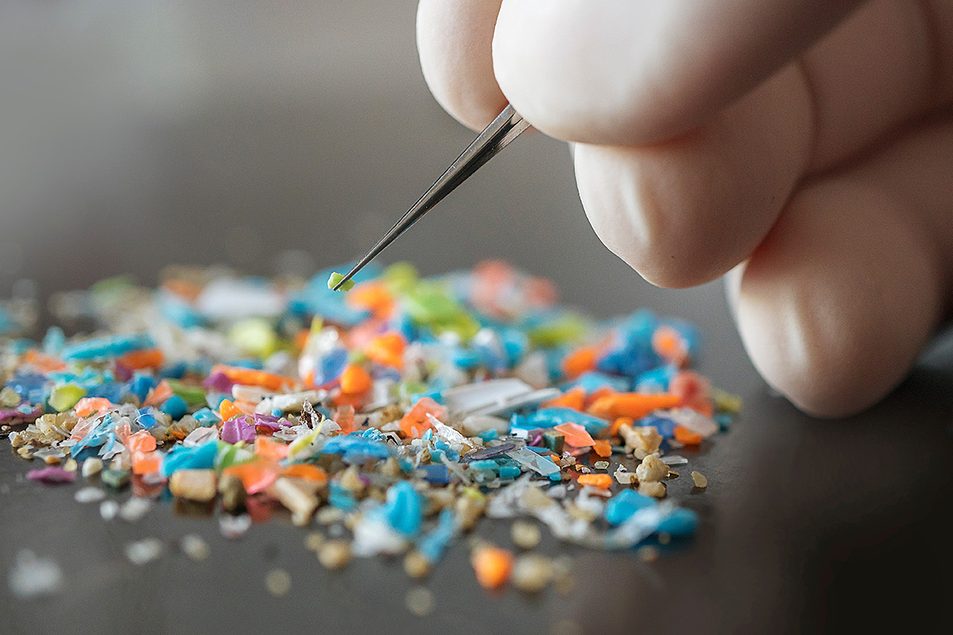


BRIGHTON and EXETER, UNITED KINGDOM — As pet parents continue to look closer at their own food for unnecessary additives, they are beginning to do the same to their pets’ food. While microplastics continue to be a concern in human health, research has also found that they can have negative effects on the health of animals. However, microplastic contamination of commercially available pet and wildlife foods have not yet been thoroughly investigated.
In response to this, researchers from the University of Sussex and University of Exeter assessed a range of dog, cat and hedgehog food products available in the United Kingdom for microplastics. The study, titled “Microplastic prevalence in commercially available petfoods,” found that 76% of the assessed pet food products contained microplastics, demonstrating a previously overlooked source of contamination.
Published in Environmental Toxicology and Chemistry, the study was conducted by Emily Thrift, Ph.D., and Fiona Matthews, Ph.D., of the School of Life Studies at the University of Sussex, along with Tamara Galloway, Ph.D., and David Santillo, Ph.D., of the School of Biosciences at the University of Exeter.
“Our findings indicate that microplastics are present across a wide range of pet food brands and food types targeting different animals,” the researchers wrote. “More than a quarter of the samples tested contained microplastics; more than three-quarters of the different products had at least one plastic-positive replicate, and almost half had two or more plastic-positive replicates.”
For each product, six individual retail units from different batch numbers were purchased to reduce the chance of results being skewed by a single contamination event. Each unit was subsampled from six locations within the package, yielding 228 total samples of 1 gram each. The products included 14 cat food formulas (with 84 total samples), 16 dog food formulas (with 96 total samples), and eight hedgehog foods (with 48 total samples). All the cat and dog foods were chicken flavored. In order to isolate and identify microplastics, samples were chemically digested using a potassium hydroxide solution to break down biological material, which was then filtered and examined.
Of the products tested, 76% of the 38 products had at least one microplastic-positive replicate, and 47% had two or more positive replicates out of six. Out of 19 brands, 84% had at least one contaminated sample, with only three brands being completely microplastic-free.
The study found that dry foods had more plastic-positive samples than wet foods, and also more pieces of microplastics per gram. However, exposure is likely to be greater from wet foods due to the daily portion size needing to be larger because of its lower energy density compared with dry foods, according to the researchers. The calculated microplastics per gram in pet foods were higher than those reported in human foods.
“This study demonstrates that commercially available pet and wild mammal feeds are a widespread and previously unrecognized source of microplastics,” the researchers wrote. “Contamination was observed across the majority of products and brands and in every price category and food type. While levels of microplastics varied, our findings indicate that even under the moderate scenario, owing to repeated daily consumption, pet foods are likely to present a chronic exposure pathway for microplastic ingestion in both pets and wild mammals. Research is now needed to understand the impacts on animal health and to identify the routes of food contamination.”
Stay up to date on the latest pet food processing industry headlines on our News page.