
STORY AT-A-GLANCE
- Teeth chattering in dogs is exactly what it sounds like — the mouth opens and closes in quick succession, causing a soft clicking sound
- The most familiar trigger is cold, where shivering muscles spill into the jaw — but persistent chattering after cold exposure can be a warning sign of hypothermia, which becomes a life-threatening emergency without prompt warming and veterinary care
- Excitement, anticipation, and anxiety can all produce chattering too, and the body language tells you which is which
- One of the most important causes to know about is oral or dental pain — periodontal disease, fractured teeth, abscesses, TMJ trouble, or oral growths can all cause chattering
- Chattering can also signal gastrointestinal issues like nausea or reflux, ear infections, the flehmen response to pheromones, or even focal seizures
You hear it before you see it. A soft, fast clicking sound coming from your dog. You look over and there they are, mouth slightly open, teeth rapidly clacking together like they just stepped out of a cold pool. Maybe they are excited about a treat. Maybe it is chilly. Maybe nothing is going on at all. Or maybe something is.
Teeth chattering in dogs has a surprisingly wide range of possible meanings. Some are completely benign. Others are a quiet flag that something needs attention. Knowing how to tell them apart is one of those small skills that can make a real difference in your dog’s day-to-day comfort.
What Teeth Chattering Actually Looks Like
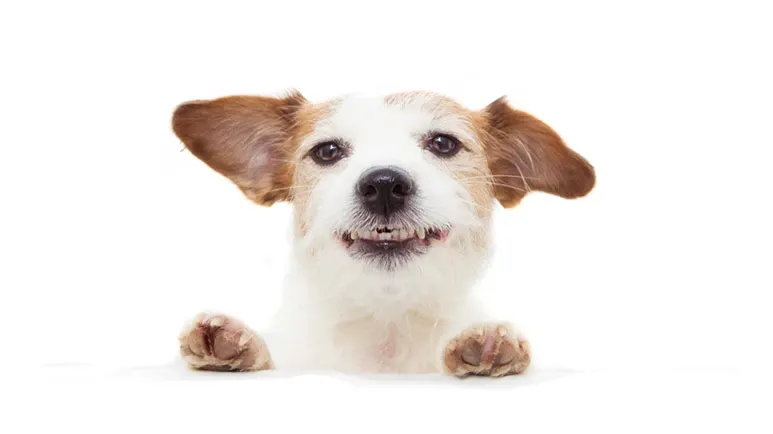
Teeth chattering is exactly what it sounds like. Your dog opens and closes their mouth in quick succession, which causes the teeth to click together. It can be a few seconds of soft clicking or a more sustained rattling. Sometimes you will hear it. Other times you will mostly see the rapid jaw movement.
It often happens alone but can be paired with shivering, drooling, head shaking, or other body-language signals. The trick to reading it is to look at everything happening around the chattering, not just the chattering itself.1,2
The Cold Response
This is probably the version most pet parents recognize. Just like in humans, shivering is the body’s way of generating heat by rapidly contracting and relaxing muscles. When those muscle contractions involve the jaw, you get teeth chattering.
How much cold a dog can tolerate depends on size, breed, coat, age, body condition, and how acclimated they are to the weather. Sighthounds with thin coats and little body fat may chatter at temperatures a double-coated sled dog would not even notice.
Teeth chattering alone is not dangerous, but it is worth taking seriously. If your dog has been outside in the cold and you notice chattering, get them warm. Persistent cold exposure can tip into hypothermia, which is a life-threatening emergency.
Warning signs that chattering has crossed into hypothermia include an increased heart rate that then slows, rapid breathing followed by shallow breathing, confusion, lethargy, dilated pupils, and loss of consciousness. If you see any of these, your dog needs same-day veterinary care.3,4
Excitement and Anticipation
Sometimes the chattering is pure enthusiasm. A treat is being unwrapped. A favorite person walks through the door. The squirrel is on the deck again. The body’s heightened emotional response can spill into the jaw, and the teeth start clicking.
Excited chattering is usually accompanied by upbeat body language — a raised or wagging tail, perked ears, a forward lean, eyes locked on whatever has captured their attention. It tends to stop the moment the trigger arrives (or leaves).5,6
Anxiety and Fear
Stress can lead to teeth chattering too, especially in situations a dog finds overwhelming. Veterinary visits are a common trigger. Greyhounds in particular often chatter during routine exams simply because they are nervous.7
The body language paints a different picture from the excited version. Anxious chattering usually comes with a tucked tail, flattened or pinned-back ears, lip licking, yawning, avoidance of eye contact, panting, or trembling. Some dogs pace, bark, or lunge.8
For hunting dogs, loud noises like gunshots or whistles can trigger an anxiety-driven response. The chattering usually stops once the stressor is gone, but repeated exposure to scary triggers without support can wear a dog down over time.9
Dental and Oral Pain
This is one of the most important causes to know about, because it is both common and easy to miss. Teeth chattering — especially when it happens regularly or without an obvious trigger — is often tied to pain in the mouth.10,11
Possible culprits include periodontal disease, fractured teeth, tooth root abscesses, tooth resorption, gum inflammation, and oral ulcers. Benign or cancerous growths in the mouth can also cause enough discomfort to produce chattering. Look for accompanying signs of dental trouble. These include:12,13,14
- Bad breath
- Drooling, sometimes with blood
- Trouble picking up or chewing food
- Chewing only on one side of the mouth
- Preferring soft food over kibble or hard chews
- Pawing at the mouth
- Loss of appetite or unexplained weight loss
- Visible swelling around the jaw
If any of these show up with the chattering, it is a veterinary conversation. A dental exam — sometimes with dental radiographs (X-rays) — is usually what gets to the bottom of it.
TMJ and Jaw Joint Trouble
The temporomandibular joint is the hinge that connects the upper and lower jaw. When it gets sore, fractured, or arthritic, dogs can chatter their teeth as a pain response.
Your veterinarian may gently open and close your dog’s mouth to feel for resistance, grinding, or asymmetry. If TMJ disease is suspected, imaging like dental radiographs (X-rays) or a CT scan can help confirm what is going on.15,16,17
Gastrointestinal Issues
Stomach trouble is another less obvious cause. Dogs with nausea, vomiting, acid reflux, or stomach ulcers may grind or chatter their teeth. A clenched jaw rubbing back and forth produces a similar clicking sound, and drooling often goes along with it.
If chattering shows up around mealtimes, after eating, or alongside other GI signs like vomiting, drooling, or appetite changes, mention it to your veterinarian. Lab work, ultrasound, or endoscopy may be part of the workup.18
The Flehmen Response
This one is more curious than concerning. After sniffing another dog’s scent — particularly when there is a hormonal angle, like an intact male sniffing where a female has been — some dogs will chatter their teeth and produce foamy saliva.
It is a form of the flehmen response. The chattering helps move scent molecules into the vomeronasal organ on the roof of the mouth, which specializes in detecting pheromones. It is a quirky bit of canine biology and not a problem.19
Seizures and Neurological Causes
Less commonly, teeth chattering can be a sign of a focal seizure — a seizure that affects only one part of the brain and may produce limited body movements rather than the dramatic shaking of a full grand mal seizure.
A key difference is responsiveness. A dog having a focal seizure usually will not respond to their name, will not look at you when you call, and may seem mentally absent during the episode. They may pace or seem clingy beforehand, and feel tired afterward.
If you suspect seizure activity, try to capture a short video and write down the timing and circumstances. Your veterinarian will use that information to decide whether to pursue neurological testing. White Shaker Dog Syndrome20 — a rare condition seen mostly in small white dogs — can also include teeth chattering.21,22,23
Other Possibilities to Keep in Mind
A few less common causes round out the list. Ear infections can produce enough pain to cause chattering. Inflamed jaw or facial muscles can do the same. Older dogs may chatter from cold sensitivity tied to low thyroid function, which is worth checking with a simple blood test.
And some dog behavior medications list teeth chattering as a possible side effect, so if it started after a new prescription, tell your veterinarian.
When to Call the Vet
Brief, situational chattering — your dog is cold, excited, or just smelled something fascinating — usually is not a problem. The pattern that calls for a veterinary visit looks different. Bring it up if you see:
- Chattering that happens at rest, with no obvious trigger
- Chattering paired with bad breath, drooling, bleeding, or swelling near the mouth
- Trouble eating, weight loss, or appetite changes
- Lethargy or signs of pain anywhere in the body
- Chattering that started after a new medication
- Episodes where your dog seems to space out or does not respond to their name
- Hypothermia warning signs after cold exposure
A short video can be a huge help. Showing your veterinarian exactly what the chattering looks like — and what your dog is doing before and after — often shortens the path to a diagnosis.
What You Can Do at Home
Once medical causes have been ruled out or addressed, a few simple steps can reduce the chattering that is tied to environment or emotion. Coats, sweaters, heated beds, and shorter winter walks help cold-sensitive dogs stay comfortable. Daily tooth brushing with a dog-safe enzymatic toothpaste, plus routine dental checkups, can prevent the kind of oral pain that leads to chattering in the first place.
For anxiety-driven chattering, the goal is to give your dog space and slowly change how they feel about the trigger. Desensitization and counterconditioning — paired with the help of a certified behaviorist when needed — can go a long way. Calming pressure shirts, pheromone products, and supplements may help in specific situations, ideally with your veterinarian’s input.
Read the Pattern, Not Just the Sound
That tiny clicking sound coming from your dog is rarely random. It might be a chilly morning. It might be the thrill of a treat. It might also be the only outward sign of a sore tooth, a stomach that does not feel right, or a stressful afternoon.
Pay attention to the pattern, not just the sound. If the chattering fits the moment and stops when the moment ends, you can usually take it at face value. If it shows up out of nowhere, sticks around, or comes with other changes, treat that little click like the clue it is — and let your vet help you decode it.
- 1,4,6,9,12,17,23 Montana Pet Dentistry and Oral Surgery, January 22, 2026
- 2,3,5,8,14,16,22 American Kennel Club, February 26, 2026
- 7,10,13,15,18,19,21 PetMD, February 4, 2025
- 11 Journal of the American Veterinary Medical Association, Volume 262: Issue 10, Page(s): 1363–1369, October 1, 2024
- 20 Front Vet Sci. 2024 Sep 20;11:1453698, Discussion

In this free guide, you’ll discover:
-

How your pet’s biology influences their nutritional needs -
Why conventional feeding advice often falls short -
Practical ways to choose better food for your dog or cat
View our Privacy Policy and Terms of Service.