
Your Quick Guide to the Best Wet Cat Foods
What we cover
Seven premium wet cat food brands tested, rated, and ranked — from fresh-cooked subscriptions to pantry-stable canned options
Top overall pick
Smalls — fresh, human-grade, and the option many cat owners stick with once they try it
Best for picky cats
Weruva Cats in the Kitchen — especially when served warm, it has one of the highest acceptance rates, even with stubborn eaters
Most accessible pick
Nulo Freestyle — solid premium nutrition at around $2 per can, and a reliable option for sensitive stomachs
Biggest reality check
No single brand works for every cat — texture, temperature, and how you transition matter just as much as ingredients
Why it’s worth your scroll
Wet food is one of the simplest ways to improve hydration and long-term health. This guide helps you cut through the noise and find something your cat will actually eat.
Somewhere between the forty-third brand on the shelf and the third time your cat has sniffed a full bowl and walked away, the question stops being “which wet food is best?” and starts being “which wet food will my cat actually eat?”
That’s a harder problem, and it’s the one this guide is actually trying to solve.
At CatVills, we’ve spent considerable time digging into what separates the premium options that earn loyal cat followings from the ones that end up donated to a shelter after a single rejected can. What we found: ingredients matter, but texture, protein type, and how you serve the food often matter more. And no brand, no matter how impressive the label, is a guaranteed win with every cat.
The seven options below represent the strongest premium wet cat foods available right now — covering fresh-cooked subscriptions, clean-label canned options, and everything in between. Each has something genuinely different to offer, and each has honest limitations worth knowing before you buy.
|
Best Overall  |
Best for Picky Cats  |
Most Accessible 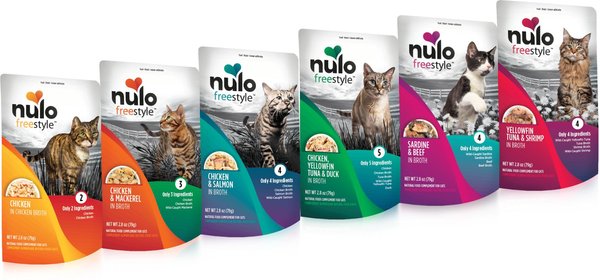 |
|
Big Pet Food prioritizes profits over cat health and they pack cat food with preservatives and fillers. Smalls believes cats deserve better and uses natural ingredients and added vitamins and minerals in our food. The fresh food come in many delicious flavors and textures. |
Inspired by the family kitchen, which is the heart of the home, each gourmet recipe is made with love and care to keep your feline feeling great. Weruva uses only the best ingredients that are high in protein—just the way your tiny carnivore needs it. And not only are they delicious and full of complete and balanced nutrition, but the easy-to-serve pouches are an excellent way to supply your cat with necessary hydration. |
Made with 100% real food, these all-natural meal enhancers are made with all your kitty’s favorite flavors in savory sauces she’s sure to love. Each pouch is packed with healthy animal protein to support lean muscles, and the added moisture helps keep your furbaby hydrated. |
Best Overall
Big Pet Food prioritizes profits over cat health and they pack cat food with preservatives and fillers. Smalls believes cats deserve better and uses natural ingredients and added vitamins and minerals in our food. The fresh food come in many delicious flavors and textures.
Best for Picky Cats
Inspired by the family kitchen, which is the heart of the home, each gourmet recipe is made with love and care to keep your feline feeling great. Weruva uses only the best ingredients that are high in protein—just the way your tiny carnivore needs it. And not only are they delicious and full of complete and balanced nutrition, but the easy-to-serve pouches are an excellent way to supply your cat with necessary hydration.
Most Accessible
Made with 100% real food, these all-natural meal enhancers are made with all your kitty’s favorite flavors in savory sauces she’s sure to love. Each pouch is packed with healthy animal protein to support lean muscles, and the added moisture helps keep your furbaby hydrated.
Why Wet Food Matters More Than Most People Think
Cats are obligate carnivores that evolved as desert hunters. Their bodies are built to extract hydration from food — not from a water bowl. That’s not a preference; it’s biology. Dry kibble, no matter how premium the brand, delivers roughly 10% moisture. Wet food delivers 75-85%.
That gap has real consequences over time. Chronic low-grade dehydration is a leading contributor to feline kidney disease and urinary tract issues — two of the most common and costly health problems cats face. Incorporating even one meal of high-quality wet food per day can meaningfully reduce that risk.
Beyond hydration, premium wet foods are significantly lower in carbohydrates than dry food, higher in animal protein, and free from the fillers, by-products, and artificial additives that lower-quality options lean on. The short version: if your cat is eating dry food exclusively, adding quality wet food to the rotation is one of the most impactful things you can do for their long-term health.
A Few Things to Know First
No single wet cat food works for every cat — and that’s worth stating plainly before diving in. The brands below are exceptional. But your cat’s texture preferences, protein sensitivities, and general willingness to cooperate are factors no ingredient list can account for.
💡 Pro Tip
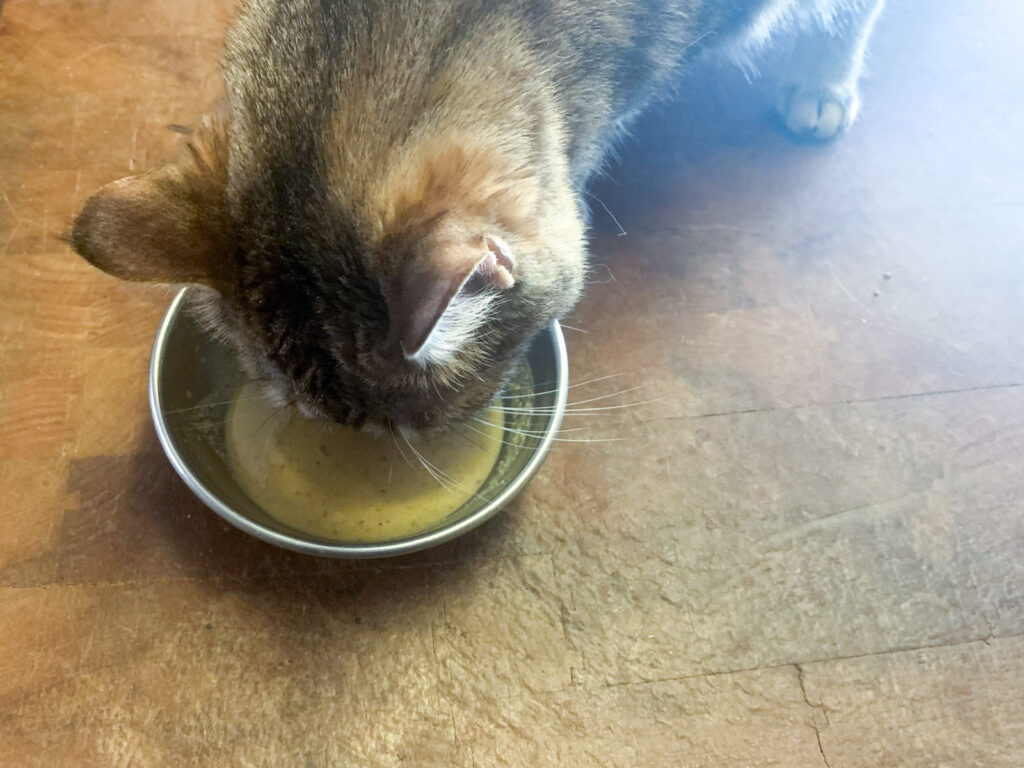
The single most effective trick for getting a reluctant cat to try a new wet food: serve it slightly warmed. Heating food to just above room temperature — about 10 seconds in the microwave — makes the aroma significantly more appealing. Across every brand in this guide, warm serving noticeably improves first-try acceptance, especially with picky eaters.
The 7 Best Wet Cat Foods
From fresh foods made just for your cat to high-quality canned foods that you can find on Chewy, here are our favorite wet cat foods.
1. Smalls — Best Fresh / Human-Grade Option

What works well
- Human-grade, USDA-certified ingredients — no feed-grade meat, no mystery proteins, no artificial preservatives
- Gently cooked to preserve nutrients and moisture — the food actually looks and smells different from typical wet food
- Noticeably less litter box odor — one of the most consistent changes owners report within the first week
- Coat and energy improvements — often visible within two to four weeks of switching
- Proactive customer service — follow-ups after the trial and easy subscription management
What to consider
- Subscription-only model — requires planning; not available in stores or typical online retailers
- Requires freezer space — portions need to be thawed in advance
- Auto-enrollment after trial — subscription starts quickly unless you adjust settings
- Not a guaranteed win for picky cats — texture can be a dealbreaker; the sampler box is the safest way to test
Most wet cat food — even the expensive kind — goes through a manufacturing process involving extreme heat, which degrades nutrients and produces the concentrated, metallic smell that makes cat food smell like cat food. Smalls does something fundamentally different. Their recipes are gently cooked using USDA-certified, human-grade ingredients sourced from the US and Canada, producing meals that look and smell like food a person might actually prepare.
That’s not marketing copy. Open a Smalls pouch next to a standard can of wet food and the difference is immediately obvious. The protein is recognizable. The smell is clean. Cats that have rejected dozens of canned options have a notably strong track record of accepting Smalls — particularly the Smooth Bird (chicken) and Smooth Fish formulas, which tend to be the best starting points for skeptical eaters.
The trade-off is real: Smalls is a subscription service, delivered frozen, requiring freezer storage and overnight thawing. It’s a different relationship with cat food than buying cans. The customized meal plan, the sampler option before committing, and the refund policy for cats who won’t eat it all lower the barrier — but it does require planning and some freezer real estate.
Smalls at a Glance
Best For
Cats whose owners want the highest-quality, freshest protein available
Format
Frozen gently-cooked pouches — Smooth, Ground, and Freeze-Dried Raw
Key Proteins
Chicken (Bird), Turkey (Other Bird), Salmon (Fish), Beef (Cow), Pork (Pig)
Subscription?
Yes — direct from smalls.com
Approx. Cost
~$1.93–$3.00 per meal, approximately $3–$4 per day for one cat
Freezer Required
Yes — thaw portions in the fridge overnight before serving
Main Limitation
Direct-to-consumer subscription only; requires freezer space; fewer protein options than some canned alternatives
Smalls | Fresh Human-Grade Cat Food Delivery
Big Pet Food prioritizes profits over cat health and they pack cat food with preservatives and fillers. Smalls believes cats deserve better and uses natural ingredients and added vitamins and minerals in our food. The fresh food come in many delicious flavors and textures.
We earn a commission if you make a purchase, at no additional cost to you.
2. Tiki Cat (Grill & Luau Lines) — Best Canned Option Overall
What works well
- Near-zero carbohydrate content — one of the few canned options suitable for diabetic cats and cats with IBD
- No product recalls in brand history — a meaningful trust signal in the premium wet food space
- Exceptionally high palatability — consistently accepted, even by picky eaters
- 40+ formulas across lines — easy to rotate and avoid flavor fatigue
- Simple, transparent ingredient lists — no by-products, fillers, or carrageenan
What to consider
- Stick to Grill and Luau lines — other lines can be less consistent depending on the formula
- Higher phosphorus in some recipes — not ideal for cats with kidney concerns without vet guidance
- Seafood-heavy lineup — some owners prefer to limit fish as a daily protein
- Premium pricing over time — can reach $4–$5 per day for larger or higher-appetite cats
Tiki Cat has earned its reputation the old-fashioned way: by producing a product that cats genuinely love and that owners feel good about feeding. The Grill and Luau lines are built on whole, shredded meat and seafood in a light broth — no grains, no fillers, no carrageenan, and ingredient lists short enough to read in under a minute. The carbohydrate content in many formulas is effectively zero. That’s genuinely rare in commercial wet food.
The brand has never had a product recall. The first ingredient is always actual protein. The broth is real. For cats with IBD, diabetes, or a documented sensitivity to carbohydrates, Tiki Cat is frequently what ends up in the rotation because nothing else comes close on the low-carb front without moving to raw or fresh food.
Worth being specific about which lines to buy: the Grill and Luau lines are where Tiki Cat’s strongest reputation lives. The After Dark line gets more variable responses — some cats love it, others reject it outright — and there are community concerns about menadione (synthetic Vitamin K) added during reformulation. Stick to the classics.
Tiki Cat at a Glance
Best For
Cats needing very low carbohydrates; picky eaters; multi-cat households wanting a reliable rotation staple
Format
Canned — shredded meat or seafood in broth; also available in pouches
Key Proteins
Ahi tuna, chicken, salmon, sardine, mackerel (Grill and Luau lines)
Approx. Cost
~$1.55–$2.19 per 2.8 oz can, approximately $3–$4 per day for one cat
Main Limitation
Higher phosphorus in some formulas — consult your vet if your cat has kidney concerns; many recipes are seafood-heavy
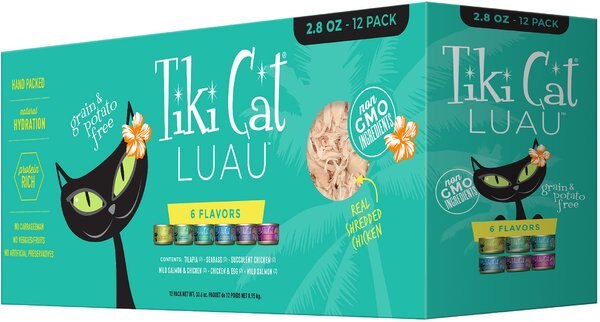
Tiki Cat Luau Variety Pack Grain-Free Canned Cat Food
Inspired by the flavors of a luau, each gourmet recipe is loaded with high-quality protein to keep your pal looking and feeling her best. Your tiny carnivore will love the shredded meats in juicy consommé in every can. And not only are they delicious and full of complete and balanced nutrition, but the easy-to-serve cans are an excellent way to supply your cat with necessary hydration to keep him thriving
We earn a commission if you make a purchase, at no additional cost to you.
3. Weruva Cats in the Kitchen — Best for Picky Eaters
What works well
- Extremely high picky-cat acceptance — the broth texture works for cats that refuse pâté-style foods
- Lower phosphorus in many formulas — a useful option for cats with or prone to kidney concerns
- Wide protein and recipe variety — easy to rotate without switching brands; includes single-protein options
- Human-grade processing facility — BRC Grade A certified with a strong safety record
- No U.S. recalls — consistent track record for quality control
What to consider
- Very broth-heavy texture — lower calorie density means larger portions may be needed
- Some lines are more watery — Cats in the Kitchen tends to perform better than certain other lines
- Manufactured in Thailand — worth noting if you prefer U.S.-made products
The picky cat problem is real, and Weruva’s Cats in the Kitchen is as close to a reliable solution as the wet food category offers. The signature is the broth — real shredded meat in a light, aromatic consommé that hits differently from the second the can opens. It doesn’t smell like cat food. It smells like actual chicken soup, or a tuna dish worth eating. Cats that have rejected pate after pate, from brand after brand, consistently respond to this.
The acceptance rate is notably high, particularly when the food is warmed to just above room temperature. Chicken Frick ‘A Zee and Mack & Jack (mackerel and skipjack) are the two formulas with the strongest track records with difficult eaters. When trying Weruva for the first time, start there.
One nutritional detail worth flagging: Weruva’s naturally low phosphorus levels in many formulas have made it a popular choice among owners of cats with kidney concerns — often used as a higher-quality alternative to prescription food, sometimes with informal veterinary support. It’s not a prescription diet, but for cats on the edge of needing one, it’s a category-adjacent option worth discussing with a vet.
A note on which line to choose: the Cats in the Kitchen and classic Weruva lines are where the brand’s strongest reputation lives. The TruLuxe line is considerably waterier and generates more mixed responses. If this is a first purchase, Cats in the Kitchen is the place to start.
Weruva Cats in the Kitchen at a Glance
Best For
Notoriously picky cats; cats with or predisposed to kidney concerns; owners wanting significant protein variety
Format
Canned — shredded meat in light broth; also available in pouches
Key Proteins
Chicken, mackerel, skipjack tuna, beef, lamb, duck (varies by line)
Approx. Cost
~$2.00–$2.50 per 5.5 oz can, approximately $3–$6 per day depending on cat size
Main Limitation
Broth-heavy texture — cats used to dense pâté may reject it; lower calorie density means feeding larger portions
Weruva Cats in the Kitchen Pantry Party Variety Pack
Inspired by the family kitchen, which is the heart of the home, each gourmet recipe is made with love and care to keep your feline feeling great. Weruva uses only the best ingredients that are high in protein—just the way your tiny carnivore needs it. And not only are they delicious and full of complete and balanced nutrition, but the easy-to-serve pouches are an excellent way to supply your cat with necessary hydration.
We earn a commission if you make a purchase, at no additional cost to you.
4. Tuft + Paw Really Great Cat Food — Best for Ingredient-Obsessed Owners

What works well
- Human-grade ingredients in a human-grade facility — one of the cleanest, most minimal ingredient lists in the category
- 52%+ crude protein (dry matter) — genuinely strong nutritional profile
- Resealable packaging — no dealing with half-used cans in the fridge
- High first-try acceptance — stew texture works for cats that reject both pâté and broth-only foods
- All life stages formula — suitable for kittens, adults, and seniors
What to consider
- Only one flavor — most cats will need a rotation partner to avoid boredom
- Packaging can be annoying — easier to open cleanly with scissors; food tends to stick in corners
- Premium price point — harder to justify as a sole food for larger or multi-cat households
Tuft + Paw built their reputation on thoughtfully designed cat furniture — the kind that doesn’t make your living room look like a cat took over. When they moved into cat food, the same design-forward, ingredient-obsessed approach carried over. Really Great Cat Food is made with cage-free free-range chicken, rabbit, salmon oil, chicken broth, and prebiotics. That’s genuinely close to the full list.
The nutritional profile is notable: over 52% crude protein on a dry matter basis and approximately 2% carbohydrates. It’s formulated for all life stages, which means it works for kittens and seniors as well as healthy adults. And the stew texture — not pate, not broth-heavy — tends to land well with cats who’ve rejected both extremes.
The packaging is genuinely clever: a resealable cardboard carton that folds down for refrigerator storage. In practice, the perforations on that carton rarely tear cleanly, and food gets stuck in the square corners. Keep scissors close. Use a spoon to scrape the corners. Once you’re past the packaging, the food itself is excellent — and six out of seven cats in multi-cat testing immediately accepted it on first offer.
Tuft + Paw at a Glance
Best For
Owners who scrutinize every label and want minimal, human-grade ingredients in a ready-to-serve format
Format
Resealable cardboard carton — stew-style texture
Key Proteins
Cage-free chicken, rabbit, salmon oil
Approx. Cost
~$3.30–$4.00 per 5.5 oz carton, approximately $3–$5 per day for one cat
Main Limitation
Only one flavor — cats needing variety will require rotation; carton can be a little awkward to open cleanly without scissors
Tuft & Paw Really Great Cat Food
This protein-packed recipe features a limited selection of veggies and fiber that mirror what cats naturally eat in the wild. The moisture-rich formula comes in a rich stew texture that helps keep your kitty hydrated. It’s free from fillers, grains, preservatives, gluten, soy, and artificial colors and flavors. Plus, it comes in convenient cartons that are easy to reseal for storing leftovers in the fridge.
We earn a commission if you make a purchase, at no additional cost to you.
5. Love, Nala — The Emerging Brand Worth Watching

What works well
- Mission-driven brand with real impact — purchases help support shelter feeding programs
- Strong value for the quality — one of the better price-to-nutrition ratios in this lineup
- High protein content — up to ~66% on a dry matter basis in some wet recipes
- Good acceptance for broth-style formulas — especially for cats that like Weruva-style textures
- Mousse treats work well as toppers — helpful for transitioning hesitant eaters
What to consider
- Newer brand — less long-term track record compared to more established names
- Wet food made in Thailand — worth noting if you prefer U.S.-produced products
- Menadione in some formulas — something label-focused owners may want to double-check
Love, Nala started with a rescue cat and an Instagram account. Nala — a cross-eyed tabby adopted at five months old from a California shelter — became the most-followed cat on the internet and holds a Guinness World Record to prove it. Her owners, Pookie and Shannon, launched Love, Nala in 2019 not just to capitalize on that reach, but to build something with a genuine purpose: affordable premium nutrition that gives back to the shelters that make stories like Nala’s possible.
The brand has donated over 250,000 meals to rescue organizations across the US. That’s not a footnote — it’s the center of what the brand is. And in a category where most brands lead with ingredient claims, Love, Nala’s mission-driven identity is connecting with a different kind of cat owner.
The food itself earns its place on this list on its own merits. The wet line — flaked and pate formats across chicken, tuna, salmon, and mackerel — is grain-free, free from artificial additives, and produced in a human-grade facility. The flaked varieties in broth closely parallel the Weruva-style texture that picky cats tend to respond to, at a noticeably lower price point. The protein content is legitimately impressive: up to 66.7% on a dry matter basis in some formulas.
The community forming around Love, Nala is small but unusually enthusiastic — driven more by genuine discovery than by the brand’s social media reach. That kind of organic word-of-mouth is typically a signal worth paying attention to.
Love, Nala started with a rescue cat and an Instagram account. Nala — a cross-eyed tabby adopted at five months old from a California shelter — became the most-followed cat on the internet and holds a Guinness World Record to prove it. Her owners, Pookie and Shannon, launched Love, Nala in 2019 not just to capitalize on that reach, but to build something with a genuine purpose: affordable premium nutrition that gives back to the shelters that make stories like Nala’s possible.
The brand has donated over 250,000 meals to rescue organizations across the US. That’s not a footnote — it’s the center of what the brand is. And in a category where most brands lead with ingredient claims, Love, Nala’s mission-driven identity is connecting with a different kind of cat owner.
The food itself earns its place on this list on its own merits. The wet line — flaked and pate formats across chicken, tuna, salmon, and mackerel — is grain-free, free from artificial additives, and produced in a human-grade facility. The flaked varieties in broth closely parallel the Weruva-style texture that picky cats tend to respond to, at a noticeably lower price point. The protein content is legitimately impressive: up to 66.7% on a dry matter basis in some formulas.
The community forming around Love, Nala is small but unusually enthusiastic — driven more by genuine discovery than by the brand’s social media reach. That kind of organic word-of-mouth is typically a signal worth paying attention to.
Love, Nala at a Glance
Best For
Value-conscious owners wanting real premium quality; mission-driven shoppers; cats who prefer broth-forward flaked textures
Format
Canned — flaked in broth and pâté; also available in squeeze-tube mousse treats
Key Proteins
Chicken, tuna, salmon, mackerel
Approx. Cost
~$1.25–$1.65 per 2.8 oz can, approximately $2–$3 per day for one cat
Main Limitation
Newer brand with less long-term data; wet food is produced in Thailand; some formulas include menadione
Love, Nala – Premium Cat Food
Each recipe by Love, Nala features high-quality, real meat as the first ingredient—providing essential nutrients and flavor. Made with single-source animal protein, it’s a simple, delicious dinner your cat will adore. Plus, these wholesome meals are crafted with care to support your feline friend’s digestion and overall well-being.
We earn a commission if you make a purchase, at no additional cost to you.
6. Ziwi Peak — Best for Novel Proteins and Cats with Food Allergies

What works well
- 92%+ meat, organs, and bone — one of the closest whole-prey style diets in a ready-to-serve format
- True novel protein options — venison and rabbit available as complete standalone formulas
- Extremely minimal ingredient lists — ideal for elimination diets and identifying sensitivities
- No U.S. recalls — strong safety track record
- Green-lipped mussels included — natural source of joint-support nutrients
What to consider
- Most expensive option here — often better as a rotation or topper than a sole daily food
- Private equity acquisition in 2021 — still made in New Zealand, but worth being aware of
- Less predictable palatability — not always a hit with picky eaters
- Includes chickpeas in some recipes — a legume some owners prefer to avoid
When a cat has cycled through every common protein — chicken, tuna, salmon, turkey — and reacted to something in each one, the options get narrow quickly. Ziwi Peak exists precisely for that situation. Made in New Zealand from ethically sourced meats, with 92% or more real meat, organs, and bone per recipe, it offers venison, rabbit, and lamb as complete, standalone wet food formulas. Those proteins are genuinely rare in the canned food category.
The ingredient lists are some of the shortest in the entire premium segment. The Venison formula contains venison, venison organs, venison bone, venison blood, green-lipped mussels, chickpeas, and vitamins. That’s essentially it. For cats on elimination diets or with documented protein allergies, this level of simplicity is hard to find anywhere else.
Two things worth noting before buying: Ziwi Peak was acquired in 2021 by FountainVest Partners, a Chinese private equity firm. Production remains in New Zealand, quality signals remain strong, and no formula changes have been confirmed. But it surfaces in community conversations and is worth knowing. Second: the price is the highest in this guide for canned food, which is why most owners use Ziwi as a rotation option or topper rather than a daily sole food.
Ziwi Peak at a Glance
Best For
Cats with food allergies or sensitivities; elimination diet support; owners who want extremely minimal ingredient lists
Format
Canned pâté; also available in air-dried form (not traditional kibble)
Key Proteins
Venison, lamb, rabbit, mackerel, chicken, beef — each offered as complete standalone formulas
Approx. Cost
~$4.00+ per 3 oz can, approximately $3.75–$4.39 per day for one cat
Main Limitation
Most expensive option in this guide; acquired by private equity in 2021 (still manufactured in New Zealand); palatability can vary widely between cats
ZIWI Peak Venison, Beef, Lamb Variety Pack
his recipe is made with simple and pure ingredients, just like the love Ziwi has for furry friends. It features a whole-prey, nutrient-dense diet with fresh meat, organs, bone, and New Zealand green-lipped mussels for natural chondroitin and glucosamine to support joint health and mobility.
We earn a commission if you make a purchase, at no additional cost to you.
7. Nulo Freestyle — Best for Sensitive Stomachs (and the Most Accessible Premium Option)
What works well
- Strong track record for sensitive stomachs — often the food that finally settles ongoing digestive issues
- No recalls — consistently clean safety history
- Wide variety of proteins and textures — easy to rotate without switching brands
- Accessible pricing — around $2 per can makes it workable for multi-cat homes
- High animal protein, grain-free formulas — supports a more biologically appropriate diet
What to consider
- Guar gum in some recipes — worth checking labels if you avoid certain thickeners
- Not always a hit with picky eaters — acceptance varies; variety packs help narrow it down
- Dry line is less consistent — the wet food performs better overall
Nulo Freestyle doesn’t have the brand mythology of Tiki Cat or the fresh-food story of Smalls. What it has is a reliable track record of working for cats that have had digestive trouble on other foods — and doing it at a price that makes sense for households with multiple cats.
The wet formulas are grain-free, high in animal protein, and available in a wide range of textures including minced, shredded, and stew styles. Cats with soft stools, intermittent vomiting, or general GI sensitivity consistently respond well to Nulo — typically within one to two weeks of switching. That consistency isn’t coincidence; removing grain fillers and low-quality by-products gives a sensitive digestive system something it can actually process.
One useful clarification: Nulo’s Freestyle and MedalSeries lines are the same food under different branding. Freestyle is the online and specialty retailer version; MedalSeries is the PetSmart version. If only MedalSeries is available locally, the nutrition is equivalent.
The community consensus on Nulo is less “this is the most exciting food I’ve ever found” and more “this is the one that finally just worked.” That’s a different kind of recommendation — and for a cat with ongoing digestive issues, it may be exactly the right one.
Nulo Freestyle at a Glance
Best For
Cats with sensitive stomachs; multi-cat households looking for solid premium nutrition at a lower price point
Format
Canned — available in minced, shredded, and stew styles
Key Proteins
Chicken, salmon, turkey, duck, beef, cod (wide range across formulas)
Approx. Cost
~$2.00 per 2.8 oz can, approximately $2–$3 per day for one cat
Main Limitation
Guar gum in some formulas; not a guaranteed win for picky eaters; wet line generally performs better than the dry
Nulo FreeStyle Variety Pack Cat Food Topper
Made with 100% real food, these all-natural meal enhancers are made with all your kitty’s favorite flavors in savory sauces she’s sure to love. Each pouch is packed with healthy animal protein to support lean muscles, and the added moisture helps keep your furbaby hydrated.
We earn a commission if you make a purchase, at no additional cost to you.
How to Choose the Right Wet Cat Food
With seven strong options on the list, the starting point depends on what your cat actually needs:
• Picky eater who rejects most things: Start with Weruva Cats in the Kitchen, served warm. Chicken Frick ‘A Zee is the highest-consensus starting formula. If that fails, try Tiki Cat Grill or Luau.
• You want the absolute best ingredients and are comfortable with a subscription: Smalls is the answer. The sampler is the right way to start.
• Food allergies or sensitivity to common proteins: Ziwi Peak’s venison and lamb options are the most reliably novel proteins available in a complete canned food.
• Chronic digestive issues on other foods: Try Nulo Freestyle. It has the strongest consistent track record for resolving GI sensitivity.
• Minimal ingredients matter most: Tuft + Paw Really Great Cat Food. Keep scissors nearby for the carton.
• Premium quality at a price that works for multiple cats: Love, Nala or Nulo Freestyle. Both deliver genuinely good nutrition without the top-tier price tag.
• Building a rotation: Mix and match. Tiki Cat for low-carb protein-focused meals, Weruva for broth days, Nulo as the sensitive-stomach buffer. Rotating proteins and textures also reduces the risk of developing food sensitivities over time.
💡 Pro Tip
Whatever brand you choose, transition slowly. Mix 25% new food with 75% of the current food for two to three days, then 50/50, then 75/25, then fully switched. Abrupt changes almost always cause digestive upset — even when the new food is objectively better.
Frequently Asked Questions
How much wet food should I feed my cat per day?
Most adult cats need approximately 3.5 to 4.5 ounces of wet food per day, though this varies by size, age, and activity level. Check the feeding guidelines on the specific food — calorie density varies significantly across brands. A cat eating calorie-dense Ziwi Peak needs much less volume than one eating Weruva’s broth-forward formulas.
Is wet food better than dry food for cats?
For most cats, yes — particularly for long-term urinary and kidney health. Cats evolved to get hydration from food rather than from a water bowl, and wet food’s 75-85% moisture content serves that biological need in a way dry kibble cannot. Many cats do well on a combination of both. Talk to your vet about what makes sense for your cat’s specific health situation.
My cat has kidney disease. Which of these foods is appropriate?
Weruva’s classic lines have naturally low phosphorus, making them a frequently recommended option for cats with kidney concerns as a non-prescription alternative. Ziwi Peak’s wet food is also relatively low in phosphorus. That said, cats with diagnosed kidney disease should be eating a food specifically recommended by a veterinarian — ideally a prescription renal diet. These brands can complement a vet plan but aren’t a substitute for medical guidance.
How do I get my picky cat to try a new wet food?
Three approaches that genuinely help: First, serve it warm — a brief microwave warm-up makes the aroma significantly more appealing. Second, transition slowly by mixing a small amount into whatever the cat currently eats, increasing gradually over 7-10 days. Third, if the cat is still refusing, try adding bonito flakes, a small amount of Churu, or Love, Nala mousse on top as a bridging layer.
Do any of these foods work for kittens?
Yes — Smalls, Tiki Cat, Tuft + Paw, and Nulo Freestyle are all formulated for all life stages, meeting nutritional requirements for growth as well as adult maintenance. Weruva, Love, Nala, and Ziwi Peak all have specific formulas appropriate for kittens within their lines. Check the AAFCO nutritional adequacy statement on the specific recipe before feeding to a kitten.
Which is best for a cat with a sensitive stomach?
Nulo Freestyle has the strongest track record specifically for resolving chronic digestive sensitivity — multiple cats who couldn’t tolerate other premium brands have stabilized on it. Tiki Cat’s Grill and Luau lines are also generally well tolerated. For cats with a suspected protein allergy, Ziwi Peak’s novel protein options are worth trying.
Is Smalls worth the price compared to buying premium canned food?
For a typical adult cat, Smalls runs approximately $3-4 per day — comparable to feeding high-end canned food exclusively. The meaningful difference is freshness and ingredient quality: Smalls uses genuinely human-grade protein prepared with minimal processing, which isn’t achievable in a canned format. If the budget works and your cat accepts it, the nutritional case is strong.
Final Thoughts
No matter how carefully you research, there’s a real possibility your cat will inspect the very expensive, highly reviewed food you just bought — and walk away. That’s not a failure of research. That’s cats.
What these seven options have in common is that they’re all genuinely worth trying: real ingredients, honest nutrition, no filler carbs or mystery proteins. Start with the one that best fits your cat’s known preferences and your household’s reality. Buy a small amount first. Transition slowly. Serve it warm.
And when your cat finishes the bowl — actually finishes it — without the sniff, the skeptical stare, and the dramatic exit? That’s the payoff.