
Katelynn Sobus / Cats.com
Conquering litter box odors can feel like an impossible task. But don’t lose hope! While completely eliminating the smell might be unrealistic, there are many ways to minimize it.
Your first step is to learn what’s causing the strong smell in the first place. From there, you can adopt some simple strategies to help keep the smell of ammonia from overwhelming your space. This guide lays out key considerations for achieving a fresher home. Here’s how to tackle strong litter box odors, so you and your cat can breathe easier.
Why Does Cat Litter Smell So Bad?
Unpleasant litter box odors can be tied to a combination of factors, from your scooping habits to your cat’s diet. Identifying the likely causes of these strong smells will help you create a plan to address them.
Here are some common reasons why your cat’s litter box may smell so bad:
- You’re not scooping often enough. After your cat uses the litter box, bacteria begin to break down the urine almost immediately, converting it into ammonia — a highly pungent gas. Bacteria multiply rapidly, so the smell can intensify quickly if waste is left unattended. Aim for daily — or twice daily — scooping.
- You’re using the wrong litter. Choosing a high-performing litter goes a long way. Litter that forms subpar clumps won’t trap odors inside, and litter that crumbles will leave soiled, smelly particles behind. Look for litter that’s super absorbent and/or forms solid clumps, like World’s Best, Catalyst, Boxiecat, or Dr. Elsey’s. Added ingredients like activated charcoal and zeolite may also help.
- You’re not using enough litter. A shallow litter box may discourage your cat from covering their waste. Poop that’s out in the open won’t help your smelly situation.
- The box needs to be replaced. Scratches in plastic litter boxes can harbor bacteria, which may explain a smell that doesn’t go away, even after scooping.
- The box is in a bad location. Bacteria grow in hot, humid conditions. Placing a litter box in the bathroom or a poorly ventilated laundry room can worsen odors.
- Your cat has an underlying health condition. Overly stinky pee or poop could point to an infection, kidney problems, or diabetes. If you notice sudden changes, check in with your cat’s veterinarian.
16 Ways To Eliminate Bad Litter Odors
Dealing with unpleasant litter odors can be challenging. But no, you’re not doomed to a lifetime of bad smells. Adopting some simple habits like daily scooping and regular cleaning can make a big difference. You can also reexamine the litter you’re using or the box itself.
Just a friendly reminder: if you notice any changes in litter box usage or sudden bad smells that are stronger than usual, check in with your vet to rule out underlying medical conditions. Once your cat has a clean bill of health, try the following strategies to reduce litter odor.
1. Scoop daily
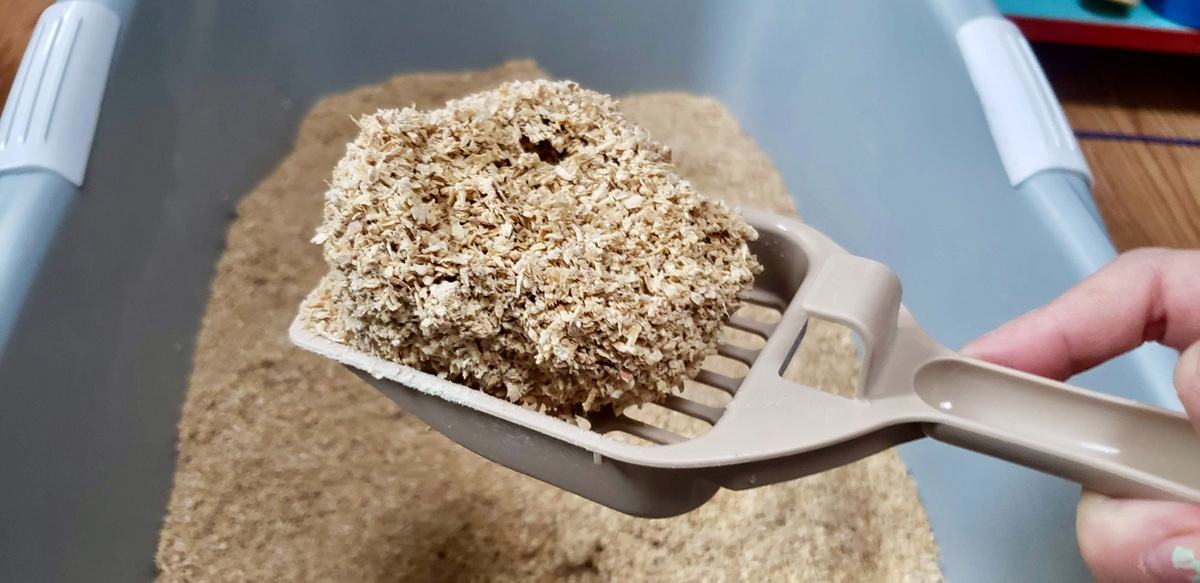
Scooping the litter box at least once a day is one of the most effective ways to prevent odor buildup. Liz Coleman / Cats.com
If you’re letting 2-3 days pass between scooping, odor can build up quickly. One of the simplest yet most effective ways to control litter odors is to scoop at least once a day — twice, even, if possible. More scooping never hurts and prevents ammonia buildup from getting out of control. It also helps keep clumps from breaking down and mixing with clean litter. If you use a non-clumping litter, like Pretty Litter or Catalyst Pine Pellets, scoop out solid waste daily and give the remaining litter a stir.
To streamline the process and encourage consistency, keep supplies at the ready. You’ll need a reliable scoop and trash bags or a litter genie. If your scoop situation could use an upgrade, consider metal. While plastic is cheaper, it tends to crack more easily and can harbor odor-causing bacteria. Good options include the DurAnimals Durascoop and Catalyst’s Slatted Steel Scoop.
2. Establish a regular deep-cleaning routine
Even if you’re diligent about scooping, residue will still cling to the box. To prevent bacteria from spreading, you’ll need to deep-clean your litter box every two to four weeks. This involves dumping out the old litter, removing any stubborn clumps stuck to the sides, and scrubbing it all down with mild dish soap and hot water. Make sure to get into the corners, rinse well, and then let it dry completely before refilling with 2-4 inches of litter. Be sure to wash your scoops and litter mats, too!
3. Use a strong clumping litter
Clumping litter combats odors by trapping them inside tightly bound clumps. Look for formulas that form solid clumps quickly; you don’t want a crumbly litter that breaks apart and leaves stinky particles behind. For clay, we recommend checking out Dr. Elsey’s, Boxiecat, or Fresh Step cat litter. Many natural litters can perform poorly in this area, so it may take some trial and error to find the best one. Consider trying sWheat Scoop, Catalyst’s Multi-Cat, or World’s Best Cat Litter.
If you prefer non-clumping (ideal for kittens or cats recovering from surgery), choose one that’s ultra-absorbent, like Tidy Cat 24/7 Performance or Catalyst Wood Pellets Litter. Keep in mind, you’ll need to change out non-clumping litter more often than clumping litter to keep things fresh.
4. Use a low-tracking litter

Choosing a low-tracking, low-dust litter—such as pellet litter—helps reduce mess and prevents odors from spreading around your home. Liz Coleman / Cats.com
When litter particles are scattered around your home, it’s not only messy — it spreads stink throughout your space. Pellet litter tends to be the least problematic for tracking. Litter made with larger, heavier granules also tends to track less than lightweight options. A low-dust litter, like Fresh Pet or Catalyst Pellets, can also help minimize mess and odors.
5. Use a naturally nice-smelling litter
As a rule, we don’t recommend litter with artificial fragrances, since many cats find them irritating. They also don’t do the best job of managing bad smells; they just add another smell on top of the bad odor.
Instead, consider a litter made from materials that naturally smell nice — without any added scents. For example, Naturally Fresh Walnut Litter and Catalyst’s Unscented Pine Litter have an earthy, woodsy smell that’s pleasant and doesn’t worsen odors.
6. Maintain optimal litter depth
Are you pouring enough litter into the box? A litter pan that’s too shallow may discourage your kitty from covering their waste. Left out in the open, these little “treasures” waft foul odors continuously into the air. Conversely, using too much litter can result in stinky granules being flung outside the box and tracked across your floors.
Generally, you should aim for 2-4 inches, which provides enough depth for your cat to comfortably do their business and bury the evidence. This depth also prevents urine from pooling on the bottom of the pan and creating more smell. Remember to top off the litter as your cat uses it — a few cups per day should do. To ensure you always have litter available, consider signing up for a cost-effective subscription service through a retailer like Chewy or an individual brand site like Catalyst, Tuft & Paw, or Pretty Litter.
7. Use the right type of litter box
Covered boxes can help contain odors, but many cats dislike them. If you’re set on a covered model, consider one with a transparent lid so your kitty can see their surroundings, like the Petphabet. A high-sided litter box may be better received by your cat and helps to keep litter where it’s supposed to be: inside the box. This prevents smelly litter particles from being tracked around your home.
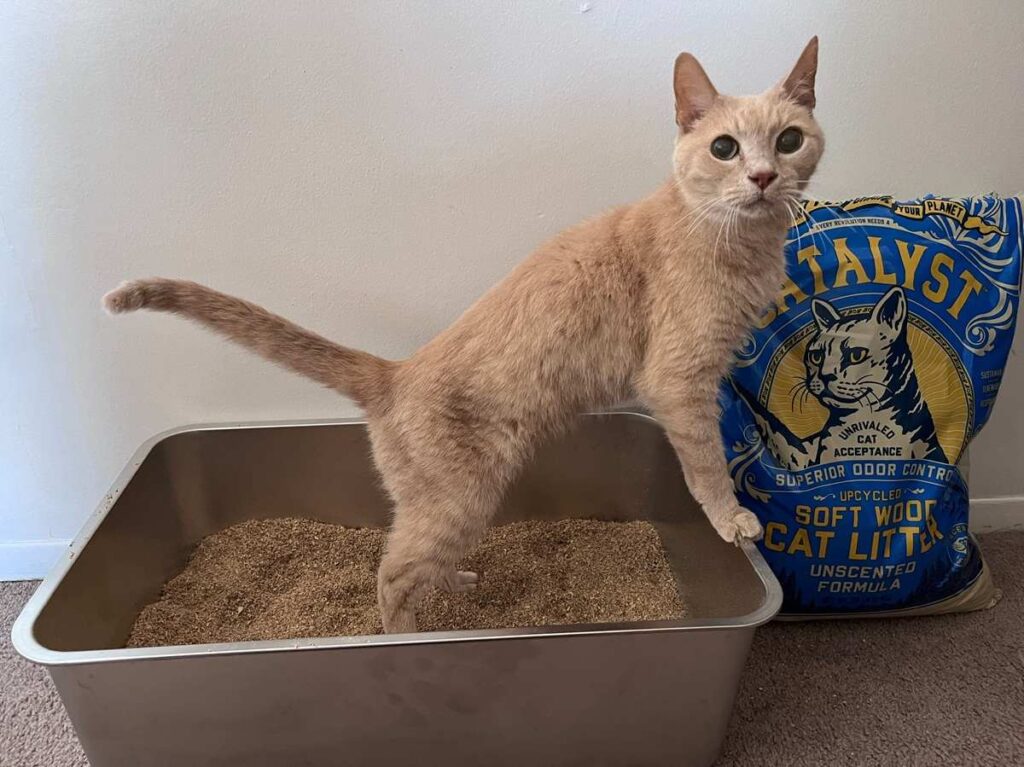
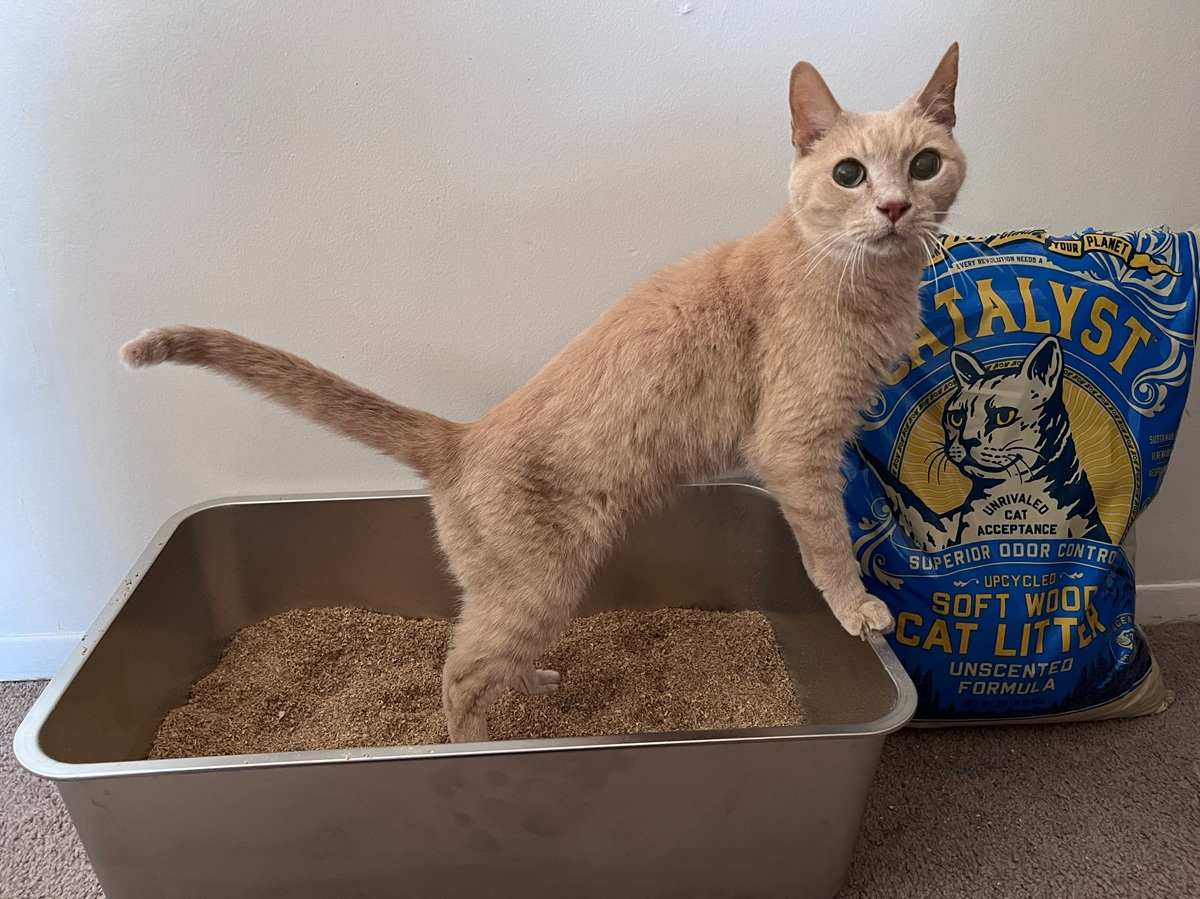
The material matters, too. Plastic is the most common material, but stainless steel actually does a better job of resisting odors because it doesn’t scratch easily like plastic, which can encourage bacteria. A stainless steel scoop (vs. plastic) is another good idea.
You can also consider investing in an automatic litter box. These remove waste right away, and many models feature deodorizing components. Just remember to set the cleaning cycle timer correctly if you’re using a natural litter like Catalyst or Sustainably Yours — these substrates will need more time than conventional clay to form solid clumps that will work with a self-cleaning model.
8. Use the right number of litter boxes
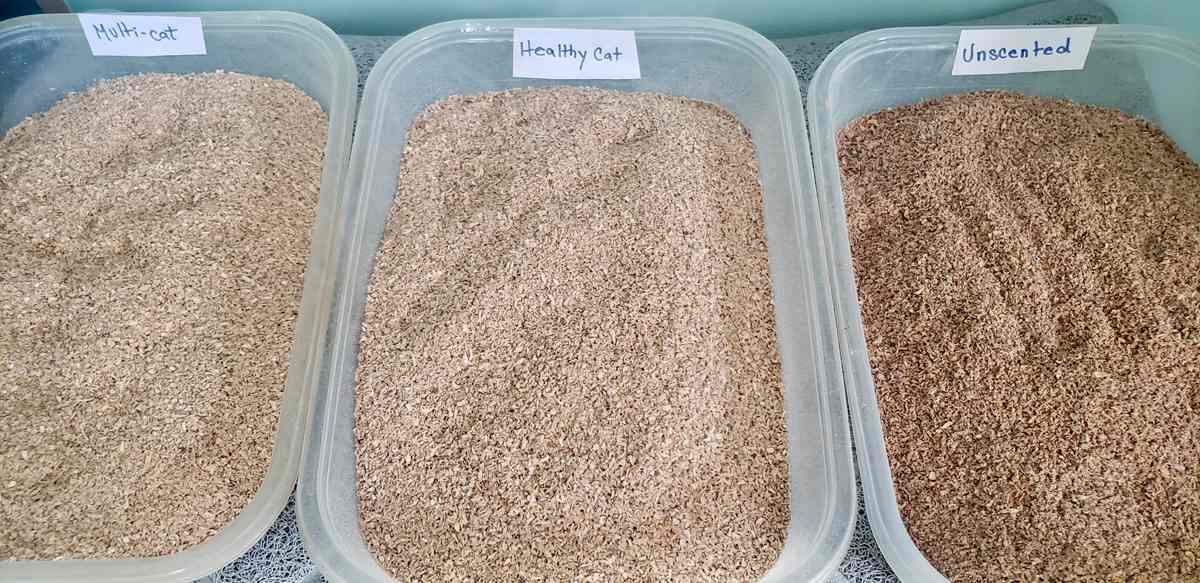
In multi-cat homes, follow the one litter box per cat, plus one rule to help keep boxes cleaner and reduce odors. Liz Coleman / Cats.com
In multi-cat households, the stink can stack up quickly if you don’t have enough litter boxes. The general rule of thumb is to have one box per cat, + 1. So a home with three cats should have at least four litter boxes. This extends each box’s freshness.
9. Be strategic about placement
Heat and humidity encourage bacterial growth and worsen bad smells. Avoid placing the litter box in a small, muggy room with poor ventilation, like the bathroom or laundry room. Instead, choose a larger, well-ventilated area.
You’ll also want to be strategic about placement to encourage feline compliance and avoid smelly accidents outside the box. Most cats prefer to potty in a quiet, low-traffic area away from their food and the center of household activity. If space is limited and the litter box needs to be in a shared living area, attractive litter box furniture is a smart workaround.
10. Replace the litter box when necessary
Litter boxes aren’t meant to last forever. With use, they’ll develop scratches and grooves that can harbor bacteria and cause odors that won’t go away, even with washing. Check your boxes for damage during each deep clean. Most plastic boxes should be replaced every 1-2 years.
11. Use an enzymatic cleaner
Between monthly deep cleans, wipe down the box’s walls with an enzymatic cleaner, such as Anti-Icy Poo or Nature’s Miracle. Whereas regular household cleaners often mask smells, enzymatic cleaners break down organic matter to eliminate the source of the odor.
12. Consider a deodorizer
A cat-safe deodorizer can boost your litter’s odor control by absorbing excess moisture. Avoid products with strong fragrances or harmful chemicals, and look for formulas with activated carbon and zeolite.
13. Try an air purifier
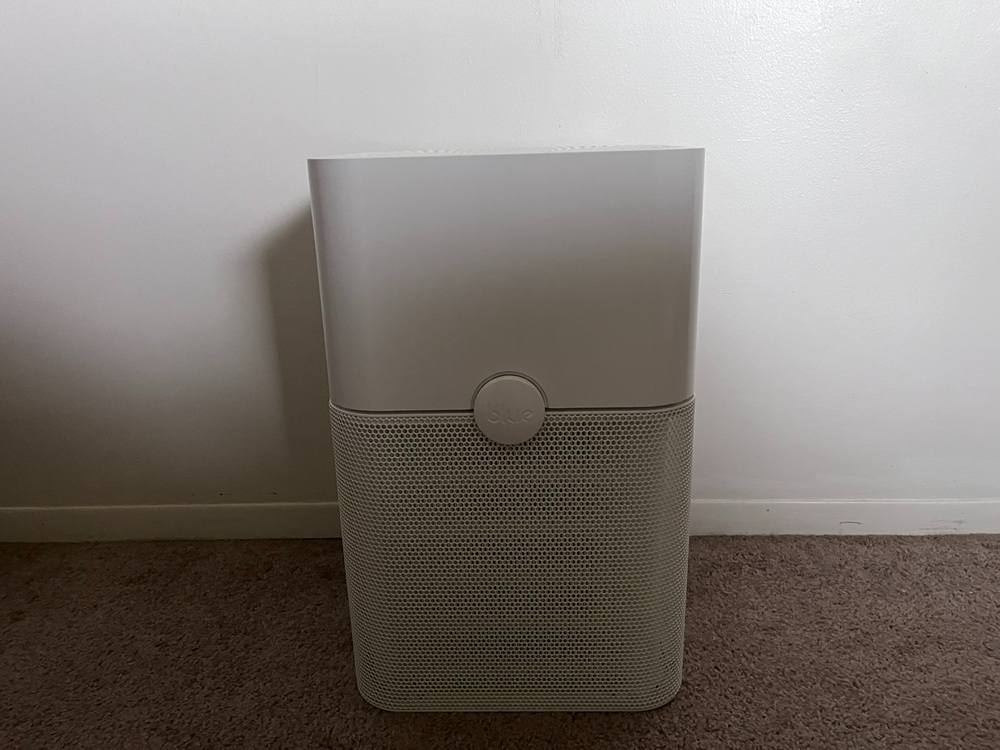
An air purifier with a HEPA filter or activated carbon can help reduce litter box odors—just avoid models that produce ozone. Katelynn Sobus / Cats.com
Placing an air purifier near your cat’s litter area may reduce lingering odors. Look for models with HEPA filters or activated carbon, and avoid ozone air purifiers.
14. Optimize ventilation
A stuffy space with stagnant air can worsen bad smells — especially in the summer! If possible, open your windows and use fans to circulate air and keep your home fresh-smelling.
15. Check your cat’s diet
What your cat eats can contribute to stronger-smelling waste. Strong-smelling urine can also indicate dehydration; these cats may benefit from a water fountain or from adding wet food to the rotation. Before changing your cat’s diet, consult your veterinarian. They can help you choose the best food for your cat’s specific needs. You can also ask them whether adding a probiotic might improve your cat’s digestive health.
16. Keep the surrounding area clean, too
Sometimes the smell comes from the area around the litter box, not the box itself. Make sure to clean up any litter, dust, or residue on the floor, litter mats, and surrounding surfaces like tables and shelves. To make regular cleanups easier (and reduce the likelihood that you’ll skip them), keep your cleaning supplies accessible and organized. That might mean placing a bin next to the litter box, hanging tools on the wall, or stashing items in a nearby closet.