
Petful is reader supported. As an affiliate of platforms like Amazon and Chewy, we may earn a commission when you buy through links on this page. There is no extra cost to you.
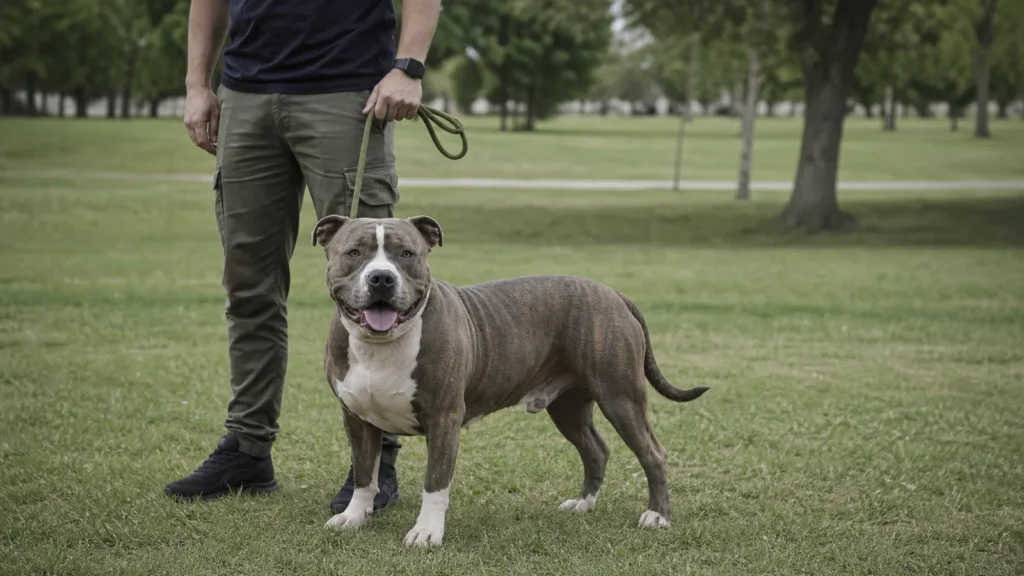
The XL American Bully is the tallest United Kennel Club variety, with mature males over 20 through 23 inches at the withers and females over 19 through 22 inches. That registry classification is not interchangeable with a government legal test, and neither a pedigree nor a seller’s label can guarantee how an authority will classify a dog.

Don’t Guess When It Comes To Your Pet’s Care
Sign up for expert-backed reviews and safety alerts all in one place.
What is an XL American Bully?
- 1XL is a height-based registry variety, not a fixed weight
- 2Temperament must be judged individually without guarantees
- 3Large-dog handling, housing, health, and cost deserve planning before purchase
- 4Legal status depends on jurisdiction and may use a physical-type test rather than pedigree
An XL American Bully is the taller variety of the American Bully recognized by the United Kennel Club and American Bully Kennel Club. The UKC describes the same overall breed type in a taller height range, while the ABKC says no particular weight is set for the breed and that height and weight should remain proportional.
Read Petful’s main American Bully guide for the history, recognized varieties, colors, and general care shared across the breed. This page owns the XL size, handling, and law questions.
The term “XXL” is generally a sales label, not an additional UKC variety. It may describe a dog claimed to exceed an XL seller’s expectations, but it does not create an official size category or prove functional structure, health, or legal status.
Is American Bully XL aggressive?
No breed or size label can determine whether an individual XL American Bully will be aggressive. Behavior reflects inherited tendencies, early environment, health, socialization, learning history, management, and the immediate situation. The consequences of poor control can be greater with a powerful dog, so uncertainty should lead to better screening and training, not a blanket label.
Meet the dog and, when possible, adult relatives. Look for recovery after excitement, comfort with ordinary handling, and the ability to disengage. Ask about guarding, fear, fights, bites, pain, and reactions to visitors and other animals. A seller’s “zero aggression” promise is not evidence.

Petful may earn a commission when you click through to Lemonade, at no extra cost to you.
How much is an XL American Bully worth?
There is no objective amount that every XL American Bully is worth. July 2026 seller pages show asking prices from several thousand dollars upward, but these are advertised figures, not independently verified transactions. Pedigree promotion, breeding rights, color, geography, seller demand, and an XL label can all move the ask without improving health.
Price should follow evidence. Give more weight to verifiable parent health results, stable behavior, functional movement, veterinary records, contract terms, and lifetime support than to head size or “rare” color. Petful’s American Bully price guide owns the detailed cost analysis.
Is the XL Bully banned in the United States?
No nationwide U.S. federal law banning the XL Bully by that name surfaced in current federal sources as of July 2026. That does not mean the dog is legal or unrestricted everywhere. State, county, municipal, tribal, housing, insurance, and transport rules can use American Bully, pit bull, or physical-type language.
Check every applicable layer before buying, moving, breeding, or traveling. A concrete example of local variation appears in the Yemassee, South Carolina code, which includes American Bully within a restricted pit-bull definition. Local code can change, so verify with the enforcing authority.
Is American Bully XL a good family dog?
An XL American Bully may be an affectionate family companion, but no label guarantees a safe fit with children, visitors, or other animals. The decision depends on the individual dog’s history and behavior, the adults’ handling ability, the household routine, supervision, space, and willingness to train and manage.
Children should never climb on, corner, disturb, or take items from any dog. Use barriers and active adult supervision, teach a calm retreat, and separate during high-energy play, food, chews, or conflict. A family should be able to control the adult dog without relying on a child.
Are American Bullies calmer than pitbulls?
There is no reliable rule that every American Bully is calmer than every American Pit Bull Terrier or dog called a pit bull. The labels describe different registry or everyday categories, and individual variation is substantial. Calmness also changes with age, arousal, pain, training, exercise, and environment.
Compare the actual dogs, not sales copy. Petful’s American Bully versus pit bull guide explains the breed identities and shared confusion without turning either name into a temperament guarantee.
How much do XL Bullies cost?
XL Bully asking prices vary widely by location, source, pedigree claims, contract, breeding rights, age, and marketing. Current seller pages observed in July 2026 commonly advertise several-thousand-dollar puppies, while rescues and rehomes use different fee structures. Those figures should be dated and labeled as asks rather than universal averages.
The acquisition amount is only the entry cost. Budget for durable large-dog equipment, food, training, housing deposits, insurance availability, preventive care, boarding, transport, and an emergency fund. An expensive puppy can still lack meaningful health testing or a workable return policy.
Is it illegal to own a XL bully in the USA?
It is not accurate to answer with one nationwide yes or no. There is no federal XL-specific ownership ban identified as of July 2026, but a local law may prohibit, restrict, sterilize, register, insure, confine, or muzzle a dog under American Bully or pit-bull-type language. Private contracts can add separate restrictions.
Ask the city or county animal-control authority for the current code and how it is applied. Also obtain written confirmation from the landlord, homeowners association, insurer, and any carrier you expect to use. Registration papers may not control those decisions.
Is American Bully just a pitbull?
No. The American Bully and American Pit Bull Terrier have separate registry standards, and the American Bully was developed as a companion breed with several height varieties. In casual speech, people often use “pit bull” as an umbrella label for multiple dogs with a similar appearance.
Law adds another layer. A government may define a prohibited type through physical characteristics rather than breed records. For that reason, “not an APBT” does not automatically mean “outside every pit-bull-type rule,” and a DNA test cannot promise a legal result.
Petful may earn a commission when you click through to Chewy, at no extra cost to you.
Registry XL versus legal XL Bully definitions
The registry question asks whether a mature American Bully falls within an organization’s variety standard. The legal question asks whether a dog meets the physical and other criteria in a particular government’s rule. The same animal can have a documented pedigree and still require a separate legal assessment.
Registry XL and Government XL Bully Definitions
| Question | Registry variety standard | Government legal type test |
|---|---|---|
| Purpose | Classify a registered breed variety | Decide whether a law applies to a dog |
| Main measurement | UKC mature height at the withers, male over 20 to 23 inches and female over 19 to 22 inches | Jurisdiction-specific conformation standard plus overall physical characteristics |
| Weight | No single official ABKC breed weight; proportion matters | Not a universal weight rule; read the jurisdiction’s full test |
| Evidence | Registry standard, pedigree, mature measurement | Enforcing authority, court process, government conformation guidance |
| Practical result | Breed-show and registry classification | Ownership, sale, breeding, public-control, exemption, or enforcement consequences |
The UKC American Bully standard is the primary source for its mature XL height range. The ABKC breed standard states that there is no particular weight for the breed and emphasizes proportion and condition.
The United Kingdom’s official XL Bully definition serves a different purpose. It is a physical conformation standard used by courts and Dog Legislation Officers. It is not simply a lookup of an American registry, DNA result, or seller description.
Two tests, two consequences
- A registry XL label does not prove that a government will classify the dog as an XL Bully, and a legal XL Bully finding does not depend on the seller having used that label.
XL Bully size and growth
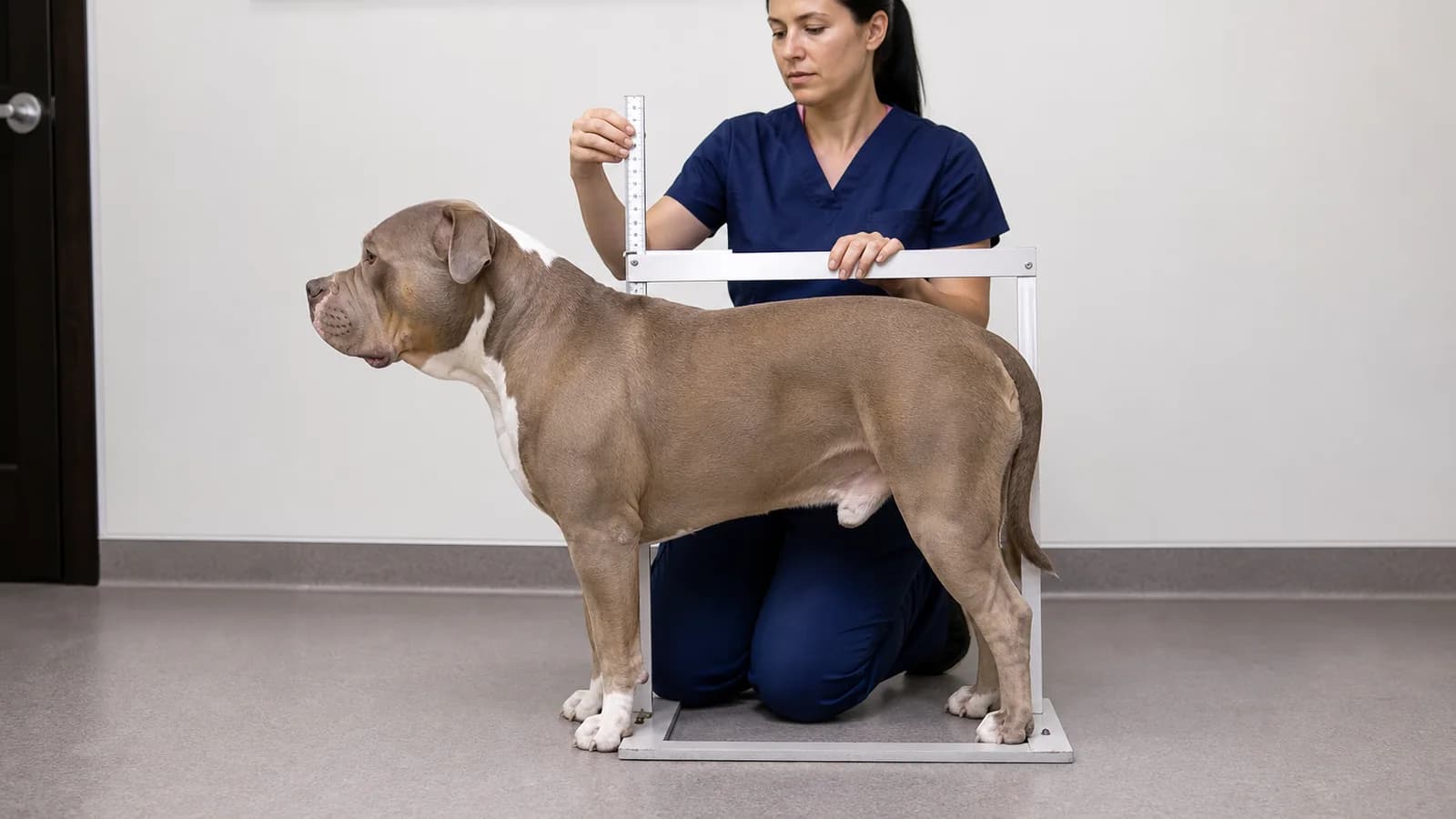
Measure height at the withers, the highest point over the shoulder blades, while the mature dog stands naturally on level ground. Do not measure to the top of the head, and do not use weight alone to assign the XL variety.
Official height and weight uncertainty
Under the UKC standard, a mature male XL is over 20 inches through 23 inches at the withers, while a mature female is over 19 inches through 22 inches. Dogs are not finally classified from puppy height, and a seller cannot guarantee a mature measurement from a young puppy.
There is no official ABKC weight target that makes a dog XL. Weight varies with height, frame, sex, body composition, and condition. A heavily overconditioned dog may weigh more without being taller, healthier, or more correct.
Use a growth record that includes:
- Date, age, and height measured on the same level surface.
- Body weight using the same reliable scale when practical.
- Body-condition observations, including ribs, waist, and abdominal tuck.
- Photos of natural stance and movement rather than posed bulk.
- Veterinary notes about gait, development, breathing, skin, and overall condition.
Growth does not turn an XL puppy into an investment asset, and a larger number on the scale does not justify a premium. Pay for verifiable care and evidence, not forced weight gain or a guaranteed adult label.
Growth-safe exercise
Puppies and adolescents need play, walking, exploration, training, and rest without repetitive impact or forced conditioning. Avoid weighted pulling, road running, repeated high jumps, and feeding for rapid bulk while the body is developing.
For adults, build activity around the individual:
- Daily sniffing walks and controlled movement.
- Short reward-based training sessions.
- Play on surfaces that provide traction.
- Strength and conditioning planned around health and ability.
- Rest, water, and heat management.
Watch function rather than chasing an XL look. A dog should be able to breathe quietly at rest, rise without struggle, move freely, recover appropriately, and maintain a lean body condition.
Petful may earn a commission when you click through to Chewy, at no extra cost to you.
XL Bully temperament and ownership
The ownership challenge is not constant aggression. It is the combination of substantial strength, individual behavioral variation, public perception, and rules that may leave little room for handling mistakes. Start with management that works on an ordinary difficult day, not only when the dog is calm.
Temperament without guarantees
The United Kennel Club standard describes the American Bully as a companion dog, but standards describe an ideal, not every individual. Screen the source, meet the dog, ask about relatives, and take fear, guarding, dog conflict, and poor recovery seriously.
An XL American Bully can live successfully with a family when:
- Adults can control and supervise the dog.
- Children have clear dog-safety rules and barriers are available.
- Resident-animal introductions are gradual and reversible.
- Training uses rewards, management, and qualified professional support.
- Exercise and enrichment match the dog’s health and arousal.
- The home can comply with every legal and private restriction.
For indoor enrichment, a size-appropriate large KONG Classic can hold part of a measured meal and support calm settling. Supervise first use, inspect it often, and remove damaged rubber.
The absence of one U.S. federal ban does not remove local or private limits. Build the law, lease, insurance, travel, and emergency-care checks into the ownership decision before the dog arrives.
Health and exercise
An XL frame does not need exaggerated mass. Prioritize proportion, open airways, free movement, sound feet, stable joints, healthy skin, and a body condition that does not hide the ribs under excess fat.
Ask a breeder for independently verifiable parent results rather than accepting “health tested” as a complete sentence. Search the OFA database by registered name or number, read which tests were performed, and ask a veterinarian what the results mean for that family.
Petful’s dedicated American Bully lifespan and health guide covers health and longevity in depth. Seek veterinary care for breathing difficulty, collapse, persistent lameness, severe skin disease, pain, or a sudden change in behavior.
Verify the actual parents
- Registry papers, a DNA panel, and the phrase health tested do not replace identifiable results for both parents or a veterinary assessment of the individual dog.
If insurance is available in the household’s state and for the exact dog, compare hereditary-condition terms, orthopedic waiting periods, exclusions, deductibles, reimbursement, and limits. A current Lemonade breed-based insurance quote is one sponsored option, but coverage and availability vary and pre-existing conditions are generally excluded.
Training and physical handling
Train the skills that keep a large dog safe in real life: name response, recall, loose-leash walking, settle, leave it, drop, cooperative care, muzzle conditioning, and calm entry and exit. Muzzle training is useful preparation even where it is not legally required because injury, travel, or an emergency may make one necessary.
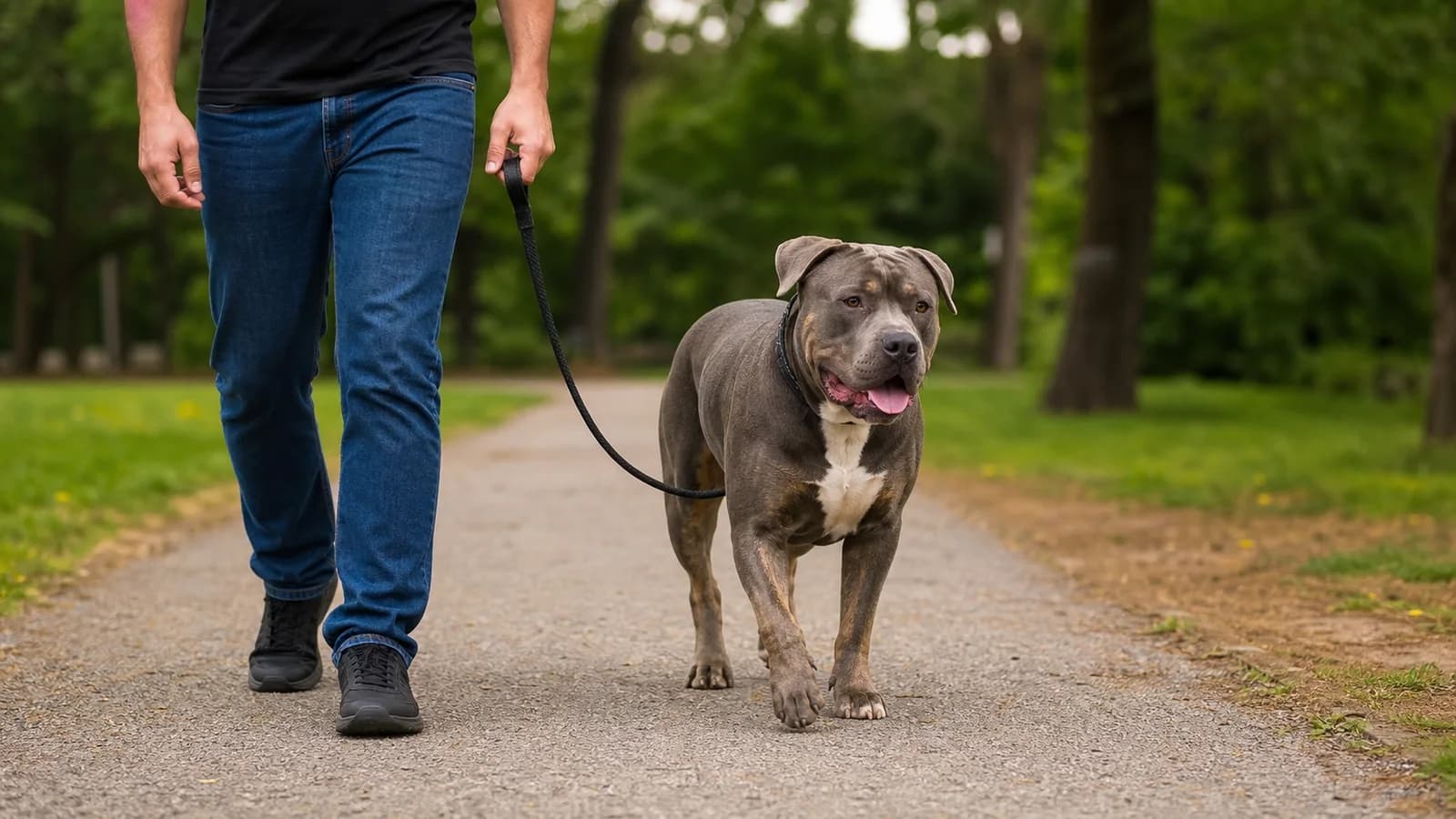
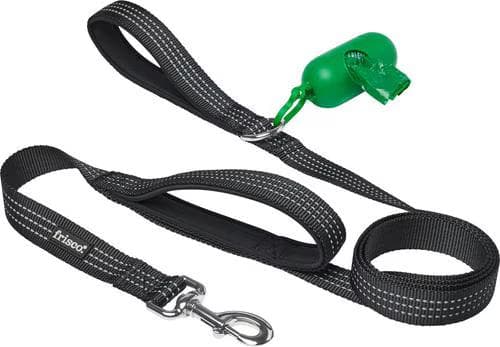
Use equipment as backup, not as the entire plan. A Frisco dual-handle traffic leash is a sponsored option that gives an adult handler a close-control point, but it does not teach leash behavior. Check stitching and clips regularly and choose width and hardware for the actual dog.
A properly fitted PetSafe Easy Walk harness can provide another management point while loose-leash training develops. Fit it to the actual chest, keep the shoulders free, and do not treat equipment as a substitute for handler control.
Avoid physical confrontations and pain-based shortcuts. If the dog lunges, guards, fights, panics, or cannot recover, increase distance and management and consult a qualified behavior professional. Do not wait for the dog to become stronger.
XL Bully laws and ownership rules
The following summary is current to July 2026 and is general information, not legal advice. England and Wales apply the Dangerous Dogs Act framework, while other jurisdictions use their own breed-specific legislation and procedures. Rules change, and the enforcing authority or a qualified lawyer should confirm what applies to an individual dog and address.
July 2026 legal checkpoint
- Check the jurisdiction, effective date, official physical-type definition, exemption status, public-control rules, address rules, travel, sale, breeding, rehoming, insurance, and any upcoming changes before acting.
England and Wales
Under GOV.UK guidance last updated July 1, 2026, it has been a criminal offence since February 1, 2024 to own or possess an XL Bully without a valid Certificate of Exemption. Selling, abandoning, giving away, breeding, breeding from, or having one in public without a lead and muzzle are also offences.
The ordinary application window is closed, and a new exemption is available only through a court-authorized route. An exempt dog must meet requirements including secure keeping, microchipping, neutering, and lead and muzzle control in public. The handler in public must be at least 16, and the certificate must be produced within five days when requested.
The previous third-party public-liability insurance requirement ended on July 1, 2026. A future rule begins November 1, 2026: a person must not leave a child under 12 in close contact with an XL Bully in a private place without adult supervision.
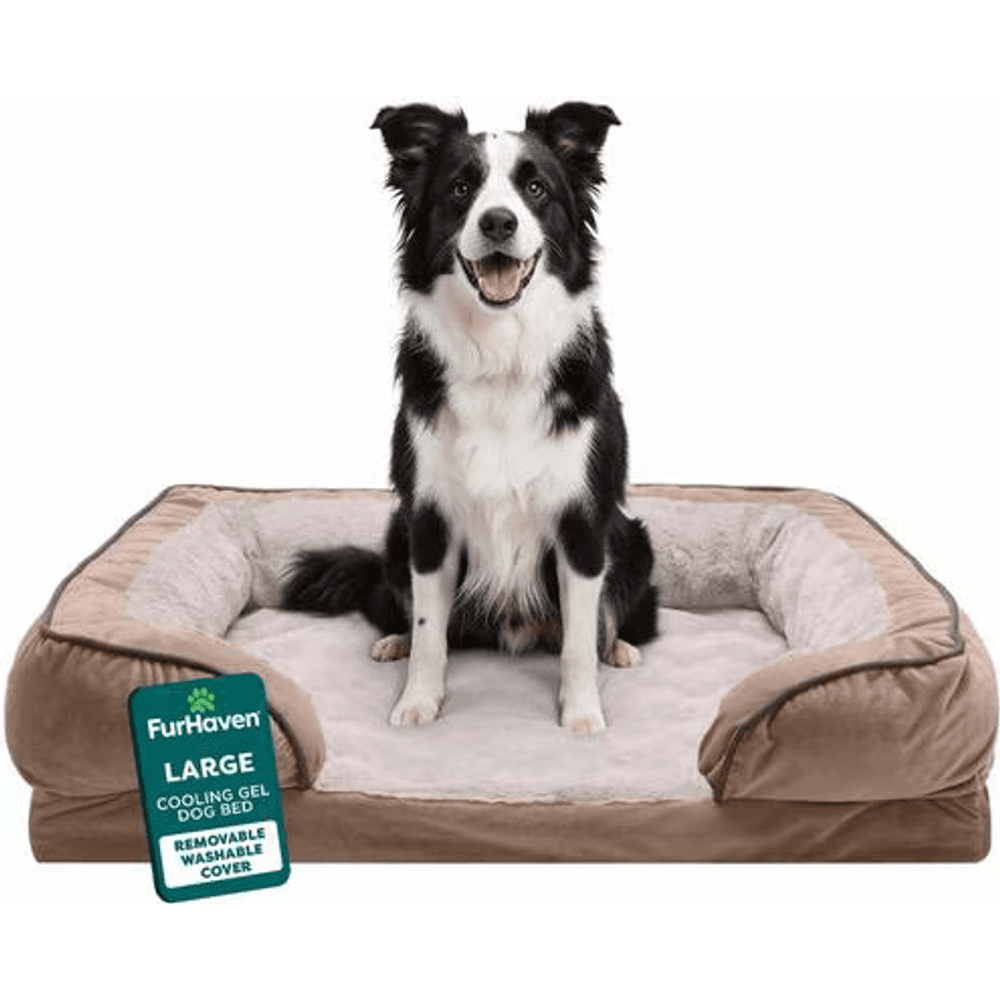
An orthopedic sofa bed with three bolstered sides for dogs who like to rest their head and joints against a cushion. The supportive foam base cradles hips and elbows, a comforting spot for an older or shaky dog to settle.
Petful may earn a commission when you click through to Chewy, at no extra cost to you.
Scotland
The Scottish Government XL Bully rules began in stages on February 23, 2024. Since August 1, 2024, keeping an XL Bully without a valid exemption has been a criminal offence. Breeding, selling, gifting, rehoming, abandoning, allowing a dog to stray, and public presence without a lead and muzzle are restricted.
The ordinary exemption deadline was July 31, 2024, with only a court-authorized route now available for a new exemption. Scotland ended the insurance requirement on July 1, 2026 and also published the upcoming under-12 supervision change for November 1, 2026. Scotland has its own conformation standard guidance.
Northern Ireland
Northern Ireland’s official banned-breeds guidance lists the XL Bully as a banned type. Restrictions on breeding, selling, offering, exchanging, gifting, abandoning, and public control began July 5, 2024, and possession without a valid exemption became an offence on December 31, 2024.
Exempt dogs must meet conditions including neutering, lead and muzzle use in public, secure keeping, and required notifications. Insurance was required only through June 30, 2026 and ended July 1, 2026. The under-12 private-place supervision rule is scheduled for November 1, 2026.
The DAERA conformation standard says assessment is based on physical type rather than pedigree or DNA. Adult height thresholds begin at 20 inches for males and 19 inches for females, but substantial additional characteristics are part of the test.
Republic of Ireland
The Republic of Ireland is a separate jurisdiction. The Department of Agriculture XL Bully guidance states that importing, breeding, selling, and rehoming XL Bully dogs has been prohibited since October 1, 2024.
Since February 1, 2025, possession requires a Certificate of Exemption or proof of a timely application. The general application window closed January 31, 2025, apart from narrow circumstances described by the government. Exempt dogs must be licensed, microchipped, and neutered, and restricted-breed public controls also apply.
United States
As of July 2026, treat U.S. legality as a local research task. Search the current municipal and county code, then confirm the answer with animal control because a rule may use breed names, a pit-bull umbrella, physical characteristics, or case-specific findings.
Also obtain written answers from:
- The landlord or property manager.
- The homeowners or condominium association.
- The homeowners or renters insurer.
- The dog-liability insurer, if separate.
- Airlines, ground carriers, boarding facilities, and destinations.
Moving, travel, sale, and rehoming
An XL Bully legal check must follow the dog through its whole life. A placement that is lawful at today’s address can become impossible after a move, eviction, insurance change, family emergency, or international trip. Research the destination before booking transport or signing a lease.
Create a mobility file containing:
- The dog’s microchip number and current registration details.
- Registry and pedigree records without treating them as legal clearance.
- Veterinary, vaccination, and neutering records.
- Any Certificate of Exemption and address notifications.
- Current muzzle, lead, crate, and carrier measurements.
- Written housing, insurance, airline, ferry, or ground-carrier approvals.
- Contact information for the relevant animal-control authority.
Moving within a restricted jurisdiction
Exemption rules may attach conditions to the registered address, temporary stays, handlers, and notices after a change. England and Wales guidance, for example, limits the time an exempt dog may stay at a different address and requires the owner to notify changes described in the certificate conditions.
Do not rely on a landlord saying “dogs are allowed.” Ask whether the exact dog, breed label, weight, physical type, and any legal exemption are acceptable under the lease and insurer. Keep the answer in writing, since an oral assurance may not prevent a later housing dispute.
International travel and import
The origin country, destination, route, and transit point can each impose rules. The United States currently requires every entering or returning dog to satisfy CDC dog import requirements, including a minimum age of 6 months, microchip, healthy appearance, and CDC Dog Import Form receipt as of the April 28, 2026 update.
Those federal import conditions do not override a destination’s local breed rule. An airline may also refuse a dog based on its own breed, crate, temperature, or handling policy even when government entry is possible.
Sale, gifting, and rehoming
In England and Wales, Scotland, Northern Ireland, and the Republic of Ireland, the current XL Bully restrictions described above make ordinary sale, gifting, or rehoming illegal or tightly unavailable. An owner facing a crisis should contact the official authority and qualified local organizations instead of privately transferring the dog.
Never assume calling a transfer “temporary fostering,” changing the registry name, or removing paperwork avoids the law. Government rules may assess physical type and the real custody arrangement.
Plan a lawful emergency route
- Before ownership, identify who can provide temporary care, whether that address is permitted, which handler can comply with lead and muzzle rules, and which authority must be notified. A social-media rehome post is not a safe emergency plan.
XL Bully price
Current July 2026 listings show wide asking-price bands, often several thousand dollars, but a seller’s price is not an appraisal and should not be presented as a national average. The most useful comparison holds the contract, health evidence, source, location, and included care constant.
Before paying, verify:
- Parent identity and independent health results.
- Temperament and functional structure.
- Veterinary, vaccine, parasite, and microchip records.
- Pet-only versus breeding-rights terms.
- Return policy and source support.
- Legal ownership, housing, insurance, and transport feasibility.
A high asking price cannot cancel a legal restriction or make a poorly moving dog sound. It also does not include the ongoing cost of food, training, durable equipment, veterinary care, travel, or emergency planning.
Is an XL Bully right for you?
The best home can comply with the law, control the dog safely, afford its care, and value function over extreme size. The wrong home is one relying on a puppy’s sales description, a landlord’s verbal answer, or a promise that a large companion dog will never need management.
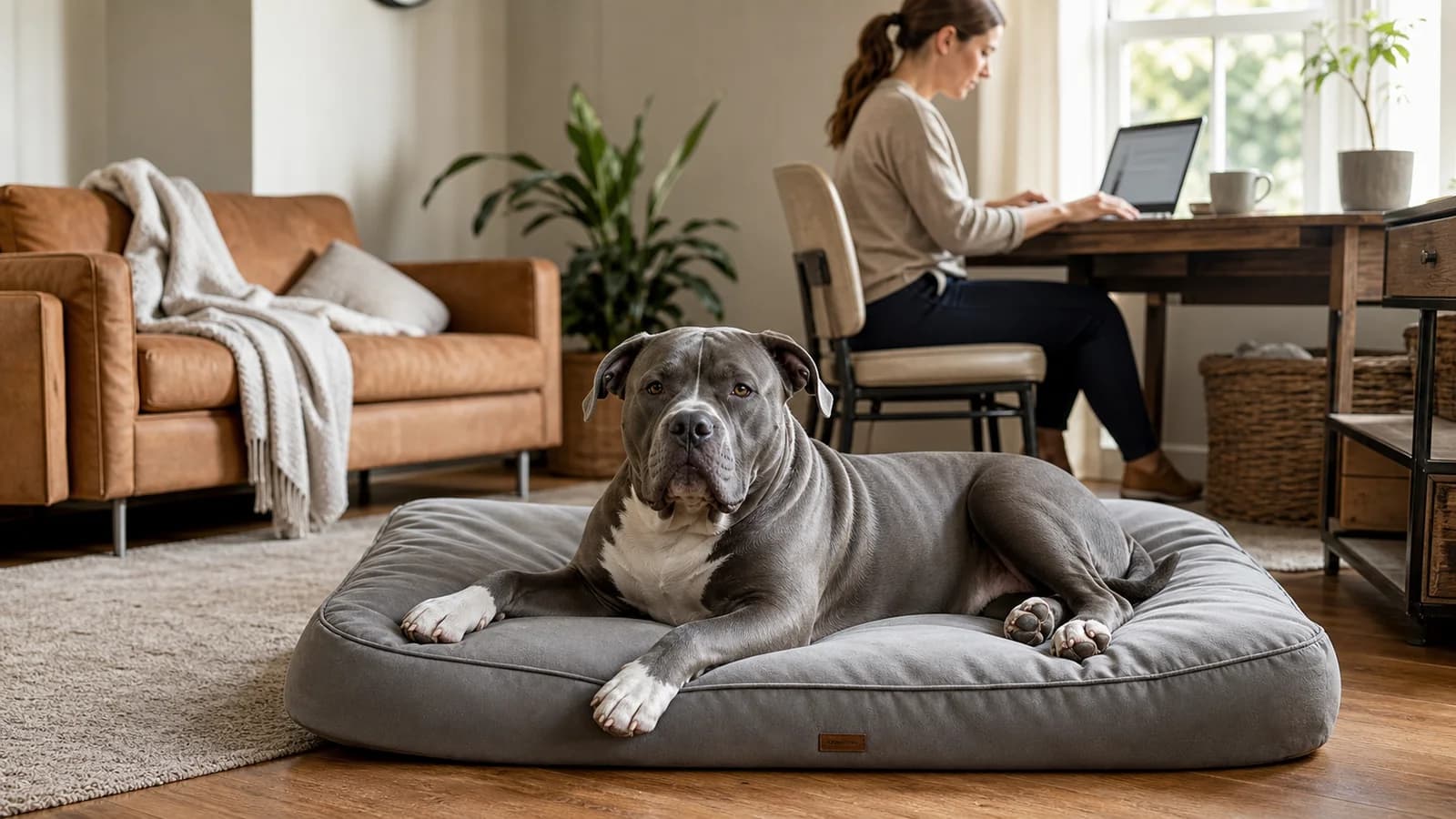
Use this final readiness list:
- Every legal and private-property answer is current and in writing where possible.
- Adults can handle the dog and maintain lead and muzzle skills.
- Children and animals can be separated with secure barriers.
- The schedule supports exercise, training, social contact, and rest.
- Housing has enough space for a large crate and safe movement.
- The budget includes routine care, an emergency fund, and possible professional training.
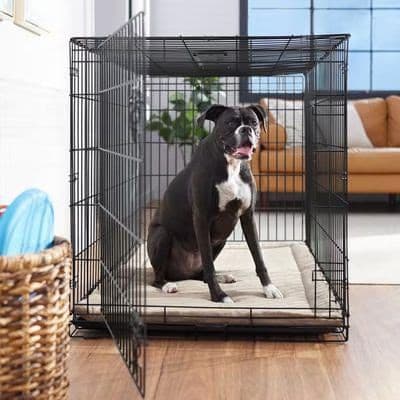
An extra-large Frisco wire crate is a sponsored equipment option if its measured internal dimensions fit the individual dog. A crate must allow normal standing, turning, and resting and should never become all-day storage.
For older or pressure-sensitive dogs, a large FurHaven orthopedic sofa bed is a sponsored resting option. Check the actual dimensions and foam support, supervise dogs that chew bedding, and keep a cooler firm surface available.
Choose function over spectacle
- Favor quiet breathing, free movement, stable behavior, healthy skin, a lean body condition, and verifiable records over a heavier scale number, oversized head, color premium, or XXL sales label.
XL American Bully FAQs
Frequently Asked Questions
Under the UKC mature standard, males are over 20 through 23 inches at the withers and females are over 19 through 22 inches. Measure on level ground at maturity. Government legal definitions may use different thresholds and additional physical characteristics.
There is no single official ABKC breed weight or weight that automatically makes a dog XL. Weight changes with height, sex, frame, muscle, and body condition. Use height for registry variety and keep the individual lean and functional rather than chasing a seller’s number.
The XL American Bully is a variety of the separately recognized American Bully, not the American Pit Bull Terrier. Casual speech and local laws may use pit bull more broadly. Pedigree does not automatically decide whether a physical-type law applies.
An XL label does not determine aggression. Genetics, early environment, health, socialization, training, management, and context all matter. Screen the individual and family behavior, use reward-based training, and take fear, guarding, dog conflict, or poor recovery seriously.
No nationwide federal XL-specific ban was identified as of July 2026, but local laws can prohibit or restrict dogs named American Bully, pit bull, or a defined physical type. Check state, county, city, tribal, housing, insurance, and transport rules.
Only with a valid Certificate of Exemption and compliance with the conditions. Since February 1, 2024, possession without an exemption has been a criminal offence. The normal application window is closed, with new exemption possible only through a court-authorized route.
Most need daily walks, sniffing, training, and play adjusted to age, health, weather, and recovery. Avoid forced high-impact work during growth. Adults should maintain a lean body condition and be able to move, breathe, and recover comfortably.
No reliable number predicts an individual dog. Longevity depends on genetics, functional conformation, body condition, preventive care, environment, and treatment. Use broad breed estimates only for planning and ask for verifiable family health history rather than accepting a seller’s guarantee.

Coreen Saito is a pet writer and longtime shelter volunteer with more than a decade in animal rescue. She covers cat behavior, breed care, and the small, ordinary science of sharing a life with companion animals, with a particular focus on honest takes about the products and decisions that actually matter. At home in Arizona, she’s outranked by Mac (a dog with the loudest opinion in the house), Rebel (a cat who governs by quiet authority), and Meri (an orange tabby who runs the late shift and the laundry basket). She writes about all three, plus the rescues that keep coming through her life, at LifeWithMinty.com.