

Petful is reader supported. As an affiliate of platforms like Amazon and Chewy, we may earn a commission when you buy through links on this page. There is no extra cost to you.
The best food for Cavalier King Charles Spaniels is complete and balanced for the dog’s life stage, appropriate in calories, produced with accountable formulation and quality control, and adjusted to body condition, preferences, and medical needs. No single meat, format, or breed label is best for every Cavalier.
- 1Find the complete-and-balanced nutritional adequacy statement first.
- 2Match the life stage and compare calories per cup, can, pouch, or gram.
- 3Evaluate the manufacturer’s expertise, quality control, and research.
- 4Measure portions and reassess body condition.
- 5Use veterinary guidance for disease, recurrent symptoms, obesity, or a therapeutic diet.

Don’t Guess When It Comes To Your Pet’s Care
Sign up for expert-backed reviews and safety alerts all in one place.
How to choose the best food for a Cavalier
The FDA explains that a food labeled “complete and balanced” as a sole diet must meet an AAFCO nutrient profile or pass an AAFCO feeding trial. The statement also identifies the life stage, such as growth or adult maintenance. Treats, toppers, and supplements are commonly not complete diets.
Start with five questions:
- Is it complete and balanced for this dog’s life stage?
- How many calories are in the unit you will actually feed?
- Who formulates the food and what are their qualifications?
- What quality-control and finished-product testing are used?
- Does the dog maintain healthy stool, skin, energy, muscle, and body condition?

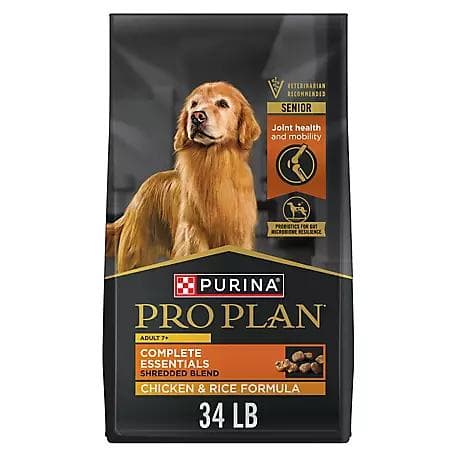
From Chewy
A vet-backed adult kibble with full WSAVA alignment and AAFCO feeding trials. Budget-friendly, though corn gluten and soybean meal sit in the top ingredients.
Petful may earn a commission when you click through to Chewy, at no extra cost to you.
How to compare Cavalier food options
Product-neutral Cavalier food audit
| Question | Evidence to find | Weak shortcut |
|---|---|---|
| Nutritional adequacy | Complete and balanced statement for the correct life stage | “Premium,” “holistic,” or breed picture |
| Calories | kcal per cup, can, pouch, or kilogram | Serving size without calories |
| Formulation | Qualified nutrition expertise and contactable company | Ingredient-list ranking alone |
| Quality control | Supplier standards, analysis, and traceability | “Natural” with no process detail |
| Research | Published feeding or nutrition work when available | Influencer endorsement |
| Individual fit | Stable body condition, stool, appetite, skin, and energy | One universal best-food claim |
The WSAVA selection tool does not approve brands. It gives questions owners and veterinary teams can ask about the company, formulation, quality control, and research. Use those questions consistently rather than turning the guideline into a logo list.
A digital kitchen scale improves portion repeatability, especially when a small change in grams is a meaningful share of a small dog’s calories.
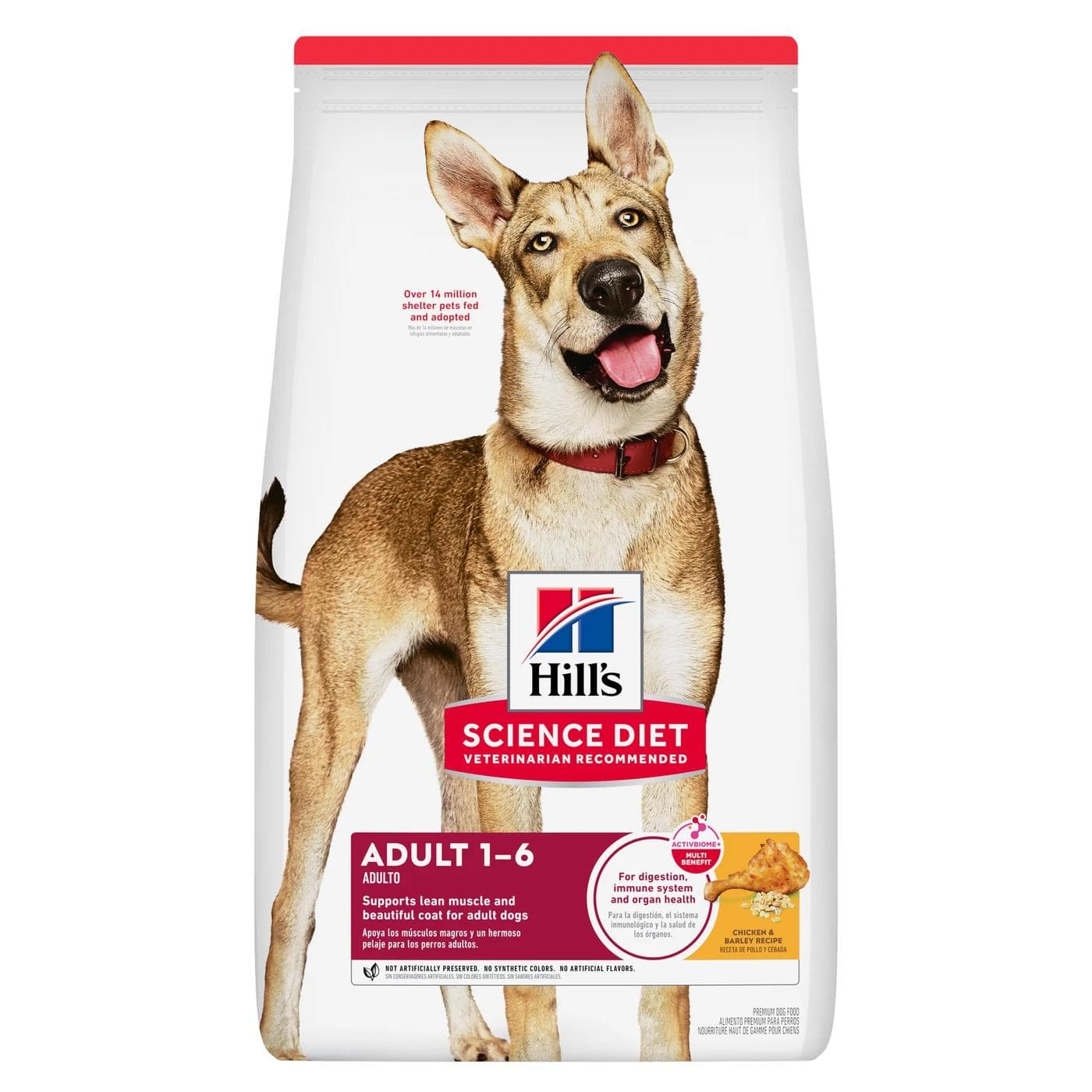
From Chewy
A vet-channel adult-maintenance kibble backed by AAFCO feeding trials. Leaner protein and fat than many competitors at a comparable price.
Petful may earn a commission when you click through to Chewy, at no extra cost to you.
If the label, life stage, calorie target, and veterinary plan align, Purina Pro Plan Adult Chicken and Rice Formula is one current adult formula to compare, with any transition made gradually. If the label, life stage, calorie target, and veterinary plan align, Hill’s Science Diet Adult Chicken and Barley Recipe is one current adult formula to compare, with any transition made gradually. If the label, life stage, calorie target, and veterinary plan align, Wellness Complete Health Adult Chicken and Oatmeal is one current adult formula to compare, with any transition made gradually.

From JustFoodForDogs
Fresh, human-grade meals made from vet-formulated recipes and 100% human-grade ingredients.
Check current price →
Petful may earn a commission when you click through to JustFoodForDogs, at no extra cost to you.
Choose by life stage and feeding format
Puppies need a diet appropriate for growth. Healthy adults usually need adult maintenance. Senior is a marketing category unless the adequacy statement and formulation explain the intended life stage, so choose based on the individual dog’s health, body condition, chewing comfort, and veterinary plan.
Dry, wet, and fresh foods can all be suitable when complete and balanced for the right life stage. Compare:
- Calories and how easily the portion can be measured.
- Storage before and after opening.
- Chewing comfort and food preference.
- Cost per day rather than package price.
- Availability during travel or supply interruptions.
- The company’s formulation and quality-control answers.
Avoid abrupt changes when the dog is stable. Transition gradually while keeping total calories controlled, unless the veterinarian gives a different plan. A sealed pet-food storage container can protect dry food when it is sized to the bag and cleaned between refills.

Deboned chicken and whole grains with guaranteed probiotics, taurine, and omegas. The sensible middle of the premium aisle for everyday adult dogs.
Petful may earn a commission when you click through to Chewy, at no extra cost to you.
Portions, calories, and body condition
The feeding guide is a starting point, not a prescription. AAHA nutrition guidance recommends individualized assessment that considers the animal, the diet, and feeding management. Weigh food, count treats and chews, and reassess weight, waist, ribs, abdominal tuck, muscle, appetite, and activity.

An ideal body condition generally includes ribs that are easy to feel with a light covering, a visible waist from above, and an abdominal tuck from the side. Long feathering can hide shape, so use hands as well as eyes. Ask the veterinary team to record a body-condition and muscle-condition score.
Treats and extras should remain a small part of intake. AAHA’s healthy feeding plan uses a practical target of at least 90% of calories from complete and balanced nutrition and no more than 10% from treats and other foods.
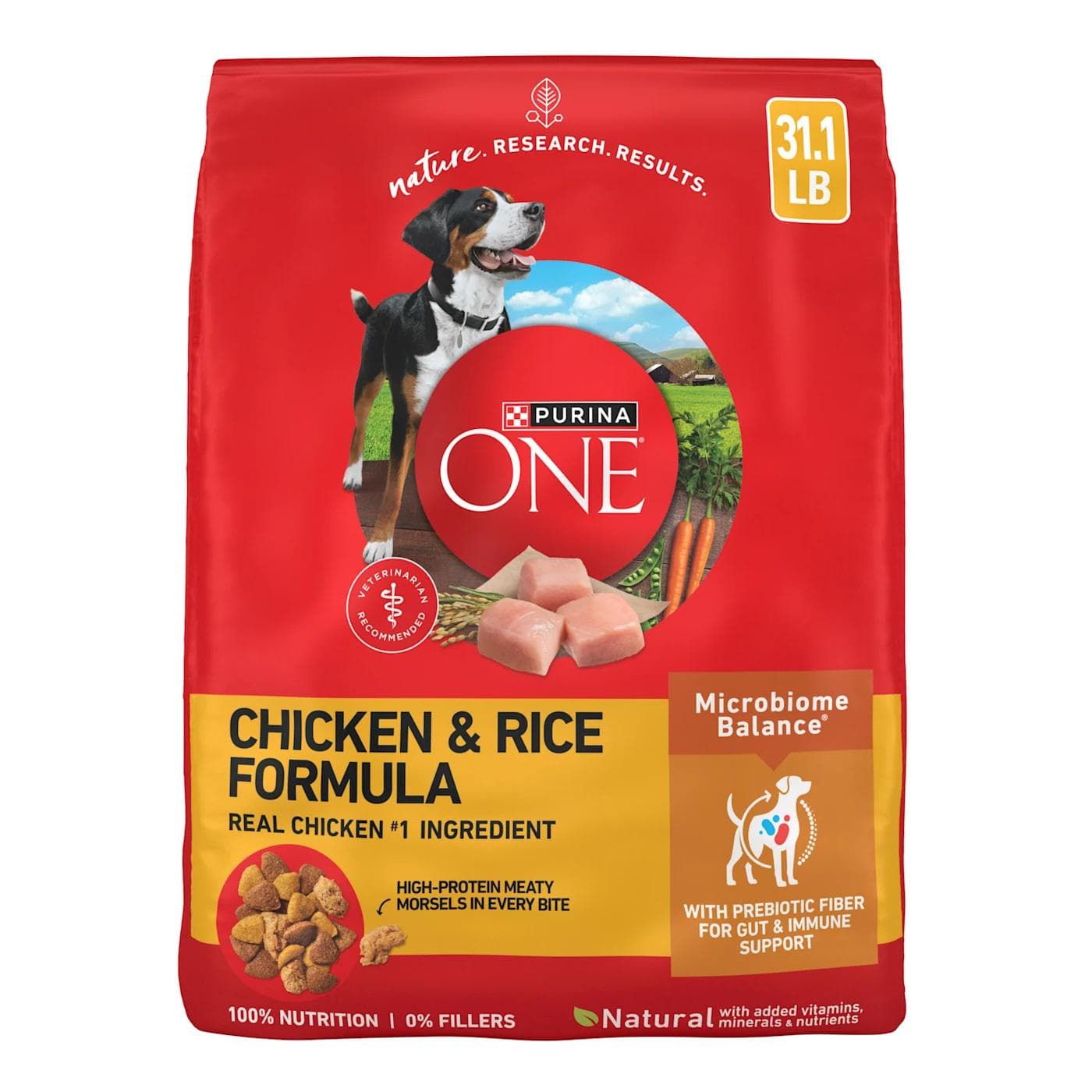
Real chicken first and Purina’s feeding-trial science at a budget price. The economical deck is the honest trade-off.
Petful may earn a commission when you click through to Chewy, at no extra cost to you.
If the label, life stage, calorie target, and veterinary plan align, Purina ONE Chicken and Rice Formula is one current adult formula to compare, with any transition made gradually. If the label, life stage, calorie target, and veterinary plan align, Blue Buffalo Life Protection Formula is one current adult formula to compare, with any transition made gradually. If fast eating is a real issue, the Outward Hound small slow-feeder bowl is one format to try with a measured portion while watching comfort, frustration, and muzzle access.
How often to feed a Cavalier
How many times a day should a Cavalier eat? Many healthy adults do well with the measured daily amount split into two meals, while young puppies often need more frequent age-appropriate meals. Disease, medication, pregnancy, appetite, and household routine can change the plan. The key is a consistent daily calorie total and body-condition follow-up, not a rigid breedwide schedule.
Is one meat best?
What meat is best for a Cavalier King Charles Spaniel? There is no universal best protein source. Dogs need complete nutrient profiles, not one fashionable ingredient. Chicken, beef, fish, lamb, and other proteins can appear in suitable diets when the complete formulation, manufacturing, calories, and individual tolerance are sound.
Do not diagnose a food allergy by rotating meats repeatedly. Veterinary diet trials require a controlled food, strict duration, and avoidance of unplanned treats or flavored products.
Foods Cavaliers should not eat
Cavaliers share general dog food-safety risks. Keep chocolate, grapes and raisins, xylitol-containing products, onions and garlic in harmful amounts, alcohol, caffeine, and other known hazards secured. Bones, fatty scraps, spoiled food, medications, cannabis products, and access to trash create additional risks.
If ingestion may have occurred, contact a veterinarian or animal poison service promptly with the product, amount, dog weight, and time. Do not induce vomiting unless a veterinary professional directs it.

When food becomes a veterinary decision
Food is not a substitute for diagnosis
- Cough, fainting, breathing change, repeated vomiting or diarrhea, weight loss, severe itching, collapse, weakness, abdominal swelling, trouble swallowing, suspected toxin ingestion, or refusal to eat needs veterinary guidance. Do not treat heart, kidney, digestive, allergic, or neurologic disease with an unreviewed diet claim.
Therapeutic diets are designed for specific medical goals and should be selected with the treating team. The Cavalier health guide explains breed risks, but it cannot prescribe an individual food.
Ask what a puppy is eating
When bringing home a puppy, obtain the exact food, amount, schedule, and veterinary record. Keep the routine stable at first and use the Cavalier puppy guide for sourcing and first-week planning.
Cavalier vs. King Charles Spaniel terminology
The Cavalier and King Charles Spaniel, called the English Toy Spaniel in the United States, are separate breeds. Food still follows life stage, body condition, and health rather than an ambiguous seller label. See the comparison guide.
Read the package in a fixed order
Front-of-bag claims are designed for quick attention. Turn the package around and use the same sequence every time so one attractive phrase does not drive the decision.
- Find the nutritional adequacy statement.
- Confirm the life stage.
- Find calories per cup, can, pouch, piece, or kilogram.
- Record the feeding guide as a starting point.
- Identify the manufacturer and contact information.
- Ask who formulates the food and how quality is controlled.
- Check storage and use-after-opening instructions.
Ingredient order alone cannot answer whether the complete diet provides appropriate nutrients, is consistently manufactured, or fits the individual dog.
Calculate a repeatable portion
Use the veterinarian’s calorie guidance or a starting estimate adjusted to the dog’s body condition and response. Convert the daily calories into grams, cups, cans, or pouches using the package calorie statement. A digital scale can make small portions more repeatable than a loosely filled cup.
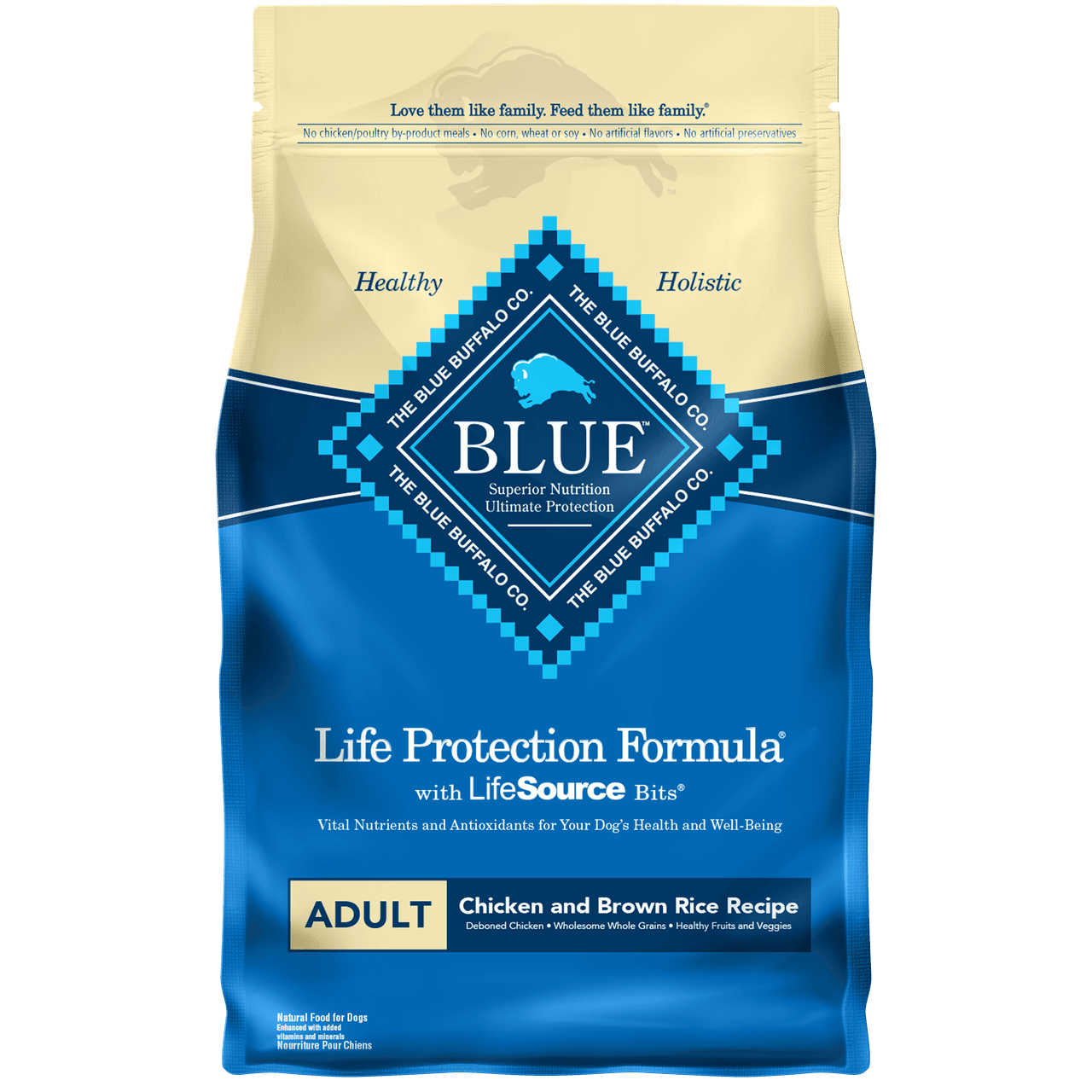
From Chewy
A grain-inclusive adult-maintenance kibble led by named chicken. Balanced macros at a mid-tier price point.
Petful may earn a commission when you click through to Chewy, at no extra cost to you.
Record:
- Product and exact formula.
- Calories per unit.
- Amount offered at each meal.
- Treat, chew, topper, and medication calories.
- Weekly weight when monitoring a change.
- Body-condition and muscle observations.
Reassess after growth, neuter status change, activity change, illness, medication, or a meaningful weight trend. Do not cut food sharply without veterinary guidance.
Split meals for the household, not by myth
Many healthy adults do well when the measured daily amount is divided into two meals. Puppies often need more frequent age-appropriate feeding. Medical conditions, medication timing, pregnancy, appetite, or a therapeutic plan can change frequency. The PetSafe Eatwell 5-meal feeder is one tool for dividing a measured daily ration into scheduled portions when the dog can use it safely.
The important controls are:
- One known daily total.
- Consistent measuring.
- A plan for who feeds.
- Prevention of double meals.
- Review when body condition changes.
Use a simple meal chart when several people share care.
Run a controlled food transition
When a stable dog needs a new food, change gradually unless the veterinarian directs otherwise. Keep the total daily calories in view as old food decreases and new food increases. Do not introduce multiple new treats, supplements, and toppers at the same time.
A transition log can track:
- Old and new food amounts.
- Appetite.
- Stool frequency and quality.
- Vomiting, gas, itching, or ear changes.
- Energy and behavior.
- Medication or environmental changes.
Repeated vomiting, marked lethargy, blood, pain, dehydration concern, or inability to keep water down needs veterinary guidance rather than a slower transition experiment.
Count treats honestly
Training food, dental chews, table scraps, pill pockets, and lick mats all contribute calories. Reserve part of the measured meal for training when practical. Break treats into small pieces so reinforcement frequency does not require large portions. DentaLife small/medium dental treats are one treat example whose calories belong in the daily total; choose by chewing style and veterinary dental guidance, not as treatment for dental disease.
Ask:
- Is this item complete and balanced or an extra?
- How many calories are in one piece or serving?
- Who else gives extras?
- Does the dog receive chews when left alone?
- Are medications hidden in calorie-dense foods?
The AAHA healthy feeding framework uses at least 90% of calories from complete and balanced nutrition and no more than 10% from treats and other foods as a practical target.
Compare cost per feeding day
Package price can be misleading when calorie density and moisture differ. Estimate how many days the package lasts at the dog’s measured portion. Include waste after opening, delivery fees, storage needs, and treats required to make an unsuitable food appealing.
A more expensive package may cost less per day if it lasts longer, and a lower package price may rise after toppers are added. Cost still does not prove quality, so compare nutritional adequacy, formulation, quality control, individual fit, and daily price together.
Prepare useful questions for the veterinarian
Bring the package or a clear photo of the label and adequacy statement. Describe the amount actually fed, not only the product name.
Ask:
- Is this appropriate for the dog’s current life stage?
- What body-condition and muscle-condition score do you record?
- What calorie range should we start with?
- Do symptoms require diagnosis before a diet change?
- Is a therapeutic diet indicated?
- How should treats and supplements be counted?
- When should weight and condition be rechecked?
Food decisions become safer when the veterinary team has the full diet history, medication list, symptoms, and goals.
Store food as the manufacturer directs
Keep the lot code, best-by date, and receipt until the food is used. Store dry food in its original bag inside a clean container when practical, close it between meals, and follow refrigeration and use-after-opening directions for wet or fresh products.
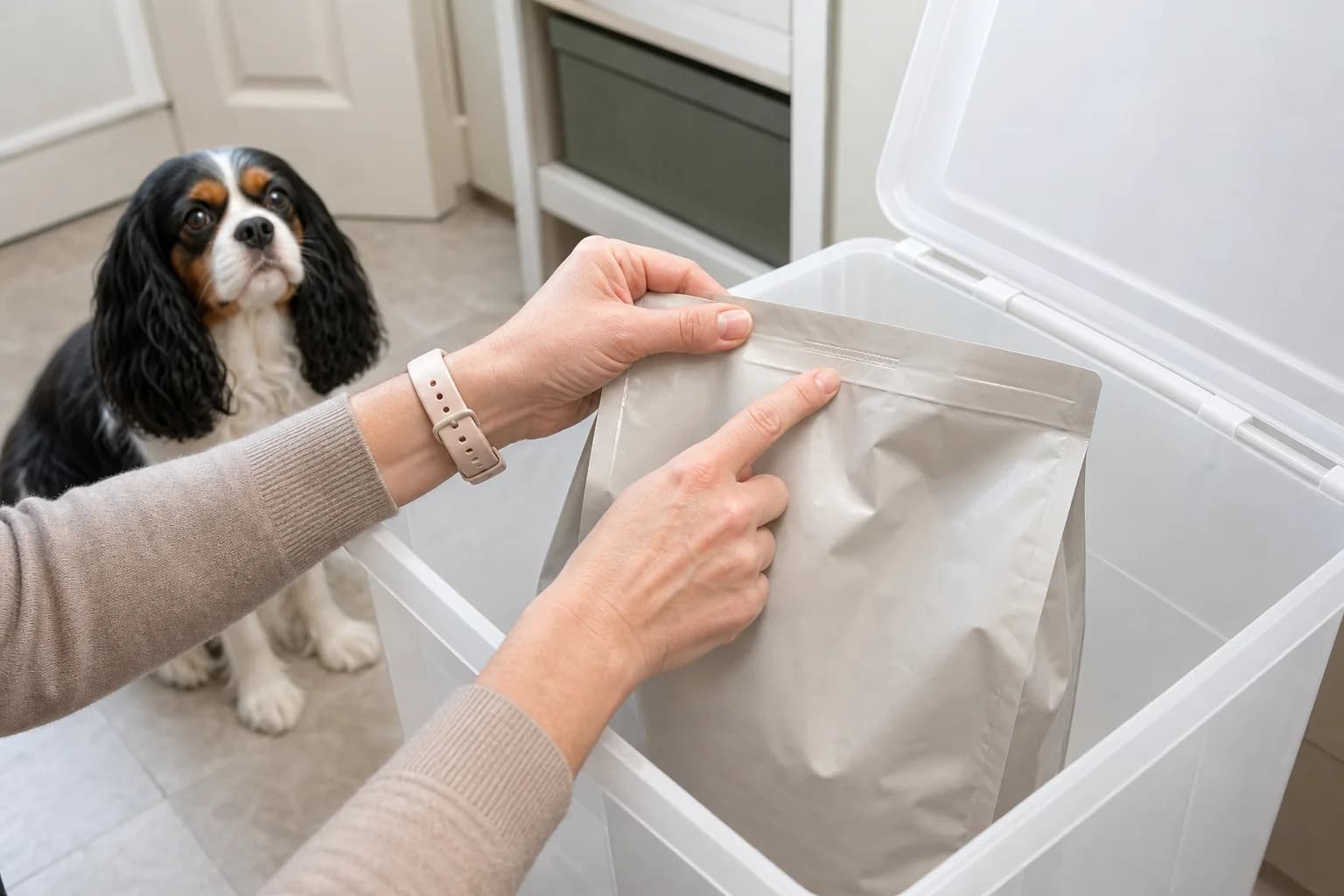
If a recall or quality concern arises, stop and contact the manufacturer and veterinarian as appropriate with the exact product, lot, date, and symptoms. Do not rely on package color or product nickname to identify the affected food.
Reassess after opening a new package
Check appearance and odor against the prior package, confirm the lot and date, and watch the dog’s appetite and digestion. Formula updates or storage problems may not be obvious from the front label.
When several pets eat different foods, label containers and measuring tools. Prevent access to another animal’s therapeutic diet, calorie-dense food, or medication.
The complete Cavalier breed guide connects feeding with exercise, grooming, training, companionship, and lifelong care. Food is one part of fit, not a shortcut around the breed’s other needs.
Cavalier food FAQs
Frequently Asked Questions
No single meat is best for every Cavalier. The dog needs a complete and balanced nutrient profile for the correct life stage, appropriate calories, accountable formulation and manufacturing, and individual tolerance. A protein source can matter during a veterinarian-directed diet trial, but ingredient preference alone does not prove nutritional quality or treat disease. The whole formulation matters more.
Choose a complete and balanced food for the dog’s life stage, compare calories in the unit fed, evaluate the manufacturer’s nutrition expertise and quality control, measure portions, and monitor body and muscle condition. The best option is one the individual can eat safely and maintain well on. Medical conditions, recurrent symptoms, obesity, or therapeutic diets require veterinary guidance.
Keep chocolate, grapes and raisins, xylitol-containing products, alcohol, caffeine, and unsafe amounts of onions or garlic away from Cavaliers, along with medications, cannabis products, spoiled food, fatty scraps, risky bones, and accessible trash. If an ingestion may have occurred, contact a veterinarian or animal poison service promptly with the product, amount, dog’s weight, and time. Do not induce vomiting unless a veterinary professional directs it.
Many healthy adult Cavaliers do well when the measured daily amount is split into two meals. Young puppies often need more frequent, age-appropriate meals. Disease, medication, pregnancy, appetite, and household routine can change that plan, so there is no rigid breedwide schedule. Keep the daily calorie total consistent, count treats and chews, and follow body-condition trends and veterinary advice rather than adding food automatically when meals become more frequent.
Start with the food’s calorie information and feeding guide, then adjust for the individual dog’s life stage, body condition, muscle condition, activity, health, treats, and veterinary plan. Measure or weigh the portion and track the waist, ribs, abdominal tuck, weight, appetite, and energy. Long feathering can hide body shape, so use hands as well as eyes. A package serving is a starting point, not a breedwide prescription.
A therapeutic or veterinary diet is appropriate when the treating team selects it for a specific medical goal, not because a breed claim promises to prevent disease. Coughing, fainting, breathing change, repeated digestive signs, weight loss, severe itching, weakness, abdominal swelling, trouble swallowing, suspected toxin ingestion, or refusal to eat needs veterinary guidance. Do not replace diagnosis, medication, or monitoring with an unreviewed heart, allergy, kidney, digestive, or neurologic diet claim.
Primary nutrition sources

BVMS, MRCVS
Dr. Pippa Elliott, BVMS, MRCVS, is a veterinarian with nearly 30 years of experience in companion animal practice. Dr. Elliott earned her Bachelor of Veterinary Medicine and Surgery from the University of Glasgow. She was also designated a Member of the Royal College of Veterinary Surgeons. Married with 2 grown-up kids, Dr. Elliott has a naughty Puggle named Poggle, 3 cats and a bearded dragon.