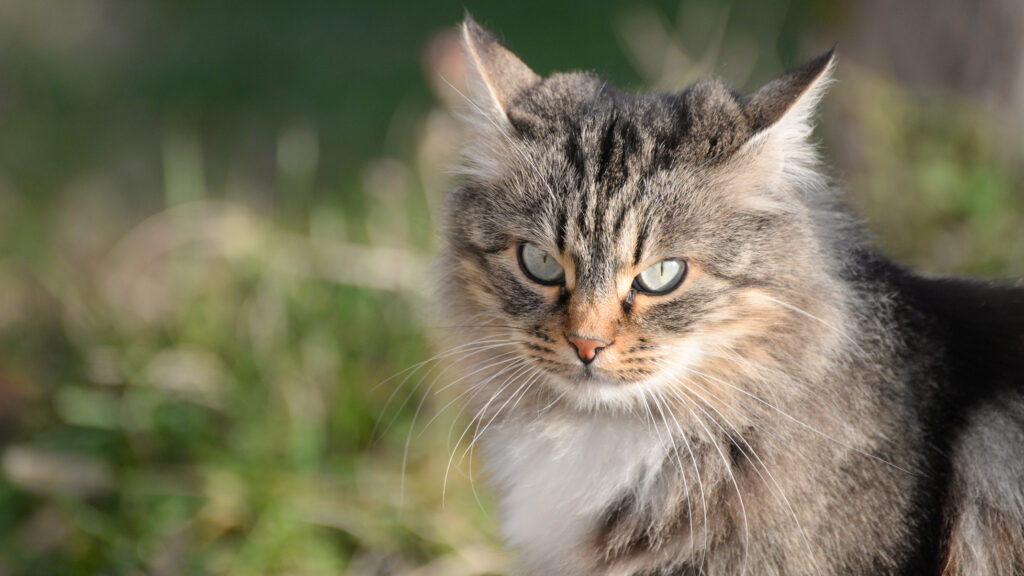

Airplane ears are easy to spot once you know what to look for:
- Ears flattened and turned outward to the sides
- • Ear tips pointing slightly backward
- • Often paired with a tense body or wide eyes
Instead of pointing forward, which shows curiosity, the ears turn sideways to protect themselves and signal that your cat is uncomfortable.
Cats use their ears as emotional indicators. When they go into “airplane mode,” this usually means something isn’t right. Your cat’s body language will give you important clues on what exactly the ears mean. Your cat may be:
Cats don’t like busy environments, so an overly energetic puppy or hyperactive child can overstimulate your feline friend in no-time. One of the most common reasons why cats get annoyed is simply them being petted for too long. If your cat starts swishing their tail, It’s a clear sign that they’ve had more than enough.

New environments like the vet’s office or a new home are almost guaranteed to stress out your feline friend. Loud, unsettling noises, such as a vacuum cleaner, can have the same effect. Anxious cats will often hide away or crouch low to the ground, with their legs tucked under their body and their tail wrapped around them or flicking nervously. And, of course, there will be airplane ears.

Cats that are ill or in pain often hold their ears in that sideways “airplane” position as a subtle sign that something isn’t right. When a cat feels unwell, they may eat less, become more withdrawn, and have lower energy levels. Keep an eye out for these signs, and contact your vet if you think something more serious might be going on.

Sometimes, airplane ears don’t mean anything negative at all. Your cat might just be listening. Cats can move their ears independently, so turning them sideways or slightly back helps them pick up sounds behind them. If your cat looks relaxed and alert, those “airplane ears” probably just mean something caught their attention.
Did you know that the position of your cat’s ears can tell you a lot about their mood. Here is what to look for:
- Forward ears: Your cat is relaxed or curious
- Airplane ears: Your cat is uncomfortable or getting defensive
- Ears flat back against the head: Your cat is very fear or about to get aggressive
Not necessarily. They usually mean your cat is uncomfortable or overstimulated. If you don’t help your cat to get comfortable again, your feline friend might become angry in a later stage though.
Sure! Kittens mostly use the same body language as adult cats, though they may switch moods more quickly.
Yes. In this case, airplane ears mean that your cat is getting overstimulated and needs a break. If your cat is swishing their tail, too, this means that they are very annoyed already and that you better stop petting right away if you don’t want to get scratched.